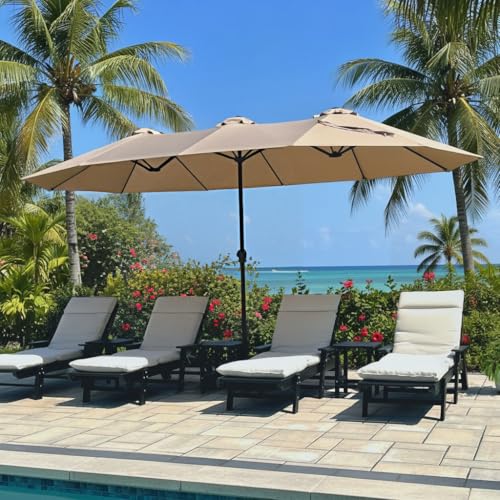
Deck Umbrella with Base: Complete Buying Guide & Setup Tips

Everything you need to choose, weight, and secure a deck umbrella with base — from canopy types and frame materials to base stability, wind safety, and long-term care. Built for homeowners who want reliable shade without guesswork.

Canopy Types Base Weights Wind Safety Frame Materials Setup & Care
Why this guide matters: A deck umbrella is only as good as its base. The wrong pairing of canopy span and base weight leads to wobble, tip-overs, and canopy damage — especially on exposed decks. This guide walks you through umbrella types, base construction, material choices, and practical setup so you can pick a combination that holds steady and looks right on your deck.

1. Deck Umbrella Types Explained

Not all deck umbrellas work the same way, and the type you choose affects how much base you need and where the umbrella can sit on your deck. The three most common configurations are market umbrellas, cantilever umbrellas, and offset or side-post umbrellas. Each balances shade coverage, footprint, and base requirements differently.

Essential Tier

Market Umbrella

A central pole runs through a table or stands in a base. Simple to reposition, widely available, and easy to pair with dining sets. The pole occupies the center of the seating area, so through-table setups are common.

Balanced Tier

Cantilever Umbrella

The canopy extends from a side arm, leaving the space beneath it free of poles. Requires a heavier or wider base because the canopy load sits off-center. Ideal for lounge groupings and deep seating layouts.

Premium Tier

Offset / Side-Post

A variation of the cantilever with the post offset to one side. Often pairs with rotation mechanisms and larger canopies. Base footprint and weight are critical, and anchoring is sometimes recommended on exposed decks.

If your deck already has a dining table with an umbrella hole, a market umbrella is the most straightforward match. If you want uninterrupted shade over a lounge area, a cantilever or offset design is the better fit — but plan for a more substantial base. For deck layouts with limited space, review small-space shade options like deck shade solutions and pair them with the right base.

2. Base Types and How They Stabilize

The base is the anchor. It counters wind lift, canopy torque, and accidental bumps. Base construction varies widely, and the right choice depends on whether the umbrella passes through a table or stands free. Below is a comparison of the most common base categories you will encounter.

Base Category Typical Construction Best For Stability Notes
Entry-Level Plate Base Resin or light steel plates Sheltered decks, small canopies Suited to through-table setups and calm locations; less stable in gusty conditions
Mid-Range Steel Base Powder-coated steel with weighted plates Standard residential decks Good balance of mass and footprint; often includes a tightening knob or collar
Fillable Base Hollow resin or plastic shell filled with water or sand Decks where portability matters Weight depends on fill; empty bases are light and should not be left freestanding in wind
Cast Stone / Granite Base Solid stone or cast composite High-end and premium setups Heavy and stable; best for freestanding umbrellas and exposed decks
Cantilever Base with Wheels Steel frame with counterweight plates and casters Cantilever and offset umbrellas Wheels aid repositioning; counterweights must match the canopy span

Through-table bases rely on the table for additional stability, while freestanding bases must carry the full load. If you plan to move the umbrella often, a wheeled cantilever base or a fillable base makes repositioning easier. For a broader look at how bases fit into deck layouts, see deck umbrella guidance and pair it with the correct base category.

Important: A base rated for a smaller canopy will not stabilize a larger one. Always match the base to the canopy span and follow the manufacturer's wind guidance. On exposed decks, close the canopy when wind picks up — no base replaces common-sense wind management.

3. Frame and Canopy Materials

Frame Materials

Aluminum frames resist corrosion and stay lighter, which helps when you reposition the umbrella. Steel frames offer strength but require a rust-proof finish to survive outdoor exposure. Wood frames bring a traditional look but need periodic sealing. Mid-range and premium tiers typically combine aluminum frames with reinforced ribs for a durable, weather-resistant build.

Canopy Fabrics

Solution-dyed acrylic and high-density polyester are the most common canopy fabrics. Solution-dyed acrylic holds color well against UV exposure and resists moisture. Polyester is widely used in entry-level and mid-range canopies and performs well when paired with a water-resistant coating. Vented canopies reduce lift and improve airflow, which helps stability in breezy conditions.

Base Materials

Cast steel, resin, granite, and cast stone are the main base materials. Heavy-duty bases use solid or plate-loaded construction for maximum stability, while fillable bases trade some stability for portability. A rust-proof finish on steel bases extends service life on humid decks.

4. Sizing the Umbrella to Your Deck

Canopy size determines shade coverage and wind load. A canopy that is too large for the deck or base creates tip-over risk; one that is too small leaves gaps in shade. As a general rule, measure the seating or dining area you want to shade and choose a canopy that covers it with a modest overhang.

  • Measure the table or seating footprint, then add a comfortable overhang for shade.
  • Check clearance between the canopy edge and nearby walls, railings, or furniture.
  • Confirm the base footprint fits your deck without blocking walkways.
  • For cantilever umbrellas, allow extra room for the side arm and rotation path.
  • Match the base rating to the canopy span — larger canopies need heavier or wider bases.

Deck layout matters as much as canopy size. If your deck doubles as a dining and lounge area, you may want two smaller umbrellas rather than one large canopy. For dining-specific setups, see deck table and chairs pairing advice, and for lounging areas review deck lounge chairs to plan shade coverage.

5. Wind Stability and Safety

Wind is the leading cause of umbrella damage. Canopies act like sails, and the load transfers to the pole and base. Stability comes from three things: base mass and footprint, frame rigidity, and correct canopy management. A vented canopy helps reduce lift, but it does not replace closing the umbrella in strong wind.

  • Close and secure the canopy when wind picks up or when the deck is unattended.
  • Use a base with a wide footprint to spread load across deck boards.
  • For freestanding setups, choose a heavier base category than you would for through-table use.
  • Keep the canopy clear of railings, walls, and low-hanging branches.
  • Inspect the base collar and tightening mechanism regularly for wear.

On windy or exposed decks, consider a heavier base and a smaller canopy. If your deck is covered or screened, review covered patio shade strategies, which can reduce wind exposure and extend umbrella life.

Safety reminder: Never leave an open umbrella unattended in gusty conditions. Even a heavy base can tip if the canopy catches a strong gust. Close, cover, or store the umbrella when storms are forecast.

6. Setup, Placement, and Care

Placement

Place the umbrella where shade is needed most — typically over seating or dining areas. Keep the base on a flat, solid section of decking. If the deck has gaps between boards, use a base with a broad flat underside so the load spreads evenly. Avoid placing the base at the edge of the deck where wind exposure is highest.

Assembly

Follow the manufacturer's assembly sequence. Tighten the base collar and pole connection firmly, and check that all ribs are fully extended before opening the canopy. For cantilever umbrellas, confirm the counterweights are in place before raising the canopy.

Routine Care

  • Clean the canopy with mild soap and water; avoid abrasive cleaners.
  • Allow the canopy to dry fully before closing to prevent mildew.
  • Inspect the frame and base for rust or loose fittings each season.
  • Store or cover the umbrella during off-season and storms.
  • Touch up scratches on steel frames and bases to protect the finish.

For broader deck furniture care, see deck furniture maintenance guidance and coordinate umbrella care with your seasonal routine.

Ready to Compare Deck Umbrella Options?

Browse recommended deck umbrella and base combinations below, then check availability and compare features that matter for your deck size, wind exposure, and seating layout.

Frequently Asked Questions

How heavy should a deck umbrella base be?
Base weight depends on canopy size, wind exposure, and whether the umbrella is freestanding or through a table. Mid-range and high-end tier bases generally use steel or resin plates that add substantial stabilizing mass, while entry-level bases often rely on lighter construction suited only to sheltered decks. Always match the base to the canopy span and local wind conditions, and consider filling a base with water or sand where the manufacturer allows it.
What is the difference between a market umbrella and a cantilever umbrella?
A market umbrella uses a central pole that typically passes through a table or stands in a base. A cantilever umbrella offsets the canopy on a side arm, which keeps the space beneath the canopy free of poles. Cantilever designs usually require heavier or wider bases because the canopy load sits off-center, while market umbrellas are simpler to reposition but occupy the center of the seating area.
Can I use a deck umbrella without a table?
Yes, but the base becomes critical. A freestanding umbrella must be paired with a base rated for its canopy size and local wind exposure. Through-table setups distribute load across the table and base, whereas freestanding setups rely entirely on the base mass and footprint. Choose a base with a wide footprint and stable plates for freestanding use.
How do I secure an umbrella base on a wood deck?
Use a base with a broad, flat underside to spread load across deck boards. Avoid drilling into deck boards unless the base is designed for anchoring. Some bases include wheels or handles for repositioning, which helps you move the umbrella into shade without dragging the base. During high wind, close the canopy and move the umbrella to a sheltered position.
What materials are best for a deck umbrella and base?
For the canopy, solution-dyed acrylic and high-density polyester resist fading and moisture. Frames in aluminum resist corrosion, while steel offers strength but needs a rust-proof finish. Bases in cast steel, resin, or granite deliver stability. Mid-range and premium tiers typically combine aluminum frames with resin or steel bases for a balance of weight, durability, and weather resistance.
Should I leave my deck umbrella open in the wind?
No. Wind is the primary cause of umbrella tip-overs and canopy damage. Close and secure the canopy when wind picks up, and store or cover the umbrella during storms and off-season. A vented canopy helps reduce lift, but it does not replace the need to close the umbrella in strong wind.

Recommended Deck Umbrellas with Bases

⚠️ AFFILIATE DISCLOSURE: This website contains affiliate links. As an Amazon Associate, we earn from qualifying purchases. If you make a purchase through these links, we may receive a small commission at no additional cost to you. Read our full affiliate policy.

OLILAWN 10FT Cantilever Offset Outdoor Patio Umbrella with Base Included | with 360° Rotation & Infinite Tilt, Yarn-Dyed Fade-Resistant Canopy, Heavy Duty 8-Rib Steel Frame for Patio, Pool, Backyard

OLILAWN 10FT Cantilever Offset Outdoor Patio Umbrella with Base Included | with 360° Rotation & Infinite Tilt, Yarn-Dyed Fade-Resistant Canopy, Heavy Duty 8-Rib Steel Frame for Patio, Pool, Backyard

Check price on Amazon
⚠️ Note: The purchase links above are affiliate links. As an Amazon Associate, we earn from qualifying purchases at no additional cost to you.
OLILAWN 10FT Cantilever Offset Outdoor Patio Umbrella with Base Included | with 360° Rotation & Infinite Tilt, Yarn-Dyed Fade-Resistant Canopy, Heavy Duty 8-Rib Steel Frame for Patio, Pool, Backyard

OLILAWN 10FT Cantilever Offset Outdoor Patio Umbrella with Base Included | with 360° Rotation & Infinite Tilt, Yarn-Dyed Fade-Resistant Canopy, Heavy Duty 8-Rib Steel Frame for Patio, Pool, Backyard

Check price on Amazon
⚠️ Note: The purchase links above are affiliate links. As an Amazon Associate, we earn from qualifying purchases at no additional cost to you.
Best Choice Products 10ft Offset Cantilever Patio Umbrella, Gray | Offset Cantilever Hanging Umbrella with Crank Adjustment, 8 Sturdy Ribs, and Wide Canopy for Outdoor Shade

Best Choice Products 10ft Offset Cantilever Patio Umbrella, Gray | Offset Cantilever Hanging Umbrella with Crank Adjustment, 8 Sturdy Ribs, and Wide Canopy for Outdoor Shade

Check price on Amazon
⚠️ Note: The purchase links above are affiliate links. As an Amazon Associate, we earn from qualifying purchases at no additional cost to you.
ABCCANOPY 10FT Cantilever Umbrella with Base and Weights Bag, Khaki | Offset Patio Umbrella Bonus Fix Frame&Weights Bag, 360° Rotation, Tilt, Crank Hanging Umbrella for for Backyard, Deck, Pool

ABCCANOPY 10FT Cantilever Umbrella with Base and Weights Bag, Khaki | Offset Patio Umbrella Bonus Fix Frame&Weights Bag, 360° Rotation, Tilt, Crank Hanging Umbrella for for Backyard, Deck, Pool

Check price on Amazon
⚠️ Note: The purchase links above are affiliate links. As an Amazon Associate, we earn from qualifying purchases at no additional cost to you.
Blissun 9' Outdoor Patio Umbrella, Outdoor Table Umbrella, Yard Umbrella, Market Umbrella with 8 Sturdy Ribs, Push Button Tilt and Crank (Tan)

Blissun 9' Outdoor Patio Umbrella, Outdoor Table Umbrella, Yard Umbrella, Market Umbrella with 8 Sturdy Ribs, Push Button Tilt and Crank (Tan)

Check price on Amazon
⚠️ Note: The purchase links above are affiliate links. As an Amazon Associate, we earn from qualifying purchases at no additional cost to you.
JEAREY 9FT Outdoor Patio Umbrella, Market Umbrella, Dark Blue | Outdoor Table Umbrellas with 8 Sturdy, Tilt & Crank UV Protection Waterproof for Garden, Deck, Backyard, Pool

JEAREY 9FT Outdoor Patio Umbrella, Market Umbrella, Dark Blue | Outdoor Table Umbrellas with 8 Sturdy, Tilt & Crank UV Protection Waterproof for Garden, Deck, Backyard, Pool

Check price on Amazon
⚠️ Note: The purchase links above are affiliate links. As an Amazon Associate, we earn from qualifying purchases at no additional cost to you.
PHI VILLA 15ft Large Outdoor Patio Umbrella with Base Included, Beige | Big Rectangle/Rectangular Market Table Umbrellas w/Stand, Double-Sised Giant Triple Head for Poolside Backyard, UV Resistant

PHI VILLA 15ft Large Outdoor Patio Umbrella with Base Included, Beige | Big Rectangle/Rectangular Market Table Umbrellas w/Stand, Double-Sised Giant Triple Head for Poolside Backyard, UV Resistant

Check price on Amazon
⚠️ Note: The purchase links above are affiliate links. As an Amazon Associate, we earn from qualifying purchases at no additional cost to you.

Disclaimer

The information provided on PatioFocus is for educational and informational purposes only. We are not professional landscapers or contractors, and our content should not replace professional advice. Always consult with a qualified expert regarding structural, safety, or weather-related concerns. Some content may use AI assistance. Always check product warranties and safety standards before purchasing. If you do not agree, please do not use this website. Read the full disclaimer.