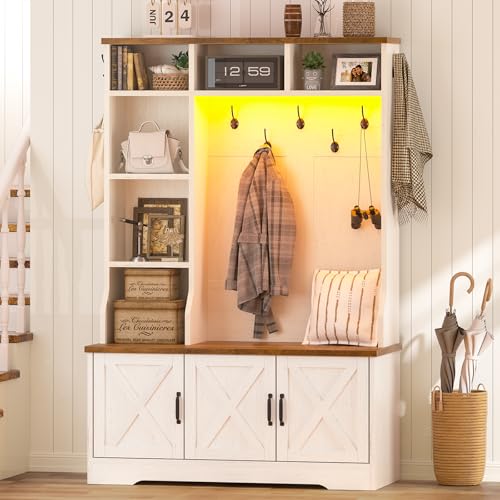
Entryway Mud Bench: The Complete Buying and Layout Guide
Everything you need to choose a mud bench that tames clutter, fits your entryway dimensions, and holds up to daily boots, bags, and coats.
What Is an Entryway Mud Bench?
An entryway mud bench is a purpose-built seating and storage unit placed where household members transition between outdoors and indoors. Unlike a decorative hallway bench, a mud bench is engineered around a daily routine: sit down, remove footwear, stow bags, hang coats, and keep the rest of the home clean. The best units combine three functions in a single footprint — a sturdy seat, concealed or open shoe storage, and hanging or cubby space for outerwear and accessories.
The concept borrows from traditional mudrooms, but modern designs compress the same functionality into compact, furniture-style pieces that suit apartments, townhouses, and open-plan entry areas. Because the bench sits at the busiest threshold in the home, its build quality and surface finishes matter far more than they would on a purely decorative accent piece. A well-chosen mud bench should handle wet boots, repeated seated loading, and the occasional bumped bag without wobbling, chipping, or sagging.
If your entry area flows into a dining or living zone, consider how the bench coordinates with nearby furniture. Many homeowners pair a mud bench with a durable doormat to trap grit at the door, and some extend the same seating logic into adjacent rooms with a dining bench seat for a cohesive, bench-forward layout.
Mud Bench Types Compared
Entryway benches fall into a handful of recognizable formats. The right choice depends on your wall length, ceiling height, storage volume needed, and how visible the entryway is from the rest of the home.
Simple Storage Bench
A low bench with open shelves or a lift-up seat. Lightest visual footprint and the most flexible placement. Ideal for small entryways and renters who want organization without a permanent fixture.
Bench with Shoe Cubby
Divided cubbies under the seat separate footwear by household member. A practical mid-tier format that keeps wet and dry shoes apart and makes daily retrieval fast.
Hall Tree Bench
Combines a bench, back panel, and hooks or a top shelf in one vertical unit. Maximizes storage per square foot and suits narrow walls where floor space is limited.
Built-In Mudroom Bench
Custom cabinetry anchored to the wall with integrated lighting, drawers, and tailored cubbies. A long-term investment that adds architectural value and near-limitless storage.
Folding or Portable Bench
Collapsible designs that stow flat when not needed. Useful for seasonal overflow, guest entryways, or homes where the entry doubles as a hallway.
Commercial-Style Locker Bench
Heavy-duty steel or laminate units with ventilated lockers. Built for high-traffic households, rental properties, or home-based work settings that need rugged, wipe-clean surfaces.
For a broader look at how bench seating integrates with surrounding furniture, the guide on DIY outdoor bench projects offers construction ideas that translate well to covered porches and mudroom-adjacent spaces.
Sizing and Clearance Rules
Measure twice before ordering. An entryway mud bench that is too deep will obstruct the door swing, while one that is too wide will crowd the walls and make the space feel tighter than it is. Use the following guidelines as a starting point.
| Household Size | Recommended Bench Width | Typical Seat Height | Best For |
|---|---|---|---|
| Single adult or couple | 30 to 36 inches | 17 to 19 inches | Compact apartments and narrow hallways |
| Two adults | 40 to 48 inches | 17 to 19 inches | Standard entryways with shoe and coat volume |
| Family of three to four | 48 to 60 inches | 17 to 19 inches | Hall tree benches with cubbies or lockers |
| Large or multi-generational household | 60 inches and above | 17 to 20 inches | Built-in mudroom benches with divided storage |
Clearance and Depth
- Front clearance: leave at least 30 inches in front of the bench so a seated person can rise comfortably and doors can open freely.
- Depth: most benches measure 14 to 18 inches deep. Deeper units suit shoe storage but can feel bulky in tight hallways.
- Seat height: 17 to 19 inches works for most adults. Taller household members may prefer 19 to 20 inches for easier standing.
- Above the bench: if you add a hall tree or wall hooks, keep the lowest hook around 48 to 60 inches from the floor for comfortable reach.
Small entryways benefit from the same space-planning discipline used in compact dining zones. If your home leans toward multi-functional bench layouts, the ideas in dining tables with benches for small spaces show how to squeeze seating and circulation out of limited room.
Materials and Build Quality
Entryway furniture lives a harder life than most indoor pieces. Wet umbrellas, salted boots, pet claws, and daily seated loading all stress the frame and finish. Prioritize construction quality over decorative detail.
Frame Materials
- Solid hardwood: the most durable choice for long-term use. Look for sealed finishes and reinforced joinery. Premium tier units often use hardwood frames with mortise-and-tenon or dowel construction.
- Engineered wood: stable and consistent, but quality varies. High-grade engineered panels with sealed edges perform well; thinner panels can swell near wet footwear.
- Metal frames: powder-coated steel offers heavy-duty support and a clean industrial look. Check for rust-proof finishes in humid or coastal entryways.
- Wicker and rattan: visually warm but better suited to covered, dry entries. Reserve for low-moisture locations or pair with a protective liner.
Seat and Surface Considerations
The seat surface should resist scuffs and be easy to wipe. Upholstered cushions add comfort but need removable, washable covers in a mudroom context. Cushioned seats in a mid-range unit typically use denser foam that holds shape longer than entry-level padding. If you plan to use the bench heavily, look for reinforced corner blocks and a weight capacity clearly stated by the manufacturer.
Some homeowners extend the same material logic to outdoor seating areas, where durable outdoor furniture guidance overlaps with mudroom priorities: sealed surfaces, corrosion-resistant hardware, and frames that tolerate moisture swings.
Storage Features That Matter
Storage is where mud benches separate themselves from ordinary seating. The right combination depends on what usually piles up at your door: shoes, coats, bags, mail, pet gear, or sports equipment.
Common Storage Configurations
- Open shoe shelves: fast access and good airflow for drying boots. Pair with baskets to hide smaller items.
- Closed cubbies: hide clutter but need ventilation or moisture-absorbing inserts to prevent odors.
- Lift-up seat storage: large capacity for seasonal gear; less convenient for daily shoes.
- Drawers: ideal for gloves, hats, and small accessories. Full-extension drawers with soft-close hardware signal a higher build tier.
- Hooks and back panels: the most-used feature in hall tree benches. Heavier coats need reinforced hook plates rated for the load.
- Top shelf: useful for baskets, decorative trays, and out-of-reach seasonal items.
Layout and Placement Tips
Placement determines whether a mud bench feels like a natural part of the entry or an obstacle. Work through the following checks before committing to a location.
- Identify the primary traffic path. The bench should sit beside, not across, the main walkway from door to interior.
- Check door swing. Entry doors, closet doors, and garage doors must open fully without contacting the bench.
- Keep utilities clear. Do not block vents, radiators, thermostats, or electrical outlets. Leave space for air circulation under the bench if it sits near a heat source.
- Anchor tall units. Hall tree benches and tall lockers should be secured to wall studs, especially in homes with children or pets.
- Consider lighting. A bench in a dim corner benefits from a nearby wall sconce or ceiling fixture. Well-lit entryways feel larger and safer.
- Coordinate with the floor. A bench placed over a hard floor benefits from felt pads; over carpet, check that legs or the base do not snag fibers.
If your entryway opens directly into a dining area, bench seating can unify the two zones. Examples of how bench-based layouts work in adjacent rooms appear in guides to dining tables with bench and chairs and dining room tables with a bench and two chairs.
Care and Long-Term Durability
A mud bench is exposed to more moisture and abrasion than almost any other indoor furniture. Simple habits keep it looking sharp and structurally sound for years.
Routine Maintenance
- Wipe down the seat and frame weekly with a damp cloth and mild soap; dry immediately to prevent water marks.
- Shake out or vacuum cubby interiors monthly to remove grit that can scratch surfaces.
- Air out damp shoes outside the cubby when possible, and use moisture-absorbing inserts in closed storage.
- Check screws, brackets, and wall anchors every few months, especially on hall tree units that carry hanging weight.
- Reapply sealant or touch up powder coating as recommended by the manufacturer to maintain a weather-resistant coating.
Seasonal Checks
At the start of each wet or snowy season, inspect the bench for loose joinery, worn felt pads, and finish wear near the seat edge. Address small issues early — a tightened bracket or a fresh coat of sealant is far simpler than replacing a swollen panel or a cracked frame later. Households in humid climates should pay particular attention to sealed edges and metal hardware, where rust-proof finishes make the biggest difference.
The same maintenance mindset applies to outdoor pieces; the weatherproofing guide covers protective coatings and seasonal routines that translate well to entryway furniture exposed to damp gear.
Ready to Organize Your Entryway?
Use the checklist above to shortlist bench widths, storage configurations, and materials that match your household. Browse the recommended entryway mud bench options below and compare features that matter for daily use.
Frequently Asked Questions
What size entryway mud bench should I choose?
Measure your available wall length and depth first. A bench that fits two adults comfortably typically measures around 40 to 48 inches wide, while a single-user bench can work in 30 to 36 inches. Allow at least 30 inches of clearance in front of the bench so the door swing and foot traffic stay unobstructed.
Is a hall tree bench better than a simple storage bench?
A hall tree integrates hooks, a bench, and often shoe storage in one vertical footprint, which suits narrow entryways and households with many coats. A simple storage bench is more flexible and visually lighter, making it a strong choice for small or open-plan entry areas where a tall unit would feel heavy.
Which material works best for a mud bench?
Solid hardwood and high-grade engineered wood with sealed finishes resist daily wear well, while metal frames with wood seats offer heavy-duty support. In humid or coastal entryways, choose sealed wood, powder-coated steel, or moisture-resistant composites. An entry-level unit may use thinner panels and basic hardware, whereas a premium tier typically adds reinforced joinery and weather-resistant coatings.
Can a mud bench be placed against a window or radiator?
Avoid blocking radiators, vents, or electrical outlets. If the bench sits under a window, confirm the back height leaves the sill clear for opening and airflow. Always anchor tall hall tree units to the wall for safety, especially in homes with children or pets.
How do I keep an entryway bench organized long term?
Assign one cubby or basket per household member, keep a shallow tray for keys and mail on top, and use the bench seat only for items in active rotation. Pair the bench with a durable doormat to trap grit before it reaches the storage area, and do a seasonal clear-out to prevent clutter from accumulating.