Free Standing Umbrella With Weighted Base: The Complete Buyer's Guide
Understand canopy types, base weights, frame materials, and stability so you can choose the right shade solution for your patio, deck, or poolside space.
Why this guide matters: A free standing umbrella with weighted base is one of the most practical shade solutions for homeowners who want flexibility without drilling into the patio or deck. But choosing the wrong combination of canopy size, frame build, and base weight can lead to wobbling, tipping, or premature wear. This guide breaks down exactly what to look for so you can buy with confidence.
What Is a Free Standing Umbrella With Weighted Base?
A free standing umbrella with weighted base is a shade structure that does not require anchoring into the ground, deck, or patio surface. Instead, it relies on a heavy base—usually filled with sand, water, concrete, or metal plates—to keep the umbrella stable. This makes it ideal for renters, homeowners with hardscaping, and anyone who wants to move shade around the yard as the sun shifts.
These umbrellas typically fall into two design families: center-pole models, where the mast rises through the middle of the canopy, and cantilever (offset) models, where the canopy hangs from a side arm so the space underneath stays clear. Both styles can be paired with weighted bases, though cantilever designs generally demand heavier and wider bases because of the leverage created by the side arm.
Compared with in-ground or table-mounted umbrellas, a weighted-base free standing model offers portability and installation-free setup. That flexibility is why they are so popular for patios, pool decks, and rental properties where permanent fixtures are not an option.
Types of Free Standing Umbrellas
Cantilever (Offset) Umbrellas
The canopy extends from a side arm attached to a vertical mast. The base sits off to one side, leaving the area beneath the canopy free for seating, dining, or lounging. Cantilever umbrellas are excellent for shading a conversation set or a dining table without a center pole getting in the way. Because the arm creates leverage, these models usually require the heaviest bases and the most rigid frames.
Center-Pole Free Standing Umbrellas
The mast rises through the center of the canopy, and the base sits directly beneath the pole. These are simpler and often lighter than cantilever models, making them easier to reposition. The trade-off is that the pole occupies the center of the shaded area, so they work best when placed beside furniture rather than over a dining table.
Market and Patio Umbrellas
Traditional market-style umbrellas with a weighted base are a classic choice for patios and garden seating areas. They usually feature a crank or pulley lift and a vented canopy. Many can be paired with a compatible weighted base plate or a wheeled base for easier movement.
Poolside and Beach-Style Models
Some free standing umbrellas are designed with tilt mechanisms and UV-resistant fabrics for poolside use. If your umbrella will sit near water, look for rust-resistant frames and quick-dry canopy materials. For lounging areas, pair your shade with a comfortable lounge chair to create a complete relaxation zone.
Understanding Weighted Bases: Sand, Water, Concrete, and Plates
The base is the single most important stability component of a free standing umbrella. Manufacturers usually specify a minimum base weight for each canopy size, and exceeding that minimum is the safest approach—especially in windy locations.
Here are the common base types you will encounter:
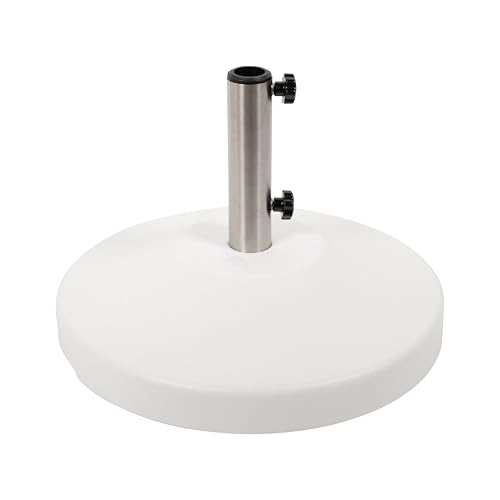
- Fillable plastic bases: Typically filled with sand, water, or both. Sand is denser and provides more stability; water is lighter and easier to drain for seasonal storage. These are common on entry-level and mid-range models.
- Concrete or stone bases: Pre-filled and very heavy. They offer excellent stability but are difficult to move once positioned. Often found on premium and high-end tier umbrellas.
- Metal plate bases: Stackable steel or cast-iron plates that fit under the pole. They are modular and can be adjusted by adding or removing plates, but they still require a compatible frame.
- Wheeled bases: Feature integrated casters so you can roll the umbrella into position. Great for patios where shade needs to move throughout the day, but the wheels must lock securely.
Always check the manufacturer's recommended minimum base weight for your specific canopy span. A base that is too light for the canopy is the leading cause of tipping accidents. If you are comparing models, treat the base rating as seriously as the canopy fabric or frame material.
Frame Materials and Canopy Fabrics
Frame Materials
Aluminum is the most common frame material for free standing umbrellas because it is lightweight and naturally resistant to rust. Powder-coated aluminum offers additional protection against the elements. Steel frames are heavier and very strong, but they require a rust-proof finish to survive outdoor exposure. Wood frames offer a classic look but need more maintenance and are less common on cantilever designs.
Canopy Fabrics
Look for solution-dyed fabrics such as acrylic or high-grade polyester, which resist fading and mildew better than untreated fabrics. A vented canopy—often called a wind vent or wind flap—allows air to pass through, reducing lift during gusts. UV-resistant treatments extend the life of the fabric and protect the people underneath.
If your umbrella will be exposed to salt air or heavy rain, prioritize rust-resistant hardware and quick-dry fabrics. Pairing your umbrella with other weather-ready pieces, such as outdoor rugs and outdoor lighting, helps create a cohesive space that stands up to the seasons.
Comparing Umbrella Tiers at a Glance
The table below uses universal tier descriptors to help you understand how free standing umbrellas differ across the market. It avoids absolute figures and focuses on relative positioning within the category.
| Tier | Frame Build | Base Type | Best For |
|---|---|---|---|
| Entry-Level | Lightweight aluminum or steel with basic powder coating | Fillable plastic base (sand or water) | Occasional shade on small patios and balconies |
| Mid-Range | Reinforced aluminum with corrosion-resistant finish | Fillable base with improved locking mechanism | Everyday residential use on decks and poolside areas |
| Premium | Heavy-duty aluminum or steel with rust-proof coating | Concrete-filled or weighted plate base | Frequent use in exposed or windy outdoor spaces |
| Luxury | Commercial-grade frame with precision joints | Integrated heavy base with wheeled mobility | High-end patios and hospitality-grade setups |
Buying Checklist: What to Verify Before You Purchase
Before you commit to a free standing umbrella with weighted base, run through this checklist to make sure the model suits your space and climate:
- Canopy span vs. base rating: Confirm the manufacturer's recommended minimum base weight for the canopy size you want.
- Wind exposure: If your patio is open to coastal or field winds, choose a heavier base and a vented canopy.
- Frame material: Aluminum for low maintenance; steel for strength; wood for a classic look with more upkeep.
- Lift mechanism: Crank, pulley, or auto-tilt mechanisms affect ease of use. Test the mechanism if possible.
- Mobility: Wheeled bases help if you need to move the umbrella during the day. Check that the wheels lock.
- Storage: Consider how you will store the umbrella during winter. Some bases can be drained; others are permanently heavy.
- Fabric durability: Solution-dyed acrylic or high-grade polyester with UV resistance and mildew resistance.
- Warranty: Review frame and fabric warranties, especially on premium and luxury tiers.
If you are building a full outdoor seating zone, consider how the umbrella will interact with the rest of your setup. A shaded seating area often pairs well with a fire pit seating arrangement or a hammock corner for relaxation.
Placement Tips for Stability and Comfort
Where you place your umbrella matters as much as the umbrella itself. Follow these placement guidelines to get the best performance:
- Place the base on a level, solid surface. A flat patio or deck gives the base full contact and reduces rocking.
- Keep the base clear of edges. Position the base well away from the edge of a raised deck or patio.
- Consider the sun path. Cantilever umbrellas can be rotated to follow the sun; plan the base position so the arm can swing without hitting walls or furniture.
- Anchor with additional weights if needed. Some bases accept extra weight plates or sandbags for windy days.
- Close the canopy when not in use. This reduces wind load and extends the life of the fabric and frame.
For patios that also include a fire feature, make sure the umbrella canopy is far enough from the heat source. A fire pit or fire pit table should never sit directly beneath a canopy.
Quick Tip: Match the Base to the Canopy
The most common mistake buyers make is under-sizing the base. A large canopy on a lightweight base will wobble and may tip in gusts. If you are unsure, choose the heavier base option or one that can be filled with sand rather than water. Sand is denser and provides noticeably more stability.
Maintenance and Seasonal Care
Proper care extends the life of your umbrella and keeps the base performing as intended:
- Clean the canopy regularly: Use mild soap and water, then rinse thoroughly. Avoid harsh chemicals that can strip UV treatments.
- Inspect the frame: Check for rust spots, loose joints, and frayed cords. Address small issues before they grow.
- Drain fillable bases before freezing weather: Water expands when it freezes and can crack plastic bases.
- Store the canopy when possible: During off-season months, remove and store the canopy in a dry place.
- Use a breathable cover: If the umbrella stays outdoors, a cover designed for the frame size protects against dust and debris.
If you want to keep your patio looking its best year-round, pair your umbrella care routine with furniture cleaner products and regular checks of your other outdoor pieces.
Frequently Asked Questions
How heavy should a weighted base be for a free standing umbrella?
A free standing or cantilever umbrella typically requires a weighted base that is substantially heavier than the canopy it supports. As a general rule, look for a base that is rated by the manufacturer for the specific canopy span you are using, and consider filling it with sand or water to increase stability. Larger offset canopies need heavier bases, while compact models can manage with lighter plates. Always follow the manufacturer's recommended minimum base weight for safe use in windy conditions.
Can a free standing umbrella with weighted base stay up in windy conditions?
Stability depends on the base weight, the canopy size, and the wind rating of the frame. Heavier bases and cross-braced frames improve resistance to gusts. Even so, most manufacturers advise closing the canopy during high winds or storms. If your patio is exposed to strong coastal or open-field winds, choose a model with a reinforced pole, a wide-footprint base, and a vented canopy to reduce lift.
Do I need to fill the weighted base with sand or water?
Many weighted bases are designed to be filled with sand, water, or a combination of both. Sand is denser and provides more stability, while water is lighter and easier to empty for seasonal storage. Some premium bases are pre-filled with concrete or metal plates and do not require filling. Always check the manufacturer's guidance so you do not exceed the frame's load limits.
What is the difference between a cantilever and a center-pole free standing umbrella?
A center-pole free standing umbrella mounts the canopy directly above the base, so the pole sits in the middle of the shaded area. A cantilever or offset umbrella suspends the canopy from a side arm, freeing the area underneath for furniture and movement. Cantilever designs usually require heavier bases and more robust frames because the side arm creates additional leverage. Both styles can be paired with weighted bases.
How do I protect a free standing umbrella with weighted base during winter?
Close and secure the canopy, remove or drain fillable bases if freezing temperatures are expected, and store the umbrella in a dry, sheltered location when possible. If the umbrella stays outdoors, use a breathable cover designed for the frame size. Inspect the pole, ribs, and base fittings before the next season to catch wear early.
Ready to Choose Your Umbrella?
A free standing umbrella with weighted base is a flexible, installation-free shade solution that works on patios, decks, poolside areas, and rental properties. By focusing on the base rating, frame material, canopy fabric, and wind exposure, you can select a model that stays stable and looks great for years.
Explore the recommended products below to compare options across tiers, or revisit our free standing patio umbrella guide for more context on how these models fit into a larger outdoor layout.