
Free Standing Patio Umbrella With Weighted Base
Discover how to choose a stable, weather-ready shade solution for your patio, deck, or poolside. A complete guide covering base weight, canopy fabric, wind resistance, and setup considerations.
Start ReadingWhy this guide matters: A free standing patio umbrella with weighted base is one of the most practical shade investments for outdoor spaces where drilling into concrete or anchoring into a table simply is not possible. This guide walks you through the technical details that separate a stable, long-lasting umbrella from a wobbly one that tips over in the first strong breeze — helping you make a confident, informed purchase decision.
In This Guide
- What Is a Free Standing Patio Umbrella With Weighted Base?
- Key Benefits Over Table-Mounted Umbrellas
- Understanding the Weighted Base: Weight, Material, and Portability
- Frame Construction and Pole Materials
- Canopy Fabric and UV Resistance
- Wind Stability and Safety Considerations
- Opening Mechanisms: Crank, Tilt, and Rotational Systems
- Tier Comparison: Entry-Level to Premium
- Setup and Placement Tips
- Maintenance and Long-Term Care
- Frequently Asked Questions
What Is a Free Standing Patio Umbrella With Weighted Base?
A free standing patio umbrella with weighted base is a shade structure that stands independently without needing a table, a permanent anchor, or structural mounting. The umbrella pole (or offset cantilever arm) is held upright by a heavy base — typically filled with water, sand, or a combination of both — that provides counterbalance against wind and normal use.
Unlike table umbrellas that slot through a hole in a patio table, free standing models offer complete flexibility: you can reposition them around the deck, move them to follow the sun, and place seating underneath without obstructing the table surface. This makes them particularly well-suited to lounging areas, poolside decks, and rental properties where permanent installations are not practical.
Most free standing umbrellas fall into two structural categories: center-pole models, where the pole rises directly through the middle of the canopy, and cantilever (offset) models, where the pole stands to one side and a curved or articulated arm suspends the canopy overhead. Both rely on a weighted base for stability, though cantilever designs typically require a heavier base because the canopy weight is offset from the pole.
Key Benefits Over Table-Mounted Umbrellas
Choosing a free standing design over a traditional table umbrella comes with several practical advantages:
- Placement flexibility: Position the umbrella wherever shade is needed most — over a lounge set, beside a pool, or near a garden fountain — without being tied to a dining table.
- Unobstructed table surface: No pole piercing the center of your dining or coffee table means more usable surface area and easier serving.
- Larger canopy options: Free standing designs can support wider canopies (often 10 to 13 feet) than table umbrellas, shading larger seating groups.
- No permanent installation: Ideal for renters, apartment balconies, and decks where drilling or bolting is not permitted.
- Repositionable throughout the day: Many models include rotation and tilt functions, letting you angle the canopy as the sun moves.
The trade-off is that the weighted base itself occupies floor space and must be heavy enough to prevent tipping. Understanding base requirements is therefore the single most important part of choosing the right model.
Understanding the Weighted Base: Weight, Material, and Portability
The weighted base is the foundation of the entire umbrella system. An under-weighted base is the most common cause of umbrella failure — a gust of wind catches the canopy and the whole assembly tips or slides. Here is what to evaluate:
Fill Material
- Water-filled bases: Lightweight to ship and easy to drain for seasonal storage or relocation. Water weighs roughly 8.3 pounds per gallon, so a base holding 10 gallons reaches about 80 pounds when full. Convenient, but water can freeze in cold climates and crack some base shells if left outdoors in winter.
- Sand-filled bases: Sand is denser than water (roughly 12 to 13 pounds per gallon equivalent volume), providing more stability per unit of volume. Sand does not freeze and does not evaporate, making it a better long-term fill for windy or cold regions.
- Combination fill: Many bases are designed for sand with a water top-off, maximizing weight in a compact footprint.
- Pre-weighted concrete or steel plates: Found on premium and commercial-grade models, these are the most stable option but are heavy to move and typically not portable.
Base Footprint and Wheels
A heavier base spreads its weight over a wider footprint, which improves stability. Look for bases with a low, wide profile rather than a tall, narrow one. If you plan to move the umbrella regularly, wheeled bases or bases with integrated handles make repositioning far easier — a feature worth prioritizing if the umbrella will serve both a dining area and a lounging zone.
Base Compatibility
Not every base fits every umbrella. Pole diameter, mounting plate bolt patterns, and cantilever arm interfaces vary between brands. If you are buying a base separately from the umbrella, confirm compatibility before purchasing. Many complete sets bundle a matched base and frame, which removes the guesswork.
Frame Construction and Pole Materials
The frame determines how the umbrella handles wind load and how long it lasts. The most common materials are:
- Aluminum: The most popular choice for free standing and cantilever umbrellas. Aluminum is lightweight, naturally rust-resistant, and strong enough for large canopies. Look for powder-coated finishes that add UV and scratch protection. High-grade aluminum with reinforced joints is characteristic of premium models.
- Steel: Stronger than aluminum in equivalent dimensions but heavier and prone to rust if the coating chips. Steel frames are often found on entry-level and mid-range center-pole umbrellas; rust-proof finishes are essential.
- Wood: Usually eucalyptus, teak, or acacia. Wood frames offer a warm, traditional look but require more maintenance — oiling, sealing, and indoor storage in harsh winters. Best suited to sheltered patios rather than exposed coastal or windy sites.
- Fiberglass or composite ribs: Sometimes used in the canopy support structure for flexibility and wind forgiveness.
Check the number of ribs supporting the canopy. Eight ribs is standard for round canopies; models with more ribs (or with double-layer rib construction) tend to hold their shape better in gusty conditions. Reinforced hubs and joints where the ribs meet the pole are a key durability indicator.
Canopy Fabric and UV Resistance
The canopy is what you actually sit under, and its fabric quality directly affects comfort, fade resistance, and longevity. Key considerations:
- Solution-dyed acrylic (e.g., acrylic fabrics marketed under established outdoor textile brands): The gold standard for outdoor canopies. Color is infused into the fiber rather than applied as a surface coating, so it resists fading and mildew far better than treated polyester. Found on premium and top-tier umbrellas.
- Polyester with UV coating: Common on mid-range models. Lighter and often water-resistant, but the color can fade faster with prolonged sun exposure. Look for a stated UPF rating.
- Olefin: A polypropylene-based fabric that offers good UV and moisture resistance at a moderate position in the market. Often used on mid-tier canopies.
Also check for vented canopies (a small opening or wind vent at the top). Vents allow hot air to escape and, more importantly, let wind pass through rather than pushing against a solid sail — significantly improving stability in breezy conditions.
Canopy shape matters too. Round and octagonal canopies are most common and easiest to stabilize. Rectangular canopies suit long dining tables but present a larger sail area to the wind, so they demand a heavier base. For poolside lounging, consider pairing a shade umbrella with dedicated pool furniture — see our guides on floating pool loungers and folding chaise lounges for compatible setups.
Wind Stability and Safety Considerations
Wind is the number one enemy of any large-canopy umbrella. Even a well-weighted base cannot guarantee stability in a storm, so plan for the following:
- Close or lower the umbrella when unattended: Most umbrellas are rated for light breeze, not gusts. If you are leaving the house or expecting storms, collapse the canopy and secure it.
- Choose a vented canopy: As noted above, wind vents reduce sail effect dramatically.
- Position thoughtfully: Place the umbrella where a building, fence, or hedge breaks the prevailing wind. Corner placements on a deck are often more sheltered than open center positions.
- Use the tilt and rotation lock: Ensure the canopy is locked in place, not left loose to swing.
- Respect the manufacturer's wind rating: Some premium cantilever models publish a maximum wind speed. Exceeding it risks injury or property damage.
- Store seasonally: In regions with harsh winters or hurricane seasons, disassemble and store the canopy and frame indoors. Water-filled bases should be drained before freezing temperatures arrive.
If your outdoor area is exposed to strong coastal winds, consider pairing the umbrella with other wind-tolerant shade structures or planning your layout around a sheltered zone. Our guide to free standing patio covers next to a house explores complementary options for wind-prone spaces.
Opening Mechanisms: Crank, Tilt, and Rotational Systems
How the umbrella opens and adjusts affects daily usability. Common systems include:
- Crank lift: A hand crank raises the canopy along the pole. Reliable and easy to operate; standard on most center-pole models.
- Push-up / manual lift: The canopy is pushed up by hand and secured with a pin. Simpler mechanism with fewer parts to break, but less convenient for large canopies.
- Pulley system: Rope-and-pulley lift, often found on larger market-style umbrellas. Effective but requires some physical effort and occasional rope replacement.
- Tilt functions: Allow the canopy to angle toward the sun. Manual tilt (a lever or collar) is common; auto-tilt (crank-operated) is more convenient and found on mid-range and premium models.
- Rotation (for cantilever models): A pedal, handle, or crank at the base rotates the entire arm and canopy 360 degrees, letting you track the sun throughout the day. A highly valued feature on high-end cantilever umbrellas.
If the umbrella will be adjusted frequently — for example, on a sunny deck used all afternoon — a crank-lift model with auto-tilt and smooth rotation is a worthwhile convenience upgrade. For a set-and-forget shaded corner, a simpler push-up mechanism may be perfectly adequate.
Tier Comparison: Entry-Level to Premium
To help you calibrate expectations, here is how free standing patio umbrellas with weighted bases generally differ across market tiers. This comparison uses quality and construction descriptors rather than any numeric figures.
| Tier | Best For | Frame & Base | Canopy | Mechanism |
|---|---|---|---|---|
| Entry-level | Occasional shade, sheltered patios, seasonal use | Steel or basic aluminum pole; water-fill base with lighter maximum weight | Polyester with UV coating; limited colorfastness | Push-up or basic crank; limited or no tilt |
| Mid-range | Regular daily use, decks and patios with moderate wind exposure | Powder-coated aluminum; sand-or-water base with improved capacity and wider footprint | Olefin or improved polyester; vented canopy; moderate UV resistance | Crank lift with manual or auto tilt |
| Premium | Frequent use, larger shade areas, cantilever setups | High-grade aluminum with reinforced joints; heavy sand-fill base, often wheeled; some models use concrete or steel plates | Solution-dyed acrylic; strong fade and mildew resistance; well-designed venting | Smooth crank with auto-tilt; cantilever models add 360-degree rotation |
| Commercial-grade | Hospitality settings, exposed locations, full-season outdoor use | Heavy-duty aluminum or steel; fixed or very heavy portable bases; engineered wind ratings | Marine-grade acrylic or specialized outdoor textiles; replaceable canopy skins | Robust crank and rotation systems designed for daily operator use |
A mid-range umbrella typically hits the sweet spot for most homeowners: a powder-coated aluminum frame with a vented canopy and a fillable base offers solid stability and a reasonable service life without the complexity of high-end cantilever mechanisms. Entry-level models suit sheltered spaces and light use; premium and commercial-grade tiers make sense when the umbrella will see daily operation in wind-exposed locations.
Ready to Explore Your Options?
Browse our recommended free standing patio umbrellas with weighted bases and compare features that matter most for your space.
View Recommended ModelsSetup and Placement Tips
Proper setup maximizes stability and extends the umbrella's service life:
- Assemble on a flat, level surface. An uneven deck or sloped patio can cause the base to rock, reducing stability.
- Fill the base fully before first use. Whether sand or water, fill to the manufacturer's recommended capacity. Partial fills compromise stability.
- Check all locking pins and collars. Ensure the canopy is fully seated on the ribs and all locking mechanisms are engaged.
- Position the base away from high-traffic paths. The base is heavy and low; people can trip over it if it sits in a walkway.
- Orient the canopy to face the prevailing wind with the vent side. If the canopy has a directional vent or the frame has a wind-forgiving orientation, align it accordingly.
- Test tilt and rotation before tightening everything down. Confirm the canopy angles and rotates smoothly without binding.
If you are furnishing the area around the umbrella, pairing it with complementary pieces such as a folding bistro set or a front porch bench can create a cohesive shaded retreat.
Maintenance and Long-Term Care
Regular care keeps the umbrella stable, clean, and fade-free:
- Clean the canopy seasonally: Brush off debris, then wash with mild soap and water. Avoid harsh detergents that strip UV coatings. Allow to dry fully before closing.
- Inspect the frame and base: Check for rust spots on steel frames and cracks in fillable bases. Touch up powder coating chips promptly.
- Lubricate moving parts: Apply a light silicone lubricant to crank mechanisms and rotation joints once or twice a season.
- Store the canopy during off-season: Remove and store the canopy in a dry place during winter to prevent mildew and fabric degradation.
- Drain water bases before freezing: Prevent ice expansion from cracking the base shell.
- Close the umbrella when not in use: The single most effective maintenance habit — it protects both the canopy and the frame from wind damage.
Frequently Asked Questions
How heavy should the base be for a free standing patio umbrella?
For a standard center-pole umbrella, a filled base of at least 50 to 100 pounds provides reliable stability in sheltered locations. Cantilever umbrellas, which suspend the canopy away from the pole, typically require 100 to 200 pounds or more depending on canopy size and wind exposure. Always follow the manufacturer's stated minimum fill weight, as under-filling can void the warranty and create a tipping hazard.
Can I use a free standing umbrella on a wooden deck?
Yes, and this is one of the main reasons people choose free standing models — they require no drilling or permanent mounting. Place the weighted base on a flat, level section of the deck, and consider a protective mat under the base to prevent scuffing and distribute the load. Avoid placing the base directly over deck board gaps where it might rock.
Water or sand — which is better for the base?
Sand is denser than water and does not freeze or evaporate, making it a better long-term fill for windy or cold-climate locations. Water is easier to drain and lighter to transport, which is convenient for seasonal setups or frequent relocation. Many bases support a combination fill for maximum weight in a compact footprint.
What canopy fabric resists fading best?
Solution-dyed acrylic is the most fade-resistant outdoor canopy fabric, because the color is infused into the fibers rather than applied as a surface treatment. It is typically found on premium and commercial-grade umbrellas. Mid-range umbrellas commonly use olefin or coated polyester, which offer good but shorter-lived color retention.
How do I keep my umbrella from tipping in the wind?
Use a fully filled base, choose a vented canopy, close or lower the umbrella when unattended or when storms are forecast, and position the umbrella in a sheltered spot where a building or fence blocks prevailing wind. Cantilever models should be rotated so the canopy is not broadside to the wind. No umbrella should be left open in strong gusts regardless of base weight.
Can a free standing umbrella be used poolside?
Yes, and it is a popular choice for pool decks because it requires no table or permanent anchor. Keep the base set back from the pool edge to avoid accidental knocks, and pair the shade with poolside furnishings such as floating pool chairs or folding chaise lounge chairs. Ensure the canopy fabric is rated for chlorine and moisture exposure if splashing is likely.
What is the difference between a center-pole and cantilever free standing umbrella?
A center-pole umbrella rises straight through the middle of the canopy, with the base directly beneath. A cantilever (offset) umbrella has a pole at one side and an arm that suspends the canopy overhead, leaving the area beneath completely unobstructed. Cantilever models require heavier bases because the canopy weight sits away from the pole, but they offer greater freedom in furniture arrangement and often include 360-degree rotation.
Recommended Free Standing Patio Umbrellas With Weighted Bases
⚠️ AFFILIATE DISCLOSURE: This website contains affiliate links. As an Amazon Associate, we earn from qualifying purchases. If you make a purchase through these links, we may receive a small commission at no additional cost to you. Read our full affiliate policy.

US Weight 80lb Freestanding Umbrella Base - Stainless Stem with Wheel Black
Check price on Amazon
US Weight 40lb Outdoor Umbrella Base - Use with Patio Table - Black
Check price on Amazon
Best Choice Products Rolling Patio Umbrella Base Stand, 123lb, Black | Heavy-Duty Fillable Market Umbrella Stand w/ 4 Locking Wheels & Tightening Knobs, Wind-Resistant, Fits 6-12ft Umbrellas
Check price on Amazon
California Umbrella 50 lbs. Round Concrete Weighted Powdercoated Steel Umbrella Base, Black Frame, One Size , CFMT160-Black
Check price on Amazon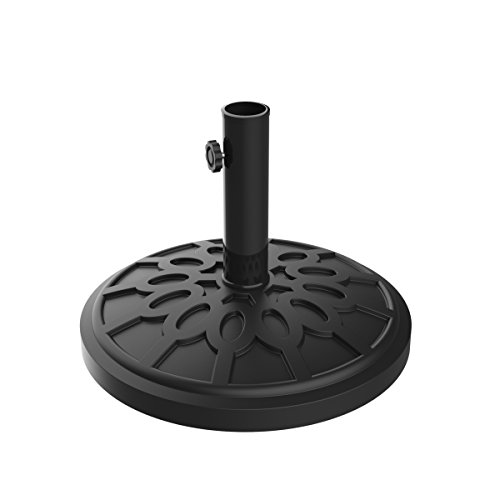
Pure Garden Outdoor Umbrella Base, 19lb, Black | Heavy Duty Weighted Outdoor Umbrella Stand for Patio Table, Tilt, and Lightweight Freestanding Shades
Check price on Amazon
US Weight 120lb Capacity Fillable Freestanding Umbrella Base w/ Wheel White
Check price on Amazon
GDY 7.5ft Patio Umbrella Outdoor Umbrella with Tilt, Crank and Umbrella Weighted Base, for Yard/Outdoor/Wedding Parties and Events (Beige)
Check price on Amazon