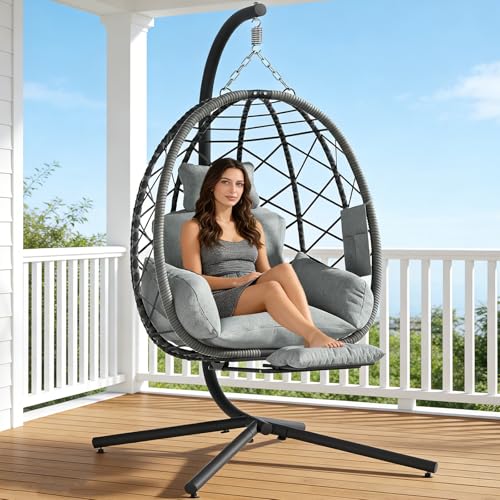
Hanging Egg Chair: The Complete Buying & Styling Guide
Everything you need to know about choosing, placing, and caring for a hanging egg chair — from frame materials and stand options to cushion care and safety checks.
Explore the GuideWhy this guide matters: A hanging egg chair is a statement piece that blends comfort, craftsmanship, and a sense of retreat. Whether you are furnishing a balcony, a garden corner, or a covered porch, the right model will serve you for years — but only if the frame, fabric, and stand are matched to your space and climate. This guide walks you through each decision so you can buy with confidence.
What Makes a Hanging Egg Chair Worth Considering
A hanging egg chair — also called a hanging wicker egg chair or an egg swing chair — suspends a rounded, cocoon-like seat from a stand or ceiling anchor. The enclosed shape creates a private, sheltered feeling while still letting you enjoy the open air. Because the seat hangs, the chair responds gently to movement, which many people find more relaxing than a static lounge chair.
The design has roots in mid-century Scandinavian furniture, and today's versions range from minimalist metal frames to woven rattan and resin wicker baskets. That variety is exactly why a little research pays off. A model built for a sheltered porch is not the same as one rated for full sun and rain, and the stand design has a major impact on where the chair can safely go.
If you are still mapping out your outdoor seating plan, it helps to see how a hanging chair compares with other options. Our overview of hanging patio chairs covers the broader category, while this guide focuses specifically on egg-shaped models.
Single vs. Two-Person Egg Chairs
The first decision is capacity. A single egg chair seats one adult and is the most common choice for balconies, small patios, and reading corners. A two-person model uses a wider basket and a heavier-duty frame, making it a better fit for a garden lounging area or a covered deck where couples or families gather.
Two-person models need noticeably more clearance around the swing arc and a stronger anchor point or stand. If your space is tight, a single chair with a well-padded cushion will usually feel more comfortable than a crowded double. For a wider basket option, see the two-person hanging egg chair with stand guide.
| Model Type | Best For | Frame Requirements |
|---|---|---|
| Single egg chair | Balconies, reading nooks, solo relaxation | Standard steel or aluminum frame |
| Two-person egg chair | Garden lounging zones, family decks | Reinforced heavy-duty frame and wider stand base |
| Chair with integrated stand | Renters and decks without overhead structure | Self-supporting arc or C-shaped base |
| Chair-only model | Covered porches with a sound ceiling beam | Requires separate stand or rated anchor |
Frame Materials and Weave Options
The basket and frame determine how the chair handles weather, how much it weighs, and how it looks over time. Most outdoor hanging egg chairs fall into a few material families:
Powder-Coated Steel
Steel frames are strong and hold their shape well, and a quality powder coating resists rust when the finish stays intact. Steel is heavier than aluminum, which can actually be an advantage for stability. Inspect the coating at joints and welds, since that is where moisture tends to collect.
Aluminum
Aluminum frames are lighter and naturally corrosion-resistant, making them a good match for coastal or humid climates. Because the metal is lighter, the stand design matters more — a wide, weighted base keeps the chair from tipping. Entry-level aluminum chairs are usually fine for sheltered spots, while premium models use thicker tubing and better hardware.
Natural Rattan and Wicker
Natural rattan brings warmth and texture, but it needs shelter from prolonged rain and should be treated periodically. A high-end natural rattan chair is a long-term investment best kept under a porch roof or inside a sunroom.
Resin and HDPE Wicker
Synthetic wicker woven over a metal frame is the most common outdoor option. It resists moisture, does not splinter, and holds color well when the weave is UV-stabilized. Mid-range and top-tier synthetic weaves are tighter and more uniform, which improves both comfort and longevity. For more on weather-ready synthetic materials, our HDPE outdoor furniture article is a useful companion read.
Practical tip: Run your hand across the weave before buying. A tight, even pattern with no sharp ends or loose strands signals better construction. Check that the hanging chain or strap attaches to a reinforced metal eye rather than directly to the wicker.
Stands and Anchoring: Getting the Setup Right
How the chair hangs is just as important as the chair itself. There are two main approaches:
Freestanding Stands
An arc-style or C-shaped stand lets you place the chair almost anywhere on a flat surface, with no drilling required. This is the practical choice for renters, concrete patios, and decks. Look for a stand with a broad base and non-slip feet, and confirm that its load rating matches or exceeds the chair's capacity. A stand-included bundle is the simplest path — see the hanging egg chair with stand overview for what to check in a bundled set.
Ceiling Anchoring
Hanging from a beam or joist creates a cleaner look and frees up floor space, but it requires a structural anchor rated for the combined weight of the chair, cushion, and occupant, plus the dynamic load of swinging. Never anchor into drywall or a decorative soffit. If you are unsure about the structure, a freestanding stand is the safer route.
Whichever route you choose, leave clearance on all sides so the chair can swing without striking walls, railings, or planters. A common mistake is measuring only the chair's footprint and forgetting the arc of motion.
Cushions, Comfort, and Fabric Care
The cushion is where most of the comfort lives, and it is also the part that wears fastest. Outdoor cushions should use solution-dyed acrylic or a comparable performance fabric that resists fading and mildew. Removable, zippered covers make seasonal cleaning far easier.
Many models ship with a matching headrest pillow, and some bundles pair the chair with a coordinated cushion set — the hanging egg chair with stand and cushion guide explains what a well-matched set includes. If you prefer to build your own look, our notes on hanging wicker egg chairs cover how cushion thickness affects the feel of a woven basket.
- Thickness: A thicker seat pad (roughly 4–6 inches) suits lounging; a slimmer pad keeps the cocoon shape crisp.
- Fabric: Performance acrylic and polyester blends handle sun and humidity best.
- Care: Brush off debris, spot-clean with mild soap, and let cushions dry fully before replacing them.
- Storage: Bring cushions inside during heavy rain or off-season storage to prevent mildew.
Placement Ideas by Space
A hanging egg chair works in more places than people expect. The key is matching the stand type and material to the exposure level of the spot.
Balcony or Apartment Terrace
Choose a compact single chair with a freestanding stand and a slim base. Check building rules before installing any ceiling anchor, and keep the chair away from the railing so the swing arc stays clear.
Garden Corner or Lawn
A two-person model or a single chair with a wide stand can anchor a quiet garden corner. Pair it with nearby seating such as a garden seat or a small garden table for drinks, and consider a shade structure if the spot gets full afternoon sun.
Covered Porch or Sunroom
This is the most forgiving environment, so natural rattan and fabric-forward designs are on the table. A chair-only model hung from a rated beam keeps the floor open and looks especially clean.
If your outdoor area is part of a larger furnishing plan, our garden furniture hub connects this piece to seating, dining, and shade choices that work together.
Safety and Weather Checklist
Before the first sit, run through these checks. They take a few minutes and prevent the most common problems.
- Confirm the load rating of both the chair and the stand, and make sure the stand is rated at or above the chair's capacity.
- Assemble hardware fully — every bolt snug, every locking pin engaged, and the hanging chain or strap centered.
- Test the anchor by gently loading the chair before full use; listen for creaks or movement at the attachment point.
- Check the ground — a level, solid surface under the stand prevents tipping and uneven wear.
- Plan for wind — in exposed spots, secure or store the chair during storms. Our guide to heavy outdoor furniture that will not blow away offers broader wind-resistance strategies.
- Protect the finish — touch up any chips in powder coating promptly to stop rust from spreading.
- Cover in the off-season — a fitted cover keeps leaves and standing water out of the basket.
Children and pets: Supervise use, and choose a model with a locking pin or strap that limits swing speed. Avoid hanging the chair where it can swing into a grill, fire feature, or glass door.
Tier Guide: Matching the Chair to Your Needs
Instead of shopping by headline features, think about which tier of construction fits your use. The classification below is consistent across this guide and reflects relative market position, not any specific figure.
| Tier | Typical Characteristics | Best For |
|---|---|---|
| Entry-level | Lighter steel frame, basic resin weave, thinner cushion, simpler stand | Seasonal use on a sheltered balcony or porch |
| Mid-range | Thicker powder-coated frame, tighter UV-stabilized weave, removable cushion covers, sturdier stand base | Year-round use on a covered patio or garden corner |
| Premium | Reinforced frame, high-density cushion with performance fabric, refined weave, well-engineered stand | Frequent daily use and exposed but sheltered locations |
| Luxury / commercial-grade | Architectural frame detailing, natural rattan or premium synthetic weave, hospitality-grade hardware | Design-led spaces, hospitality settings, long-term outdoor placement |
As a rule, mid-range models offer the smoothest hanging mechanism and the most consistent weave for the category, while entry-level chairs are best kept under cover. Premium and luxury tiers justify themselves through hardware quality and fabric longevity.
Frequently Asked Questions
Is a hanging egg chair safe for adults?
Yes, when the chair is paired with a properly rated stand or anchored to a sound structural beam. Always check the load rating of the frame and stand, and follow the assembly instructions for anchoring.
Can a hanging egg chair stay outside all year?
Many models are designed for outdoor use, but durability depends on the frame finish and cushion fabric. Powder-coated steel frames and solution-dyed acrylic cushions handle weather best, and a cover extends their service life. For a broader look at all-weather pieces, see garden furniture you can leave out all year.
Do hanging egg chairs come with a stand?
Some do and some do not. Stand-included models are simpler to place on a patio or deck, while chair-only models require a separate stand or a suitable ceiling anchor. Bundled sets are covered in more detail in our hanging chair with stand article.
What is the difference between a single and a two-person egg chair?
A single egg chair seats one adult comfortably, while a two-person model uses a wider basket and a heavier-duty frame and stand. Two-person models need more clearance and a stronger anchoring point.
How do I keep the cushion from getting moldy?
Choose a cushion with removable, quick-drying performance fabric, and bring it inside during extended rain or when the chair is not in use. If mildew appears, clean with mild soap and a diluted white vinegar solution, then dry in indirect sun.