Heavy Outdoor Furniture That Won't Blow Away
A complete research guide to wind-resistant patio furniture: materials, weight thresholds, base design, anchoring methods, and tier-based recommendations for exposed yards, rooftops, and coastal decks.
Quick summary: The furniture least likely to blow away combines three things: substantial mass (roughly 50+ pounds per piece), a wide footprint or low center of gravity, and a frame that does not catch wind. Solid cast aluminum, wrought iron, and dense teak tend to perform best. Hollow resin and thin tubular frames are the most vulnerable. Anchoring or weighting adds a safety margin that no material choice can replace.
Why Outdoor Furniture Blows Away (And Why Weight Alone Isn't Enough)
Wind does not simply push furniture sideways. It creates lift and torque. A gust hitting a chair back, a tabletop, or a seat cushion acts like a sail. The force is proportional to the surface area exposed to the wind and grows with the square of wind speed. That means a piece that feels stable in a gentle breeze can tip in a strong gust even if it is relatively heavy.
Three physical factors determine whether a piece stays put:
- Total mass. Heavier pieces require more force to move. Light resin chairs are the first to go; solid metal and dense wood hold their ground.
- Center of gravity. A low, weighted base resists tipping far better than a tall, top-heavy design. This is why a low-profile lounge chair often outperforms a tall bar stool of the same weight.
- Wind-catching surface area. Slatted backs, open frames, and mesh seats let air pass through. Solid panels, wide tabletops, and loose cushions catch air and convert it into lifting force.
Practical weight reference: as a rule of thumb, empty chairs and small tables below roughly 30 pounds are highly wind-sensitive. Pieces in the 50 to 70 pound range offer meaningful resistance in moderate gusts. Above that, anchoring becomes the deciding factor rather than mass alone. For a broader comparison of construction approaches, see our guide to heavy-duty patio furniture and our breakdown of heavy outdoor dining furniture for windy areas.
Which Materials Resist Wind Best?
Material choice determines both density and how the piece behaves over time. Here is how the main categories compare in wind-exposed settings.
| Material | Wind Resistance | Key Strengths | Watch Out For |
|---|---|---|---|
| Cast Aluminum | High | Dense, rust-proof, holds shape, often low-profile | Thin castings weigh less than solid ones |
| Wrought Iron / Steel | Very High | Highest mass per piece, extremely stable | Requires rust protection in coastal air |
| Solid Teak & Hardwood | High | Dense grain, naturally weather-resistant | Lighter species and thin sections underperform |
| HDPE / Recycled Plastic | Moderate | Weather-proof, often slatted to pass wind | Hollow designs are light and sail-like |
| Resin / Polypropylene | Low to Moderate | Easy to move, stackable | Lightweight, most prone to tipping |
| Wicker & Rattan (synthetic) | Moderate | Woven surfaces let some air through | Frame weight varies widely by brand |
If you are shopping by material first, our guides on good wood for outdoor furniture and HDPE outdoor furniture go deeper into long-term weather performance. For year-round exposed placements, garden furniture that can be left outside all year covers which materials tolerate continuous exposure.
Design Features That Keep Furniture Grounded
Beyond raw material, specific design choices signal a wind-resistant piece. Look for these when comparing options:
Wind-Resistance Checklist
- Wide, splayed legs or a broad pedestal base that spreads load and lowers tipping risk
- Low seat height and a deep, grounded profile rather than tall, narrow silhouettes
- Slatted or perforated surfaces that let wind pass through instead of catching it
- Hollow legs or base cavities that can be filled with sand or water for extra ballast
- Interlocking or modular pieces that connect to each other and act as one heavier unit
- Recessed feet or anchor points compatible with ground stakes or straps
- Removable cushions that can be stored during storms so they do not become sails
For tables specifically, a heavy pedestal base with a wide foot is more stable than four thin legs. Our articles on heavy-duty patio tables with umbrella holes and glass-top patio tables explain how tabletop material and frame construction interact with wind load.
Market Tiers: What Each Level Typically Delivers
Rather than absolute figures, it helps to compare furniture by market tier. The descriptors below reflect relative positioning and build quality across the category.
Entry-Level Tier
Lightweight frames, often hollow resin or thin tubular metal. Best suited to sheltered balconies and calm courtyards. Requires anchoring or weighting in exposed locations.
Mid-Range Tier
Solid cast aluminum, denser HDPE, or mid-weight hardwood. Balanced between portability and stability. Generally reliable in moderate wind when paired with basic anchoring.
High-End Tier
Wrought iron, thick-section teak, and reinforced frames. High mass and low profiles make these the most naturally wind-stable pieces in the category.
Commercial-Grade
Engineered for hospitality and rooftop use. Heavy-gauge steel, weighted bases, and anchor-ready designs. The reference standard for exposed, high-wind installations.
Anchoring and Weighting: The Safety Margin That Matters Most
No material choice eliminates risk entirely. Anchoring is the final layer of protection, and it is usually the least expensive step you can take.
- Weighted bases. Fill hollow table bases or umbrella stands with sand or water where the design permits. This lowers the center of gravity and adds mass without changing the furniture.
- Furniture straps and tethers. Connect chairs and sofas to a fixed rail, post, or ground anchor. Straps with buckles are easy to release when you want to rearrange the layout.
- Ground anchors. For tables and heavy seating on grass or gravel, stake-style anchors hold the feet in place during gusts.
- Interlocking systems. Modular sofas and sectional pieces that clip together behave as a single heavier unit, which is far harder for wind to move.
- Storm routine. Remove cushions, fold umbrellas, and lay tall pieces on their side before forecast high winds. A five-minute routine prevents most damage.
Umbrellas and shade structures deserve special attention because they act as sails. Our guides to heavy-duty wind-resistant patio umbrellas and heavy-duty umbrella stands with wheels cover the anchoring side of shade. For protective storage, see heavy-duty waterproof patio furniture covers and outdoor patio furniture covers.
Matching Furniture to Your Exposure Level
Sheltered Patios and Courtyards
Wind exposure is limited by walls, fences, or adjacent buildings. Mid-range pieces with solid frames perform well, and anchoring is a precaution rather than a necessity. Conversation sets and dining groups in this setting are covered in our garden furniture conversation sets guide and garden table and six chairs overview.
Open Lawns and Exposed Decks
These spaces see sustained wind and occasional gusts. Prioritize high-end or commercial-grade pieces with low profiles and wide bases. Heavy dining tables, solid benches, and weighted lounge chairs are the safest choices. Our articles on heavy-duty lawn chairs, heavy-duty outdoor swings for adults, and garden furniture you can leave out all year explore specific product types in this category.
Rooftops and Coastal Decks
Wind speeds are highest at elevation and near open water. Treat anchoring as mandatory. Wrought iron and commercial-grade cast aluminum are the most dependable materials. Pair them with weighted bases and interlocking configurations. The year-round garden furniture guide covers salt-air and UV considerations alongside wind.
Frequently Asked Questions
What is the minimum weight for outdoor furniture to resist strong wind?
A piece should generally weigh at least 50 to 70 pounds when empty to resist moderate gusts. However, weight alone is not enough. A low center of gravity and a wide footprint matter just as much as total mass. A 60-pound chair with a narrow base can tip more easily than a 40-pound chair with a broad, weighted base.
Are metal or wood furniture better for windy areas?
Both can work well. Cast aluminum, wrought iron, and solid teak are dense materials that resist tipping. The key is not the material type itself but the finished weight and structural design. Hollow, thin-walled metal is light and catches wind, while solid or reinforced frames perform far better.
Do furniture covers help prevent wind from blowing furniture away?
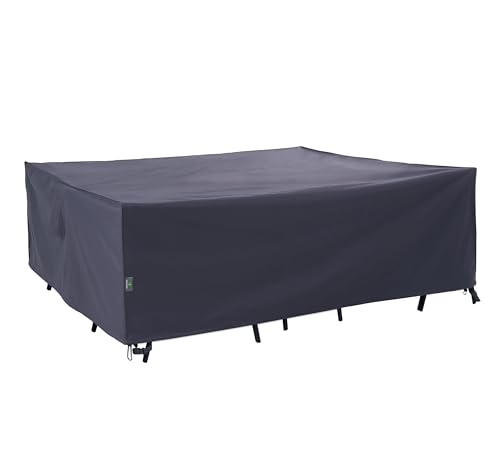
Covers can help protect finishes, but a loose cover acts like a sail and increases wind load. Use fitted, heavy-duty covers with secure straps, and remove them during high-wind events if the manufacturer recommends it. For permanent wind resistance, anchoring the furniture itself is more effective than covering it.
How do I anchor patio furniture to prevent it from blowing away?
Use furniture straps, ground anchors, or weighted bases designed for outdoor use. For tables, add sand or water weight to hollow bases where the design allows. For chairs and sofas, tether them to a fixed point or use interlocking clips to connect pieces together. Always follow the manufacturer's guidance to avoid damaging the frame.
Putting It Together
Wind-resistant outdoor furniture is a system, not a single feature. Start with a dense material and a low, wide design. Then add anchoring or weighting to cover the gap between what the piece weighs and what the wind can do. Cushions, umbrellas, and loose accessories should be stowed before forecast storms. Following that formula keeps your patio layout intact season after season.
If you are still comparing broad categories, our overview of garden furniture and our roundup of heavy outdoor furniture that won't blow away are useful starting points. For seating-specific research, explore garden seats, garden benches, and garden chairs.
Related Reading
- Heavy Outdoor Dining Furniture for Windy Areas
- Heavy-Duty Patio Furniture
- Heavy-Duty Lawn Chairs
- Heavy-Duty Patio Table with Umbrella Hole
- Heavy-Duty Outdoor Umbrella Stand with Wheels
- Garden Furniture That Can Be Left Outside All Year
- Heavy-Duty Waterproof Outdoor Storage Box
- Gas Fire Pit Table with Hidden Propane Tank