Glass Top Patio Table: The Complete Buyer's Guide
A glass top patio table brings light, elegance, and a sense of openness to any outdoor dining space. This guide explains frames, glass types, sizing, umbrella compatibility, and long-term care so you can choose with confidence.
Who this guide is for: If you have already decided that a glass top patio table fits your outdoor style and you now need clarity on materials, dimensions, and practical details, you are in the right place. We focus on the information that actually influences satisfaction after the table is on your patio.
Why a Glass Top Patio Table Stands Out
A glass surface reflects light and visually expands a small patio. Compared with opaque tops, glass keeps the base and legs visible, which makes the dining area feel airier and less crowded. That transparency is especially valuable on compact balconies and in small garden dining setups where every visual cue matters.
Glass also wipes clean quickly, resists stains from food and drinks, and does not absorb odors. The trade-offs are weight, the need for tempered safety glass, and a surface that shows water spots and fingerprints more readily than textured alternatives. Understanding these trade-offs early prevents disappointment later.
The Glass Itself: What to Look For
Tempered Glass Is Non-Negotiable
Tempered glass is heat-treated to create internal stress. If it breaks, it crumbles into small, blunt pieces rather than sharp shards. For any outdoor dining surface, tempered glass should be the baseline. Standard annealed glass is not appropriate for patio tables regardless of how thick it is.
Thickness and Edge Finish
Most quality patio tables use glass in the 5 mm to 10 mm range. Thicker glass feels more substantial and resists flexing, but the frame matters just as much. A flat-polished edge reduces the chance of chips and looks more refined than a raw cut edge. Beveled edges add visual weight and are common on premium models.
Clear, Tinted, or Frosted
- Clear glass maximizes light and shows off the frame. It shows dust and water spots most readily.
- Tinted glass (often bronze or gray) reduces glare and hides smudges. It pairs well with darker metal frames.
- Frosted or textured glass hides fingerprints and scratches best but offers less transparency and can be harder to wipe clean.
If the table sits in full sun, a tinted or slightly textured top can reduce eye strain during long lunches. If the goal is to showcase a decorative base, clear glass remains the classic choice.
Quick check before you buy
Confirm the listing states "tempered glass" explicitly. Look for a manufacturer note about edge polishing and glass thickness. If the product description is vague, treat that as a warning sign rather than a minor omission.
Frame Materials and How They Pair With Glass
The frame carries the glass and determines how the table ages outdoors. Here is how the common options compare.
| Frame Material | Market Tier | Durability | Best For |
|---|---|---|---|
| Powder-coated aluminum | Mid-range to premium | Rust-proof, lightweight, strong | Year-round outdoor use, windy patios |
| Stainless steel | Premium to luxury | Heavy-duty, corrosion-resistant | Coastal areas, high-humidity climates |
| Wrought iron | Mid-tier | Solid build, requires coating maintenance | Traditional and cottage-style patios |
| Resin or plastic composite | Entry-level | Lightweight, weather-resistant, less rigid | Occasional use, easy relocation |
| Teak or hardwood | Premium | Natural beauty, needs periodic sealing | Warm, natural design schemes |
Powder-coated aluminum is the most balanced choice for most households: it does not rust, it stays manageable in weight, and modern coatings resist chipping. Stainless steel is the high-end tier option when the table will live near salt air. Wrought iron offers timeless style but demands attention to touch up scratches before rust sets in.
If your patio is exposed to strong winds, frame weight becomes a practical concern. Heavier frames resist tipping, but you still need a stable base. For exposed locations, pair any glass table with a sturdy design and consider wind-rated covers; our guide to heavy outdoor dining furniture for windy areas covers the broader strategy.
Umbrella Holes: Practical or Optional?
An umbrella hole turns the dining table into a shaded hub for summer meals. A glass top patio table with umbrella hole must be matched with a proper base, because the umbrella's leverage in wind is significant. The base should sit beneath the table and be rated for the umbrella's canopy size, not just its pole diameter.
If you prefer flexibility, choose a table without a hole and use a cantilever umbrella that stands beside the table. That approach keeps the glass surface uninterrupted and lets you reposition shade independently. For a comparison of table-and-shade combinations, see our overview of a glass patio table and chairs with umbrella setup.
Measured Considerations for Umbrella Tables
- The hole diameter must match your umbrella pole; adapters exist but add wobble.
- The hole edge should be polished or fitted with a grommet to prevent chipping.
- Wind is the main risk: a weighted base and a closed umbrella during storms are essential.
Sizing the Table to Your Space and Guest Count
Seating capacity drives the size decision more than anything else. As a practical starting point:
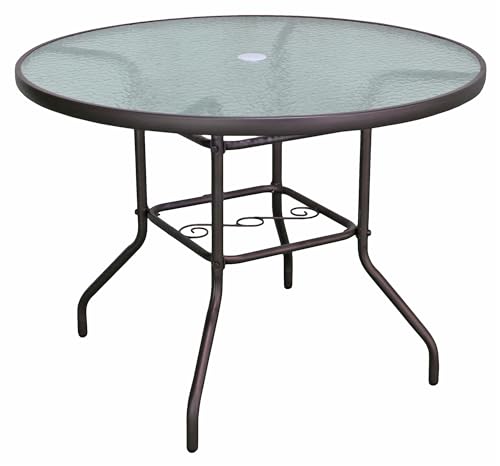
- Two to four diners: round tables around 36 to 48 inches in diameter, or compact rectangular tops.
- Four diners: a glass top patio table and 4 chairs set is a common, well-proportioned arrangement.
- Six diners: a glass top patio table and 6 chairs configuration, often around 66 x 40 inches in rectangular form.
- Angled or space-conscious layouts: a hexagon glass patio table with 6 chairs offers generous seating with a softer footprint.
Leave at least 36 inches of clearance between the table edge and walls or railings so chairs can pull out smoothly. On a balcony, measure the depth of the chair when occupied, not just the table footprint.
Shape and Style Options
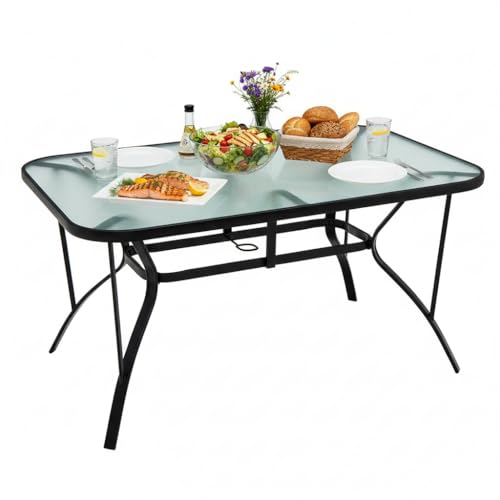
Rectangular tops suit narrow patios and formal dining lines. Round tops encourage conversation and soften small spaces. Oval designs split the difference. Among rectangular options, a glass top rectangular outdoor dining table is the most space-efficient for seating six along two long sides.
If your patio has a defined dining zone, a 66 x 40 surface is a popular middle ground; our page on the glass top patio dining table 66 x 40 covers that format in detail. For a broader comparison of glass dining formats, the glass top outdoor dining table with umbrella hole guide is a useful companion read.
Care and Maintenance That Actually Matters
Glass tops are easy to live with when a few simple habits are in place:
- Wipe spills promptly with a soft microfiber cloth to prevent sticky residue and staining at the edge.
- Use mild soap and water; avoid abrasive pads and ammonia-heavy cleaners that can cloud the surface.
- Clean the underside of the glass periodically, especially after pollen season.
- Place coasters under hot dishes; thermal shock is a real risk even with tempered glass.
- Use a fitted cover during long periods of disuse, and secure it so it does not flap against the glass.
- In freezing climates, store the glass top indoors for winter or use a rigid cover that prevents ice buildup.
The frame needs attention too. Touch up chips on painted metal promptly, and oil or seal wooden frames according to the maker's schedule. Our broader garden furniture that can be left outside all year resource explains which combinations genuinely tolerate year-round exposure.
Children and pets
Tempered glass is safe by design, but the table's stability matters just as much. Choose a base with a wide stance and avoid tables with narrow pedestals on uneven patio surfaces. A stable table is the best safety feature.
How Glass Top Tables Fit Into a Larger Patio Plan
A dining table rarely stands alone. Pairing it with complementary seating and shade creates a cohesive zone. If your patio also needs a relaxed corner, a garden furniture conversation set balances the dining area without competing for attention. For patios with a natural, softer look, wooden frames and garden chairs blend well with glass tops and greenery.
Ambient additions matter too. A garden fountain or a garden statue near the dining zone adds sound and visual interest without cluttering the table itself. Keep these elements at least a few feet from the table so chairs can move freely.
Common Mistakes to Avoid
- Ignoring the umbrella base: a table-mounted umbrella without a proper base is a wind hazard.
- Choosing glass thickness without checking the frame: a thin frame under heavy glass can flex and stress the edges.
- Overlooking sun glare: clear glass in full afternoon sun can be uncomfortable; tinted glass or a shade solution helps.
- Skipping the clearance measurement: chairs need room to pull out, and walkways need room to pass.
- Using the wrong cleaner: ammonia and abrasives dull the surface over time.
A Simple Decision Framework
To choose well, work through these questions in order:
- How many people will sit at the table regularly? This sets the size and shape.
- Will the table sit in full sun? Decide between clear and tinted glass, and whether an umbrella hole is needed.
- What is the climate? Coastal and humid environments favor aluminum or stainless steel; freezing climates favor removable glass or rigid covers.
- How much maintenance is realistic? Aluminum and glass are the lowest-effort combination; wood frames require periodic sealing.
- What is the visual goal? Clear glass for an airy look; tinted or frosted for a calmer, glare-free surface.
With those answers, the shortlist narrows quickly. A mid-range powder-coated aluminum frame with tempered clear glass and a polished umbrella hole covers the widest range of households, while premium stainless steel or luxury hardwood frames suit specific climates and design preferences.
Explore Recommended Glass Top Patio TablesFrequently Asked Questions
Yes. Tempered glass is heat-treated so it crumbles into small, blunt fragments instead of sharp shards if it ever breaks. Always confirm the table uses tempered glass rather than standard annealed glass, since only tempered glass is appropriate for outdoor use.
Most glass tops are weather-resistant, but the frame determines long-term durability. Powder-coated aluminum and stainless steel frames handle year-round exposure best. In freezing climates, cover the table or store the glass top indoors to prevent stress cracks from ice and rapid temperature swings.
An umbrella hole is optional but highly practical if you want shade over the dining area. A glass table top with a hole for an umbrella must be paired with a weighted base beneath the table so the umbrella stays stable in wind.
Wipe the surface with a soft microfiber cloth and a mild soap-and-water solution, then dry with a clean cloth to prevent water spots. Avoid abrasive pads and ammonia-heavy cleaners, which can cloud the surface over time. Clean the underside of the glass periodically as well.
A rectangular glass top patio dining table around 66 x 40 inches typically seats six comfortably. Round tables need roughly 60 inches of diameter for six seats. Always leave at least 36 inches of clearance around the table for chairs to pull out.