Glass Top Patio Table with Umbrella Hole: The Complete Buying Guide
Everything you need to choose the right glass top patio dining table with an umbrella hole — frames, glass types, shapes, sizes, stability, and long-term care, explained clearly.
START WITH THE BASICSWhy this guide exists: A glass top patio table with an umbrella hole is one of the most practical pieces of outdoor dining furniture you can own. It gives you a smooth, easy-to-clean surface, lets you add shade without a separate stand, and visually opens up a small patio. But glass top tables vary widely in frame material, glass quality, umbrella-hole reinforcement, and stability. This guide walks you through each decision so you can buy with confidence and enjoy the table for years.
What Makes a Glass Top Patio Table with Umbrella Hole Different?
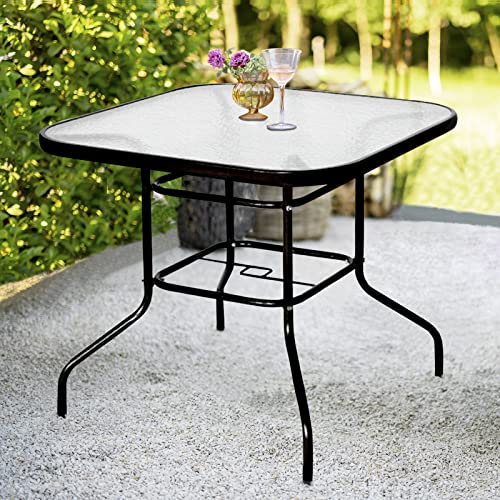
A glass top patio table with umbrella hole combines three elements: a structural frame (usually metal or aluminum), a tempered glass tabletop, and a pre-cut opening in the center that accepts a patio umbrella pole. The opening is typically reinforced with a metal grommet or collar so the umbrella does not rest directly on the glass edge.
That center hole does more than hold an umbrella. It also improves the table's versatility: you can pair the table with a cantilever umbrella, a standard market umbrella, or a lighted umbrella for evening dining. If you are still comparing table formats, our guide to the glass top patio table covers the broader category before you narrow down to umbrella-ready models.
Tempered Glass Surface
Heat-treated glass that resists impact and, if broken, shatters into small blunt fragments. Look for the word "tempered" explicitly in the product description.
Reinforced Umbrella Hole
A metal collar or grommet around the opening protects the glass edge and centers the umbrella pole for a stable fit.
Rust-Resistant Frame
Powder-coated aluminum or steel frames are the standard for outdoor durability. Aluminum resists rust well; steel needs a strong coating.
Adjustable Feet
Leveling glides compensate for uneven patio surfaces and reduce wobble, which matters on stone, concrete, and decking.
Frame Materials: What to Look For
The frame determines how stable the table feels, how long it lasts, and how much maintenance it needs. Glass top tables are available across entry-level, mid-range, and premium tiers, and the frame is usually the biggest difference between them.
Powder-Coated Aluminum
Aluminum is the most common choice for outdoor glass tables because it is lightweight, naturally rust-resistant, and easy to move when rearranging the patio. Powder coating adds a durable color finish that resists chipping. Mid-range and premium aluminum tables often use thicker gauge tubing and better welds, which noticeably reduces wobble.
Powder-Coated Steel
Steel frames feel heavier and more anchored, which is helpful in windy areas. The trade-off is that any scratch through the coating can become a rust point. High-end tier steel tables use galvanized or double-coated finishes to address this. If your patio is exposed to salt air or frequent rain, aluminum is usually the safer long-term choice.
Wood and Wicker Frames with Glass Tops
Some tables pair a glass top with a wooden or wicker base for a warmer look. These can work well on covered porches. If you want furniture that can stay outside without much fuss, compare options in our guide to garden furniture that can be left outside all year before committing to a wood-based design.
Glass Types: Tempered, Tinted, and Textured
Not all glass tops are equal. The glass type affects safety, heat buildup, and how the table looks on your patio.
| Glass Type | Best For | Key Consideration |
|---|---|---|
| Clear tempered glass | Classic look, small patios, modern settings | Shows smudges and pollen quickly; needs frequent wiping |
| Tinted or smoked glass | Sunny exposures, reducing glare | Hides surface dust better; can feel darker in shade |
| Textured or patterned glass | High-traffic family patios, slip resistance | Hides scratches and water spots; slightly harder to wipe clean |
Always confirm that the product listing states "tempered glass." If the description only says "glass top" without qualification, treat it as a red flag. Tempered glass is the baseline for outdoor safety, and reputable brands state it clearly.
Shapes and Sizes: Matching the Table to Your Space
The shape of a glass top patio table affects traffic flow, seating capacity, and how well an umbrella works. Rectangular tables are the most common for family dining, while round tables suit compact spaces and conversation-focused layouts.
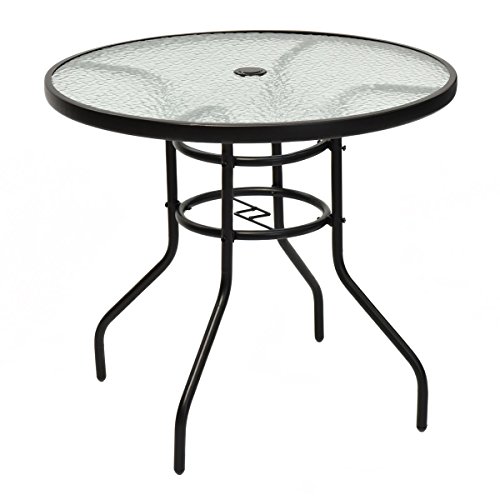
Round Glass Tables
A round table with a center umbrella hole is efficient in small spaces because there are no corners to navigate around. It typically seats four comfortably and makes the umbrella the visual centerpiece. Round tables work especially well on balconies and compact decks.
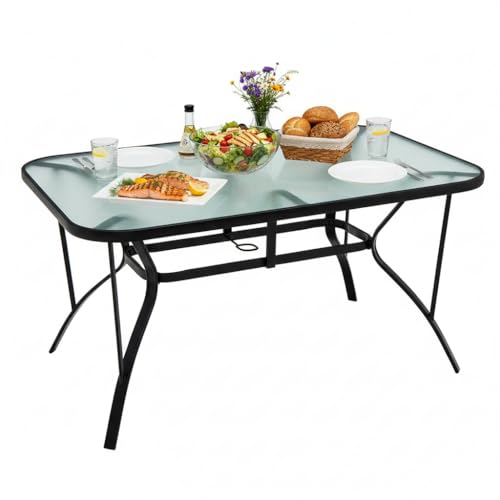
Rectangular Glass Tables
Rectangular models seat more people along the long sides and pair naturally with bench seating or matching chairs. A common mid-size format seats four to six. If you want a specific configuration, our overview of the glass top patio dining table 66 x 40 shows how that footprint fits typical patios.
Oval and Hexagonal Options
Oval tables soften the look of a long patio and reduce sharp corners. Hexagonal glass tables are a distinctive alternative that works well with a centered umbrella. If a six-sided layout appeals to you, see the hexagon glass patio table with 6 chairs for a coordinated setup.
Quick Sizing Checklist
- Allow at least 24 inches of clearance between the table edge and any wall or railing.
- Leave roughly 30 to 36 inches per seated person along the table edge.
- Confirm the umbrella hole size (commonly around 1.5 to 2 inches) matches your umbrella pole.
- Check that chairs can tuck under the table without hitting the frame or umbrella base.
- Measure your patio door swing so the table does not block access.
Stability, Wind, and Umbrella Support
An umbrella acts like a sail. Once you add one to a glass top table, wind becomes the single biggest safety consideration. The table itself needs enough mass and a wide enough base to resist tipping, and the umbrella needs a proper base or stand.
There are two common approaches. A standard market umbrella passes through the table hole and into a weighted base beneath the table. A cantilever umbrella stands separately and hangs over the table, which removes stress from the glass hole entirely. If you expect gusty conditions, our guide to heavy outdoor furniture that won't blow away is worth reading before you finalize the setup.
Close the umbrella whenever the table is unattended or when winds pick up. Even a well-weighted table can shift if the umbrella catches a strong gust. A fitted cover and a closed umbrella are the simplest protections.
Pairing the Table with the Right Chairs
The table is only half of the dining set. Chair height, arm style, and material all affect comfort and how the set looks together. For a glass top table, chairs with a slightly lighter visual profile tend to balance the reflective surface.
If you prefer a coordinated look, browse garden chairs for style options, or consider a complete glass patio table and chairs with umbrella set to avoid mismatched heights. For smaller patios, a glass top patio table and 4 chairs configuration keeps the footprint manageable. Larger families may prefer the glass top patio table and 6 chairs layout.
Care and Maintenance for Glass Top Tables
Glass top tables are easy to live with when you follow a simple routine. The goal is to protect the glass surface, keep the frame coating intact, and prevent water from sitting in the umbrella collar.
- Clean weekly: Wipe with a mild soap and water solution using a soft cloth. Avoid abrasive pads and ammonia-heavy cleaners that can dull the glass.
- Rinse pollen and debris: Pollen and bird droppings can stain if left in the sun. A quick rinse prevents buildup.
- Dry the umbrella collar: Water trapped around the hole can accelerate corrosion on steel frames. Dry it after rain.
- Inspect the frame: Touch up any chips in the powder coating promptly to prevent rust from spreading.
- Cover when idle: A fitted cover protects both the glass and the frame during off-season months.
If you want a broader maintenance routine, our glass table top with hole for umbrella reference covers care specifics for umbrella-ready glass surfaces. For seasonal protection tips across all outdoor furniture, see the weatherproofing guide.
Alternatives Worth Considering
Glass is not the only option. If you want a more forgiving surface or a different aesthetic, compare these alternatives before deciding:
- Heavy-duty patio table with umbrella hole — better suited to windy, exposed patios.
- Glass top rectangular outdoor dining table — a closer look at the most popular rectangular format.
- Glass top outdoor dining table with umbrella hole — a deeper comparison of glass dining models.
- Garden table and 6 chairs — a complete-set approach if you prefer not to match pieces individually.
- Garden table and chairs for small garden — compact layouts for tighter spaces.
Who Is a Glass Top Patio Table with Umbrella Hole Best For?
This table format suits several types of households:
- Small-patio owners: The reflective glass surface makes compact spaces feel larger, and the center umbrella adds shade without a separate footprint.
- Frequent entertainers: Glass wipes clean quickly between meals and handles spills well.
- Style-conscious buyers: Tempered glass pairs well with both modern and traditional chair designs.
- Sunny-climate households: An integrated umbrella hole means shade is always an option, not an afterthought.
It may be less ideal for households with very young children who climb on furniture, or for exposed coastal patios where salt and wind are constant. In those cases, a heavier non-glass table is usually the more practical long-term choice.
Final Buying Checklist
Before You Check Out, Confirm:
- The listing explicitly states tempered glass.
- The umbrella hole is reinforced with a metal collar or grommet.
- The frame is powder-coated aluminum or well-coated steel.
- The hole diameter matches your umbrella pole.
- The table footprint fits your patio with room for chairs to pull out.
- The table includes leveling feet or adjustable glides.
- You have a plan for a weighted umbrella base or a cantilever umbrella.
- You know the seating capacity and have confirmed it against your household size.
- You have a cover sized to the table for off-season storage.
Frequently Asked Questions
Is a glass top patio table with umbrella hole safe for outdoor use?
Yes, when the table uses tempered glass and a reinforced frame. Tempered glass is designed to withstand outdoor temperature swings and, if it ever breaks, shatters into small blunt pieces rather than sharp shards. Always confirm the table specifies tempered glass and check the weight rating of the umbrella hole.
What size umbrella hole does a glass patio table have?
Most glass top patio tables with an umbrella hole use a standard opening of roughly 1.5 to 2 inches in diameter, which fits the majority of market umbrellas. Measure the hole and match it to your umbrella pole before purchasing, and confirm whether a reducer ring is included.
How do I protect a glass top table from wind and weather?
Use a fitted waterproof cover when the table is not in use, keep the umbrella closed during high winds, and place the table in a sheltered spot or use a heavy base for the umbrella. Clean the glass with a mild soap solution and avoid abrasive pads that can scratch the surface.
Can a glass top patio table stay outside all year?
Many glass top tables are designed for year-round outdoor use, provided the frame is powder-coated or rust-resistant and the glass is tempered. In regions with heavy snow or freezing conditions, storing the glass top indoors or using a reinforced cover extends its lifespan significantly.
How many people can sit at a glass top patio table with umbrella hole?
A rectangular glass top table in the mid-size range typically seats four to six, while larger rectangular and oval models can seat six to eight. Round glass tables generally seat four comfortably. Always check the manufacturer's recommended seating capacity and allow extra room for chairs to pull out.