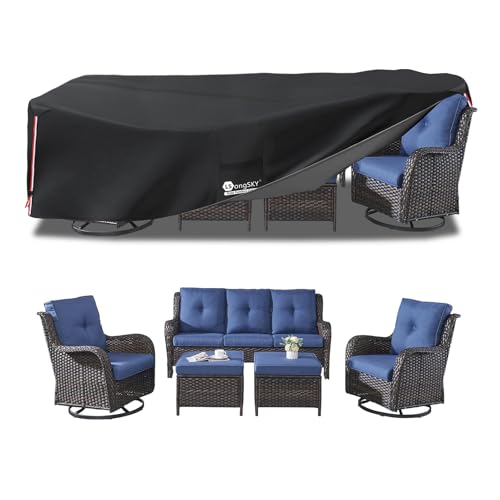
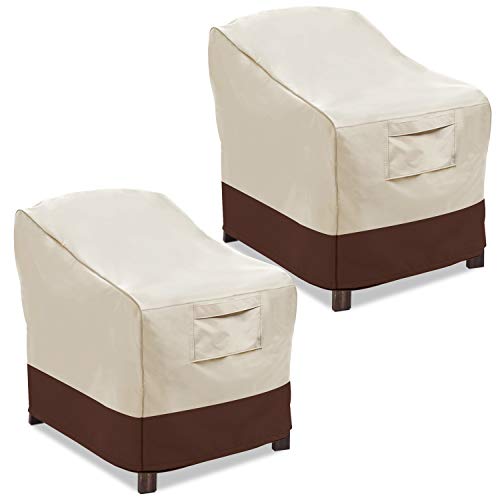
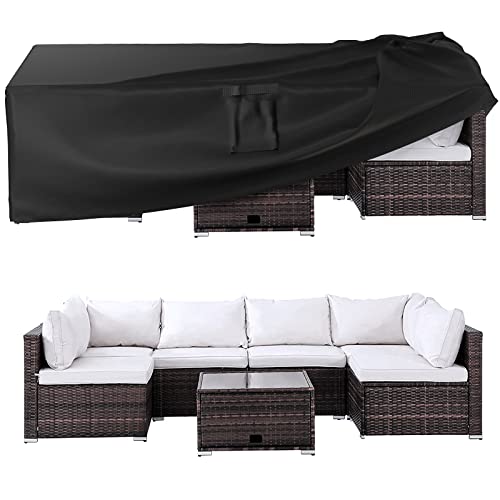
Heavy Duty Outdoor Patio Furniture Covers
Protect your outdoor investment with covers built for rain, wind, sun, and everything in between. Here is what to look for before you buy.
EXPLORE THE GUIDEWhy Heavy Duty Covers Matter More Than You Think
Patio furniture sits in one of the harshest environments a homeowner owns. UV radiation breaks down fabric and resin, rain seeps into seams and cushions, wind drives debris against frames, and seasonal temperature swings stress every material. A light dust cover handles pollen and a few leaves. It does not handle the full reality of an exposed patio.
Heavy duty outdoor patio furniture covers are engineered differently. They combine a denser woven fabric, a waterproof backing, reinforced seams, and a fastening system designed to stay put in gusty conditions. The goal is not just keeping furniture clean — it is preserving structural integrity, cushion foam, and finish over multiple seasons.
This guide walks through the materials, construction details, fit decisions, and maintenance habits that separate a cover that lasts from one that fails after a single storm season. If your furniture is exposed to weather for most of the year, the choice of cover is as important as the furniture itself.
Key takeaway: A heavy duty cover is defined by four factors — fabric density, waterproof backing, seam construction, and fastening security. Miss any one of them and the cover underperforms in real weather conditions.
What Defines a Truly Heavy Duty Cover
Marketing language is loose. "Heavy duty" appears on covers that are little more than thin polyester. The practical way to evaluate a cover is to look at specific construction and material properties rather than the label on the packaging.
Fabric Density and Denier
Denier measures the thickness of the individual yarn used in the fabric. Higher denier generally means a denser, more abrasion-resistant weave. Entry-level covers often use lighter fabric that tears at stress points. Mid-range covers step up to a denser weave with a tighter construction. Top-tier covers use high-denier fabric combined with a coating or laminate that resists UV degradation over years, not months.
Waterproofing and Breathability
Waterproofing is not binary. Water-resistant fabric sheds light rain but saturates over time. Waterproof covers use a coated or laminated backing that blocks liquid water entirely. The trade-off is condensation: a fully sealed cover can trap moisture underneath, which is why serious heavy duty covers add ventilation panels or breathable membrane layers. The best balance is a waterproof shell with controlled airflow so trapped humidity escapes rather than condensing on furniture surfaces.
Seam Construction and Reinforcements
Seams are the first failure point on any cover. Basic covers use simple stitched seams that wick water. Mid-range covers use bound or double-stitched seams for strength. Top-tier covers add taped or sealed seams and reinforced stress points at corners, tie-downs, and the top ridge where water pools. If a cover claims waterproofing but has exposed stitching along the seams, that claim is incomplete.
Fastening Systems
A cover that lifts in wind is worse than no cover at all — it abrades the furniture and eventually tears itself apart. Look for drawstring hems, adjustable straps, buckles, or elasticized corners. High-end covers often include a combination: a drawstring base plus straps that anchor under the furniture. For windy areas, this fastening detail is the single most important feature after waterproofing.
UV Resistance
Sun exposure degrades fabric faster than rain in many climates. UV-stabilized fabric and solution-dyed materials hold color and tensile strength longer. A cover that fades and becomes brittle after one summer is not heavy duty regardless of its initial thickness. Check whether the fabric is treated for UV resistance and whether the manufacturer specifies a lifespan under sun exposure.
Material Comparison by Tier
The table below compares common cover materials by market tier rather than by any numerical figure. Use it to understand relative positioning and typical performance expectations.
| Tier | Typical Material | Water Resistance | Best For |
|---|---|---|---|
| Entry-level | Lightweight polyester or PE fabric | Water-resistant, not waterproof | Covered porches, dust and pollen protection |
| Mid-range | Denser woven polyester with PU coating | Waterproof with basic seam treatment | Exposed patios with moderate rain and sun |
| Premium | High-denier fabric with laminated waterproof backing | Waterproof with taped seams and vents | Year-round outdoor exposure in mixed climates |
| Commercial-grade | Heavy coated fabric, reinforced panels, marine-grade stitching | Waterproof, wind-rated, UV-stabilized | Coastal areas, high-wind zones, rental properties |
Tier descriptors reflect relative market positioning and construction quality, not numerical figures.
For furniture that stays outside all year, mid-range and premium covers are the practical starting point. Entry-level covers make sense only when furniture already sits under a roof or awning. Commercial-grade covers are worthwhile when wind exposure is severe or when furniture is a long-term investment that must survive coastal salt air and storms.
If your furniture is designed to remain outdoors year-round, the cover choice should match that intent. Our guide to garden furniture that can be left outside all year explains how furniture material and cover performance work together.
Fit and Sizing: The Most Common Mistake
Most cover failures trace back to fit. A cover that is too large billows in wind, collects water in sagging pockets, and flaps against furniture edges until the fabric wears through. A cover that is too small strains at seams, cannot drape over corners, and leaves gaps where rain enters.
The correct approach is to measure the furniture at its widest points — including armrests, back height, and any protruding elements like umbrella holes or table extensions — and then select a cover sized to those dimensions with a small allowance for drape. Adjustable drawstrings and straps exist precisely to take up that allowance without creating slack.
Shape matters as much as size. A cover designed for a sofa has a different cut than one designed for a dining set or a chaise lounge. Using a generic rectangular cover on an irregular piece leaves exposed areas. If you are covering multiple pieces, consider whether individual covers or a grouped cover better suits your layout. For larger seating arrangements, the same sizing logic applies to garden furniture conversation sets, where a single cover over a grouped set can be more practical than several separate covers.
Ventilation placement also interacts with fit. Covers with mesh vents near the top allow rising humid air to escape. If the cover fits too tightly against the furniture, airflow is blocked and condensation becomes more likely. A slight drape at the base, combined with a secured hem, gives moisture an exit path without letting wind underneath.
Building a Complete Protection Strategy
A cover is one layer of protection, not the entire strategy. Furniture that is cleaned before covering, stored with airflow, and inspected after storms lasts significantly longer than furniture that is covered dirty and forgotten.
Before Covering
- Clean and dry furniture thoroughly. Trapped dirt and moisture under a cover accelerate mold and finish damage.
- Remove cushions when possible and store them separately in a dry space. Cushions trapped under a cover in humid conditions are a common source of mildew.
- Check that furniture surfaces are free of sharp edges or debris that could abrade the cover from the inside.
During the Season
- Inspect after heavy rain or wind. Pooling water on top of a cover should be cleared; standing water stresses seams and eventually finds a path through.
- Re-tension straps and drawstrings periodically. Fasteners loosen with temperature changes and wind movement.
- Check ventilation panels for blockages from leaves or debris.
Long-Term Care
- Clean covers according to manufacturer instructions. Mild soap and water are typical; harsh detergents degrade waterproof coatings.
- Allow covers to dry fully before folding or storing for the season. Folded damp fabric develops mildew quickly.
- Replace covers when seams separate or the waterproof backing delaminates. A failing cover can trap moisture and cause more harm than temporary exposure.
For furniture with specific material concerns, pair cover use with the right maintenance routine. Wood furniture, for example, benefits from sealing before it is covered for extended periods. Our outdoor care section covers cleaning, sealing, and seasonal storage in more depth.
Common Mistakes to Avoid
- Buying by furniture type only. A cover labeled for "patio tables" may not fit your table's shape or umbrella hole configuration. Measure first.
- Ignoring wind. In exposed areas, a cover without a secure fastening system will lift, flap, and fail. Prioritize straps and drawstrings over decorative features.
- Confusing water-resistant with waterproof. These are different performance levels. For exposed patios, waterproof with sealed seams is the appropriate standard.
- Covering wet furniture. Trapping moisture under a waterproof cover creates a humid micro-environment that damages cushions and promotes mold.
- Never inspecting. Covers are consumables. Periodic checks catch seam failures and pooling before they become furniture damage.
If your furniture is particularly vulnerable to wind, our guide to heavy outdoor furniture that won't blow away complements cover selection with furniture-weight and anchoring considerations.
Frequently Asked Questions
What makes a patio furniture cover heavy duty?
Heavy duty covers typically combine a high-denier woven fabric, a waterproof backing layer, reinforced seams, and a secure fastening system. The combination of fabric weight, coating quality, and construction details separates a true heavy duty cover from a basic dust cover.
Are waterproof and water-resistant covers the same?
No. Water-resistant fabric slows moisture penetration but can eventually let water through during prolonged rain. Waterproof covers use a sealed or coated backing that blocks water entirely. For heavy duty use in wet climates, a waterproof rating with taped seams is the safer choice.
How should a heavy duty cover fit my patio furniture?
A proper fit allows the cover to drape slightly over the edges without billowing. Too loose and wind will catch it; too tight and moisture cannot escape and seams strain. Look for covers sized to your furniture dimensions with adjustable drawstrings or straps to fine-tune the fit.
Can I leave heavy duty covers on all year?
Many heavy duty covers are designed for year-round use, but performance depends on ventilation. Covers with breathable vents reduce condensation buildup, and periodic inspection after storms helps catch pooling water or trapped debris early.
Ready to Protect Your Patio Furniture?
Explore our recommended heavy duty covers below. Compare features, check availability, and choose the cover that matches your furniture dimensions and climate.
VIEW RECOMMENDED COVERS