Garden Seat Buying Guide: Find the Perfect Spot to Rest
A garden seat is more than furniture — it is an invitation to pause. Learn how to choose the right bench, chair, stool or lounger for your outdoor space, so every break in the garden feels intentional.
Why a garden seat matters: Most gardens are designed to be looked at, but the best ones are designed to be used. A thoughtfully placed garden seat turns a passing glance into a daily ritual — a morning coffee, an afternoon read, or a quiet moment after work. This guide walks you through the types, materials, sizing and placement decisions that separate a seat you rarely use from one you never want to leave.
Start With How You Will Actually Use It
Before comparing styles or materials, define the seat's job. Garden seats fall into a few broad use patterns, and each points toward different designs:
- Short rests and pauses — a bench or stool along a path, near a border, or at the end of a lawn. Comfort matters less than placement and quick accessibility.
- Long relaxation sessions — a lounger, recliner or deep-seated chair in a shaded corner. Cushioning, recline and support become the priority.
- Social seating — chairs grouped around a table or conversation area. Here you will want matching pieces, consistent seat heights and enough room to turn toward one another.
- Task-adjacent seating — a stool or bench near a potting area, grill or fire pit. Durability and easy cleaning outrank plush comfort.
If you are still mapping out the broader layout, our guide to garden furniture covers how seating fits into a complete outdoor scheme, while the conversation set guide helps if you plan to seat several people together.
Types of Garden Seats Compared
Each garden seat category has a distinct personality. The table below summarizes how they differ; the sections that follow go deeper.
Garden Bench
The most iconic garden seat. Benches suit long sightlines, borders and focal points. Two-seat models fit most gardens; three-seat versions anchor larger lawns. Explore garden benches for style options.
Garden Chair
Moveable and easy to regroup. Chairs work for reading nooks, paired seating, or around a table. Stackable and folding designs suit smaller gardens. See garden chairs for the full range.
Garden Stool
Small footprint, big flexibility. Stools double as side tables, footrests or extra party seating. Wheeled versions make repositioning effortless — see garden stools with wheels.
Garden Lounger
Built for recline and long sessions. Loungers need more depth and clearance than chairs. Compare styles in our garden loungers overview.
Knee Bench & Working Seat
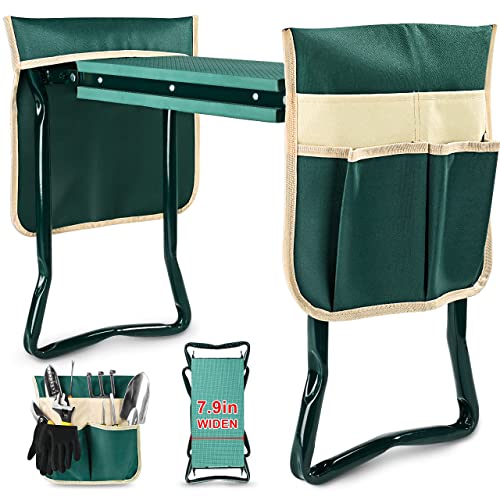
Task-focused seats for planting and tending. Not for lounging, but invaluable for gardeners who spend hours in borders. See knee benches and working benches.
Gardening Seat With Wheels
Rolling seats combine a perch with storage or tool trays, ideal for long border work. Explore gardening seats with wheels and gardening carts with seats.
Benches: The Backbone of Garden Seating
A bench earns its place through presence. Long wooden or metal benches define the end of a lawn, frame a view, or sit beneath a pergola. When choosing, look at back height (a low back looks elegant but offers less support), armrests (helpful for older users and for resting a cup), and leg style (slatted legs suit traditional gardens, sled or hairpin legs suit modern ones). A glider bench adds gentle motion and suits porches or sheltered patios.
Chairs: Flexibility Above All
Chairs give you the freedom to rearrange. A pair of chairs and a small side table form an instant conversation nook; a single chair angled toward a border becomes a reading spot. Folding and stackable chairs are the practical choice for compact gardens, while dining-height chairs pair with a garden table for al fresco meals.
Stools: Small but Mighty
Never underestimate the stool. It slides under a table when not in use, acts as a plant stand, and provides overflow seating at gatherings. A garden stool in a weatherproof material is one of the most hardworking pieces you can own.
Loungers: Committing to Comfort
Loungers ask for more room but reward you with genuine rest. Consider recline positions, whether the back adjusts in steps or continuously, and how easily the piece folds or stores. A lounger placed in dappled shade with a view is the single best upgrade many gardens can make.
Materials: The Long-Term Decision
Material determines how a seat ages, how often it needs attention, and how it feels on a hot or cold day. The comparison below groups materials by market tier so you can match expectations to your climate and maintenance habits.
| Material | Tier | Best For | Maintenance |
|---|---|---|---|
| Teak & dense hardwood | Premium tier | Long-term investment pieces; traditional and contemporary gardens | Occasional oiling; weathers to silver if left untreated |
| Powder-coated aluminum | Mid-range | Low-maintenance seating; coastal and rainy climates | Wipe clean; rust-proof finish resists corrosion |
| HDPE (recycled plastic) | Mid-tier | Year-round outdoor use; busy family gardens | Soap and water; no sealing required |
| Wicker & rattan (natural or synthetic) | Entry-level to mid-range | Sheltered patios, porches, decorative corners | Synthetic weaves wipe clean; natural rattan needs cover |
| Cast aluminum | High-end tier | Ornate traditional styling with solid build | Minimal; touch up paint if chipped |
| Steel with weather-resistant coating | Essential tier to mid-range | Budget-conscious setups in dry climates | Inspect for chips; store or cover in wet seasons |
For gardens exposed to wind and rain, prioritize aluminum, HDPE or treated hardwood. If your seat will live on a covered porch, wicker and rattan become far more viable. The guide to garden furniture that can be left outside all year is a useful cross-check before committing.
Sizing and Clearance: Getting the Fit Right
Most garden seat mistakes are sizing mistakes. Use these rules of thumb as a starting point:
- Single chair: allow roughly 2.5 feet of width and 30 inches of depth, plus 24–30 inches of clearance in front for legs and movement.
- Two-seat bench: plan for about 4 feet of width. Three-seat benches run closer to 5–6 feet.
- Lounger: expect 6–7 feet of length when fully reclined — measure the recline footprint, not just the folded size.
- Path-side stool or bench: keep at least 18 inches clear on the walking side so the seat does not become an obstacle.
In tight spaces, a garden table and chairs for a small garden paired with a folding stool covers dining and overflow seating without crowding the footprint.
Placement: Where a Garden Seat Earns Its Keep
The right seat in the wrong spot goes unused. Place seating where the garden already draws you:
- At a focal point — facing a garden fountain, a statue, or a long view. Seating frames what you want to look at.
- In dappled shade — beneath a tree or pergola for reading and long sessions. Full afternoon sun shortens any visit.
- Along circulation routes — the end of a path, a corner where two borders meet, or beside a gate. Seats on the way to somewhere get used.
- Near activity — beside a garden table for dining, or close to a fire pit for evening gatherings.
- Away from standing water — low spots that collect rain will shorten the life of any seat, wooden or metal.
If your garden has a dining zone already, a garden set may cover the social seating, freeing you to place a single bench or lounger purely for quiet moments. For larger plots, a garden table and six chairs anchors entertaining while individual seats scatter around the garden.
Comfort Details That Matter More Than Looks
Style sells a seat; comfort keeps it in use. Prioritize these details:
- Seat height: 17–18 inches suits most adults for dining and general sitting; lower benches (15 inches) feel relaxed but are harder to rise from.
- Seat depth: 18–20 inches is comfortable for most; deeper seats need cushions or a backrest angle to prevent slouching.
- Back support: a gentle recline of 10–15 degrees is more comfortable for long sessions than a rigid upright back.
- Armrests: genuinely useful for rising, for holding a drink, and for older users. Do not dismiss them as decorative.
- Cushions: quick-dry foam and solution-dyed fabrics survive weather far better than standard upholstery. Removable covers extend life.
Weather Protection and Longevity
Even weather-resistant seats benefit from basic care. Cover cushions when not in use, store or cover pieces during severe storms, and inspect fixings and joints at the start of each season. Wooden seats appreciate an annual clean and occasional oiling; metal seats need only a wipe and a check for chips in the coating. If your garden is windy, favor heavier frames or add weighted bases — the heavy-duty patio furniture guide covers stability in exposed sites.
Quick Buying Checklist
- Define the use: short rest, long relaxation, social seating, or task work.
- Measure the footprint and the clearance around it before shortlisting.
- Choose the material based on climate, shelter and maintenance willingness.
- Check seat height, depth and back angle for the people who will use it most.
- Confirm weather rating if the seat stays outside year-round.
- Place it where the garden already draws you — focal points, shade, and paths.
- Plan storage for cushions and covers before the first storm.
Frequently Asked Questions
What is the best material for a garden seat?
Teak and other dense hardwoods offer the longest lifespan when maintained, while powder-coated aluminum and HDPE are the most weather-resistant low-maintenance options. Wicker and rattan suit sheltered spots, and cast aluminum delivers traditional styling with solid durability.
How do I choose the right size garden seat?
Measure your available footprint first, then allow at least 24 to 30 inches of clearance around the seat for comfortable movement. A two-seat bench typically needs about four feet of width, while a single garden chair needs roughly two and a half feet.
Can garden seats stay outside all year?
Many modern garden seats are designed for year-round exposure, particularly aluminum, HDPE and treated hardwood models. Check the manufacturer's rating, and use covers or store cushions during harsh weather to extend the life of the piece.
Where should I place a garden seat?
Place garden seats where you will actually use them: near a focal point such as a fountain, in dappled shade for reading, along a path for resting, or beside a table for dining. Avoid low spots that collect water and full afternoon sun unless shade is provided.
Ready to Choose Your Garden Seat?
Browse our curated selection of garden seating and outdoor products, hand-picked for durability, comfort and design.
Explore Garden Seating Options