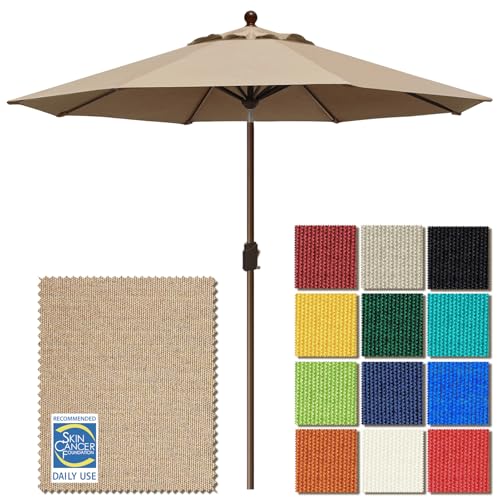
Heavy Duty Wind Resistant Patio Umbrella: The Complete Buying Guide
A sturdy umbrella transforms a windy patio from unusable to inviting. This guide explains exactly what separates a true heavy duty wind resistant patio umbrella from an ordinary shade canopy, so you can choose with confidence.
Explore Buying CriteriaWhy this guide matters: Most umbrella failures happen at the frame joints, the hub, or the base — not because the canopy fabric was poor. If your patio catches crosswinds, or if you simply want an umbrella that lasts through many seasons, you need to evaluate the structural system as a whole. This guide walks you through each component in a practical, decision-oriented way.
What Makes an Umbrella Truly Wind Resistant?
Wind resistance is not a single feature — it is the result of several systems working together. When shoppers search for a heavy duty wind resistant patio umbrella, they are really looking for an umbrella that manages four forces: lift, torque, oscillation, and fatigue. Each of the following components plays a role in managing those forces.
1. The Frame and Pole
The frame is the skeleton of the umbrella, and in windy conditions it takes the brunt of the stress. Heavy duty umbrellas typically use thicker aluminum or high-grade steel ribs, reinforced joints, and a larger hub assembly. Aluminum is the preferred material for wind-resistant designs because it resists corrosion while remaining relatively light. Some premium frames use fiberglass or composite ribs, which flex slightly under gusts instead of snapping.
- Rib count: More ribs generally distribute stress more evenly. Eight ribs is common; some heavy duty models use more for larger canopies.
- Rib thickness and profile: Thicker, shaped ribs resist bending better than flat, thin ribs.
- Hub design: A reinforced hub with metal components resists the twisting forces that fatigue cheaper plastic hubs.
- Pole diameter: A larger pole diameter adds rigidity and reduces oscillation at the base.
2. The Canopy Fabric
The fabric itself contributes to wind performance. A taut, well-tensioned canopy catches less wind than a loose one, and solution-dyed fabrics tend to hold their shape and tension longer. Fabric weight matters too: heavier fabrics are generally more durable, but the most important factor is how the fabric is attached to the ribs. Reinforced pockets and double-stitched seams prevent the canopy from tearing away at the attachment points.
For a broader look at outdoor furniture that stands up to the elements, see our guide to garden furniture that can be left outside all year.
3. Venting and Wind Flow
A wind vent (or vented canopy) is one of the most effective wind-resistance features. The vent allows air to pass through the top of the canopy instead of lifting the entire umbrella. Single-wind vents are common; double-wind vents provide even better airflow and are often found on top-tier and commercial-grade umbrellas. Some designs also use a wind-resistant "sail" cut, which channels air around the canopy rather than trapping it.
4. The Base and Anchoring System
No canopy is wind resistant if the base slides or tips. The base is arguably the most overlooked component in wind performance. Heavy duty bases use dense materials such as cast concrete, granite, or water-fillable HDPE with a wide footprint. For cantilever umbrellas, the base must be substantially wider and heavier because the offset arm creates additional leverage. If your patio is exposed, consider an outdoor umbrella stand with wheels that can be locked in place — it combines mobility with a stable footprint.
5. Tilt and Rotation Mechanisms
Tilt mechanisms add convenience, but they also add joints that can loosen over time. On a heavy duty umbrella, look for metal tilt hinges and locking collars rather than plastic friction joints. A robust crank and collar system keeps the canopy locked at the desired angle, which reduces flapping in gusty conditions.
Center-Pole vs. Cantilever: Which Handles Wind Better?
Both styles can be genuinely wind resistant, but they fail in different ways and require different anchoring strategies.
Center-pole market umbrellas place the load directly over the base, which is inherently stable when the base is heavy enough. They are easier to secure and generally simpler to maintain. The trade-off is that the pole occupies the center of the table, which can limit seating flexibility. For dining areas, a center-pole design paired with a glass-top patio table with an umbrella hole is a classic, stable combination.
Cantilever umbrellas hang the canopy from an offset arm, freeing the space beneath. This is excellent for lounging areas and sectional seating. However, the offset arm creates leverage that amplifies wind force on the base. A heavy duty wind resistant cantilever patio umbrella must therefore use a wider, heavier base and a reinforced arm joint. When properly anchored, cantilever models can perform very well — but they demand more attention to base weight and placement.
Practical rule of thumb
If your patio is a dining space with a fixed table, a center-pole umbrella with a heavy base is usually the simplest route to wind stability. If your priority is open, unobstructed lounging space, choose a cantilever model only if you are prepared to invest in a substantial base and anchor it correctly.
Comparing Umbrella Tiers by Build Quality
Rather than focusing on numbers, it helps to think about umbrellas in terms of build tiers. The table below summarizes how each tier typically performs in windy conditions. Use it as a framework, then verify the specific features of any model you consider.
| Tier | Frame & Ribs | Canopy & Venting | Best For |
|---|---|---|---|
| Entry-level | Thinner aluminum or steel ribs, basic hub, smaller pole diameter | Standard fabric, single vent or no vent | Sheltered patios with occasional light breeze |
| Mid-range | Reinforced aluminum ribs, metal hub components, larger pole | Solution-dyed fabric, single wind vent, reinforced pockets | Open patios with regular afternoon breezes |
| Premium | Thick aluminum or fiberglass ribs, heavy-duty hub, locking tilt collar | Heavy solution-dyed fabric, double wind vent, double-stitched seams | Exposed patios and coastal areas with frequent gusts |
| Commercial-grade | High-grade steel or thick aluminum, welded joints, oversized hub | Marine-grade fabric, double vent, replaceable canopy panels | Hospitality settings, windy rooftop terraces, year-round use |
Notice that the jump from mid-range to premium is mostly about reinforcement and venting rather than cosmetic differences. If wind is your primary concern, that is the tier transition worth prioritizing. The descriptors above are consistent throughout this guide so you can compare models fairly.
Base Weight and Anchoring: The Deciding Factor
Even a premium canopy will tumble if the base is inadequate. Wind resistance is fundamentally a balance between the canopy's lift and the base's resistance. Here is how to think about anchoring for different scenarios.
For center-pole umbrellas
- Use a base that is rated for the canopy span of your umbrella. Wider canopies require heavier bases.
- Place the base on a firm, level surface. Loose gravel or soft turf reduces stability.
- If the umbrella passes through a table, ensure the table itself is stable and the umbrella collar is tightened.
For cantilever umbrellas
- Choose a base with a wide footprint, ideally one that can be weighted with water or sand.
- Position the base so the arm extends over the seating area, not toward an open edge where wind can catch it.
- Use the locking mechanism on wheeled bases whenever the umbrella is in use.
For exposed and coastal patios
If your patio is on a rooftop, a beachfront, or an open field, consider a permanent or semi-permanent anchoring solution. Some heavy duty umbrellas accept ground sleeves or bolt-down plates. If you cannot anchor permanently, a very substantial weighted base combined with a wind vented canopy is the next best option. For more context on stabilizing outdoor furniture in general, see our article on heavy outdoor furniture that won't blow away.
Feature Checklist Before You Buy
Use this checklist when evaluating any wind resistant umbrella
- Reinforced ribs and hub: Look for metal components at the hub and thick ribs with a shaped profile.
- Wind vent: A single or double vent is essential for lift reduction.
- Solution-dyed canopy fabric: Holds tension and color better over time.
- Double-stitched seams and reinforced pockets: Prevents canopy tear-away at stress points.
- Metal tilt collar and crank: Plastic friction joints loosen and flap.
- Substantial base: Rated for your canopy span, with a wide footprint.
- Corrosion-resistant finish: Powder-coated aluminum or rust-proof hardware for coastal use.
- Warranty coverage on frame: A longer frame warranty signals confidence in build quality.
Care, Storage, and Wind Etiquette
A wind resistant umbrella is designed for breezy conditions, not storms. Closing the umbrella when strong gusts are forecast protects both the canopy and the frame. Store the canopy dry to prevent mildew, and check the hub and tilt joints at the start of each season for loose fasteners. If you leave furniture outdoors year-round, pair your umbrella with heavy duty waterproof patio furniture covers to protect surrounding pieces.
For dining setups that incorporate an umbrella, our guide to heavy duty patio tables with umbrella holes explains how table stability complements umbrella anchoring. If you are also considering a beach umbrella for travel, the wind resistant beach umbrella guide covers portable options.
Frequently Asked Questions
What makes a patio umbrella wind resistant?
A wind resistant patio umbrella combines a reinforced frame, a wind-vented canopy, secure ribs, and a weighted base or anchoring system. These elements work together to reduce lift, distribute stress, and keep the umbrella stable in gusty conditions.
Is a cantilever umbrella better in wind than a market umbrella?
It depends on the design. Heavy duty wind resistant cantilever umbrellas with a wide weighted base and a robust offset arm can perform well, but a center-pole market umbrella with a properly anchored base is often simpler to stabilize. The key factor is the anchoring system and frame reinforcement, not the style alone.
Should I close my patio umbrella during high winds?
Yes. Even the most robust wind resistant umbrella should be closed and secured when storms or very strong gusts are expected. A wind resistant umbrella is designed to handle breezy conditions, not extreme weather. Closing it protects both the canopy and the frame.
How much weight does a wind resistant umbrella base need?
The required base weight depends on the umbrella span, the pole material, and your local wind exposure. As a general principle, wider canopies and offset cantilever designs need substantially heavier bases than compact center-pole umbrellas. Always follow the manufacturer's recommended minimum base weight for your specific model.
Ready to compare models?
Use the checklist above to narrow down your options, then browse our recommended heavy duty wind resistant patio umbrellas below. Each selection is evaluated for frame reinforcement, venting, and anchoring compatibility.