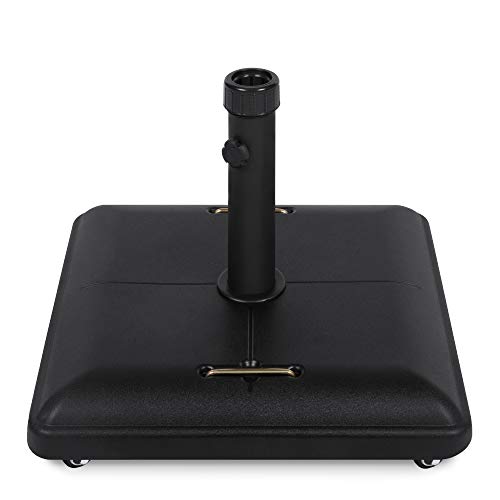
Heavy Duty Outdoor Umbrella Stand with Wheels: Complete Buying Guide
A stable umbrella starts at the base. Learn how weighted, wheeled stands keep your patio umbrella upright, easy to reposition, and ready for every season.
Why a Heavy Duty Umbrella Stand with Wheels Matters
A patio umbrella is only as reliable as the base beneath it. A lightweight stand may seem fine on a calm day, but a sudden gust can tip the entire setup, damage the canopy, or injure someone nearby. A heavy duty outdoor umbrella stand with wheels solves two problems at once: it provides the ballast needed to hold the umbrella steady, and it lets you reposition shade across your deck without lifting a dead weight.
If you are still planning the rest of your outdoor setup, our broader guide to garden furniture can help you coordinate seating, tables, and shade into one cohesive space. For windy locations, pair a weighted base with a heavy duty wind resistant patio umbrella so the canopy and the stand work together.
How Wheeled Umbrella Stands Work
Most heavy duty stands use one of three designs. Understanding the difference helps you match the stand to your umbrella type and your patio surface.
Water-fill or sand-fill bases
These hollow bases accept water or sand as ballast. Water is convenient because it can be drained before moving, while sand provides more concentrated weight. Many models include a fill cap and a drain plug, and some combine both materials for maximum stability.
Plate-weighted bases
Cast iron or steel plates bolt onto a central hub. They are extremely stable and resistant to tipping, but they are heavier to move even with wheels. Look for retractable casters that lift the plate slightly off the ground while rolling.
Cantilever and offset bases
Offset umbrellas place the pole to the side, which shifts the center of gravity. These stands typically require a cross-shaped or square base with locking wheels and a substantial ballast capacity. If you are considering an offset model, review our guide to a heavy duty wind resistant cantilever patio umbrella before choosing a base.
Comparing Umbrella Stand Tiers
Instead of shopping by numbers alone, it helps to think in terms of product tiers. The table below uses a consistent classification so you can compare stands by build quality, mobility, and intended use.
| Tier | Typical Build | Wheel System | Best For |
|---|---|---|---|
| Entry-level | Resin or plastic water-fill base | Small casters, often non-locking | Small canopies on sheltered balconies |
| Mid-range | Powder-coated steel with water and sand capacity | Locking casters or two retractable wheels | Standard patio tables and moderate wind |
| Premium | Cast iron or high-grade steel plate base | Four locking wheels with lift mechanism | Large canopies and exposed decks |
| Commercial-grade | Reinforced steel frame with heavy ballast chamber | Heavy-duty swivel casters with brakes | Restaurants, pool decks, and high-wind areas |
Tiers are relative to one another, not absolute. A well-specified mid-range stand can outperform a poorly built premium model, so check the ballast capacity, wheel locking mechanism, and finish quality rather than the label alone.
Key Features to Check Before Buying
Ballast capacity and fill type
Check whether the base accepts water, sand, or both. Water is lighter per volume but easier to drain; sand is denser and stays put. Some stands ship with a fill indicator so you know when the chamber is full. Match the capacity to your umbrella's recommended base weight.
Wheel design and locking
Locking casters are essential. Once the stand is in position, the wheels should lock so the base cannot roll. Retractable wheels that lift the base off the ground are ideal because the base then rests on a flat foot for maximum grip. Avoid stands with tiny plastic wheels that sink into gravel or crack under load.
Pole compatibility
Measure your umbrella pole diameter before ordering. Most stands use a collar or reducer rings to fit poles from roughly 1.5 to 2 inches. A loose fit causes wobble even with a heavy base, so use the correct reducer ring.
Material and finish
Powder-coated steel and cast iron resist rust and hold up to sun exposure. Aluminum is lighter and corrosion-resistant, which suits coastal patios. Whatever the material, look for sealed welds and a rust-proof finish. For year-round setups, see our guide to garden furniture that can be left outside all year.
Footprint and surface
Cross-shaped bases spread weight over a wider area and suit wooden decks. Square plate bases work well on concrete and stone. On a sloped or uneven patio, choose a stand with adjustable feet or a wheel system that locks firmly.
Matching the Stand to Your Umbrella and Table
The stand should complement the table it sits under or beside. A glass top patio table with umbrella hole relies on a base that fits cleanly beneath the table without blocking legroom. If your table already has a hole, confirm the stand's height and hub diameter clear the table's understructure.
For dining setups, a base with a low profile keeps chairs from bumping the wheels. For lounge areas, a taller cantilever base may be more practical. If you are building a full dining set, browse glass patio table and chairs with umbrella options to see how bases are typically paired. And if you plan to move the umbrella between the patio and the lawn, a wheeled stand saves effort compared with a fixed plate.
Placement, Wind, and Safety
Position the umbrella so the canopy does not overhang a walkway or pool edge where someone could walk into the pole. Lock the wheels before opening the canopy, and close the umbrella during storms or when the patio is unattended. If your area sees strong gusts, consider a heavy outdoor furniture that won't blow away strategy across the whole patio, not just the umbrella.
- Fill the ballast chamber completely before first use.
- Lock every caster and check the pole collar for tightness each season.
- Drain water ballast before winter storage to prevent cracking.
- Keep the umbrella closed during high winds and store the canopy if possible.
- Inspect wheels for cracks and replace worn casters promptly.
Protective covers extend the life of both the canopy and the base. Our guide to heavy duty outdoor patio furniture covers explains how to choose a cover that fits an assembled umbrella stand.
Frequently Asked Questions
How much weight does a heavy duty umbrella stand with wheels need?
For a standard patio umbrella, look for a base that can hold at least 50 to 80 pounds of ballast, such as water or sand. Cantilever and offset umbrellas usually require a heavier base, often in the 100 to 150 pound range or more, depending on the canopy size and wind exposure.
Can wheels make an umbrella stand less stable?
Only if the wheels are poorly designed. A quality heavy duty stand uses lockable or retractable wheels that sit flush or lift away from the ground once positioned, so the base rests flat and stable. Avoid stands with small, non-locking casters that can roll or wobble in the wind.
What materials are best for an outdoor umbrella stand?
Powder-coated steel and cast iron offer the most durability and weight. High-grade aluminum is lighter and rust-resistant, making it a good choice for humid or coastal areas. Resin or plastic bases are common for water-fill designs, but they generally sit in the entry-level tier for wind resistance.
How do I move a heavy umbrella stand safely?
Choose a stand with wheels rated for the loaded weight, and always drain water ballast before moving if possible. Tilt the base slightly toward you and roll it slowly. Lock the wheels once the umbrella is in place, and never move a stand with the umbrella canopy fully open in windy conditions.
Final Checklist Before You Choose
A heavy duty outdoor umbrella stand with wheels is a long-term investment in safety and convenience. Before you decide, confirm the ballast capacity matches your umbrella, the wheels lock and retract properly, the pole collar fits your umbrella's diameter, and the finish suits your climate. If you are still shaping your patio, pair the stand with a heavy duty patio table with umbrella hole for a stable, coordinated centerpiece.
With the right base, your umbrella stays upright through breezy afternoons, moves easily when you want shade in a new spot, and lasts for many seasons of outdoor living.