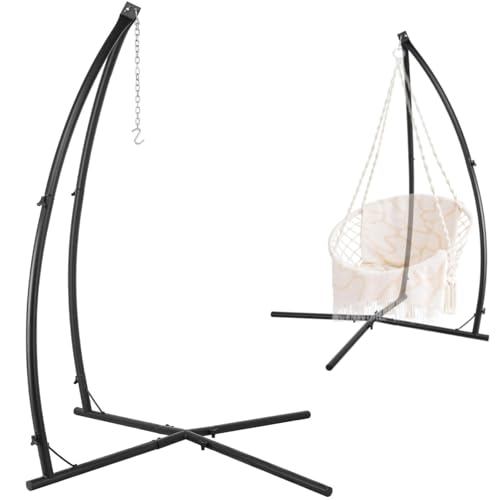
Hanging Swing Stand: The Complete Buyer's Guide
Everything you need to choose a freestanding swing stand for your patio, porch, or garden. Learn frame types, materials, load ratings, and setup tips before you buy.
Start the GuideQuick overview: A hanging swing stand is a freestanding frame that supports a hanging chair, porch swing, or hanging seat without drilling into a ceiling or hanging from a tree branch. It gives you placement freedom on patios, decks, porches, and even indoors. This guide walks you through frame types, materials, load capacity, and the practical details that matter most when choosing one.
What Is a Hanging Swing Stand and Why You Need One
A hanging swing stand—sometimes called a swing frame, hanging chair stand, or porch swing stand—is a self-supporting structure designed to suspend a swing or hanging seat safely. Instead of relying on a structural beam, tree limb, or ceiling joist, the stand carries the load through its own base and frame. That means you can place your swing almost anywhere on a flat surface, from a rental balcony to a backyard patio.
The appeal is straightforward: you get the relaxing motion of a hanging swing without permanent modifications to your home or landscape. For homeowners who want flexibility—moving the swing with the seasons, reconfiguring a patio layout, or taking the stand indoors during colder months—a freestanding stand is the practical solution.
If you are still deciding between swing types, our guide to hanging chair with stand and cushion covers the combined package options, while the 2-person hanging chair with stand guide is useful if you plan to share the seat. This article focuses specifically on the stand itself: how it is built, what to look for, and how to match it to your space.
Freestanding vs. Hanging from a Structure
Before committing to a stand, it helps to understand the trade-offs between a freestanding frame and a ceiling- or beam-mounted setup.
- Freestanding stand: No structural work required. Portable and repositionable. Ideal for rentals, apartments, and patios without overhead support. Requires a flat, stable surface and enough floor space for the base footprint.
- Ceiling or beam mount: Saves floor space and can look cleaner in a permanent setup. Requires a load-rated beam or joist and professional installation in many cases. Not portable and not suitable for renters without permission.
- Tree branch mount: A classic look for gardens, but branch health and load capacity are unpredictable. A stand is the safer, more controlled option.
For most buyers researching a hanging swing for a patio or porch, the freestanding stand is the lowest-risk choice. It removes the uncertainty of structural mounting and keeps the swing usable year after year.
Hanging Swing Stand Frame Types
Stand designs generally fall into three broad categories. Each suits a different space and usage pattern.
A-Frame Stands
The most common design. Two angled legs form an A shape on each side, connected by a top crossbar. Stable, easy to assemble, and widely available in entry-level to premium tiers. Best for a single hanging chair or compact porch swing.
Cantilever Stands
A single vertical post with an overhead arm that extends outward. The swing hangs from the arm rather than a central crossbar, keeping the seating area clear. Often favored for modern patios and spaces where a clean silhouette matters.
Arbor and Arch Stands
Decorative frames with a curved or arched top. These blend structure and style, often used in gardens and traditional patios. Load capacity varies widely, so check the rating carefully if you plan a two-person swing.
If your priority is a compact footprint, an A-frame or cantilever design usually works best. If you want the stand to double as a garden focal point, an arbor style may be the better fit. Our article on hammock chair with stand explores how these frame types pair with fabric hanging chairs specifically.
Materials: Steel, Aluminum, and Wood
Material choice affects durability, weight, maintenance, and how the stand looks in your outdoor space. Here is how the main options compare.
| Material | Strengths | Considerations | Best For |
|---|---|---|---|
| Powder-Coated Steel | Heavy-duty strength, solid build, rust-resistant coating | Heavier to move; inspect coating for chips over time | High-traffic patios and two-person swings |
| Aluminum | Lightweight, naturally rust-resistant, easy to reposition | May flex more under load; check wall thickness and rating | Balconies, rentals, and movable setups |
| Wood | Natural aesthetic, blends with rustic and traditional decor | Requires sealing and seasonal maintenance | Garden settings and classic porch styles |
Powder-coated steel is the most common choice for mid-range and premium stands because it balances strength and weather resistance. Aluminum is the practical pick when portability matters. Wood stands reward buyers who are willing to maintain them and want a warmer look. Regardless of material, look for a weather-resistant coating or a rust-proof finish on all hardware, including chains and hooks.
Load Capacity and Safety
Load capacity is the single most important specification to verify. A stand must support the combined weight of the swing, cushions, and the people using it—plus a safety margin. Manufacturers typically publish a load rating; treat that number as the ceiling, not a target.
- Single-user stands: Entry-level and starter-tier frames are usually rated for one adult and a lightweight hanging chair.
- Two-person stands: Mid-range and high-end tier frames are reinforced at the joints and crossbar to support two adults plus a porch swing or two-person chair.
- Commercial-grade stands: Built for shared or public use, with heavier tubing, welded joints, and higher ratings. Appropriate for busy family patios or rental properties.
Also consider the base footprint and stability. A wider base spreads the load and resists tipping, especially when the swing is in motion. If you plan to use the stand on a deck or balcony, confirm the surface can bear the combined weight of the stand, swing, and users. Anchoring or weighted feet add stability on windy sites.
Setup, Placement, and Assembly
Most hanging swing stands assemble with basic hand tools and clear instructions. A typical sequence is: connect the base rails, attach the vertical posts or A-frame legs, secure the top crossbar or cantilever arm, then hang the swing using the supplied chains, straps, or hooks. Premium models sometimes offer quick-lock or tool-free assembly, which is worth considering if you plan to move the stand often.
Placement tips that make a real difference:
- Choose a level surface. Uneven ground causes sway and stress on joints. Use shims or leveling feet if needed.
- Leave swing clearance. Allow enough space in front of and behind the swing for a comfortable arc—typically at least a couple of feet on each side.
- Mind overhead clearance. The top bar and chains need vertical room; avoid low ceilings, pergola beams, or hanging plants.
- Protect the floor. On decks, tile, or indoor floors, use protective caps or a mat under the feet to prevent scratches.
- Recheck hardware seasonally. Tighten bolts and inspect chains, hooks, and coatings at the start of each season.
For a broader look at how a swing fits into a full outdoor seating plan, our outdoor patio seating set guide covers complementary furniture, and the hanging swing stand resource page collects related stand options. If you are designing a compact relaxation corner, the cozy outdoor chairs for small spaces article is a useful companion read.
Matching a Stand to Your Space
The right stand depends on where it will live and how it will be used.
- Small patio or balcony: Prioritize a compact A-frame or cantilever with a narrow base. Aluminum construction keeps it manageable to move. Verify the balcony's load limits.
- Porch or covered deck: A classic A-frame or arbor style suits traditional porch aesthetics. Steel frames handle two-person swings well.
- Garden or lawn: A wood arbor stand doubles as a focal point. Place it on firm, level ground and consider anchoring for wind.
- Indoor sunroom or bedroom: Choose a stand with protective feet and a finish that complements interior decor. Lighter aluminum frames are easier to reposition.
If your space also needs shade, the cantilever patio umbrella with tilt and rotation can be positioned near a swing without a central pole getting in the way of the motion.
How to Choose: A Practical Checklist
Use this checklist to evaluate any hanging swing stand before you commit:
- Frame type: A-frame, cantilever, or arbor—match to your space and style.
- Material: Steel for strength, aluminum for portability, wood for aesthetics.
- Load rating: Confirm it supports your swing plus users with a safety margin.
- Base footprint: Measure your space and ensure a stable, level fit.
- Weather resistance: Look for powder coating, rust-proof hardware, and UV-resistant finishes.
- Assembly: Check whether tools are included and how complex the build is.
- Hardware: Verify the included chains, hooks, or straps are rated for the swing.
- Portability: If you plan to move it, favor lighter frames or quick-release designs.
Buyers often compare a stand-only purchase against a bundled package. Our 2-person hanging chair with stand guide explains when a bundle makes more sense than sourcing the frame and chair separately.
Frequently Asked Questions
What is a hanging swing stand?
A hanging swing stand is a freestanding frame that supports a hanging chair, swing, or hanging seat without ceiling or tree attachment. It typically features a sturdy base, vertical posts, and a top crossbar or cantilever arm from which the swing is suspended.
What materials are used for hanging swing stands?
Common materials include powder-coated steel, aluminum, and wood. Powder-coated steel offers heavy-duty strength, aluminum provides rust resistance and lighter weight, and wood delivers a natural aesthetic suitable for rustic or traditional patio styles.
How much weight can a hanging swing stand hold?
Load capacity varies by design and tier. Entry-level stands typically support one adult, mid-range models support two adults, and high-end or commercial-grade stands can support multiple users or heavier swing configurations. Always check the manufacturer's stated load rating before use.
Can a hanging swing stand be used indoors?
Yes, many hanging swing stands are suitable for indoor use in living rooms, bedrooms, or sunrooms, provided the stand fits the space and the floor can support the combined weight. Choose models with protective feet to prevent floor scratches.
How do I assemble a hanging swing stand?
Most hanging swing stands assemble with basic hand tools following the included instructions. Assembly typically involves connecting the base, attaching the vertical posts, securing the top crossbar, and hanging the swing using the provided chains or straps. Some premium models feature tool-free or quick-lock assembly.
Ready to Choose Your Hanging Swing Stand?
You now have the framework to evaluate frame types, materials, load ratings, and placement. Browse the recommended options below to compare features and find the stand that fits your patio, porch, or garden.