High Top Outdoor Dining Table: A Complete Buying Guide
Everything you need to choose a bar-height or counter-height patio table that fits your space, your guests, and your style.
START THE GUIDEA high top outdoor dining table raises the everyday patio meal to a more social level. Instead of sitting low to the ground, guests perch at bar or counter height, which keeps conversations lively, opens up sightlines, and makes the most of compact decks and balconies. If you are in the research stage and already know you want an elevated dining setup, this guide walks you through the height standards, materials, shapes, and seating choices that matter before you commit.
The appeal is easy to understand. A taller table naturally separates the dining zone from the lounging zone on an open patio, and it pairs well with stools that tuck neatly underneath. Many homeowners also find that a raised table feels more intentional and modern than a standard set. The trade-offs are real too: taller tables need matching chairs, they can feel top-heavy if the base is light, and they are less forgiving for young children and guests with limited mobility. This article covers each of these points so you can decide with confidence.
PatioFocus quick take: A high top outdoor dining table works best when the chair height matches the table height within a couple of inches of the ideal ratio. Bar-height tables usually sit around 40 to 42 inches tall and pair with 28 to 30 inch seats, while counter-height tables sit around 36 inches and pair with 24 to 26 inch seats. Getting this pairing right is the single most important decision you will make.
What Counts as a High Top Outdoor Dining Table?
In everyday patio terminology, a high top table is any dining table that stands noticeably taller than a standard 28 to 30 inch outdoor table. The category splits into two main heights, and knowing the difference prevents a frustrating mismatch with chairs.
| Category | Typical Table Height | Matching Seat Height | Best For |
|---|---|---|---|
| Counter-height | Around 34 to 36 inches | Around 24 to 26 inches | Everyday family dining, guests who prefer easier access |
| Bar-height | Around 40 to 42 inches | Around 28 to 30 inches | Social entertaining, small patios, standing-and-sipping layouts |
Both categories are commonly sold as a matched set with chairs or stools included. Buying the set together is the safest route, because the manufacturer has already tuned the footrest placement and seat height to the tabletop. If you plan to mix and match, measure carefully and confirm the seat-to-tabletop gap, which usually works best in the 10 to 12 inch range.
One more distinction matters: a high top dining table is built for full meals, so it typically offers a deeper tabletop and more legroom than a pure bar table. If your priority is a spot for drinks and appetizers, a slimmer bar table is fine. If you plan to serve dinner nightly, favor a model with a wider top and a sturdy, wobble-free base.
Why Homeowners Choose a High Top Outdoor Dining Table
- Better sightlines. Raised seating keeps the view across the yard or balcony open, so the patio feels larger even when the footprint is tight.
- Space efficiency. Stools slide fully under the table, reducing the floor area needed for circulation. This is a major advantage on small decks and apartment balconies.
- Clear zoning. A taller dining table visually separates eating from lounging, which helps an open outdoor space read as distinct rooms.
- Social energy. Bar and counter height feels convivial, and guests can easily mingle between the table and a grill or serving station.
- Umbrella compatibility. Many high top tables include a center hole for a patio umbrella, letting you shade the table without a separate freestanding base.
The counter-height option is often the better fit for households with children or older guests, because the step up is smaller and the chair backs are easier to reach. Bar-height tables, by contrast, shine when the table is used more for entertaining than for long family dinners.
Materials: What Holds Up Outdoors
The material determines how much maintenance the table needs and how the set will look after a few seasons of sun and rain. These are the four families you will encounter most often.
Powder-Coated Aluminum
Lightweight, rust-resistant, and easy to move. Frames hold up well in wet climates, though thin-gauge versions can wobble. Look for reinforced cross-bracing and a thick powder coat for durability.
High-Density Polyethylene (HDPE)
Weatherproof and low-maintenance, with a convincing wood-grain finish. HDPE shrugs off moisture, fading, and insects, making it a strong choice for uncovered patios. See our guide to HDPE outdoor furniture for the full picture.
Teak and Hardwoods
Warm, natural appearance and a solid feel. Teak weathers to a silver-grey patina and needs occasional sealing if you want to keep the honey tone. A worthwhile investment for covered or semi-covered patios.
Wrought Iron and Steel
Heavy-duty construction that resists wind and stays planted. Powder-coated steel and wrought iron need touch-ups if the finish chips. A premium wrought iron set can become a long-term investment.
Whichever material you choose, check the finish at the welds and joints. These are the first places where moisture creeps in and corrosion starts. A rust-proof finish and sealed hardware make a measurable difference in longevity.
Shapes, Sizes, and Seating Capacity
The table shape drives both traffic flow and conversation. Use this comparison as a starting point, then measure your actual patio before choosing a set.
| Shape | Typical Seating | Best For |
|---|---|---|
| Square high top | 4 people | Compact patios, balconies, breakfast-style dining |
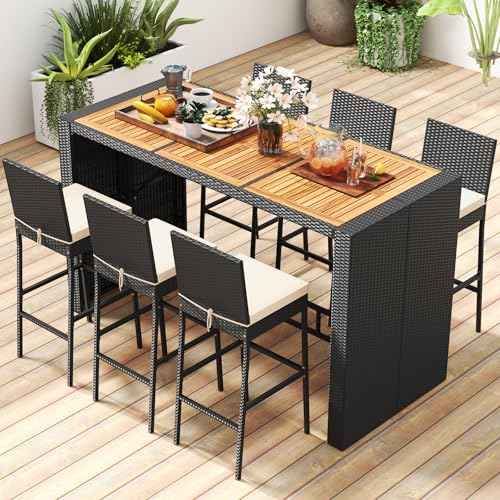
| Rectangular high top | 6 to 8 people | Longer decks, larger families, full dinner service |
| Round high top | 4 to 6 people | Conversation-focused layouts, corner placements |
| High top with bench | 5 to 7 people | Casual entertaining, mixed seating preferences |
As a rule of thumb, allow about 24 inches of table edge per seated guest and leave at least 30 inches of clearance behind chairs for walkways. A rectangular model is the most flexible for full meals, while a square or round table keeps a small patio from feeling blocked in. If you want a dedicated outdoor dining set for six, our guide on a high top outdoor dining table set for 6 walks through layout math in more detail.
Height also affects seating count. A taller table with narrow stools can seat more people around the same footprint than a standard set, but the trade-off is less elbow room. For a balanced approach, look at a high top patio table with 4 chairs as a starting configuration and scale up from there.
Pairing Chairs, Stools, and Cushions
A high top table is only as comfortable as the seating you pair with it. The matched set is the simplest route, but many buyers prefer to upgrade the chairs for comfort. A few pairings work particularly well:
- Swivel chairs make it easy to step in and out without dragging the seat. Consider a high top patio table with swivel chairs if your guests move around often.
- Cushioned seats add comfort for long dinners. Our overview of high-back patio chair cushions in a set of 4 explains how to match cushion dimensions to seat size.
- Bar stools without backs keep the look minimal and tuck away cleanly, which is helpful on tight balconies.
- Bench seating can work on one side of a rectangular table, mixing a casual feel with efficient use of space.
Check the footrest position on any chair you pair with the table. A well-placed footrest keeps legs supported and reduces pressure on the back of the thighs, which matters more at bar height than at standard height. If the set includes cushions, confirm that the cushion covers are removable and machine-washable for easier maintenance.
Elevated Features: Fire Pits and Umbrellas
Many modern high top tables incorporate a feature that makes the set do double duty. Two options dominate the market.
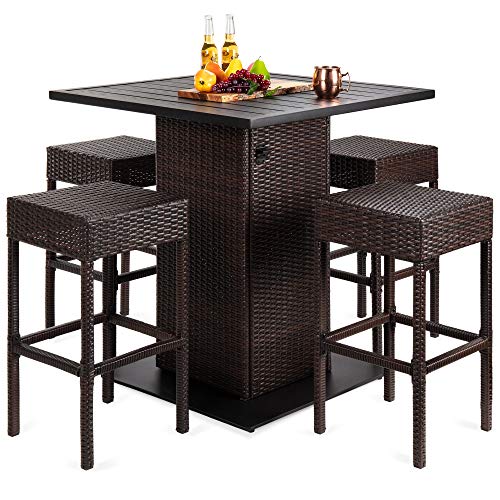
Fire pit tables. A built-in fire pit turns the dining table into an evening gathering spot once the plates are cleared. These models typically run on propane or natural gas and include a cover to convert the pit into a usable table surface during meals. If this appeals to you, explore a high top outdoor dining table with fire pit before deciding between a dedicated dining setup and a dual-purpose one.
Umbrella holes. A center hole with a sturdy base lets you add shade without a freestanding umbrella. This is a practical feature for sunny patios where the table sits in direct sun for most of the afternoon. Our guide to a high top outdoor table with umbrella hole covers base weights and canopy sizing.
Choose one signature feature rather than stacking both, since a fire pit and an umbrella compete for the same center space. If you want both shade and warmth, plan for a fire pit table plus a separate offset or cantilever umbrella.
Quality Tiers: How to Read the Market
Rather than shopping by numbers, it helps to think in tiers. The descriptors below are relative positions in the market, and they hold up regardless of season or retailer.
- Essential tier. Basic high top sets with lighter frames and simpler finishes. Fine for seasonal use on a covered porch or balcony. Expect to tighten hardware occasionally and store the set during harsh winters.
- Balanced tier. Better-gauge aluminum or HDPE with more stable bases and improved powder coating. This is where most buyers land, and it offers good value for its tier with a solid build that handles regular outdoor use.
- Top-tier. Heavier frames, sealed hardware, and premium materials such as teak or commercial-grade aluminum. Feature-rich for its class and designed to stay outdoors year-round with modest care.
- Professional-grade. Sets built to hospitality standards, with reinforced welds and replaceable components. A worthwhile investment for homeowners who entertain frequently or run a short-term rental.
Across every tier, the things that separate a durable set from a disappointing one are consistent: frame gauge, weld quality, finish coverage, and base stability. Look for these before anything else. Our guide to high-end outdoor furniture explains what premium construction actually means in practice.
Space Planning and Placement Tips
Before you order, sketch the patio to scale and mark the table footprint plus the clearance behind each chair. A high top set with stools tucked in needs less floor space than a standard dining set, but guests still need room to pull out a stool and step away.
- Leave 30 inches of walkway between the table edge and any wall, railing, or grill.
- Keep the table off the main traffic path between the house door and the yard.
- Place the table on a level surface. Bar-height tables are more sensitive to uneven pavers than low tables, so check for wobble after assembly and use shims if needed.
- Consider wind. Lightweight aluminum sets on an exposed deck may need a weighted base or a spot against a wall. Heavy wrought iron is more stable but harder to move.
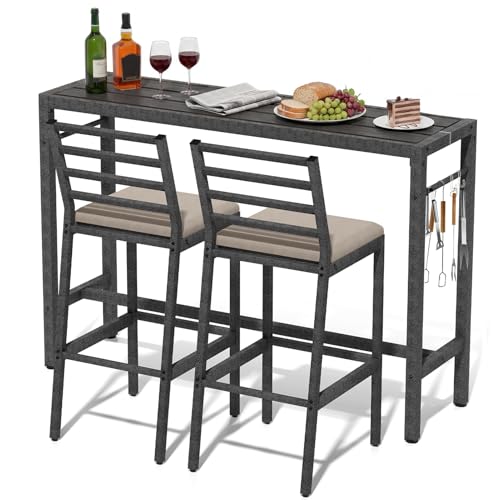
If your patio is small, a compact set such as a high top patio table with 2 chairs can serve as a breakfast nook and a work-from-outside spot. For a larger family, a high top patio table with 6 chairs gives everyone a seat without crowding the grill area.
Care and Maintenance
High top tables are exposed to weather on all sides, including underneath where moisture collects. A simple seasonal routine keeps the set looking sharp and extends its service life.
- Clean weekly during the season with mild soap and water. Avoid abrasive pads on powder-coated finishes.
- Rinse and dry after rain if the table sits on a covered porch, since standing water can pool around hardware.
- Tighten hardware twice a year. Bar-height tables take more lateral stress than low tables, so bolts loosen faster.
- Store cushions indoors when not in use, and cover the set during off-season months.
- Touch up chips promptly on steel and wrought iron to prevent corrosion from spreading.
If your table lives in a rainy climate, prioritize aluminum or HDPE, which tolerate moisture with minimal fuss. If you prefer the look of wood, teak is the most forgiving hardwood, and a light annual cleaning keeps the grain looking healthy.
A Practical Buying Checklist
- Decide the height. Counter-height for family dining, bar-height for entertaining.
- Measure the patio and confirm clearance for chairs and walkways.
- Choose the shape that fits your guest count and traffic flow.
- Shortlist the material based on climate and maintenance appetite.
- Confirm the chair pairing and check the seat-to-tabletop gap.
- Decide on features such as a fire pit or umbrella hole.
- Check the base for stability and any leveling adjustments.
- Review the care instructions and warranty before ordering.
Ready to compare options? Browse our related guides on high top patio table and chairs with umbrella, high top outdoor dining set with fire pit, and high top table and chairs for outside to narrow your shortlist. For a full dining experience, see the high top patio dining set with fire pit.
Frequently Asked Questions
What is the standard height of a high top outdoor dining table?
A high top outdoor dining table typically stands between 36 and 42 inches tall. Bar-height tables usually sit around 40 to 42 inches, while counter-height tables sit around 36 inches. The right height depends on the chairs you pair with the table.
How many people can sit at a high top outdoor dining table?
Seating capacity depends on the table shape and size. A square high top table often seats four, a rectangular model seats six to eight, and a round table typically seats four to six. Always confirm the recommended seating count from the manufacturer.
Are high top outdoor dining tables good for small patios?
Yes. High top tables make efficient use of vertical space and often have a smaller footprint than full dining sets. They also keep sightlines open, which helps small patios and balconies feel less crowded.
What materials work best for a high top outdoor dining table?
Powder-coated aluminum, high-density polyethylene (HDPE), teak, and wrought iron are all common choices. Aluminum and HDPE resist moisture well, teak ages gracefully with care, and wrought iron offers a solid, heavy-duty feel.
Final Thoughts
A high top outdoor dining table is a smart upgrade for anyone who wants a patio that feels social and space-efficient. The key decisions come down to height, shape, and material, and each one maps cleanly to how you actually use the space. Nail those three and the rest of the details, from chair cushions to umbrella bases, fall into place naturally. Take your measurements, pick a tier that matches your climate and maintenance habits, and choose a set that will make your patio the place everyone wants to gather.