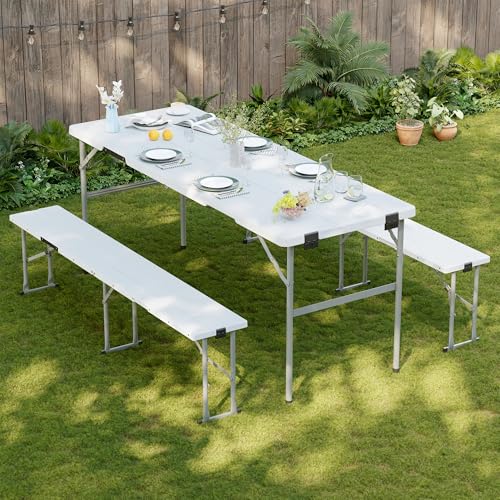
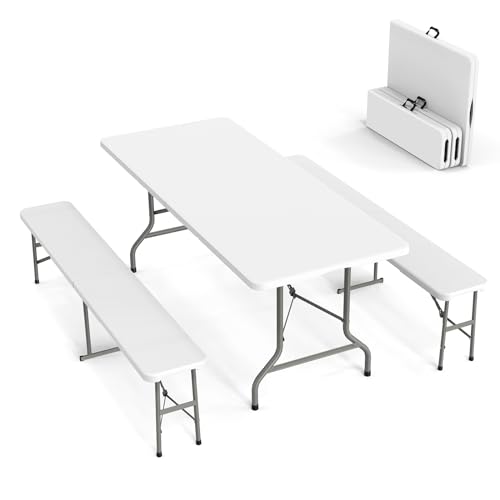
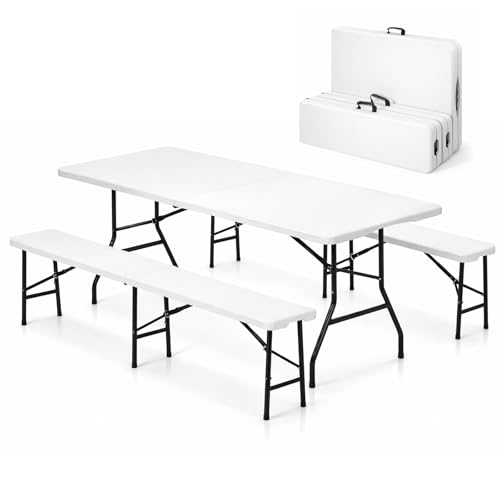
Lightweight Folding Camping Table and Chairs: The Complete Buying Guide
Everything you need to know before choosing a portable table and chair set for camping, tailgating, picnics, and van life. Compare frame materials, weight classes, stability features, and setup mechanisms so you can pick the right set with confidence.
Explore Buying FactorsWhy a Lightweight Folding Camping Table and Chairs Set Matters
If you have already narrowed your search to a portable camping table and chair combination, the next step is understanding the trade-offs between packed weight, stability, and durability. A well-chosen set transforms a campsite into a functional outdoor living space: a clean surface for cooking, a stable base for drinks, and comfortable seating that packs into the trunk of a car or the back of a van.
The category has matured significantly. Modern folding camping tables and chairs are no longer flimsy accessories — many now use aircraft-grade aluminum, reinforced nylon hubs, and locking tabletop hinges. The challenge is that the market is crowded, and specifications on retailer pages rarely tell the full story. This guide breaks down the factors that actually matter: frame construction, weight capacity, folded dimensions, ground adaptability, and long-term maintenance.
Readers researching this topic typically fall into three groups: car campers who want a convenient basecamp setup, backpackers who need to shave every ounce, and casual users who want a reliable set for picnics and festivals. The recommendations below are organized so each group can find the right tier without sorting through irrelevant options. For those also comparing seating styles, our guide to lightweight aluminium folding camping chairs pairs naturally with this article.
Anatomy of a Lightweight Folding Camping Table and Chairs Set
The Table
Most portable camping tables fall into three structural categories: roll-top tables, scissor/X-frame tables, and accordion-style tables. Roll-top designs use a slatted aluminum surface that rolls into a compact cylinder — these are typically the lightest and pack smallest, but they trade some rigidity for portability. X-frame tables use a folding leg mechanism with a solid or slatted top and generally offer better stability for cooking and dining. Accordion tables fold into a briefcase shape and are popular for their fast setup and integrated carry handle.
Key table specifications to compare include the tabletop surface area, height (low-profile vs. standard dining height), weight capacity, and whether the legs have adjustable feet. A table with a cross-brace under the center is noticeably more stable when pressure is applied to the edges — an important detail for anyone planning to place a camp stove or heavy cooler on top.
The Chairs
Folding camping chairs in a table-and-chair bundle usually follow one of four designs: the classic quad-fold chair, the compact backpacking chair, the rocker or swinging chair, and the director-style chair with side table. Quad-fold chairs are the most common companion to a folding table because they fold flat and stack easily. Backpacking chairs prioritize packed size and may use a tensioned fabric seat over a minimal aluminum frame.
When evaluating chairs, pay attention to seat height relative to the table height. A low-profile table paired with standard-height chairs creates an awkward dining posture. Most bundled sets are designed as a matched system, but if you are buying components separately, verify that the chair seat height and table height are compatible. Our overview of light-weight folding tables covers table-only options in more detail.
Frame Materials: Aluminum vs. Steel vs. Composite
The frame material is the single biggest determinant of packed weight, durability, and weather resistance. The table below summarizes how the main options compare across the factors that matter most to campers.
| Material | Relative Weight | Durability | Weather Resistance | Best For |
|---|---|---|---|---|
| Aluminum alloy | Lightest | Good to excellent with reinforced joints | Excellent — naturally rust-resistant | Backpacking, van life, humid climates |
| Powder-coated steel | Heaviest | Excellent rigidity | Good — requires coating integrity | Car camping, basecamp, heavy-duty use |
| Composite / engineering plastic | Moderate | Good for light loads | Excellent | Casual picnics, festivals, kids' use |
| Mixed aluminum + steel joints | Moderate | Very good | Very good | Balanced all-round camping |
Aluminum remains the dominant choice for lightweight sets because it offers the best strength-to-weight ratio and does not corrode. The weak point in aluminum frames is usually the joint rivets and hinge plates, not the tubing itself. Look for sets that use stainless steel rivets or reinforced nylon bushings at pivot points. Steel frames are heavier but resist flexing better under load, which matters if you plan to use the table as a cooking station or place heavy gear on it. For a deeper dive into material durability, see our materials guide.
Fabric components deserve equal attention. Chair seats and table storage pockets are typically made from polyester or nylon. A higher denier (the fabric weight measure) generally indicates better abrasion resistance. PU-coated or PVC-backed fabrics add water resistance, which is valuable in damp conditions. Mesh panels improve breathability but reduce water resistance — a trade-off worth considering for hot-weather camping.
Market Tiers: Entry-Level, Mid-Range, and Premium
To make comparison easier, this guide uses three universal tiers based on construction quality, feature depth, and intended use. These tiers are relative positions in the market — not absolute measures — and they remain stable over time regardless of retail fluctuations.
| Tier | Typical Construction | Weight Profile | Best For |
|---|---|---|---|
| Entry-level / essential tier | Light aluminum or composite frame, basic hinge mechanisms, simple carry bag | Light to moderate | Occasional picnics, festivals, casual backyard use |
| Mid-range / balanced tier | Aluminum frame with reinforced joints, locking tabletop, anti-sink feet, padded carry bag | Moderate, well-distributed | Regular car camping, tailgating, family trips |
| Premium / high-end tier | High-grade aluminum or mixed alloy, precision hinges, adjustable legs, weather-resistant fabrics | Optimized for the category | Frequent campers, van life, demanding terrain |
Entry-level sets are perfectly serviceable for occasional use. They typically lack locking tabletops and anti-sink feet, which reduces stability on uneven ground. Mid-range models are the sweet spot for most buyers: the mechanism quality is noticeably smoother, the frames hold up better over multiple seasons, and the carry bags are designed for actual transport rather than storage. Premium sets justify their position through tighter tolerances, better weight distribution, and features like height-adjustable legs and integrated leveling.
A practical way to think about the tiers: entry-level sets are designed for a handful of outings per season, mid-range sets for regular monthly use, and premium sets for near-constant deployment. If you camp more than a few times per year, the mid-range tier is generally the most efficient long-term choice.
Stability, Ground Adaptability, and Load Capacity
Stability is the most under-discussed factor in camping furniture reviews. A table that wobbles on grass or sinks into sand quickly becomes a frustration. Three design features directly influence stability:
- Cross-bracing: An X-brace or center brace under the tabletop distributes load and prevents leg splay. Tables without bracing are noticeably less rigid at the edges.
- Anti-sink feet: Wide foot caps or removable "snow basket" style pads increase surface area and prevent legs from sinking into soft ground. These are essential for sand, mud, and freshly cut grass.
- Locking hinges: Tabletop hinges that lock into place prevent accidental collapse when weight shifts. Mid-range and premium sets almost always include this feature.
Weight capacity figures published by manufacturers are usually conservative, but they assume even load distribution. Placing a heavy cooler on one corner of a table rated for a higher total load can still cause flexing or tipping. For cooking setups, choose a table with a stated capacity well above the combined weight of your stove, cookware, and fuel. Chairs should be matched to the heaviest user; heavy-duty chairs with reinforced leg assemblies are available in the mid-range and premium tiers.
Ground adaptability also depends on leg design. Telescoping or independently adjustable legs allow the table to sit level on sloped terrain — a feature worth prioritizing if you camp in hilly areas. For campers who also need seating on uneven ground, our guide to lightweight camping chairs for heavier users covers reinforced options in detail.
Portability: Packed Weight and Folded Dimensions
Portability is more than a weight number. The packed shape and carry method matter just as much. A set that weighs slightly more but packs into a flat, rectangular bag is often easier to transport than a lighter set with an awkward cylindrical roll.
Consider these portability metrics when comparing sets:
- Packed weight per person: Divide the total set weight by the number of users. A two-person set that weighs the same as a four-person set is not necessarily the better choice if you rarely camp as a pair.
- Folded length: Check whether the folded table fits across the trunk of your vehicle or inside a roof box. Roll-top tables usually pack shortest; accordion tables pack flattest.
- Carry method: Shoulder straps, reinforced handles, and compression straps make a real difference on longer carries from the parking area to the campsite.
- Bag durability: A thin drawstring bag will fail long before the furniture does. Look for zippered bags with reinforced seams and at least a basic water-resistant coating.
Backpackers should prioritize sub-category weight classes and may prefer a table-only setup paired with ultralight stools. Car campers can accept a heavier frame in exchange for rigidity and a larger tabletop. The right balance depends on how far you carry the set and how often you deploy it. Our article on lightweight aluminum folding beach lounge chairs follows a similar portability-first logic for a different product category.
Setup, Takedown, and Long-Term Maintenance
Setup speed is a quality-of-life feature that becomes more valuable the more often you camp. Most folding camping tables deploy in under a minute, but the mechanism varies. Scissor frames unfold in one motion; roll-top tables require attaching the slats to the end rails, which takes slightly longer but packs smaller. Chairs with hub-and-pole designs take longer than quad-fold chairs.
Maintenance is straightforward but easy to neglect. Follow this routine to extend the lifespan of your set:
- Wipe down the tabletop and chair frames with a damp cloth after each trip, especially after coastal or sandy outings.
- Dry all fabric components completely before folding and storing to prevent mildew.
- Inspect rivets and hinge plates periodically; tighten or replace any loose hardware.
- Apply a light silicone lubricant to hinge points once per season if the mechanism feels stiff.
- Store the set in its carry bag in a dry, shaded location rather than leaving it exposed to UV.
UV exposure is the silent killer of camping furniture. Prolonged sunlight degrades fabric and causes powder coatings to chalk. If your set lives outdoors between trips, consider a storage cover or move it under shelter. For related care guidance, see our articles on waterproof outdoor furniture covers and waterproof outdoor furniture cushions, which cover protection principles that apply to camping gear as well.
Matching the Set to Your Use Case
Car Camping and Basecamp
Car campers can prioritize stability and tabletop area over packed weight. A mid-range X-frame table with a locking top and a set of quad-fold chairs offers the best balance for cooking, dining, and gear staging. Look for sets that include a carry bag with a shoulder strap for the short walk from vehicle to site.
Backpacking and Ultralight Trips
Every gram matters. Choose a roll-top aluminum table in the entry-level weight class and pair it with minimal backpacking chairs. Accept that stability and surface area will be reduced — the trade-off is a set that disappears into a pack. Our guide to lightweight aluminium folding camping chairs is a useful companion for this use case.
Tailgating and Festivals
These settings favor fast setup, easy transport, and a larger surface for food and drinks. Accordion-style tables with integrated handles and a set of four quad-fold chairs work well. Durability matters here because the set will be deployed and packed repeatedly in crowded conditions.
Van Life and Overlanding
Space efficiency is the priority. Look for sets that pack flat and can slide under a bed platform or into a narrow storage compartment. Height-adjustable tables are valuable because they can double as a low coffee table or a full dining surface depending on the setup.
Quick Buying Checklist
Before finalizing a purchase, run through this checklist to confirm the set matches your needs:
- Frame material matches your climate and carry distance (aluminum for humid or backpacking, steel for rigidity).
- Table has cross-bracing and locking hinges for stable cooking and dining.
- Legs include anti-sink feet or adjustable height for uneven ground.
- Chair seat height is compatible with table height.
- Weight capacity exceeds your intended load by a comfortable margin.
- Packed dimensions fit your vehicle and storage space.
- Carry bag has reinforced seams and a usable handle or strap.
- Fabric is water-resistant and appropriate for your climate.
- Hardware is accessible for tightening and replacement.
- Manufacturer offers a warranty that covers the frame and hinges.
Frequently Asked Questions
What should I look for in a lightweight folding camping table and chairs set?
Focus on frame material, packed weight, folded dimensions, weight capacity, and assembly mechanism. Aluminum frames with reinforced joints offer the best balance of portability and durability for most campers.
Are lightweight folding camping tables stable enough for cooking?
Yes, provided the table has a cross-brace or X-frame design, a weight capacity suited to your cookware, and locking tabletop hinges. Mid-range and premium models typically offer the most stable platforms for camp stoves.
How do I choose between aluminum and steel folding camping chairs?
Aluminum chairs are lighter and more rust-resistant, making them ideal for backpacking and humid environments. Steel chairs are heavier but often more rigid and stable for car camping and basecamp setups.
Can lightweight camping tables and chairs be used on soft ground?
Yes, but you should look for wide feet or anti-sink caps. On sand or soft soil, spreading the load with wider foot pads prevents legs from sinking and improves overall stability.
What is the best way to store and maintain a folding camping table and chairs?
Clean and dry all surfaces before storing, keep the set in its carry bag, and store it in a dry place away from direct sunlight. Periodic lubrication of hinges and inspection of joint rivets extends the lifespan significantly.
Final Thoughts
A lightweight folding camping table and chairs set is one of the most practical outdoor investments you can make. The right set turns any patch of ground into a usable living space, whether you are cooking breakfast at a campsite, hosting a tailgate, or working from a van. The key is to match the set to your actual use case rather than chasing the lightest or most feature-heavy option.
Use the tier framework and checklist above to narrow your options, then verify the specific measurements and capacities against your needs. For readers continuing their research, our guides to light-weight folding tables and lightweight aluminium folding camping chairs provide additional detail on the table and seating components separately.
Below you will find a curated selection of products in this category, organized to help you compare options quickly and move from research to a confident decision.