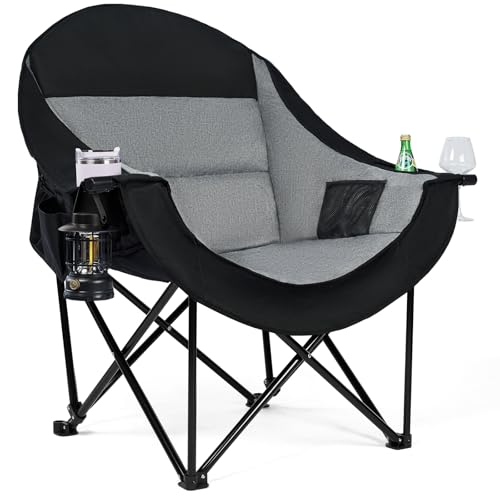
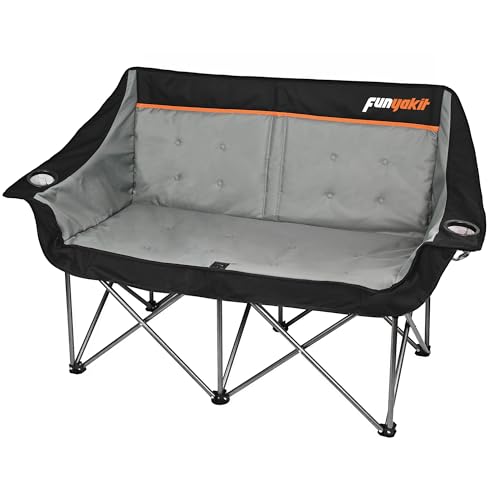
Lightweight Camping Chair for Heavy Person: The Complete Buying Guide
Find a camping chair that combines portability with serious weight capacity. We break down frame materials, stability features, comfort design, and real-world considerations so you can choose with confidence.
What You Will Learn
- Why Choosing a Lightweight Chair for a Heavy Person Is Tricky
- Key Features to Look For
- Frame Materials and Construction
- Understanding Weight Capacity Ratings
- Stability on Uneven Ground
- Comfort and Support Features
- Portability Without Compromise
- Product Tiers at a Glance
- Buying Checklist
- Frequently Asked Questions
Why Choosing a Lightweight Camping Chair for a Heavy Person Is Tricky
Most standard camping chairs are designed for casual use and general body types. When you need a lightweight camping chair for a heavy person, the engineering challenge changes: the chair must remain easy to carry while supporting a high weight load without flexing, wobbling, or failing at stress points.
The best models solve this by using high-grade materials, reinforced joints, and smart structural geometry. The good news is that modern designs have closed the gap significantly. Today, you can find chairs that weigh only a few pounds yet are rated for several hundred pounds of capacity.
Key Features to Look For
When comparing options, focus on the following attributes. They determine whether a chair will feel solid and comfortable over many seasons of use.
- High weight capacity with a safety margin: Choose a chair rated comfortably above your body weight.
- Reinforced frame joints: Look for cross-bracing, gusseted corners, and welded or bolted stress points.
- Heavy-duty fabric: Ripstop nylon, polyester, or canvas with reinforced stitching at seams and corners.
- Wide, stable base: A wider footprint improves lateral stability, especially on uneven ground.
- Comfort features: Padded armrests, a supportive seat pan, and a slightly reclined backrest.
- Easy packability: A carry bag with a shoulder strap and a compact folded profile.
If you also plan to pair your chair with a compact table setup, consider browsing lightweight folding tables for a complete camp-ready kit.
Frame Materials and Construction
The frame is the backbone of any heavy-duty lightweight camping chair. Material choice directly affects strength-to-weight ratio, durability, and long-term reliability.
Aircraft-Grade Aluminum
Aluminum alloys are the most common choice for lightweight chairs with high weight capacity. Thick-walled aluminum tubing with cross-bracing offers an excellent balance of low weight and high strength. It resists corrosion and performs well in damp conditions.
Reinforced Steel
Steel frames are extremely durable and handle heavy loads well, but they add weight. For a lightweight camping chair for a heavy person, steel is best reserved for hybrid designs where the frame uses steel at high-stress junctions and aluminum elsewhere.
Composite and Fiber-Reinforced Components
Some premium models use fiber-reinforced plastic joints and composite hubs. These can be very strong when engineered correctly, and they reduce weight at connection points. Look for models that specify reinforced composite joints rather than basic plastic fittings.
Fabric and Stitching
The seat fabric must handle tension and abrasion. High-denier polyester or ripstop nylon with double-stitched seams and reinforced corner panels is ideal. Water-resistant coatings are a bonus for outdoor use. If you want to learn more about fabric durability in outdoor products, see our materials guide.
Understanding Weight Capacity Ratings
Weight capacity is the single most important specification for a heavy person. Standard camping chairs are often rated for 250 to 300 pounds, while dedicated heavy-duty models are commonly rated for 400 to 600 pounds or more.
Always choose a chair with a capacity rating that exceeds your body weight by a comfortable margin. This margin accounts for dynamic loads, such as shifting your weight or sitting down with momentum, and it reduces long-term wear on the frame and fabric.
- Look for explicit ratings: Reputable brands publish weight capacity clearly.
- Avoid vague claims: Terms like "heavy-duty" without a number are less reliable.
- Check the warranty: A strong warranty often signals confidence in the frame.
For a broader look at portable seating options, you can also explore lightweight aluminium folding camping chairs and lightweight aluminum folding beach lounge chairs to compare design approaches.
Stability on Uneven Ground
A lightweight chair for a heavy person must stay stable when the ground is not perfectly flat. Stability comes from several design factors working together.
- Wide stance: A wider distance between the feet reduces the chance of tipping sideways.
- Flat, broad feet: Wide feet distribute load and resist sinking into soft ground.
- Low center of gravity: A seat height that is not excessively tall improves stability.
- Cross-bracing: Diagonal supports reduce frame flex and twisting.
- Locking mechanisms: Some chairs include locking hinges that prevent accidental folding.
If you often camp on soft or uneven terrain, prioritize models with wide mud-guard feet and a sturdy cross-braced base.
Comfort and Support Features
Comfort is not a luxury. A chair that supports your body properly reduces fatigue and makes long outdoor sessions far more enjoyable.
- Supportive seat pan: A firm, wide seat distributes pressure and prevents sagging.
- Padded armrests: Helpful for getting in and out and for resting your arms.
- Backrest angle: A slight recline supports the lower back without making the chair unstable.
- Breathable fabric: Improves comfort in warm weather.
- Seat height: A slightly higher seat is easier on the knees when standing up.
Comfort also extends to how the chair integrates with your other gear. If you enjoy relaxed outdoor lounging, you might also like the inflatable lounger as a complementary option for different settings.
Portability Without Compromise
Lightweight does not mean flimsy. The goal is a chair that folds compactly and carries easily while still offering robust support.
- Folded dimensions: Check the packed length and diameter against your backpack or vehicle space.
- Carry bag: A durable bag with a shoulder strap makes transport easier.
- Folding mechanism: Simple, robust hinges are less likely to fail than complex mechanisms.
- Overall weight: Aim for a chair that you can carry comfortably for the distance you plan to walk.
For related portable gear, consider lightweight folding camping tables and chairs to build a complete lightweight camp setup.
Product Tiers at a Glance
To compare options without relying on numbers, use the following tier framework. It reflects relative market positioning and feature depth.
| Tier | Typical Frame | Best For | Key Trade-off |
|---|---|---|---|
| Entry-level | Basic aluminum or steel | Occasional use, lighter loads | Heavier or less refined joints |
| Mid-range | Thick-walled aluminum with cross-bracing | Regular camping, moderate to high loads | Slightly heavier than premium models |
| Premium | High-grade aluminum, reinforced hubs | Frequent use, high loads, long trips | Higher tier investment |
| Top-tier | Advanced alloys, professional-grade construction | Demanding use, maximum confidence | Specialized features add complexity |
Mid-range and premium tiers usually offer the best balance for a lightweight camping chair for a heavy person. They provide reinforced joints and higher capacity ratings while keeping weight manageable.
Buying Checklist
Use this checklist before you finalize your choice:
- Capacity rating comfortably above your body weight.
- Thick-walled aluminum or reinforced steel frame.
- Cross-bracing and reinforced joints.
- Heavy-duty fabric with double-stitched seams.
- Wide, stable base with broad feet.
- Comfort features such as padded armrests and a supportive backrest.
- Compact folded size and a durable carry bag.
- Clear warranty terms.
If you are also setting up a full outdoor relaxation area, you may find useful ideas in our guides to lounge chairs for tanning ledges and water-resistant outdoor storage cabinets for keeping gear protected.
Frequently Asked Questions
Can a lightweight camping chair really support a heavy person?
Yes. Modern lightweight camping chairs for heavy persons use high-grade aluminum or reinforced steel frames and heavy-duty fabric, offering high weight capacities while keeping overall weight low. The key is to look for chairs rated for high weight capacity with reinforced stress points.
What frame material is best for a heavy-duty lightweight camping chair?
Aircraft-grade aluminum is the best balance of low weight and high strength. Reinforced steel offers maximum durability but adds weight. For a lightweight camping chair for heavy person, look for thick-walled aluminum with cross-bracing and reinforced joints.
What weight capacity should I look for in a camping chair for a heavy person?
Choose a chair rated at least 50 to 100 pounds above the user's weight for a safety margin. Many heavy-duty lightweight camping chairs are rated for 400 to 600 pounds, while standard chairs often max out around 250 to 300 pounds.
How do I keep a lightweight camping chair stable on uneven ground?
Look for chairs with wide, flat feet or mud guards, a low center of gravity, and a stable base geometry. Some models include adjustable feet or a wider stance for better stability on uneven terrain.
Editorial note: This guide is based on published specifications, material science principles, and common design patterns in outdoor furniture. Always verify the weight capacity and warranty details provided by the manufacturer before use.