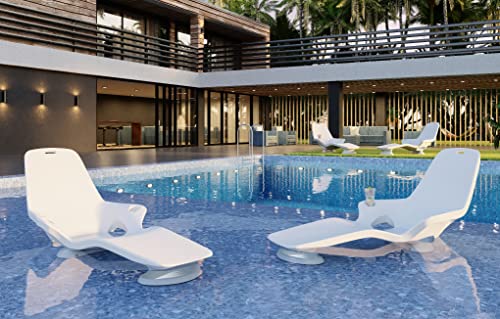
Lounge Chairs for Tanning Ledge in Pool: The Complete Buying Guide
Everything you need to choose the right in-pool lounger for your tanning ledge — materials, sizing, styles, safety, and maintenance, explained in plain language.
Why this guide matters: A tanning ledge is one of the most enjoyable features of a modern pool, but choosing the right lounge chair for it is not as simple as grabbing any outdoor chaise. Water depth, pool finish, material durability, and drainage all affect your experience. This guide walks you through every decision so you can buy with confidence and enjoy your ledge for years.
What Is a Tanning Ledge and Why It Needs Special Chairs
A tanning ledge — sometimes called a sun shelf, Baja shelf, or wet deck — is a shallow, flat platform built into the pool, usually 6 to 12 inches deep. It is designed for relaxing in the water without fully swimming, making it ideal for sunbathing, reading, or supervising children.
Because the ledge sits partially submerged, standard patio chaise lounges are not suitable. They are typically too tall, too light, or built with materials that degrade quickly in chlorinated or saline water. In-pool lounge chairs are purpose-built with lower profiles, weighted or non-slip bases, and water-tolerant materials. If you are still exploring general outdoor seating, our lounger chair guide covers broader options, while this page focuses specifically on water-adjacent use.
Types of Lounge Chairs for Pool Ledges
There are several distinct categories, each suited to different pool configurations and user preferences.
1. Submersible In-Pool Loungers
These are designed to sit directly on the ledge, partially underwater. They typically feature a weighted base, quick-dry mesh or sling seating, and a reclining backrest. Many are adjustable to multiple angles. They are the most popular choice for tanning ledges because they let you stay cool while sunbathing.
2. Floating Pool Loungers
Floating loungers are not anchored to the ledge but can be used over it. They are lightweight, portable, and often inflatable or foam-filled. They suit casual use but lack the stability and support of a fixed in-pool chair. For a related option, see our inflatable lounger overview.
3. Low-Profile Patio Chaise Lounges
Some homeowners place a low-profile outdoor chaise on the deck beside the ledge rather than in the water. This works well when the ledge is too shallow or narrow for in-pool furniture. Our outdoor chaise lounge chair guide explores styles that pair well with poolside layouts.
4. Double or Companion Loungers
These are wider units designed for two people or for one person who wants extra room. They are ideal for larger ledges and can double as a family relaxation spot. A related concept is the outdoor double chaise lounge, though not all double units are rated for submersion.
Materials Compared: Which Stands Up to Water and Sun
Material choice is the single most important factor in longevity. Pool water — especially chlorinated or saline — is harsh on many materials. Here is how the common options compare.
| Material | Water Tolerance | UV Resistance | Weight & Stability | Best For |
|---|---|---|---|---|
| Marine-Grade Polymer / Resin | Excellent — non-porous, chlorine-safe | High with UV stabilizers | Lightweight; needs weighted base | Entry-level and mid-range in-pool loungers |
| Powder-Coated Aluminum | Good if coating is intact; rust-prone if scratched | Good | Lightweight; strong frame | Mid-range to premium adjustable loungers |
| 316 Marine-Grade Stainless Steel | Excellent — resists salt and chlorine | Excellent | Heavy; very stable | Top-tier and commercial-grade installations |
| Teak (Oiled) | Good — naturally water-resistant | Good with periodic oiling | Moderately heavy | Luxury deck-side loungers near the ledge |
| PVC-Coated Mesh / Sling | Excellent — quick-dry, mold-resistant | Good | Lightweight seat surface | Submersible seat material across tiers |
| Fabric Cushions (Standard) | Poor — absorbs water, dries slowly | Moderate | Adds bulk | Not recommended for submerged use |
For a deeper dive into material properties across outdoor furniture, our materials guide provides context that applies directly to poolside and in-pool products.
Sizing and Fit: Measuring Your Ledge Correctly
Fit is critical. A chair that is too large will not sit flat or may block entry points; one that is too small may feel unstable. Follow these steps before buying:
- Measure depth at the waterline: Use a ruler or tape from the ledge surface to the water surface. Most in-pool loungers are designed for 6–12 inches of water; check the product specification for the recommended range.
- Measure usable length and width: Exclude steps, handrails, and water feature zones. Leave at least 6 inches of clearance on each side for safe entry and exit.
- Check the submerged footprint: The chair's base dimensions, not just the seat, must fit within the ledge boundaries without overhanging the drop-off.
- Confirm the reclining arc: If the backrest reclines, ensure the full reclined length still fits on the ledge.
- Consider the user's height and weight: Look for weight ratings and seat lengths that match the primary users. A taller user may need a longer seat pan than a compact model provides.
If your ledge is too small for a full in-pool chair, a low-profile deck-side chaise — such as those discussed in our modern chaise lounge guide — may be a better fit.
Key Features to Look For
- Adjustable backrest: Multiple recline positions let you switch between upright reading and flat sunbathing.
- Quick-dry seat surface: PVC-coated mesh or sling fabric drains instantly and resists mold.
- Non-slip or weighted base: Prevents sliding on smooth pool finishes and keeps the chair stable when you shift your weight.
- UV-stabilized construction: Prevents fading and embrittlement from prolonged sun exposure.
- Drainage channels: Small gaps or perforations that stop water pooling on the seat.
- Low profile: A seat height that keeps you comfortably partially submerged rather than perched above the water.
- Corrosion-resistant hardware: Stainless steel or coated fasteners that will not rust and stain the pool surface.
- Stackable or foldable design: Makes off-season storage easier and keeps the ledge clear when not in use.
Tier Comparison Table
Use this table to understand how features scale across market tiers. Descriptors are relative and do not reference specific figures.
| Tier | Frame Material | Seat Surface | Adjustability | Typical Use Case |
|---|---|---|---|---|
| Entry-Level | Basic polymer or resin | PVC mesh | 2–3 fixed positions | Occasional seasonal use on a small ledge |
| Mid-Range | Powder-coated aluminum or reinforced resin | UV-stabilized sling or mesh | Multi-position adjustable backrest | Regular use by a couple or small family |
| Premium | 316 stainless steel or premium aluminum | High-grade quick-dry mesh with padded edges | Full recline with locking positions | Frequent use, larger ledges, design-focused setups |
| Luxury / Commercial-Grade | Marine-grade stainless steel with reinforced welds | Commercial-grade sling with UV and chlorine resistance | Continuously adjustable with smooth mechanism | High-traffic pools, resorts, long-term installations |
Safety and Pool Surface Protection
A tanning ledge is a pleasant place to relax, but it introduces safety and surface-care considerations that differ from standard patio furniture use.
- Protect the pool finish: Weighted bases should be smooth and free of sharp edges. Avoid dragging chairs across plaster or pebble finishes; lift and place instead.
- Prevent tipping: Choose a chair with a wide, stable base. Never stand on an in-pool lounger, and avoid using it as a step to enter or exit the pool.
- Supervise children: Even shallow water on a ledge warrants supervision. In-pool chairs are not flotation devices and should not be treated as such.
- Check weight ratings: Every lounger has a manufacturer-stated weight limit. Exceeding it compromises stability and can damage the pool surface if the chair tips.
- Keep entry points clear: Position chairs so they do not obstruct steps, handrails, or the main swim-out area.
- Mind the chemicals: Remove chairs before shock treatments or heavy chemical dosing to prevent accelerated material degradation.
Care and Maintenance Tips
Proper care extends the life of any in-pool lounger and keeps it looking presentable season after season.
- Rinse after each use: A quick fresh-water rinse removes chlorine and salt residue before it can dry and concentrate.
- Dry before storage: Allow the chair to air-dry fully before folding or storing to prevent mildew on mesh surfaces.
- Inspect hardware seasonally: Check bolts, welds, and coating integrity. Touch up any scratches on coated aluminum to prevent corrosion.
- Store during off-season: Even water-tolerant materials last longer when removed from the pool during winter or extended closures. A waterproof outdoor storage container or a water-resistant outdoor storage cabinet keeps chairs protected.
- Clean with mild soap: Avoid abrasive cleaners that can scratch coatings. A soft brush and mild detergent are sufficient for mesh and frame surfaces.
- Cover when appropriate: For deck-side chaises used near the pool, waterproof outdoor furniture covers add a layer of protection against rain and debris.
For broader outdoor upkeep guidance, our weatherproofing guide covers protective strategies that apply to poolside furniture as well.
Ready to Explore Your Options?
Browse our curated selection of pool-friendly loungers and outdoor seating designed for tanning ledges, decks, and water-adjacent spaces.
View Recommended ProductsFrequently Asked Questions
What is a tanning ledge in a pool?
A tanning ledge is a shallow, flat area within a swimming pool, typically 6 to 12 inches deep, designed for lounging and sunbathing while remaining partially submerged in water.
Are in-pool lounge chairs safe for all pool surfaces?
Most in-pool loungers are designed with smooth, weighted bases to protect pool finishes. However, always verify compatibility with your specific pool surface — such as plaster, pebble, or vinyl — before use. Lifting rather than dragging the chair is the safest habit.
How do I measure my tanning ledge for lounge chairs?
Measure the ledge's length and width at the waterline and note the water depth. Leave at least 6 inches of clearance on each side for easy entry and exit, and confirm the chair's submerged dimensions fit within those boundaries. Check the reclined length if the backrest adjusts.
Can in-pool lounge chairs be left in the water year-round?
It depends on the material and water chemistry. Entry-level and mid-range models often tolerate seasonal use but should be removed during winter or heavy chemical treatments. Top-tier and commercial-grade loungers with UV-stabilized, chlorine-resistant materials may remain in water longer, but manufacturer guidelines should always be followed.
Do I need special cushions for an in-pool lounger?
Standard fabric cushions are not recommended for submerged use because they absorb water and dry slowly. Look for quick-dry mesh or sling seats built into the lounger. If you want extra padding, choose closed-cell foam cushions specifically rated for water use, and remove them after each session.
What is the difference between a tanning ledge lounger and a regular chaise lounge?
A regular chaise lounge is designed for dry deck use, with a taller frame and often fabric cushions. A tanning ledge lounger is purpose-built for partial submersion — it has a lower profile, water-tolerant materials, a weighted or non-slip base, and quick-drain seating. Using a standard chaise in the water will shorten its lifespan and may damage the pool finish.
Choosing the right lounge chair for your tanning ledge comes down to matching material durability, correct sizing, and practical features to how you actually use your pool. Start with accurate measurements, prioritize water-tolerant construction, and select a tier that reflects your expected frequency of use. With the right chair in place, your ledge becomes the most relaxing corner of the backyard.