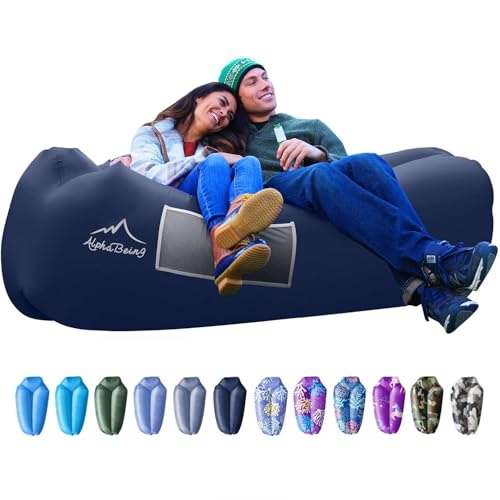
Inflatable Lounger: The Complete Guide to Air Sofa Comfort
Everything you need to know before buying an inflatable lounger — how air sofas work, which fabric and seams matter, how to inflate and care for one, and the situations where a portable lounger genuinely makes outdoor life better.
Jump to Buying ChecklistWhy this guide exists: Inflatable loungers look simple, but two models that appear identical online can behave very differently after a few weekends outdoors. This guide walks you through the mechanics, the materials, the realistic use cases, and the checks that separate a lounger you keep for years from one that leaks by midsummer.
What Is an Inflatable Lounger?
An inflatable lounger — also called an air sofa, air lounger, or inflatable lounge chair — is a fabric tube that traps air inside to form a soft, reclining seat. Unlike a traditional air mattress, it has no pump and no valves that need a compressor. Instead, a wide open mouth at one end catches air as you sweep the bag through the air, and a roll-and-clip closure seals it. The trapped air pressurizes the fabric, and the lounger holds its shape well enough to support an adult in a relaxed, hammock-like recline.
That simple mechanism is why inflatable loungers became a staple of beaches, campsites, festivals, and backyard lawns. They pack down small, weigh very little, and set up in under a minute once you get the technique right. For a broader look at how portable outdoor seating fits into a complete patio setup, our materials guide explains how fabric and frame choices affect comfort and longevity across outdoor furniture categories.
It helps to think of an inflatable lounger as a category rather than a single product. There are entry-level versions with thin nylon shells, mid-range models with ripstop fabric and reinforced seams, and premium air sofas with double-layer construction and more refined shaping. Each tier behaves differently in wind, on sand, and after repeated folding, which is why the buying section below focuses on construction rather than marketing language.
How Inflatable Loungers Work Without a Pump
The physics are straightforward. The lounger is essentially a long fabric sleeve open at one end. When you swing it through the air, the open mouth scoops air into the sleeve, and the fabric billows outward. You repeat the sweep two or three times until the sleeve is roughly full, then roll the opening tightly toward the body and secure it with the built-in clip. The rolled fabric creates a mechanical seal, and the trapped air gives the lounger its structure.
Two details determine whether this works well in practice. First, the mouth needs to be wide enough to catch air efficiently — narrow openings force more sweeps and more frustration. Second, the clip must hold the roll firmly; a weak clip slowly releases air and leaves you sinking after twenty minutes. Mid-range and premium loungers usually improve both points with wider openings and more robust buckle closures.
Because there is no valve, the lounger cannot be topped up with a pump mid-use. If it feels soft, you unroll, re-sweep, and re-seal. That is a minor inconvenience rather than a flaw, but it is worth knowing before you commit — especially if you plan to use the lounger for long reading sessions where a firmer seat matters.
Materials, Seams, and Realistic Durability
Most inflatable loungers are made from nylon or polyester, often with a polyurethane or PVC coating on the inside to hold air. The outer shell may be treated for water resistance, though none of these loungers are waterproof in the sense of being safe in water. Fabric weight and weave are the clearest indicators of how a lounger will age.
Entry-level models typically use thinner fabric and simpler stitched seams. They are fine for occasional park days, but they puncture more easily on twigs and rough ground, and the seams are the first place to fail under repeated inflation pressure. Mid-range loungers usually upgrade to ripstop nylon, which resists small tears from spreading, and use reinforced or double-stitched seams at the stress points near the opening and the ends.
Premium and top-tier air sofas often add a double-layer shell, heat-sealed seams in critical areas, and a slightly more structured shape that holds a recline without sagging. That construction is heavier and packs larger, so there is a genuine trade-off between durability and portability. If you are weighing a lounger against other lightweight outdoor seating, our guide to lightweight aluminium folding camping chairs covers the rigid-frame alternative, and the outdoor cushion guide explains how fabric and filling choices affect comfort over time.
| Tier | Typical Construction | Best For | Trade-off |
|---|---|---|---|
| Entry-level | Thin nylon shell, stitched seams, simple buckle clip | Occasional park days, festivals, short outings | Punctures more easily; seams wear faster with frequent use |
| Mid-range | Ripstop nylon, reinforced seams, wider inflation mouth | Regular beach and camping use across a season | Slightly heavier and bulkier when packed |
| Premium | Double-layer fabric, heat-sealed stress points, structured shape | Frequent use, long lounging sessions, firmer support | Larger packed size; less convenient for minimalist travel |
How to Inflate and Set Up an Air Sofa Correctly
Most complaints about inflatable loungers trace back to inflation technique rather than the product itself. The sweep needs to be deliberate and the roll needs to be tight. Follow these steps and the lounger will hold firm for hours.
- Unroll and face the wind Lay the lounger flat and hold the open mouth so it faces into the breeze if there is one. Even a light wind helps the first sweep.
- Sweep in a wide arc Hold the mouth open and swing the lounger through the air in a smooth, wide arc. Two or three sweeps usually fill the sleeve; more sweeps overfill it and make the roll difficult.
- Close the mouth immediately As soon as the sleeve is full, bring the mouth together and roll it tightly toward the body. Do not pause — air escapes quickly through an open mouth.
- Clip and test Secure the buckle clip and press gently on the lounger to check firmness. If it feels soft, unroll and repeat the sweep rather than trying to force more air in.
- Place on level ground Set the lounger on a flat surface and use a ground mat or blanket if the surface is sandy, stony, or rough. This single habit dramatically extends fabric life.
Inflation tips that make a real difference
- Inflate on grass or a mat, never directly on gravel or pavement.
- In strong wind, inflate with your back to the wind so the lounger does not balloon out of control.
- Roll the mouth as tightly as you can — a loose roll is the most common cause of slow deflation.
- Re-sweep rather than over-inflating; an overfilled lounger is harder to seal and stresses the seams.
Where Inflatable Loungers Genuinely Shine
Inflatable loungers are at their best when portability matters more than structured support. They are lightweight, pack small, and set up faster than most folding chairs, which makes them a natural fit for a specific set of situations.
- Beach days: The soft fabric conforms to the sand, and the lounger packs away easily when the tide comes in. Pair it with a beach shade for a complete setup.
- Camping and festivals: A lounger adds a comfortable seat without the bulk of a camp chair, and it doubles as a backup seat for guests.
- Backyard lawns: For a casual, low-to-the-ground seat that complements a hammock or a lounger chair in a relaxed outdoor layout.
- Poolside lounging: As a dry seat near the pool, not in the water. For actual water relaxation, a pool lounger or a recliner pool float is the appropriate choice.
- Picnics and park afternoons: Light enough to carry on a short walk and quick to set up on grass.
Where inflatable loungers fall short is structured support. If you need a firm back, armrests, or a seat that stays put on uneven ground, a lightweight aluminium folding camping chair or a folding camping table and chairs set is a better fit. Inflatable loungers are comfort-first seating, not task seating.
Inflatable Lounger Buying Checklist
Before you choose a model, run through these checks. They cover the details that reviews often skip but that determine whether the lounger survives a full season of real use.
Construction checks
- Fabric weight and weave: Ripstop nylon resists tears spreading; thin plain-weave nylon is more puncture-prone.
- Seam quality: Reinforced or double-stitched seams at the opening and ends are the main durability marker.
- Closure system: A wide mouth plus a strong buckle clip makes inflation faster and the seal more reliable.
- Weight rating: Check the manufacturer's stated capacity and stay comfortably within it.
- Packed size and weight: Premium models are more durable but bulkier; match this to how you plan to carry it.
Practical checks
- Included accessories: A ground mat or stake loop is a small addition that protects the fabric and keeps the lounger in place on windy days.
- Cleaning: Wipe-clean surfaces are easier to maintain than textured fabric that traps sand.
- Storage: A stuff sack with a drawstring makes packing consistent and protects the lounger between uses.
- Warranty and returns: Check coverage for seam failures, since that is the most common long-term issue.
If you are building a broader outdoor seating plan, it helps to compare the lounger against other portable options. Our guides to heavy-duty lightweight camping chairs and lightweight folding tables cover the rigid-frame side of the same category, so you can decide where an inflatable lounger fits and where a structured chair serves you better.
Care, Cleaning, and Storage
Inflatable loungers are low-maintenance, but a few habits make a meaningful difference to lifespan. Deflate fully before cleaning — air trapped inside makes the fabric harder to wipe down and stresses seams during handling. Use a damp cloth with mild soap, then rinse with a clean damp cloth. Avoid harsh detergents, bleach, and machine washing, all of which degrade the coating that holds air.
Dry the lounger completely before folding. Storing it damp encourages mildew and weakens the fabric coating over time. Fold loosely rather than compressing it tightly for long periods, and store it in a dry place away from direct sunlight. If you use the lounger on sand or near saltwater, rinse it with a damp cloth after each trip to prevent grit and salt from abrading the fabric.
For small punctures, most loungers can be repaired with a fabric patch kit designed for nylon. Repair immediately rather than waiting — a small tear that spreads is much harder to fix than a clean puncture caught early. If you store the lounger outdoors for extended periods, keep it in a dry cabinet; our guide to a water-resistant outdoor storage cabinet covers the storage conditions that protect fabric gear from humidity and UV exposure.
Safety Notes Before You Buy
Inflatable loungers are not flotation devices. They should never be used in water, including pools, lakes, and the ocean, regardless of how buoyant they seem when inflated. They are also not designed for use on steep slopes, where the smooth fabric can slide unexpectedly. Keep the lounger away from open flames, fire pits, and hot surfaces — the synthetic fabric can melt or ignite. And always check the manufacturer's weight limit; exceeding it stresses seams in ways that are not always immediately visible.
Frequently Asked Questions
How does an inflatable lounger work without a pump?
An inflatable lounger uses a wide open mouth at one end. You swing the bag through the air to trap air inside, then roll the opening tightly and clip it shut. The trapped air pressurizes the fabric tube, which then holds its shape as a soft lounge chair.
How much weight can an inflatable lounger hold?
Most quality inflatable loungers are rated for one adult and often list a capacity of around 200 to 300 kilograms depending on the model. Always check the manufacturer's stated weight limit and never exceed it, especially on rough or sloped ground.
Are inflatable loungers durable?
Durability depends on the fabric and seams. Entry-level models use thinner nylon and may puncture more easily, while mid-range and premium loungers use ripstop nylon, reinforced seams, and sometimes double-layer construction. With careful use and a ground mat, a good lounger can last several seasons.
Where can you use an inflatable lounger?
Inflatable loungers are popular for beaches, parks, campsites, festivals, poolside areas, and backyard lawns. They are lightweight and packable, making them a convenient portable seat. They are not recommended for use in water or as a flotation device.
How do you clean an inflatable lounger?
Deflate the lounger fully, then wipe the surface with a damp cloth and mild soap. Avoid harsh detergents and machine washing. Rinse with a clean damp cloth, and let it air dry completely before folding and storing it in a dry place.
Final Thoughts
An inflatable lounger is a straightforward product, but the gap between a good one and a frustrating one comes down to fabric, seams, and closure quality. If you use it occasionally and pack it light, an entry-level or mid-range model is a sensible choice. If you plan to use it every weekend through the season, the reinforced seams and structured shape of a premium air sofa justify the extra packed weight.
Whatever tier you choose, the habits matter as much as the product: inflate on a mat, roll the mouth tightly, dry it fully before storage, and repair punctures early. Do that, and a well-built inflatable lounger becomes one of the most convenient seats in your outdoor rotation.