What Makes a Dining Set "Mid Century Modern"?
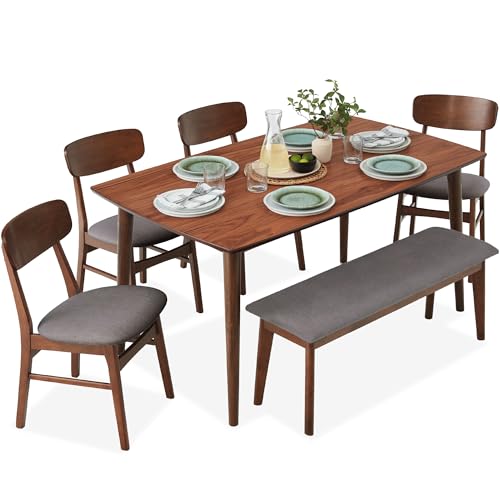
Mid century modern design, rooted in the middle decades of the twentieth century, is defined by a deliberate balance between form and function. When applied to an outdoor dining set with bench, the style shows up in several recognizable ways:
- Tapered and angled legs that lift the silhouette and create a sense of lightness, even in heavy materials.
- Clean, uncluttered lines with minimal ornamentation — no excessive carving or applied decoration.
- Organic curves in the bench backrest, seat edges, and table corners that soften the geometric structure.
- Natural wood tones — walnut, teak, and warm oak hues — often paired with black, white, or muted earth-tone metal frames.
- Asymmetry and mixed seating, where a bench replaces chairs on one side to create a relaxed, communal dining dynamic.
Understanding these hallmarks helps you evaluate whether a set is genuinely mid century modern in spirit or merely borrowing a few surface details. The best examples carry the style through every component, including hardware, joinery, and finish. If you are comparing broader design directions, our guide to mid century modern outdoor furniture puts these principles in a wider context.
Why Choose a Bench-Style Dining Set?
A bench is not simply a seating alternative — it changes the social geometry of the table. Here is what a bench brings to an outdoor dining setup:
More Seating per Foot
A bench typically seats three to four people along one side, while the same length of individual chairs seats two to three. That efficiency is valuable on compact patios.
Cleaner Visual Line
One continuous bench creates an uninterrupted horizontal line beneath the table, reinforcing the low, streamlined profile that defines the style.
Effortless Tucking
A bench slides fully under the table, freeing up walkway space when the set is not in use — a practical advantage for smaller decks and balconies.
Casual, Communal Feel
Benches invite people to slide in and out, creating a relaxed, family-style dining experience that suits outdoor entertaining.
Design Continuity
A bench made from the same wood and metal as the table reads as one intentional piece rather than a collection of separate items.
Versatile Placement
When not at the table, the bench works as entryway seating, a plant stand, or a quiet reading spot along a garden path.
Key Dimensions and Proportion Checks
Proportion is where mid century modern sets succeed or fail. Because the style depends on clean sightlines, a poorly scaled bench can make an otherwise elegant table feel cramped or unstable. Use these checks before committing:
- Table height and bench seat height: The bench seat should sit roughly 10 to 12 inches below the tabletop for comfortable leg clearance. Verify this with the actual product dimensions rather than assuming standard sizing.
- Bench length versus table length: A bench that is slightly shorter than the table — around 80 to 90 percent of the table length — looks intentional and leaves room for legroom at the ends.
- Clearance around the set: Allow at least 36 inches of walkway between the table edge and walls, railings, or planters so people can pull out and slide along the bench without disruption.
- Seat depth: Look for a bench seat depth of 15 to 18 inches. Deeper seats feel generous but can push shorter guests away from the table edge.
- Table shape: Rectangular and oval tops pair most naturally with benches. Round tables can work with a curved bench, but the geometry is harder to get right and should be assessed carefully.
Materials That Hold Up Outdoors
Mid century modern design favors honest materials, and outdoors those materials must also tolerate moisture, sun, and temperature swings. The strongest options for a dining set with bench fall into three families:
Powder-Coated Aluminum and Steel
Metal frames deliver the crisp, thin profiles that define the style. Powder coating provides a durable, chip-resistant finish in the muted blacks, whites, and sage tones typical of mid century palettes. Aluminum is lighter and naturally corrosion-resistant; steel is heavier and more rigid. Either way, inspect welded joints and confirm the hardware is stainless or otherwise treated against rust. Our overview of metal furniture explains how different frames behave in coastal and humid climates.
Weather-Resistant Hardwoods
Teak, eucalyptus, and acacia bring the warmth and grain that make mid century modern sets feel inviting. These woods contain natural oils or dense fibers that resist rot and insects. Over time, untreated surfaces weather to a soft silver patina — a look many designers prefer. If you want to preserve the original honey tone, plan on an annual application of a UV-protective oil.
Mixed-Material Frames
Many of the most faithful mid century modern sets combine a wood tabletop with a metal base, or a wood bench seat with a slim metal frame. These hybrids balance visual warmth with structural rigidity and are generally easier to move than all-wood equivalents. Check that the connection points between materials use isolation washers or gaskets to prevent galvanic corrosion.
For a deeper comparison of frame construction and finish quality, see our guide to metal patio furniture.
Comfort Features Worth Prioritizing
Mid century modern benches are often described as firm, but firm does not have to mean uncomfortable. The details below separate a bench you will use every weekend from one you avoid:
- Contoured seat surface: A gentle curve or subtle saddle shape distributes weight better than a perfectly flat plank.
- Backrest angle: A backrest reclined slightly — around 10 to 15 degrees — supports longer meals and conversation without forcing an upright posture.
- Cushion compatibility: If the bench is designed to accept a tie-on cushion, confirm the cushion uses quick-dry foam and solution-dyed fabric. These resist mildew and fading far better than standard upholstery foam.
- Edge treatment: Rounded or chamfered edges on the seat and backrest improve comfort, especially for guests in shorts or light clothing.
- Foot glides: Replaceable glides protect both the bench legs and your patio surface, and they are inexpensive to renew over the life of the set.
If you plan to use the set for long, leisurely meals, our article on the most comfortable outdoor chair for reading offers useful benchmarks for seat depth and back support that translate directly to bench design.
Quality Tiers: How to Read the Market
Mid century modern dining sets with bench are available across a wide spectrum of build quality. Instead of focusing on numbers, use the tier framework below to understand what distinguishes each level. The descriptors are relative and consistent across this guide.
| Tier | Typical Construction | Best For |
|---|---|---|
| Entry-level | Lightweight tubular frames, thinner gauge metal, basic powder coating, engineered wood or lower-density hardwood components. | Seasonal use on covered patios, first-time buyers testing the style, or occasional balcony dining. |
| Mid-range | Reinforced aluminum or steel frames, welded joints, UV-stabilized finishes, solid hardwood tabletops with sealed edges. | Year-round use in temperate climates, families who dine outdoors regularly, and buyers who want a long-term daily set. |
| Premium | Heavy-duty welded frames, marine-grade hardware, kiln-dried teak or equivalent hardwood, precision joinery and hand-finished edges. | Full-sun exposure, coastal environments, and households that treat the set as a permanent architectural feature. |
| Luxury / commercial-grade | Contract-grade materials, tested load ratings, replaceable components, and finishes engineered for hospitality use. | High-traffic entertaining, rental properties, and buyers seeking the longest service life with minimal maintenance. |
Within each tier, judge value by construction details rather than surface appearance. A mid-range set with welded joints and replaceable glides will typically outlast an entry-level set with decorative detailing but weaker connections. For a broader framework on evaluating durability, see our guide to the most comfortable durable outdoor furniture.
Style Pairings and Space Planning
A mid century modern dining set with bench anchors a space, but it needs supporting elements to feel complete. Consider these pairings:
- Shade: A cantilever or offset umbrella suits the clean lines of the style better than a heavy center-pole canopy. If your table has a pre-drilled hole, confirm the umbrella collar fits the frame thickness. Our guide to offset patio umbrellas covers the mounting options.
- Grounding: A flat-weave outdoor rug in a neutral tone or subtle geometric pattern defines the dining zone without competing with the furniture.
- Accent seating: A pair of sculptural lounge chairs nearby extends the set into a conversation area. The mid century style lounge chair is a natural companion.
- Lighting: Low, warm string lights or a slim linear fixture above the table reinforce the horizontal lines of the bench and tabletop.
- Greenery: Tapered planters in matte ceramic or concrete echo the angular legs of the set and soften the hardscape.
For compact areas, our guide to modern outdoor furniture for small spaces offers layout strategies that apply directly to bench-style dining sets. If you are weighing a bistro configuration instead, the mid century modern bistro table and chairs comparison is a useful reference point.
Assembly, Care, and Long-Term Ownership
Longevity in outdoor furniture is mostly a matter of preparation and routine. Build these habits into ownership:
- Assemble on a soft surface and tighten all fasteners progressively rather than fully tightening one corner at a time. This prevents racking and keeps the frame square.
- Re-tighten hardware after the first month of use, then at the start of each season. Outdoor temperature cycles gradually loosen connections.
- Clean regularly with mild soap and water. Avoid abrasive pads on powder-coated metal and avoid chlorine-based cleaners on wood.
- Treat wood annually with a UV-protective oil if you want to preserve its original tone, or leave it to weather naturally for a silver patina.
- Store cushions and textiles in a dry, ventilated space when not in use. Quick-dry foam still benefits from air circulation.
- Use a fitted cover during extended inclement weather, but ensure the cover is breathable to prevent trapped moisture.
For a step-by-step seasonal routine, our weatherproofing guide covers cleaning solutions, sealant schedules, and cover selection in detail.
Common Buying Mistakes to Avoid
- Choosing style over scale. A beautiful set that is too large for the space will feel oppressive and block circulation. Measure first, then shop.
- Ignoring the bench pull-out zone. Benches need room to slide out. Without that clearance, the bench becomes a fixed wall and loses its main advantage.
- Overlooking cushion storage. If you plan to use cushions, decide where they will live when wet or not in use before you buy.
- Assuming all powder coating is equal. Finish thickness and pretreatment vary significantly. Look for brands that describe their coating process in detail.
- Skipping the hardware check. Stainless or treated hardware is a small detail with an outsized effect on longevity, especially near the coast.
Frequently Asked Questions
What defines a mid century modern dining set with bench?
A mid century modern dining set with bench is characterized by clean lines, tapered legs, organic curves, and a mix of natural wood tones with minimal ornamentation. The bench replaces traditional individual chairs on one side, creating a streamlined silhouette that encourages casual, communal seating.
How do I choose the right size dining set for my patio?
Measure your available space and allow at least 36 inches of clearance around the table for comfortable movement. For a bench-style set, ensure the bench can slide fully under the table when not in use. Consider a rectilinear table for narrow spaces and a round or oval table for more intimate settings.
What materials are best for an outdoor mid century modern dining set?
Powder-coated aluminum, stainless steel, and weather-resistant hardwoods such as teak or eucalyptus are excellent choices. These materials resist rust, moisture, and UV damage while preserving the clean lines characteristic of mid century modern design. Look for marine-grade hardware and UV-stabilized finishes for longevity.
Can a mid century modern dining bench be used indoors?
Yes. Many mid century modern dining benches transition seamlessly between indoor and outdoor settings. If the bench features weather-resistant materials and UV-stable finishes, it can serve as a dining bench in a kitchen or entryway, or as outdoor seating on a covered patio.
How do I maintain a wood or metal mid century modern dining set?
For wood, clean with a mild soap solution and reapply a UV-protective oil or sealant annually. For metal, wipe down with a damp cloth and inspect for scratches that could lead to corrosion. Store cushions indoors when not in use and use a fitted cover during extended periods of inclement weather.
Final Checklist Before You Choose
Use this list to confirm your decision:
- Table and bench dimensions verified against your patio footprint, including the pull-out zone.
- Seat height and table clearance confirmed for comfortable legroom.
- Frame material and finish appropriate for your climate and sun exposure.
- Hardware specified as stainless or treated against corrosion.
- Bench backrest angle and seat contour assessed for long meals.
- Cushion strategy decided — quick-dry foam, solution-dyed fabric, and a storage plan.
- Assembly and seasonal maintenance schedule understood before purchase.
A well-chosen mid century modern dining set with bench becomes the quiet center of outdoor life — the place where meals stretch longer, conversation lingers, and the design of the set itself fades into the background because it simply works. Take the measurements, verify the materials, and choose with confidence.