Most Comfortable Front Porch Rocking Chairs: The Complete Buying Guide
A front porch rocking chair is more than just a piece of furniture—it is an invitation to slow down, watch the neighborhood go by, and enjoy a quiet morning with a cup of coffee. But not every rocker delivers that experience. The most comfortable front porch rocking chairs combine thoughtful ergonomics, durable materials, and cushioning that supports long stretches of relaxation. This guide walks you through everything you need to know before choosing the right rocker for your porch.
Whether you are outfitting a covered farmhouse porch, a compact city stoop, or a coastal veranda, the principles of comfort remain the same. You will learn what separates a truly comfortable rocker from an average one, how to evaluate materials and construction, and how to match a chair to your body and your space.
Why a Rocking Chair Belongs on Every Front Porch
The rocking chair is one of the few furniture pieces that blends function with ritual. Its gentle motion is naturally soothing, and the design encourages conversation and stillness rather than distraction. On a front porch, a rocker transforms an unused slab of concrete or wood into a destination.
Beyond atmosphere, a well-chosen rocker supports posture. The curved rocker base allows for subtle movement that keeps the spine engaged without strain, while the seat and back angle distribute weight more evenly than a rigid chair. For older adults in particular, a comfortable rocker can be easier to get in and out of than a low lounge chair, especially when it has sturdy armrests.
The Anatomy of a Comfortable Rocking Chair
Understanding the components of a rocker helps you evaluate chairs with a critical eye. Here are the elements that most directly affect comfort.
Seat Depth and Width
A seat that is too deep forces you to slouch or perch, while a seat that is too shallow creates pressure behind the knees. For most adults, a seat depth between 18 and 21 inches works well. Width matters too—generous seats accommodate movement and allow you to tuck a leg or shift position without feeling confined.
Back Height and Recline Angle
A supportive back should reach at least to the mid-shoulder blades. The recline angle should be gentle—enough to relax the upper body without tipping you backward. Chairs with a slight lumbar curve reduce fatigue during longer sitting sessions.
Armrests
Armrests are often overlooked, but they play a major role in comfort and accessibility. Look for armrests that are wide enough to rest a forearm on and positioned at a height that lets your shoulders relax. Flat, slightly contoured armrests are generally more comfortable than narrow round ones.
Rocker Mechanism
The rocker arc should be smooth and stable. A well-balanced chair rocks gently with minimal effort and does not tip easily. Wooden rockers with a shallow arc tend to feel more controlled, while deeper arcs produce a more pronounced motion. Test the rocker on a flat surface to confirm it does not wobble.
Cushioning
Cushions add plushness, but they should be made from high-density foam that resists flattening. Breathable, water-resistant covers are ideal for outdoor use. Cushions with ties or non-slip backing stay in place as you rock. If you plan to leave the chair outdoors, look for quick-drying materials that do not trap moisture. Our outdoor cushion guide explains fabric and foam options in more detail.
Material Choices: Wood, Wicker, Metal, and Beyond
The material of a rocking chair affects its comfort, durability, maintenance needs, and visual character. Each option has trade-offs.
Wood
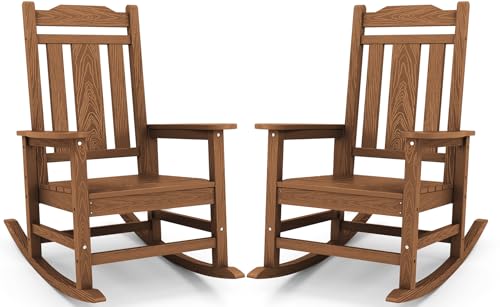
Wooden rockers are the classic choice for front porches. They offer solid support, timeless style, and a satisfying weight that feels stable. Teak, cedar, and acacia are popular outdoor woods because they resist moisture and insects. A wooden rocker with a contoured seat and a well-shaped back can be exceptionally comfortable, especially with a thin cushion added.
Wicker and Rattan
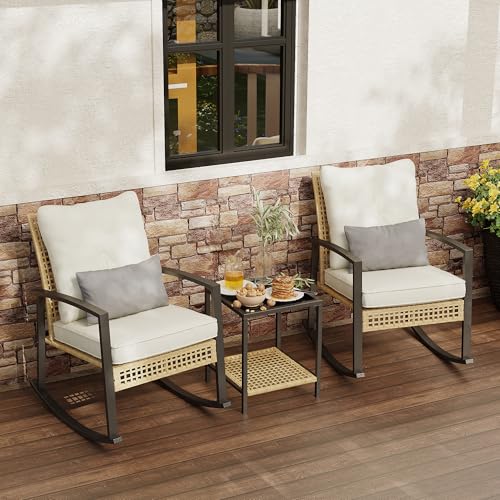
Wicker and rattan rockers have a natural flex that many people find comfortable. They are lighter than solid wood and often feature woven seats that conform slightly to the body. Look for all-weather resin wicker for outdoor use, as natural wicker can deteriorate in rain and sun. If you like the woven look, our guide to comfortable outdoor wicker furniture covers what to look for.
Metal
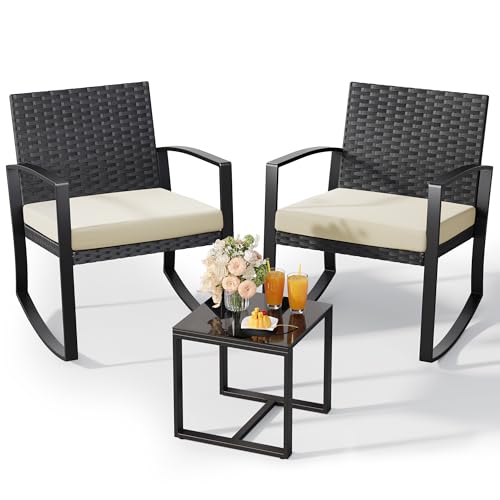
Metal rockers, including aluminum and wrought iron, are durable and often have a slim profile that suits smaller porches. Aluminum is lightweight and rust-resistant, while wrought iron is heavier and more traditional. Metal frames typically need cushions to feel comfortable, but they are easy to clean and maintain.
Recycled Plastic and Resin
Modern recycled plastic rockers have improved dramatically in both comfort and appearance. They are weather-proof, low-maintenance, and often shaped with ergonomic curves. They can feel stiffer than wood or wicker, so cushioning helps.
| Material | Comfort Character | Best For | Maintenance |
|---|---|---|---|
| Teak / Cedar Wood | Firm support with natural warmth; benefits from a cushion | Traditional porches, long-term use | Occasional oiling or sealing |
| All-Weather Wicker | Light flex, breathable woven seat | Coastal and cottage porches | Wipe clean; cover in harsh weather |
| Aluminum | Lightweight, rigid; cushion-dependent | Small porches, easy repositioning | Minimal; rust-resistant |
| Wrought Iron | Heavy, stable, classic feel | Formal or vintage porches | Touch-up paint for chips |
| Recycled Plastic | Firm, weather-proof, ergonomic shapes available | Low-maintenance households | Soap and water |
Cushions and Upholstery: The Comfort Multiplier
Even the best-shaped rocker benefits from a well-designed cushion set. A seat cushion adds pressure relief, while a back cushion supports the lumbar region. For outdoor porches, choose cushions labeled water-resistant or waterproof. Quick-dry foam and solution-dyed acrylic fabrics resist fading and mildew.
If your rocker will be exposed to rain, consider a waterproof outdoor rocking chair cushion set that includes ties and a non-slip base. For chairs kept under a covered porch, a standard outdoor cushion with a breathable cover is usually sufficient. Rotate cushions periodically to prevent uneven wear.
Ergonomics and Body Fit: Matching the Chair to the Sitter
Comfort is personal. A rocker that feels perfect for a 6-foot adult may feel awkward for someone who is 5-foot-2. When evaluating a chair, consider these fit points:
- Seat height: Your feet should rest flat on the floor when seated, with knees at roughly a 90-degree angle. A seat height around 16 to 18 inches suits most adults.
- Seat depth: There should be a small gap (about two fingers wide) between the back of your knee and the front edge of the seat.
- Back height: The back should support your shoulder blades without forcing your head forward.
- Armrest height: Your forearms should rest comfortably without lifting your shoulders.
- Rocker arc: A shallower arc feels more controlled; a deeper arc feels more dynamic. Choose based on your preference for gentle or pronounced motion.
If multiple people will use the chair, look for adjustable or generously proportioned models. A chair with a slightly wider seat and a mid-height back tends to accommodate a broader range of body types.
Top-Tier Comfort Categories for Front Porch Rockers
Instead of pointing to a single model, it helps to understand the tiers of comfort and construction available in the market. This framework lets you match a chair to your priorities without relying on transient pricing.
Essential Tier: Solid Everyday Comfort
Entry-level and essential-tier rockers focus on fundamental comfort: a stable frame, a simple curved seat, and basic armrests. These chairs work well for occasional use and for shoppers who plan to add their own cushions. Look for solid joinery and weather-resistant finishes even at this tier.
Balanced Tier: Enhanced Ergonomics and Materials
Mid-range rockers typically add contoured seats, lumbar curves, and better materials such as teak or all-weather resin wicker. They often include cushion sets with ties and quick-dry foam. This tier represents a strong balance of comfort and longevity for most households.
Premium Tier: Refined Craftsmanship
Premium rockers feature precise joinery, hand-finished surfaces, and carefully tuned rocker arcs. They may include higher-grade cushion foams, UV-resistant fabrics, and designs that support longer sitting sessions. These chairs are a long-term investment in daily comfort.
Luxury and Commercial-Grade Tier
At the top end, luxury and commercial-grade rockers are built for heavy use and exceptional comfort. They may use marine-grade hardware, custom cushion shaping, and reinforced frames. These are appropriate for households that use their porch as a primary living space or for hospitality settings.
| Tier | Comfort Features | Best For |
|---|---|---|
| Essential Tier | Basic curved seat, simple armrests, add-on cushion ready | Occasional sitters, first-time porch owners |
| Balanced Tier | Contoured seat, lumbar support, quality cushion set | Daily use, families, mixed body types |
| Premium Tier | Refined joinery, tuned rocker arc, high-grade foam and fabric | Long sitting sessions, design-conscious porches |
| Luxury / Commercial-Grade | Reinforced frame, marine hardware, custom cushion shaping | Heavy daily use, hospitality, primary outdoor living |
Matching the Rocker to Your Porch and Lifestyle
The best rocking chair for your home depends on the porch itself. Consider these practical factors.
Porch Size and Layout
Measure the usable depth and width of your porch. A rocking chair needs clearance in front and behind to rock freely. On narrow porches, a rocker with a shallow arc and a compact footprint works best. If you plan to pair two chairs with a side table, leave at least 24 inches between chairs.
Weather Exposure
A covered porch protects furniture from direct rain and sun, allowing a wider range of materials. An open porch requires weather-resistant materials and covers or storage during harsh seasons. For uncovered setups, consider waterproof outdoor furniture covers to extend the chair's life.
Household Use
If children or pets use the porch, choose a stable rocker with smooth edges and a heavy base. For older adults, prioritize armrests that are easy to grip and a seat height that is easy to rise from. Households that entertain frequently may benefit from a pair of matching rockers plus a small side table.
Maintenance Preferences
Some homeowners enjoy the ritual of oiling teak; others want a chair they can hose down. Be honest about how much maintenance you will realistically do. A low-maintenance resin or aluminum rocker may deliver more long-term satisfaction than a high-maintenance wood chair that is neglected.
A Practical Buying Checklist
Before you commit to a rocker, run through this checklist to confirm it fits your needs.
- Measure your porch: Confirm the chair's footprint and rocking clearance fit your space.
- Test the fit: If possible, sit in the chair. Confirm seat height, depth, and armrest comfort.
- Check the rocker motion: Rock gently. The motion should be smooth and stable, with no wobble.
- Review the materials: Confirm the frame and finish are suited to your porch's weather exposure.
- Evaluate cushions: Check foam density, cover breathability, and whether ties or non-slip backing are included.
- Consider maintenance: Read care instructions and confirm you are willing to follow them.
- Plan for storage: Decide where the chair will go during off-season or severe weather.
For additional context on materials and construction, our materials guide covers outdoor furniture frames and finishes in depth. If you are also considering woven seating for other parts of your porch, the wicker seating overview may be helpful.
Frequently Asked Questions
What makes a front porch rocking chair comfortable?
Comfort comes from the combination of seat depth, back angle, armrest height, cushion quality, and the smoothness of the rocker mechanism. A well-contoured seat, supportive lumbar area, and breathable cushioning are the key factors. A chair that fits your body proportions will always feel more comfortable than one that merely has thick padding.
Are wooden or wicker rocking chairs more comfortable?
Both can be highly comfortable depending on construction. Wooden rocking chairs offer solid support and timeless aesthetics, while wicker and rattan provide natural flex and a lighter feel. Comfort ultimately depends on the seat design, cushion support, and how well the chair matches the user's body.
How do I choose the right size rocking chair for my porch?
Measure your porch space and consider the chair's footprint, including the rocking arc. Ensure there is enough clearance for the chair to rock freely. Also match the seat height to the user's leg length so feet rest flat on the floor when seated.
What type of cushions work best for porch rocking chairs?
Waterproof or water-resistant outdoor cushions with high-density foam and breathable covers work best. Look for cushions with ties or non-slip backing to keep them in place, and consider fade-resistant fabric for sun exposure. Quick-dry foam is especially useful on open porches.
Can I leave a rocking chair outside all year?
It depends on the material and your climate. Teak, cedar, aluminum, and all-weather resin wicker can handle outdoor exposure with proper care. In freezing climates or during extended rainy seasons, bringing cushions indoors and covering the frame extends its life. Always check the manufacturer's care guidelines.
How many rocking chairs should a front porch have?
Two matching rockers are a classic arrangement that supports conversation and symmetry. A single rocker works well on small porches or as a reading spot. If space allows, pair the chairs with a small side table for drinks and books.
Ready to Choose Your Porch Rocker?
The most comfortable front porch rocking chair is the one that fits your body, your porch, and your daily rituals. Use this guide to narrow your options, then compare features and read full reviews before you decide. A thoughtful choice now means years of relaxed mornings and easy evenings on the porch.
Explore Rocking Chair Options