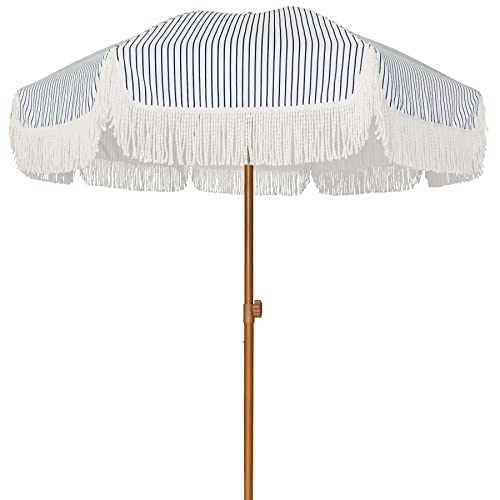
Navy Blue and White Striped Patio Umbrella: A Complete Buying Guide
Everything you need to know about choosing a navy blue and white striped patio umbrella — from canopy fabric and frame construction to size, shade coverage, and styling.
Explore Buying FactorsWhy a navy blue and white striped umbrella? The classic nautical stripe brings a crisp, coastal character to any outdoor space. It pairs naturally with white furniture, natural wood, and wicker, and it adds visual structure to a patio without overwhelming the surrounding landscape. This guide walks you through the practical details — fabric, frame, canopy shape, and coverage — so you can choose with confidence.
Why a Navy Blue and White Striped Umbrella Works
A striped canopy does more than provide shade. The navy and white pattern creates a strong focal point above your seating area and visually ties together the color palette of your patio. Navy is dark enough to read as a neutral anchor, while the white stripes keep the canopy from feeling heavy. This balance makes the combination one of the most versatile shade choices for coastal, traditional, and modern outdoor spaces alike.
The stripe direction also affects perception. Vertical stripes can make a canopy feel taller, while horizontal bands emphasize width. For a balanced look over a dining table, a canopy with evenly spaced stripes tends to feel orderly and classic. If you are building a cohesive seating zone, consider pairing the umbrella with navy and white striped chaise lounge cushions to reinforce the pattern without introducing a new color story.
Key Buying Factors to Evaluate Before You Choose
Striped umbrellas differ in ways that matter once the umbrella is outside in sun, wind, and rain. Use the factors below as a checklist. Each one affects how the umbrella performs, how long it lasts, and how well it fits your patio.
Canopy Fabric
Solution-dyed acrylic and polyester are the most common outdoor canopy fabrics. Solution-dyed acrylic holds color well against UV exposure, while polyester blends can offer good water resistance. Look for fade-resistant and water-repellent treatments.
Frame Material
Aluminum frames resist rust and suit coastal environments. Wood frames add a traditional look but need more care. Powder-coated steel is strong but heavier. Check the hub and ribs, since these joints take the most stress.
Canopy Shape & Size
Octagonal canopies are the classic market style. Round and square canopies suit different table shapes. Size should match your table and seating: an umbrella that is too small leaves sun exposure, while an oversized canopy may overpower a small patio.
Lift Mechanism
Manual crank and push-up mechanisms are common. Crank lifts are easier for frequent opening and closing. A collar tilt or crank tilt helps you angle shade as the sun moves across the day.
Base & Stability
Center-pole umbrellas need a weighted base sized to the canopy. Offset and cantilever designs move the pole away from the table but require a heavier base. Wind exposure at your site should guide how much weight you plan for.
Ventilation
A top vent allows hot air to escape and reduces wind lift. Single and double vents both help. If your patio is exposed to gusts, ventilation is worth prioritizing alongside a sturdy frame.
Comparing Umbrella Tiers
Striped umbrellas are available across several market tiers. The table below describes what typically changes as you move from entry-level to top-tier models. Use it to match construction quality to how often you plan to use the umbrella and how exposed your patio is to weather.
| Tier | Canopy & Frame | Best For |
|---|---|---|
| Entry-level | Polyester canopy with basic UV treatment; lightweight aluminum or steel frame; simple push-up or basic crank lift. | Seasonal use, covered patios, and light shade for occasional seating. |
| Mid-range | Solution-dyed acrylic or reinforced polyester; powder-coated aluminum frame; smoother crank lift and a collar tilt. | Regular daily use on an open patio with moderate sun and wind exposure. |
| Premium | High-grade solution-dyed acrylic with water-repellent finish; heavier aluminum frame with reinforced ribs; crank tilt and a more substantial hub. | Frequent use, sunny exposures, and patios where color retention matters. |
| Top-tier | Marine-grade canopy fabric and commercial-grade frame; welded or reinforced joints; smooth multi-position tilt; designed for hospitality-style use. | High-use outdoor areas, coastal sites, and setups where long-term durability is the priority. |
Choosing the Right Size and Shade Coverage
Canopy size should be measured against the table and the seating zone, not against the patio as a whole. A common approach is to choose a canopy that extends roughly two feet beyond the table edge on each side. That overhang protects seated guests from direct sun without making the umbrella feel oversized.
- Bistro and small tables: A compact canopy suits two to four chairs and keeps a small patio uncluttered.
- Dining tables for four to six: A mid-size octagonal canopy covers the table and the seated area comfortably.
- Lounge and sectional zones: Offset or cantilever umbrellas can shade a seating area without a center pole interrupting the layout.
If your table has a pre-cut hole, a center-pole umbrella is the straightforward choice. For a lounging area with no table, consider an off-set umbrella so the pole sits outside the seating footprint. If you plan to anchor a cantilever model, review the guidance on mounting a cantilever umbrella to a deck before installation.
Fabric, Color Retention, and Care
Navy stripes are more forgiving of light soiling than solid white canopies, but the fabric still benefits from routine care. Solution-dyed acrylic is the most reliable choice for color retention because the pigment is part of the fiber rather than a surface coating. Polyester canopies with a UV finish can perform well too, provided the finish is maintained.
For routine care, close the umbrella during high winds and store it or use a cover during extended off-season periods. Mild soap and water are usually sufficient for cleaning; avoid abrasive brushes that can wear the fabric weave. If the canopy is removable, check the manufacturer's washing guidance before machine washing. For broader maintenance routines that apply to outdoor furniture and shade products, see the weatherproofing guide.
Frame Construction and Wind Performance
The frame determines how the umbrella behaves in a breeze. Aluminum is the most practical choice for most patios because it resists rust and keeps the umbrella manageable to open and close. Powder-coated steel is stronger but heavier, and it needs a coating that remains intact to prevent corrosion. Wood frames offer a warm, traditional appearance but require periodic sealing.
Pay attention to the ribs and the hub, where the canopy meets the frame. Reinforced ribs and a solid hub reduce flex in gusty conditions. A vented canopy also helps by letting air pass through rather than lifting the whole umbrella. If your patio is windy, pair a sturdy frame with an appropriately weighted base and close the umbrella when it is not in use.
Styling a Navy and White Striped Umbrella
The stripe is a strong pattern, so the surrounding pieces can stay simple. White or natural wood furniture lets the canopy lead, while neutral cushions keep the seating area calm. If you want to extend the nautical theme, pair the umbrella with natural wood dining pieces or metal bistro tables for a clean, uncomplicated look. A metal outdoor table and chairs with umbrella set is a practical combination for a coordinated dining zone.
For a more relaxed coastal feel, mix in woven textures and light-toned accessories. If your patio leans modern, keep the lines clean and let the stripe provide the only bold element. The umbrella can also anchor a lounging corner: a modern chaise lounge or a set of modern outdoor chairs works well beneath a striped canopy when the palette stays neutral.
Ready to Compare Navy and White Striped Umbrellas?
Explore curated navy blue and white striped patio umbrella options and compare canopy fabrics, frame types, and sizes side by side.
View DetailsFrequently Asked Questions
What size umbrella fits a standard patio dining table?
Match the canopy to the table and seating: the canopy should extend roughly two feet beyond the table edge on each side. For a table seating four to six, a mid-size octagonal canopy is typically appropriate. Measure your table and the seated area before choosing.
Is a navy blue and white striped canopy fade-resistant?
Fade resistance depends on the fabric. Solution-dyed acrylic holds color well because the pigment is integrated into the fiber. Polyester with a UV finish can also perform well if the finish is maintained. Check the manufacturer's fade-resistance claims for the specific canopy.
Can I use a center-pole umbrella without a table?
Yes, provided you use an appropriate weighted base. Without a table, the base becomes the sole anchor, so choose a base rated for the canopy size and local wind conditions. An off-set umbrella is an alternative if you want the pole out of the seating area.
How do I keep the umbrella stable in wind?
Use a weighted base sized to the canopy, choose a frame with reinforced ribs and a solid hub, and select a vented canopy to reduce lift. Close the umbrella during high winds and when it is not in use.
How should I clean a striped canopy?
Mild soap and water are usually sufficient. Avoid abrasive brushes that can damage the fabric weave. If the canopy is removable, follow the manufacturer's washing instructions. Store or cover the umbrella during extended off-season periods.