Outdoor Bar Furniture: The Complete Buying Guide
Everything you need to plan a patio bar that works as hard as it looks good — from bar-height sets and swivel stools to mobile carts, materials, and layout.
Why this guide exists: Outdoor bar furniture turns a plain patio into a social anchor. But the category is broader than it looks — bar-height bistro sets, counter-height dining tables, freestanding stools, swivel chairs, and rolling carts all serve different roles. This guide walks you through each type, explains how the tiers differ, and helps you match a setup to your space, climate, and hosting style so you can decide with confidence.
What Counts as Outdoor Bar Furniture?
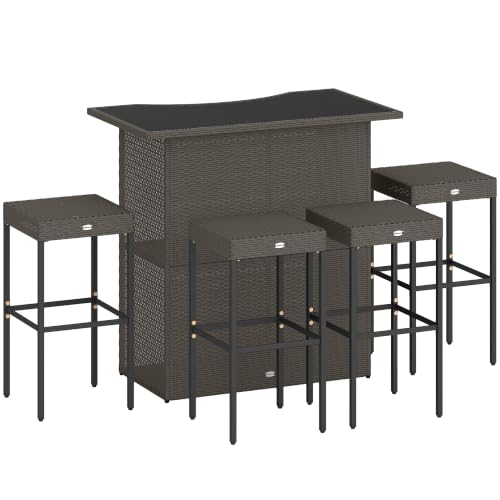
Outdoor bar furniture is any seating and surface group designed for standing-height or stool-height entertaining on a patio, deck, porch, or poolside area. Unlike a standard dining set, the defining trait is elevation: the table, counter, or bar top sits higher so guests can perch, chat, and serve drinks comfortably. Within that umbrella, most buyers are choosing between four core formats.
Bar-Height Bistro Sets
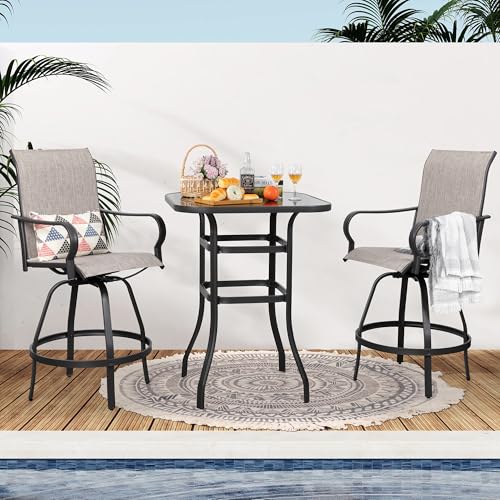
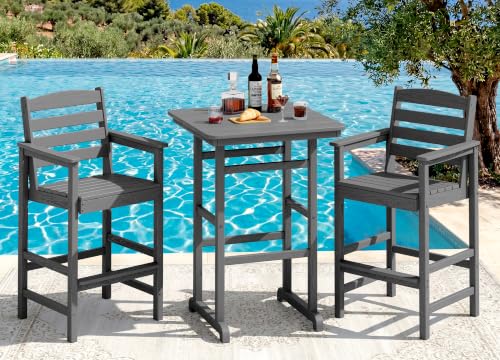
Compact tables paired with two to four stools. Ideal for balconies, small patios, and morning coffee or evening drinks. Often foldable or stackable for tight storage.
Outdoor Bar Stools
Standalone seating that pairs with a built-in counter, outdoor kitchen island, or a long bar table. Swivel, backless, and armrest versions each suit different comfort needs.
Bar Carts & Serving Stations
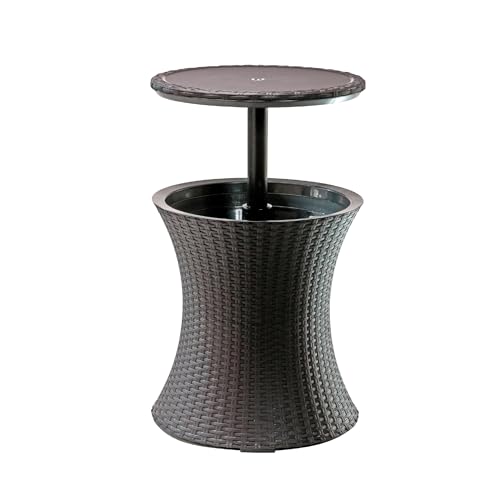
Mobile storage and prep surfaces for glassware, bottles, and tools. Useful as a staging area beside a fixed bar or as a standalone entertaining hub on a lawn.
Bar-Height Dining Sets
Larger tables with matching high chairs for full meals. Best for households that entertain often and want a single set that handles both dining and drinks.
Height, Sizing, and Clearance: Get These Right First
Most bar furniture mistakes come down to height mismatches. A stool that is too tall for its table forces guests to hunch; one that is too short leaves them reaching. Before comparing styles, lock in the numbers.
| Setup | Typical Surface Height | Matching Stool Seat Height | Best For |
|---|---|---|---|
| Counter-height | 34–36 inches | 24–26 inches | Casual dining, mixed-height households, easier step-up for guests |
| Bar-height | 40–42 inches | 28–30 inches | Classic patio bar feel, standing socializing, poolside setups |
| Extra-tall / pub style | 44+ inches | 30–32 inches | Narrow footprints and built-in counter extensions |
Allow roughly 10 to 12 inches between the stool seat and the underside of the tabletop for comfortable leg clearance. Plan about 24 to 30 inches of linear bar space per person, and leave at least 30 inches of walkway behind occupied stools so guests can pass without squeezing. On a small balcony, a compact swivel bistro set often solves both the seating and the circulation problem at once.
If your patio also hosts full meals, consider how a bar set coexists with your main dining furniture. Many homes pair a low dining table for meals with a high bar zone for drinks — a layout that works well alongside outdoor conversation sets and separate outdoor dining chairs.
Materials That Survive Real Weather
Outdoor bar furniture lives outside year-round in most homes, so frame and finish matter more than styling. Here is how the common materials compare in practice.
- Powder-coated aluminum: Lightweight, rust-resistant, and easy to move. The most common frame for mid-range bar sets and a reliable long-term choice in humid or coastal climates.
- High-grade stainless steel: Heavy-duty and corrosion-resistant when the grade is right. Typically found in professional-grade and commercial-grade pieces; heavier to reposition but extremely durable.
- Teak and eucalyptus: Naturally weather-resistant hardwoods that develop a silver-grey patina outdoors. Require occasional oiling if you want to preserve the original tone.
- Resin wicker over aluminum: A strong mid-tier option that mimics woven looks while resisting moisture. Check that the weave is tight and the frame underneath is aluminum, not steel.
- Recycled plastic and composite: Low-maintenance and fade-resistant. Entry-level and mid-range pieces in this category have improved significantly in finish quality.
Cushions deserve equal scrutiny. Look for UV-resistant, quick-dry foam and solution-dyed fabrics, and confirm that seat bases have drainage holes. Removable, zip-off covers extend usable life considerably. If you plan to mix and match, browse waterproof outdoor chair cushions or high-back patio chair cushions to find compatible sizes.
Understanding Tiers: Entry-Level to Luxury
Rather than shopping by number, it helps to understand where a piece sits in the market. The descriptors below are used consistently across this guide and reflect relative positioning, build quality, and expected lifespan.
Essential Tier
Basic folding or stacking sets in steel or resin. Fine for balconies, seasonal use, and first-time buyers. Expect simpler welds and lighter frames; a solid choice for the tier when portability matters most.
Balanced Tier
Powder-coated aluminum frames, tighter weaving, and better cushion foams. This is where most households land — feature-rich for its class and usually the sweet spot for year-round outdoor exposure.
High-End Tier
Teak, high-grade stainless steel, and precision joinery. Smoother swivel mechanisms, reinforced stress points, and finishes designed to hold up over many seasons.
Flagship & Commercial-Grade
Hospitality-grade construction, custom upholstery options, and exacting tolerances. A long-term investment for homes that entertain heavily or for covered outdoor kitchens.
In practice, the jump from entry-level to mid-range usually shows up in frame rigidity and finish durability; the jump from mid-range to premium shows up in mechanism smoothness and material longevity. If your bar sits under a roof or on a covered porch, a mid-range set often performs nearly as well as premium over the first several years. If it faces full sun, salt air, or heavy rain, stepping up a tier tends to pay off in the long run.
Choosing the Right Bar Stools
Stools carry most of the comfort burden in a bar setup, so prioritize them even if the table gets more attention. The right choice depends on how long guests typically linger and how much clearance you have behind the seating.
Swivel vs. Fixed
Swivel stools make conversation easier and let guests turn toward the bar, the view, or the grill without moving the stool. They suit islands and open layouts. Fixed stools are simpler, sturdier over time, and better where space is tight.
Backs and Arms
Backless stools tuck fully under the counter and look cleaner in small spaces, but they are less comfortable for long conversations. Stools with backs and arms — such as metal bar stools with backs and arms — are the better pick for evening-long entertaining and for guests who appreciate support.
Matching Stools to Your Bar
If you have an outdoor kitchen island or built-in counter, measure the overhang before ordering. A stool with arms needs enough clearance under the counter edge; a backless stool does not. For a complete ready-made pairing, a bar-height bistro set with swivel chairs removes the guesswork entirely, while a bar-height bistro table and chairs set gives you a slightly larger footprint for two-person meals.
Bar Carts and Serving Stations
A cart is the connective tissue of an outdoor bar. It holds glassware, tools, and bottles, gives you a prep surface away from the seating, and can be rolled out of the way when the evening ends. Look for locking casters, a rust-proof finish, and at least one shelf with a raised lip so bottles do not slide.
Carts also solve a common layout problem: when the bar set is fixed in a corner, the cart brings service to wherever guests have gathered. Pair it with a compact small outdoor table for a secondary drop zone, or use it beside a metal bistro table when you want a relaxed, moveable drinks corner.
Layout and Placement Ideas
Where the bar goes matters as much as what it is made of. Three placements cover most homes well.
- Perimeter bar: Place the bar along a railing, wall, or property edge with stools facing outward. This preserves open floor space in the middle of the patio and works well on balconies and narrow decks.
- Island bar: Set a freestanding bar table in the center of the patio as a social hub. Best when you have generous clearance on all sides and want the bar to double as a gathering point during parties.
- Kitchen-adjacent bar: Position the bar beside the grill or outdoor kitchen so serving and cooking flow together. This is the most efficient layout for hosts who cook while entertaining.
If your patio already holds a lounge zone, keep a clear path between the bar and the seating so guests can move with a drink in hand. A well-planned patio often mixes a high bar zone with low seating, using an outdoor conversation set with a dining table or a garden furniture conversation set as the anchor. On tighter footprints, conversation sets for small spaces can coexist with a compact bar if you measure the walkway carefully.
Style Directions That Work Outdoors
Bar furniture reads as a design statement more than most patio pieces because it sits at eye level. Three directions cover most of the looks buyers are after.
- Modern minimal: Slim aluminum frames, neutral cushions, and clean lines. Works with modern outdoor furniture with clean lines and pairs naturally with a modern outdoor dining table with an umbrella hole nearby.
- Rustic and farmhouse: Wood-toned tops, heavier silhouettes, and warm metals. Sits comfortably beside farmhouse-style tables with benches and other mixed-material pieces.
- Coastal and resort: Light frames, woven textures, and breezy cushions. A natural fit for poolside placements and homes near water, where high-quality resin wicker patio furniture performs well against humidity.
Whatever the style, keep the bar zone coherent with the rest of the patio. If your main seating is low and relaxed, a bar set in the same palette bridges the two heights visually. If the rest of the patio is bold, a quieter bar in a neutral finish gives the eye somewhere to rest.
Accessories and Small Upgrades
A handful of additions make a bar setup noticeably more usable. Umbrellas or a shade sail cut afternoon glare over the bar top; consider a large umbrella if the bar sits in full sun. A mat or small rug defines the bar zone and reduces slip risk on wet stone. Lighting — string lights or a low pendant — extends usable hours into the evening.
Storage is the quiet upgrade. A covered bin for cushions, a tray that corrals glasses, and hooks for tools keep the bar from turning into clutter. If your bar doubles as a dining surface, a set of outdoor dining chairs can supplement the stools for meal service.
Care and Seasonal Maintenance
Bar furniture takes more abuse than low seating because it sits at the height of wind-blown rain and sun exposure. A short seasonal routine keeps it in shape.
- Wipe metal frames with a mild soap solution and dry thoroughly; touch up scratches before they spread.
- Oil teak once or twice a year if you want to preserve its tone; let it weather naturally if you prefer the grey patina.
- Remove and store cushions during off-season or extended rain; never store them damp.
- Use fitted, breathable covers rather than tarps, which trap condensation.
- Check swivel mechanisms and tighten bolts at the start of each season.
If your bar sits near a fire feature, keep clearance in mind. A fire pit bench or curved outdoor bench with back for a fire pit can extend the evening around the bar zone — but leave a safe gap between upholstered stools and open flame.
A Practical Buying Checklist
Before you commit to a set, run through these questions. They catch most of the issues buyers run into after delivery.
- Measure twice: Record surface height, stool seat height, and the walkway behind the seating.
- Confirm clearance: Check that stools tuck under the counter or table without hitting the frame.
- Match the climate: Aluminum for humid and coastal; teak or stainless for long exposure; resin wicker for covered patios.
- Check cushions: Look for removable, UV-resistant covers and drainage-friendly foam.
- Plan storage: Folding or stacking pieces help if you have limited off-season space.
- Read the warranty: Frame warranties vary widely by tier and reveal how the maker views durability.
Frequently Asked Questions
What height should outdoor bar furniture be?
Standard bar-height furniture is typically around 40 to 42 inches at the table or counter surface, paired with stools that seat at roughly 28 to 30 inches. Counter-height sets run lower, usually 34 to 36 inches, with stools around 24 to 26 inches. Always measure your space and confirm the stool-to-surface gap leaves room for comfortable leg clearance.
Which materials hold up best outdoors?
Powder-coated aluminum, high-grade stainless steel, and teak or eucalyptus are strong performers. Resin wicker over an aluminum frame is a popular mid-range option that resists moisture well. Look for rust-proof finishes, UV-resistant cushions, and drainage-friendly seat construction for long-term durability.
How many stools fit at an outdoor bar?
A general rule is to allow about 24 to 30 inches of linear space per stool. A four-foot bar top comfortably seats two to three people, while a six-foot counter seats three to four. Factor in armrests, swivel clearance, and walkway space behind the seating.
Do I need a bar cart if I already have a bar set?
A bar cart adds mobile serving space and storage for glassware, tools, and bottles. It is especially useful when your bar set is fixed in place or when you entertain across a lawn and patio. Many hosts treat the cart as a prep station and the bar set as the social hub.
How do I protect outdoor bar furniture in winter?
Use fitted, breathable covers, store removable cushions indoors, and tighten or remove umbrella canopies. For metal frames, inspect for scratches and touch up the finish before cold weather. If space allows, move lighter pieces like carts and stools into a shed or garage.