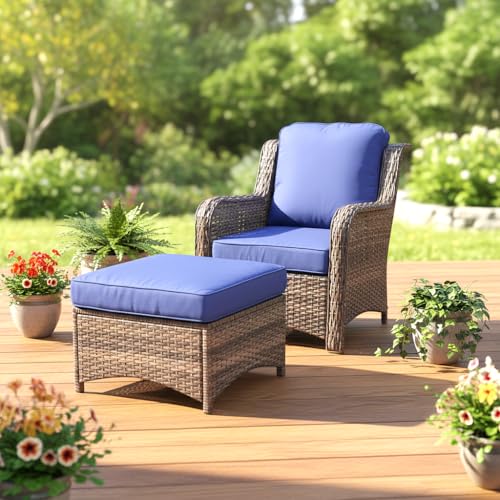
Outdoor Chair With Ottoman That Slides Underneath
One chair, two ways to relax. Learn how a tuck-away ottoman delivers full lounge comfort without permanently claiming extra floor space on your patio, deck, or balcony.
Why this design matters: A lounge chair with a hidden ottoman is one of the smartest solutions for outdoor spaces where room is finite but comfort is non-negotiable. When the ottoman is tucked beneath the seat, you get a compact reading chair. Slide it out and the same seat becomes a full chaise-style lounger for sunbathing, napping, or an evening with a book. This guide explains the mechanisms, materials, and layout considerations so you can choose a model that fits both your space and your routine.
What Is an Outdoor Chair With a Sliding Ottoman?
This chair type pairs a standard outdoor lounge seat with an ottoman engineered to move on a track, glide rail, or low-friction base. When you want to recline, the ottoman extends forward and acts as a footrest or leg extension. When you are done, it slides back underneath the seat, freeing up walking space and making the setup look tidy.
The concept borrows from indoor accent chairs with hidden footstools, but outdoor versions add weather-resistant frames, UV-stable fabrics, and drainage-friendly cushions. The best models balance a smooth slide with a stable, non-wobbling seat. If you are comparing this design against a fixed chaise, read our guide to the outdoor chaise lounge chair to understand the trade-offs between full-length loungers and modular seating.
How the Sliding Mechanism Works
There are three common approaches, and each affects how the chair feels in daily use:
- Track and rail systems: Metal or composite rails guide the ottoman in a straight line. These offer the most controlled movement and a satisfying, stable feel. Mid-range and premium models usually use this design.
- Low-friction glides: The ottoman rests on nylon or PTFE glides that slide across the chair base. This is simpler and lighter, and works well on entry-level and mid-tier chairs.
- Caster-based tuck-away: Small wheels let the ottoman roll out and back. This is easiest on hard surfaces such as concrete or composite decking and less ideal on thick rugs or uneven stone.
Whichever mechanism you choose, the key question is whether the ottoman locks securely in the extended position. A locking stop or friction fit prevents the footrest from drifting while you are using it. Also check that the underside of the seat has enough clearance for the ottoman frame, especially if the chair sits on a soft surface.
Main Types of Sliding Ottoman Outdoor Chairs
Compact Glide Chair
Lightweight frames, simple glide tracks, and basic weather-resistant fabric. A solid choice for balconies and occasional use where easy movement matters more than heavy-duty construction.
Rail-Track Lounge Chair
Powder-coated aluminum or steel frame with a guided rail and thicker cushions. Balances durability, smooth motion, and a comfortable seat depth for regular seasonal use.
Deep-Seat Modular Lounger
Wider seat, high-density cushioning, and precision glides. Designed for daily use on full-size patios, often with removable, washable covers and rust-proof hardware.
Designer Teak or Woven Frame
Teak, high-grade aluminum, or all-weather wicker with a concealed slide system. Focused on long-term investment, refined aesthetics, and a seamless look when the ottoman is tucked away.
Frame and Fabric Materials Explained
Outdoor furniture lives with sun, rain, and temperature swings, so material choices matter more than styling. Here is how the main options compare:
| Material | Best For | Key Strength | Care Note |
|---|---|---|---|
| Powder-coated aluminum | Balconies, coastal areas, everyday use | Rust-resistant and light to move | Wipe down; check glides seasonally |
| High-grade steel | Windy patios, heavier users | Solid build and stable stance | Requires rust-proof finish maintenance |
| Teak / premium hardwood | Long-term patio setups | Natural weather resistance, ages well | Oil periodically to preserve color |
| All-weather wicker / resin | Decorative, covered porches | Warm look, low maintenance | Keep track clear of grit and debris |
| Solution-dyed acrylic fabric | Sunny, exposed patios | Fade-resistant and quick-drying | Spot clean; air dry cushions fully |
Cushion foam also matters. Quick-dry reticulated foam lets water pass through instead of soaking in, which reduces mildew risk. If you plan to leave the chair out in shoulder seasons, prioritize drainage-friendly cushions and removable covers. For a broader look at matching seating and tables, browse our outdoor chairs collection overview.
Space Planning: How Much Room Do You Actually Need?
The main advantage of a tuck-away ottoman is footprint flexibility. In its closed position, the chair takes roughly the same floor area as a standard lounge chair. Extended, it adds the depth of the ottoman, usually somewhere between a footstool and a full leg extension.
When measuring your space, account for three distances:
- Closed footprint: The chair width and depth with the ottoman fully tucked. This is what you need for walkways and balcony clearance.
- Extended depth: The total front-to-back length with the ottoman pulled out. Leave a comfortable margin so you can step around it.
- Recline clearance: Some models tilt the backrest when the ottoman extends. Check that the chair has room to lean without hitting a wall or railing.
On narrow balconies, consider pairing a single chair with a slim side table such as an outdoor small table rather than a full dining set. If you are furnishing a compact lounge zone, our outdoor coffee table with nesting ottomans guide shows how hidden-storage pieces can work together with tuck-away seating.
What to Check Before You Buy
- Slide smoothness: Look for a mechanism that moves without binding and stops firmly when extended. Reviews that mention the ottoman "wandering" are a warning sign.
- Seat height and depth: A deep seat feels luxurious but can be hard to stand up from. Match seat height to the people who will use it most.
- Frame finish: Powder coating and rust-proof hardware make a measurable difference in humid or coastal climates.
- Cushion attachment: Ties, straps, or grip dots keep cushions from sliding when the ottoman moves.
- Weight and portability: If you need to move the chair for cleaning or seasonal storage, aluminum is easier to handle than steel or solid wood.
- Storage clearance underneath: Confirm the ottoman clears the floor and any rug edge when tucked, especially on soft surfaces.
- Assembly hardware: Stainless or coated fasteners resist corrosion better than untreated steel bolts.
Pairing Ideas for a Cohesive Patio
A sliding ottoman chair works best as part of a layered seating arrangement rather than a standalone piece. A few combinations that hold up well:
- Reading corner: One lounge chair with tuck-away ottoman, a compact side table, and a floor lamp or string lights for evening use.
- Conversation pair: Two matching chairs facing a low outdoor coffee table, with the ottomans extended for relaxed chatting.
- Fire pit lounge: Position the chair near a fire pit so the ottoman becomes a footrest while you stay seated. Our guide to outdoor chairs for fire pit areas covers heat-safe placement.
- Balcony retreat: A single chair plus a outdoor accent table keeps the floor plan open while still feeling furnished.
- Mixed seating: Combine one or two tuck-away chairs with a bench or outdoor Adirondack chair for a more eclectic look.
Care and Maintenance for the Slide Mechanism
The sliding track is the one part of this chair that benefits most from routine attention. Leaves, sand, and grit can work into the rails and make the movement stiff. A simple routine keeps it working smoothly:
- Brush or vacuum the track every few weeks during heavy-use seasons.
- Rinse with clean water and let it dry completely before storing cushions.
- Apply a silicone-based lubricant to metal glides a few times per year, following the manufacturer's guidance.
- Avoid dragging the ottoman sideways, which can bend rails or wear glides unevenly.
- Use a fitted cover during winter or long periods of disuse to keep debris out.
For broader seasonal care, see our weatherproofing guide and our tips on waterproof outdoor chair cushions for cushion protection.
Frequently Asked Questions
What does it mean when an outdoor chair has an ottoman that slides underneath?
The ottoman is designed to tuck beneath the chair seat when not in use. You can pull it out as a footrest or leg extension, then slide it back to reclaim floor space. It is a space-saving alternative to a fixed chaise.
Are sliding ottoman outdoor chairs suitable for small balconies?
Yes. The tucked configuration keeps the footprint close to a standard lounge chair, so you can keep walkways clear. It is one of the most efficient seating designs for compact outdoor areas.
Which frame material works best for a sliding ottoman chair outdoors?
Powder-coated aluminum is a strong all-around choice because it resists rust and stays light. High-grade steel offers a solid build but needs a rust-proof finish, while teak and premium hardwoods are durable but require periodic oiling.
How do I keep the sliding mechanism working smoothly?
Clear debris from the track regularly, rinse with clean water, and lubricate metal glides a few times per season. Avoid dragging the ottoman sideways, and use a cover during long periods of disuse.
Can a sliding ottoman chair stay outside all year?
Weather-resistant frames and solution-dyed fabrics can handle year-round exposure in mild climates. In areas with heavy snow or extreme temperature swings, bring cushions indoors and cover the frame to protect the track and finish.
Ready to Compare Models?
Browse the recommended outdoor chairs with sliding ottomans below to compare features, frame materials, and seating comfort side by side.
View Recommended Options