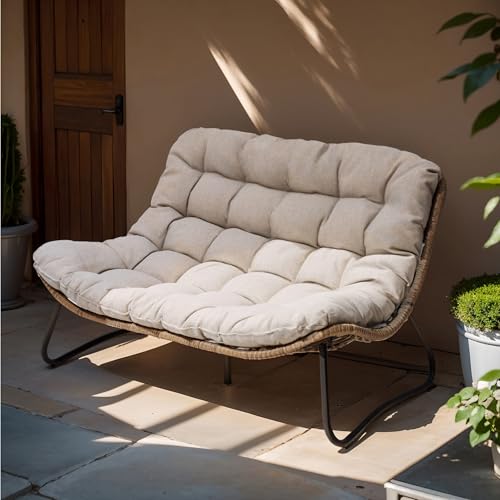
Outdoor Covered Couch: A Complete Buyer's Guide
A covered couch turns a shaded patio into a genuine second living room. Learn how shelter design, frame materials, cushion fabrics, and ventilation work together to keep outdoor seating protected and comfortable in every season.
Explore the Buying GuideWhy covered seating matters: An outdoor couch that sits under a roof, pergola, or awning faces far less direct sun and rain than exposed furniture. The result is slower fabric fading, fewer waterlogged cushions, and a longer service life for the frame — provided you still choose the right materials and manage airflow.
If you have ever brought a fabric sofa onto an open deck and watched it fade, sag, or grow mildew within a couple of seasons, you already understand the value of shelter. An outdoor covered couch is not simply a patio sofa placed beneath a roof — it is a system of choices: how much overhead protection you have, how the fabric breathes, how the frame copes with humidity, and how easily you can pull a cover over the whole piece when storms roll in.
This guide walks you through those choices in the order that matters. You will learn how to assess your existing structure, which frame materials perform best under shelter, how cushion foam and fabric behave in shaded conditions, and how a covered setup compares with fully exposed furniture. Throughout, we pair practical recommendations with links to deeper resources on our site so you can research each component before you commit.
By the end, you should be able to look at your patio, balcony, or screened porch and know exactly which configuration of couch, cover, and accessories will actually work in that space — and which ones will not.
What Counts as a "Covered" Outdoor Couch?
"Covered" can mean several different things, and the distinction matters when you are evaluating products. In practice, buyers use the term in three ways:
- Architecturally covered seating. The couch sits under a permanent roof, pergola with slats, gazebo, or covered patio ceiling. Protection comes from the structure itself.
- Furniture with an integrated or pull-over cover. The sofa includes a fitted protective cover, sometimes built into the design, that you deploy when the couch is not in use.
- Cushions and upholstery treated for covered use. The couch is designed for sheltered locations rather than full exposure — lighter fabrics and foams that prioritize comfort over raw weather resistance.
Most shoppers are looking for a blend of the first two: a couch that lives under a roof most of the time and has a cover for the shoulder seasons or surprise storms. If you are still deciding how much shelter you want overall, our guide to an outdoor covered patio lays out roof, pergola, and shade options in more detail.
Step 1: Assess Your Shelter Before You Shop
Before comparing a single couch, measure how much protection your space actually offers. The answer determines which materials are worth paying for and which are unnecessary.
Overhead coverage
A solid roof keeps off nearly all rain and blocks the harshest midday sun. A pergola with slats offers partial shade but lets rain through; many owners add a fabric or polycarbonate topper to convert it into genuine cover. An awning or umbrella provides shade and light rain protection but is vulnerable to wind and does not shield the sides.
Side exposure
A couch tucked into a corner under a deep overhang is far more protected than one sitting at the open edge of a covered porch. Wind-driven rain arrives sideways, so the more solid walls, screens, or plantings you have on the prevailing weather side, the better your seating will hold up. Screened porches are excellent because they combine a roof with insect and debris protection.
Drainage and airflow
Even covered patios get humidity. Check whether your space dries out quickly after rain or stays damp. Good airflow under and around the couch is one of the best defenses against mildew on cushions and rust on metal frames. Avoid pushing a sofa flush against a damp wall, and leave a gap for air to circulate.
Quick shelter checklist
- Is there a solid roof, slatted pergola, or fabric canopy above the seating?
- How far does the roof extend beyond the couch's front edge?
- Which direction do storms usually come from, and is that side open?
- Does water pool or drain away after rain?
- Can air move under and behind the couch?
Step 2: Choose a Frame Built for Shelter and Humidity
Under a roof, frames face less direct rain but often more persistent humidity — especially on covered porches in warm, damp climates. The right frame resists corrosion, holds its shape, and does not need constant refinishing.
| Frame Material | Tier | Best For | Notes |
|---|---|---|---|
| Powder-coated aluminum | Mid-range to premium | Most covered patios and porches | Lightweight, rust-resistant, low maintenance; choose a thick powder coat for scratch resistance |
| Stainless or galvanized steel | High-end tier | Windy or coastal covered spaces | Heavy and extremely durable; verify the finish is truly rust-proof |
| Teak and other hardwoods | Premium to luxury | Shaded porches with stable humidity | Natural oils resist rot; needs occasional sealing and benefits from a cover |
| Resin wicker over aluminum | Entry-level to mid-range | Coastal and casual covered patios | Comfortable look, moderate durability; inspect weave density |
| Solid plastic or resin | Entry-level | Occasional-use covered balconies | Lightweight and easy to move; least rigid over time |
For a covered couch, powder-coated aluminum is usually the balanced choice: it will not rust like untreated steel, it is far lighter than hardwood, and a quality coating survives years of shaded humidity. If your porch is exposed to salt air, stainless steel or a marine-grade aluminum frame is the safer long-term investment. Our guide to outdoor couches covers frame construction and joinery in more depth if you want to compare specific builds.
Step 3: Match Cushions to Shaded Conditions
Shelter changes what you should look for in cushions. Under a roof, you can prioritize comfort and texture, but you still need fabrics that resist mildew and foam that recovers its shape. A covered couch often feels more like indoor seating, which is exactly the point — but only if the materials are up to a humid environment.
Fabric choices
- Solution-dyed acrylic and olefin: Color is locked into the fiber, so fading is slow even with indirect light. These are the standard for quality outdoor cushions.
- Polyester blends: Widely used in entry-level and mid-range couches; performance varies, so check whether the fabric is labeled water- and fade-resistant.
- Textured and woven covers: Add indoor-like comfort under a roof, but they trap moisture more easily than smooth weaves — plan on regular airing.
Foam and fill
Look for quick-dry foam or a foam core wrapped in polyester fiber. Open-cell foam drains and dries faster than dense blocks. Many covered couches benefit from zippered cushion covers that you can remove and wash, and from mesh drainage panels that let trapped air escape.
Frames inside the cushions
Cushion cores and covers are only part of the story. If your couch uses replaceable cushions, check how easy it is to source replacements later. Our outdoor cushion guide explains how to evaluate fabric ratings and fill types, and outdoor couch cushions covers sizing and replacement options for popular couch styles.
Step 4: Decide How Your Couch Will Be Covered
Even under a roof, a fitted cover is the difference between a couch that looks new after several seasons and one that collects dust, pollen, and damp. There are three practical approaches.
Permanent architectural cover
If your patio already has a solid roof or enclosed pergola, you may only need a light dust cover for the off-season. This is the least demanding setup, but it relies on the structure being genuinely watertight.
Fitted furniture covers
A quality cover should be breathable, water-resistant rather than fully waterproof, and sized to the couch with a drawstring or strap system. Fully waterproof covers that seal in moisture can actually encourage mildew under a humid porch. Look for vented panels and UV-resistant fabric. Our guide to covered patio planning discusses how covers interact with overhead structures, and outdoor couch cushions explains how to protect the cushions themselves when the couch is not in use.
Built-in or pull-over covers
Some couches ship with an integrated cover that folds over the seat. These are convenient for daily use but rarely as protective as a separate fitted cover for long absences. Treat them as a supplement, not a replacement.
Cover selection checklist
- Is the fabric breathable and labeled UV-resistant?
- Does it have vents or mesh panels to release trapped humidity?
- Is it sized specifically to your couch, with straps or a drawstring?
- Can you remove and store it easily when not needed?
- Does it cover the cushions and the frame, not just the seat?
Step 5: Pick a Configuration That Fits Your Space
Covered patios and porches are often narrower or more enclosed than open decks, which changes which couch layouts work. Consider these common configurations:
Straight sofa under a deep overhang
The classic arrangement: a three-seat couch parallel to the house wall, facing the yard. Works best when the roof extends at least a few feet beyond the front of the seat. Pair with a low table and two chairs to form a conversation zone; our roundup of outdoor conversation sets covers layouts that fit this footprint.
Corner or L-shaped sectional
Sectionals maximize seating in a covered corner, but they are harder to cover and harder to move. Choose one with modular pieces so you can shift sections for cleaning and airflow. If your couch came with cushions that need refreshing, replacement cushions for curved sectionals explains what to measure before ordering.
Loveseat and chair pairing
For smaller covered balconies or screened porches, a cushioned loveseat plus a chair offers flexibility and is far easier to cover than a full sofa.
Couch with a fire feature
Covered seating pairs well with a fire pit or fire table, provided the roof is high enough and the fire feature is rated for covered use. Our guides to conversation sets with a fire pit table and dining sets with a fire pit table cover the safety and clearance considerations.
If you are working with a tight footprint, our guide to conversation sets for small spaces is a useful complement to this page.
How to Evaluate an Outdoor Covered Couch Before You Buy
Use this sequence when comparing models. It moves from the most important structural questions to the finishing details.
| Factor | What to Check | Tier Guidance |
|---|---|---|
| Frame material and finish | Powder-coated aluminum, stainless steel, or sealed hardwood; inspect welds and joints | Entry-level: resin or plastic; mid-range: coated aluminum; premium: stainless or teak |
| Cushion fabric | Solution-dyed acrylic or olefin, removable covers, water-repellent finish | Entry-level: polyester blends; mid-range: olefin; premium: solution-dyed acrylic |
| Foam and drainage | Quick-dry open-cell foam, mesh drainage panels, zippered covers | Essential tier: standard foam; balanced tier: quick-dry core; top-tier: wrapped quick-dry foam |
| Cover compatibility | Is a fitted cover available or included? Vented, UV-resistant fabric? | Starter tier: universal cover; mid-tier: custom-fit cover; high-end tier: included premium cover |
| Modularity and weight | Can sections be separated? Can two people move it for cleaning? | Entry-level: lightweight but less rigid; mid-range: balanced; premium: heavy-duty modular |
| Assembly and hardware | Stainless hardware, clear instructions, replacement parts availability | Essential tier: basic hardware; mid-tier: stainless fasteners; top-tier: full parts support |
Two practical tips help regardless of tier. First, always confirm the couch's clearance height and depth against your covered space — a deep seat can crowd a narrow porch and block airflow. Second, check whether the manufacturer offers replacement cushion covers and hardware; a couch you can refresh is a couch you keep longer.
Keeping a Covered Couch in Good Condition
Covered furniture needs less maintenance than exposed furniture, but it is not maintenance-free. A simple routine keeps fabric fresh and frames sound:
- Weekly: Brush off dust and pollen; flip or rotate cushions so they wear evenly and air out.
- Monthly: Wipe down the frame with mild soap and water; check welds and fasteners for looseness or early corrosion.
- Seasonally: Remove cushion covers if they are machine-washable and follow the care label; let foam dry fully in the sun before reassembling.
- Before long absences: Fit the cover, secure straps, and confirm vents are clear so humidity can escape.
- Annually: Inspect the roof or pergola above the couch for leaks, loose fasteners, or debris that traps moisture.
If your cushions start to smell musty or show dark spots, act quickly. Mildew spreads, and early treatment is far easier than restoration. Our cushion care resources, including the outdoor cushion guide and outdoor couch cushions, cover cleaning products and drying techniques in detail.
Covered Couch vs. Exposed Patio Couch
Is it worth building shelter or buying a cover rather than choosing furniture designed for full exposure? Usually yes, but the trade-offs are worth understanding.
| Consideration | Covered Couch | Exposed Couch |
|---|---|---|
| Fabric and foam options | Wider range, including softer, more indoor-like materials | Restricted to highly weather-resistant fabrics and quick-dry foam |
| Expected service life | Longer, with slower fading and less water intrusion | Shorter unless premium weatherproof materials are used |
| Maintenance | Moderate; focus on dust, humidity, and seasonal covers | High; frequent cleaning and drying after rain |
| Comfort | Closer to indoor seating | Firmer, more utilitarian cushions |
| Setup requirements | Needs a roof, pergola, awning, or consistent cover use | Works in any open space |
If your patio is fully open, you can still approximate a covered setup by pairing a weather-resistant couch with a fitted cover and a shade sail or umbrella. But if you are starting from scratch, investing in a pergola or covered structure usually pays off in furniture longevity. Our covered patio guide compares roof styles and shade options if you are planning that upgrade.
Frequently Asked Questions
Can any outdoor couch be used under a covered patio?
Most outdoor couches work under a roof, but materials still matter. Aluminum or stainless frames and solution-dyed fabrics perform best in humid, shaded conditions. Avoid indoor-only upholstered couches, which trap moisture and are not built for temperature swings.
Do I still need a cover if the couch is under a roof?
Yes, for most setups. A roof blocks rain but not dust, pollen, or blowing damp. A breathable fitted cover protects cushions during long absences and the off-season. Choose a vented, UV-resistant cover rather than a fully sealed one.
What fabric is best for covered outdoor couch cushions?
Solution-dyed acrylic and olefin are the most reliable choices for colorfastness and mildew resistance. Polyester blends can work in entry-level and mid-range couches, but confirm they are labeled water- and fade-resistant and that the covers are removable.
How do I stop cushions from getting musty under a covered patio?
Airflow is the key. Leave space between the couch and walls, rotate and flip cushions regularly, and let foam dry fully after cleaning. Choose quick-dry foam and mesh-backed cushions, and use a breathable cover instead of a sealed one.
Is a covered couch safe to use with a fire pit?
Only if the fire feature is rated for covered use and the roof is high enough to allow safe clearance. Check the manufacturer's instructions for both the fire feature and the structure, and never place a fire pit directly beneath a low or flammable roof.
How long should a quality covered couch last?
With a powder-coated aluminum frame, solution-dyed cushions, and consistent cover use, a covered couch can serve for many seasons. Longevity depends heavily on humidity control and whether you replace worn cushions and covers before damage spreads to the frame.