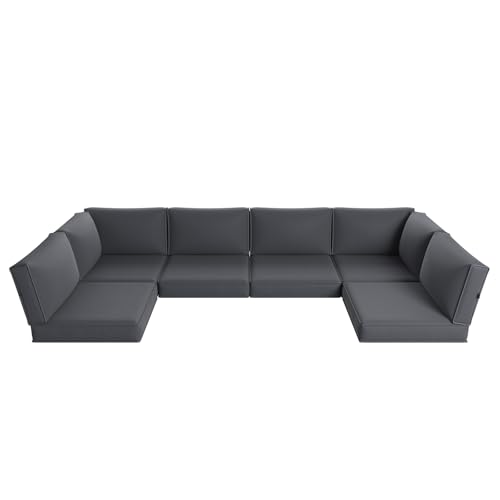
Outdoor Couch Cushions: The Complete Buying Guide
Everything you need to choose, size, and care for patio cushions that stay comfortable and beautiful season after season — from fabric technology and fill types to measuring your frame and storing your set.
START THE GUIDEWhy this guide matters: Outdoor couch cushions are the single most replaceable part of your patio seating — and the part that most directly affects comfort and appearance. Whether you are upgrading tired cushions on a trusted frame, furnishing a new outdoor couch, or refreshing a deep seating arrangement, understanding fabrics, fill, fit, and care will save you from costly misfits and premature wear. This research-stage guide walks you through each decision so you can buy with confidence.
Why Outdoor Couch Cushions Deserve Careful Selection
Patio cushions live a harder life than indoor upholstery. They face direct sun, humidity, rain, temperature swings, and constant compression from use. A cushion that looks plush in a showroom may flatten within a season if the fill and fabric are not matched to real outdoor conditions.
Choosing well means balancing three priorities: comfort (fill density and loft), durability (fabric weave and UV treatment), and fit (dimensions matched to your frame). Get these right and your seating feels intentional and inviting. Get them wrong and you end up with sliding cushions, waterlogged foam, or faded covers before the season ends.
For a broader overview of patio seating before you commit to cushions, explore our outdoor couch buying resources and the wider outdoor cushion guide that covers seating styles beyond couches alone.
Fabric Selection: The Foundation of Long-Lasting Cushions
Fabric is where most outdoor cushions succeed or fail. The best materials resist fading, moisture, and mildew while staying soft against the skin. Here are the main categories you will encounter:
Solution-Dyed Acrylic
Color is locked into the fiber itself, not applied on top. This produces exceptional fade resistance and a soft hand-feel. The benchmark for premium outdoor upholstery.
High-Grade Polyester
Durable, water-repellent options are widely available. Blends with acrylic or olefin improve softness and colorfastness while keeping the fabric resilient.
Olefin (Polypropylene)
Naturally water-resistant and mildew-tolerant, ideal for humid climates. Slightly less soft than acrylic, but excellent for high-moisture environments.
Textilene & Mesh Blends
Quick-drying, breathable, and easy to clean. Best suited to sling-style frames and humid regions where water pooling is a concern.
For covers sold separately, prioritize waterproof outdoor cushion covers with sealed seams or hidden zippers. A well-made cushion cover set lets you refresh the look of your seating without replacing the inner foam — a smart, sustainable upgrade path.
Fabric check: Look for UV-stabilized yarns and a tight, balanced weave. Hold the fabric up to light — a high-quality outdoor fabric should block most light without looking stiff. Also confirm the care label permits machine washing or spot cleaning without voiding the fabric's protective finish.
Fill Types: Balancing Support and Softness
The inside of a cushion determines how it feels and how long it holds its shape. Most quality outdoor cushions use one of three approaches:
- High-density polyurethane foam — the workhorse of seat cushions. It resists compression and keeps its structure under frequent use. Mid-range and high-end cushions typically use foam cores of increasing density, while entry-level cushions may use softer, lighter foam that flattens sooner.
- Polyester fiber fill — soft and cloud-like, common in back cushions. It feels luxurious at first but requires regular fluffing and may clump over time in humid conditions.
- Wrapped foam (foam core with fiber wrap) — the best of both worlds. The foam provides support while the fiber wrap adds a plush surface feel. This is the construction to look for in top-tier seat cushions.
In very humid climates, consider quick-drying foam or mesh-backed constructions that allow water to drain and air to circulate. Avoid fiber-only seat cushions for high-traffic seating; they compress quickly and are better reserved for back cushions or decorative accents.
Measuring for Replacement Outdoor Couch Cushions
Fit is the most common source of frustration with replacement cushions. A cushion that is even slightly too deep will buckle, and one that is too narrow will slide. Measure your frame carefully before ordering any replacement cushions or new seat cushions.
Step 1: Seat Width
Measure the interior width of the seat frame, from side to side. Add a small allowance if cushions are meant to be snug against armrests.
Step 2: Seat Depth
Measure from the front edge of the frame to the backrest. For deep seating, measure the usable depth rather than the outer frame dimensions.
Step 3: Thickness
Check the frame's seat height and back angle. Thicker cushions raise seating height; ensure the total height remains comfortable for dining or lounging.
Step 4: Back Cushion
Measure the height and width of the back panel separately. Curved backs may require flexible or tapered cushions for a smooth fit.
For curved or sectional frames, measure at the widest points and consider custom or modular cushion sets. If you are replacing cushions on a shaped piece, our notes on curved sectional replacement cushions cover the extra measurement steps. Deep seating arrangements benefit from our specific guide to deep seating replacement cushion covers.
Measurement tip: Record every dimension in the same unit (inches or centimeters) and photograph your frame with the tape measure in place. This prevents ordering errors and makes it easy to compare products from different listings.
Cushion Quality Tiers at a Glance
The table below groups outdoor couch cushions by market positioning so you can align your expectations with the tier that suits your patio's use. Compare features, not figures.
| Tier | Typical Fabric | Fill Construction | Best For |
|---|---|---|---|
| Starter tier | Polyester blends with basic UV treatment | Standard foam or fiber fill | Occasional use, covered patios, seasonal refreshes |
| Mid-tier | Acrylic-polyester blends, water-repellent finishes | Higher-density foam with fiber wrap | Regular family use, mixed sun and shade |
| High-end tier | Solution-dyed acrylic, sealed seams | High-density wrapped foam, quick-dry backing | Daily use, full-sun exposures, humid climates |
| Luxury tier | Premium solution-dyed acrylic with stain barriers | Multi-layer foam and fiber with structured cores | Design-led patios, long-term investment seating |
As a rule, moving up a tier improves fabric longevity and fill recovery more than it changes appearance. A mid-tier cushion with a quality cover often outperforms a starter-tier cushion with a premium look but thin fill.
Care and Maintenance for Outdoor Couch Cushions
Simple habits dramatically extend cushion life. Make these part of your seasonal routine:
- Brush off debris weekly to prevent dirt from working into the weave.
- Spot clean promptly with mild soap and water; avoid harsh bleach on solution-dyed fabrics unless the care label permits it.
- Rotate and flip cushions monthly to even out wear and sun exposure.
- Store in a ventilated box during heavy rain or off-season. A cushion storage solution keeps moisture out while allowing airflow.
- Reapply fabric protector at the start of each season to maintain water repellency.
If your covers are showing wear but the inner foam is still firm, consider refreshing with new outdoor cushions or a full cushion cover set rather than replacing the entire seating. For wicker frames, our guide to cushion sets for wicker furniture addresses fit and attachment considerations.
Matching Cushions to Your Patio Setup
The right cushion also depends on the seating it sits on. Consider these pairings:
- Conversation sets: If you are building around a conversation set with dining table or a set with swivel chairs, choose thicker seat cushions for comfort during long gatherings.
- Small spaces: Compact cushions with tapered backs help smaller frames feel proportionate. Our guide to conversation sets for small spaces pairs well with slim-profile cushions.
- Cushionless frames: Some homeowners prefer frames designed for use without cushions; our overview of conversation sets without cushions explains when that approach makes sense.
- Loveseats and benches: A cushioned loveseat or cushioned bench benefits from coordinated cushion sets that unify the seating area.
If you are replacing cushions across a full set, order all covers from the same batch where possible to ensure color consistency, and confirm that seat and back cushions are sold as coordinated pairs.
Pre-Purchase Checklist
Before you order, confirm each of the following:
- Exact seat width, depth, and thickness recorded from your frame.
- Back cushion height and width measured separately.
- Fabric type appropriate for your sun exposure and humidity.
- Fill type matched to seat versus back use.
- Cover construction: sealed seams, zipper quality, and washability.
- Return policy confirmed in case of fit issues.
- Coordinated storage plan in place for wet weather.
If you are furnishing from scratch, browse the full range of outdoor couches available and pair them with cushions that match the frame's depth and style. For a broader style overview, the outdoor cushion guide covers color and pattern selection across seating types.