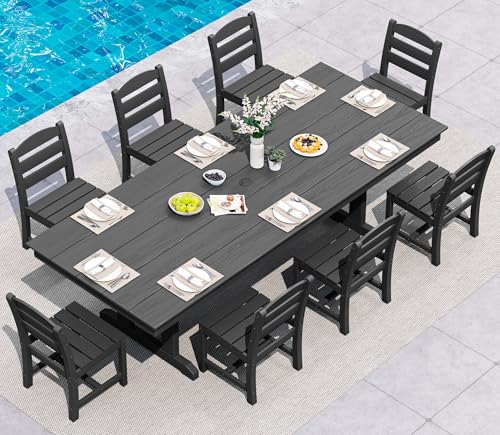
Outdoor Dining Table and Chairs for 8: The Complete Buying Guide
An eight-seat outdoor dining set turns a patio into a gathering place for family dinners, weekend brunches, and celebrations. This guide walks you through sizing, materials, comfort features, and long-term care so you can choose a set that fits your space and your lifestyle with confidence.
Start With SizingWhy this guide matters: Most shoppers researching an eight-person outdoor dining table already know they want a large set. What they often lack is a clear framework for comparing footprint, material performance, seat comfort, and shade compatibility. The sections below answer those questions in plain language and help you move from research to a confident purchase decision.
Sizing an Eight-Person Outdoor Dining Set
The first decision for any large patio dining set is the table footprint. An eight-person table must provide enough linear space per diner so elbows and plates do not collide. As a working rule, allow at least 24 inches of table edge per person and place chairs so they can slide in and out without scraping.
Rectangular tables are the most space-efficient way to seat eight because they use two long sides and two ends. Round tables feel more conversational but need a generous diameter to seat eight comfortably. Oval tables split the difference, offering a softer visual profile and easier circulation around the corners.
| Table Shape | Suggested Minimum Size | Best For | Space Planning Note |
|---|---|---|---|
| Rectangular | 84–96 in long × 36–40 in wide | Formal dinners, mixed seating, umbrella use | Most efficient for narrow patios and decks |
| Oval | 84–96 in long × 40–44 in wide | Soft visual style, easy circulation | Slightly wider footprint than rectangular |
| Round | 60–72 in diameter | Conversation-focused gatherings | Needs generous clearance on all sides |
Clearance is just as important as table size. Plan for at least 36 inches between the table edge and any wall, railing, or planter so chairs can pull out and guests can walk behind them. If you regularly serve from the patio, 42 to 48 inches of clearance makes traffic flow much smoother. Multiply the table footprint plus clearance by two to estimate the minimum patio area you need. Homeowners with tighter spaces sometimes reconsider table shape before committing; our outdoor dining set overview compares layouts in more detail.
Choosing the Right Material for an 8-Seat Set
Material choice drives long-term durability, maintenance effort, and the visual character of your dining area. The main families are metal, wood, resin, and composite, and each performs differently across climates and use patterns.
Metal: Aluminum, Cast Aluminum, and Steel
Powder-coated aluminum is the most common choice for large outdoor dining sets because it is lightweight, rust-resistant, and easy to move when you reconfigure the patio. Cast aluminum adds visual weight and allows ornate detailing, making it a popular premium option. Steel is heavier and very stable but needs a high-grade finish to resist rust over time. A metal outdoor dining table pairs well with matching chairs and tends to handle sun and rain with minimal care.
Wood: Teak, Eucalyptus, and Acacia
Hardwoods like teak and eucalyptus bring warmth and a premium feel to a large dining set. Teak in particular is known for natural weather resistance and can be left to develop a silvery patina or periodically sealed to retain its original tone. Acacia is a solid mid-range option that performs well with routine sealing. Wood sets are heavier and benefit from covers during off-season months.
Resin, HDPE, and Composite
Resin and high-density polyethylene sets are entry-level options that resist moisture and require little upkeep. They are lightweight and easy to clean, making them a practical starter-tier choice for families with young children. Composite materials blend wood fibers with resin to mimic the look of timber while reducing maintenance. If you want a natural look with less upkeep, a metal outdoor table that looks like wood is worth considering as a hybrid alternative.
Materials Comparison at a Glance
| Material | Durability | Maintenance | Best For |
|---|---|---|---|
| Powder-coated aluminum | High, rust-resistant | Low; wipe clean | Coastal and rainy climates |
| Cast aluminum | High, heavy-duty | Low; occasional cleaning | Windy patios and formal settings |
| Teak hardwood | Very high | Moderate; periodic sealing | Premium natural look |
| Resin / HDPE | Moderate | Very low | Families and starter setups |
| Composite | Moderate to high | Low | Wood look without sealing |
Comfort, Seating, and Chair Design
A dining set for eight is used for long meals, so chair comfort deserves serious attention. Consider seat height, back support, armrest clearance, and cushion thickness. Chairs with contoured seats and slightly reclined backs reduce fatigue during extended dinners, while stackable chairs are easier to store during cooler months.
Cushions add comfort but also require care. Look for quick-dry foam and solution-dyed fabrics that resist fading and mildew. If you plan to leave the set outside year-round, removable, washable cushion covers simplify maintenance. For a deeper comparison of fabric performance, our outdoor cushion guide covers fill types, fabric ratings, and care routines.
Chair style also affects the overall look. Slatted aluminum chairs are classic and easy to clean, while wicker and rattan chairs soften the visual weight of a large table. If you want to mix seating, a dining table set with chairs and bench can fit more people along one side while keeping the footprint compact.
Shade and Weather Considerations
An eight-person table often sits in full sun during the middle of the day, so shade planning is essential. A market umbrella with a wide canopy is the simplest solution, especially if your table includes an umbrella hole. For a more permanent structure, a pergola or gazebo provides consistent overhead shade and defines the dining zone. Our guide to a metal outdoor table and chairs with umbrella explains canopy sizing and base stability in more detail.
Wind is the other major factor. Lightweight aluminum sets should be paired with a weighted umbrella base and, in exposed locations, secured during storms. Covers protect finishes and cushions during off-season months; a set of waterproof outdoor furniture covers is one of the most practical accessories for any large dining set. If storage space is limited, our cushion storage guide covers weatherproof containers and deck boxes.
Product Tiers for Large Dining Sets
Eight-person sets span a wide range of construction quality. Rather than focusing on numbers, shoppers can use market tiers to compare relative build quality, material grade, and finish durability. The categories below describe typical characteristics within each tier.
Entry-Level Tier
Lightweight aluminum or resin frames, simpler welds, and thinner cushion foam. A solid starting point for seasonal use, renters, and families who want a functional set without extensive upkeep.
Mid-Range Tier
Heavier aluminum or hardwood frames, better powder coating, and denser cushions. This tier is competitive within its class for year-round use in moderate climates and offers a good balance of durability and comfort.
Premium Tier
Cast aluminum or premium hardwood construction, reinforced joinery, and high-grade fabrics. A worthwhile investment for households that entertain frequently and want a set that holds up over many seasons.
Luxury / Commercial-Grade Tier
Heavy-duty frames, marine-grade hardware, and top-tier upholstery. These sets are built for exposed locations, frequent use, and a polished visual profile that anchors the entire patio design.
Within each tier, details matter more than marketing labels. Look for welded rather than bolted frame joints, powder coating that covers all surfaces including the underside, and cushions with quick-dry cores. A premium-grade umbrella base and a fitted cover extend the lifespan of any set, regardless of tier. If you are comparing brands across tiers, our outdoor dining set buying guide and materials guide provide additional context.
Space Planning and Layout Tips
A large dining set works best when the patio layout supports circulation. Keep the serving path clear by placing the table away from the main door, and leave room for a sideboard or bar cart near the seating zone. If your patio is long and narrow, a rectangular table aligned with the long axis preserves walking space on both sides. On square patios, an oval or round table can reduce sharp corners and improve flow.
Consider how the dining zone connects to the rest of your outdoor space. A clear transition between the dining area and a lounge corner helps guests move naturally between meals and conversation. If your yard includes multiple zones, our outdoor dining hub links to related guides on seating, shade, and entertaining.
Care and Maintenance for Long-Term Value
Routine care is the simplest way to protect a long-term investment. Wipe metal frames with mild soap and water, rinse hardwood surfaces after pollen season, and store cushions in a dry place when not in use. Touch up small scratches on powder-coated aluminum before they spread, and check fasteners at the start of each season.
In colder climates, covers and indoor storage extend the life of both frames and cushions. A well-fitted cover prevents standing water and reduces sun fading. For a broader seasonal checklist, see our weatherproofing guide.
Frequently Asked Questions
What size outdoor dining table seats 8 people comfortably?
A rectangular table roughly 84 to 96 inches long and 36 to 40 inches wide seats eight adults comfortably. Round tables need a diameter of about 60 to 72 inches, and oval tables generally match rectangular lengths. Always leave at least 24 inches of table width per diner and 36 inches of clearance around the table for chair pull-out.
Which material is best for an 8-seater outdoor dining set?
Powder-coated aluminum and cast aluminum are the most popular choices because they resist rust and require minimal upkeep. Teak and other hardwoods offer a premium look and natural weather resistance but need periodic sealing. Resin and HDPE are entry-level options that handle sun and rain well. Choose based on your climate, maintenance preference, and design goals rather than a single best material.
How much clearance do I need around a patio table for eight?
Plan for at least 36 inches of space between the table edge and any wall, railing, or planter so chairs can slide out and people can walk behind them. For serving traffic, 42 to 48 inches is more comfortable. Add the table footprint plus twice the clearance to determine the minimum patio or deck area needed for an eight-person dining zone.
Should I choose an umbrella or a pergola for shade over a large dining table?
A market umbrella with a wide canopy is the simplest shade solution, especially if the table has an umbrella hole. A pergola or gazebo provides more consistent overhead shade and defines the dining area but requires permanent installation. For maximum flexibility, choose an umbrella with a sturdy base rated for your wind conditions and pair it with a weighted stand.
Ready to Compare Eight-Person Dining Sets?
Browse the recommended products below to compare materials, sizes, and seating configurations. Each listing includes feature highlights and availability so you can evaluate options that match your patio footprint and design goals.