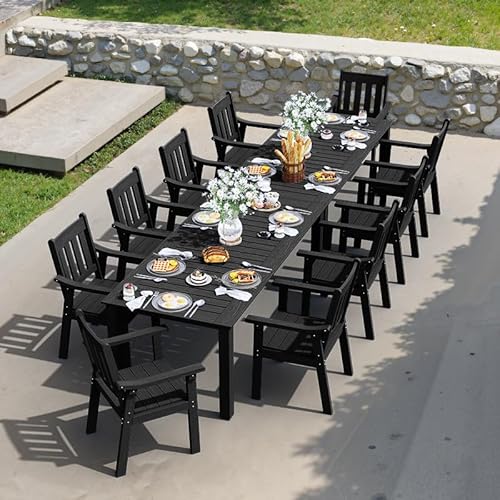
Outdoor Dining Set Buying Guide
Everything you need to know before choosing a patio dining set: materials, sizing, seating capacity, umbrella compatibility, and long-term care — so your outdoor table becomes the heart of every gathering.
START THE GUIDEWhy this guide matters: An outdoor dining set is one of the largest and most-used investments in your backyard. The right set fits your space, survives the seasons, and seats the people you actually host. This guide walks through every decision — from table shape and material to umbrella pairing and winter storage — so you can buy with confidence instead of guesswork.
Why an Outdoor Dining Set Deserves Careful Planning
A dining set transforms a patio from a pass-through area into a destination. It anchors al fresco meals, becomes the natural gathering point during warm evenings, and often doubles as a workspace or game table in between. Because it stays outdoors, it also faces sun, rain, temperature swings, and constant use — which means the decision is as much about durability as it is about style.
Buyers who plan ahead tend to avoid the two most common regrets: a table that is too large for the walkway, and chairs that cannot be pulled out without hitting a wall or planter. Before comparing finishes or shapes, map your space and confirm your realistic seating needs. If you are still exploring the broader category, the outdoor dining hub offers a helpful overview, and the outdoor dining set collection shows the range of configurations available.
Measure First: Sizing Your Dining Area
Measurements are the foundation of a good decision. A set that looks balanced in a showroom can overwhelm a narrow balcony, while an undersized table can leave a large deck feeling empty.
The clearance rule
Allow roughly 36 inches (about 90 cm) of open space around the table edge for chair pull-out and comfortable walk-behind space. On compact patios, 30 inches can work for chairs that tuck in fully, but never sacrifice a clear walkway.
Table shape by space
- Round tables: Best for square or compact patios and encourage conversation. A round four-seat configuration fits tighter corners gracefully.
- Square tables: Efficient for small groups and flexible for two to four diners. They pair well with benches on one or two sides.
- Rectangular tables: The classic entertaining choice for six to eight seats and long porches. They suit linear deck layouts and accommodate benches along the long edge.
- Oval tables: Soften rectangular footprints and make it easier to navigate around the ends.
Seating capacity at a glance
| Configuration | Typical Seats | Best For |
|---|---|---|
| Bistro or round table | 2–4 | Balconies, courtyards, couples |
| Square table with benches | 4–6 | Small families, flexible seating |
| Rectangular table with chairs | 6–8 | Everyday entertaining, covered porches |
| Large table with bench plus chairs | 8+ | Frequent hosters, extended families |
If you regularly host larger groups, consider a large dining table with bench and chairs, or a set pairing chairs and a bench for flexible seating. A dining table set with chairs and bench is a smart compromise between seat count and footprint.
Material Guide: Which Frame Lasts in Your Climate
Material determines weight, maintenance, comfort in heat and cold, and how the set ages. Rather than chasing a single "best" option, match the material to your climate and how much upkeep you are willing to do.
| Material | Tier Positioning | Strengths | Best For |
|---|---|---|---|
| Powder-coated aluminum | mid-tier | Lightweight, rust-resistant, easy to move | Windy decks, frequent rearranging |
| Cast aluminum | premium | Heavier, ornate detailing, holds position | Covered patios, classic style |
| Teak & acacia hardwood | premium | Natural warmth, ages beautifully with oiling | Sheltered patios, warm climates |
| Metal (steel or iron) | mid-range | Solid build, traditional look | Stable, level patios with cover |
| HDPE / resin | entry-level to mid-tier | Weather-forgiving, low maintenance | Coastal areas, year-round exposure |
| Wicker & rattan weave | varies by frame | Soft visual texture, comfortable feel | Covered porches, resort-style patios |
Powder-coated aluminum remains the most popular mid-tier choice for good reason: it resists rust, stays cool in strong sun, and is light enough to reposition. Cast aluminum sits in the premium tier with a heavier, more permanent feel and intricate casting. If you want a metal look with a natural finish, a metal outdoor table that looks like wood delivers warmth without the maintenance of timber, and a metal outdoor dining table pairs well with modern and transitional styles.
Wood lovers should compare teak (top-tier for longevity, oil-rich) against acacia (a solid mid-range option that benefits from an annual seal). For a contemporary option, a concrete dining table offers a grounded, architectural look that suits modern patios, though it is heavy and best positioned permanently. You can compare finishes and care routines in the materials guide.
Chairs, Cushions & Everyday Comfort
The table gets the attention, but chairs decide whether you actually linger after dinner. Look for seats with a comfortable seat height relative to the table (most dining sets sit around 28–30 inches at the table surface), a supportive back, and arms if you want a relaxed feel.
Matching sets are convenient, but mixing in benches or statement seating can solve space problems. If you prefer a lighter visual footprint, rattan chairs for outdoor add texture, while a white garden table brightens shaded patios. For narrow areas, a mid-century modern bistro table and chairs keeps the footprint compact without sacrificing character.
Cushions are a major comfort factor and a common replacement point. Invest in waterproof outdoor furniture cushions and review the outdoor cushion guide for fill and fabric guidance. If your set includes seating that needs refreshing, outdoor dining chair replacement cushions extend the life of the frame. Use the cushion storage solutions to keep them dry between uses.
Umbrella Compatibility & Shade Planning
If your patio receives strong midday sun, shade is not optional. Many outdoor dining tables include a pre-drilled umbrella hole, but compatibility details matter more than the hole itself.
- Check pole diameter: Confirm the hole size matches your umbrella pole, and use a reducer ring if needed.
- Stabilize the base: A weighted base or freestanding offset umbrella prevents tipping in gusts.
- Consider offset umbrellas: Cantilevered designs free up the table surface and work well over benches.
- Plan for wind: Close or lower umbrellas during storms; a broken canopy can damage the table frame.
Popular configurations include an outdoor dining table with umbrella hole and chairs, a dining set for six with umbrella, and a metal table and chairs with umbrella. Smaller patios can use an outdoor deck table and chairs with umbrella or an outdoor bar table and chairs with umbrella for a pub-height option.
Choosing a Configuration That Fits Your Space
Configuration is where lifestyle meets layout. Think about who sits down most often, how you serve food, and whether the set needs to be moved for cleaning or seasonal storage.
For four seats
A dining set for four with a round table is a versatile starting point for couples and small families. Round shapes soften tight corners and encourage conversation.
For six seats
The most common entertaining size. Compare an outdoor dining set for six with six-seat dining sets for layout differences — some include a bench, others all chairs. If your patio is linear, a rectangular six-seat table is usually the most efficient.
For eight or more
Large families and frequent hosters should look at an outdoor dining table and chairs for eight. Bench-plus-chairs arrangements add seat count without crowding the perimeter.
Compact and multi-use
On small patios, a convertible design like an outdoor coffee table that raises to a dining table lets one surface serve lounging and dining. For pub-style dining, consider bar-height table and chairs with umbrella hole and bar stools with 24-inch seat height.
Understanding Tiers: What Changes as You Move Up
Rather than focusing on numbers, understand what each market tier typically delivers. This helps you decide where to prioritize quality.
| Tier | Typical Characteristics | Best For |
|---|---|---|
| entry-level | Lightweight frames, simpler welds, basic cushions | First patio, short-term use, seasonal setups |
| mid-range | Powder-coated aluminum, better hardware, thicker cushions | Everyday family use, most patios |
| premium | Cast aluminum or solid hardwood, reinforced joinery | Long-term investment, covered patios |
| luxury | Designer detailing, high-grade materials, extended coverage | Statement patios, full outdoor kitchens |
Mid-range sets often deliver the most balanced ownership experience: smoother mechanisms, better UV-resistant finishes, and cushions that survive multiple seasons. Premium and luxury tiers justify themselves through heavier frames, refined casting, and superior joinery that hold up over many years.
Maintenance & Storage: Protecting Your Investment
Even the best-built set needs basic care. A consistent routine — rather than occasional deep cleaning — keeps finishes intact and extends the life of cushions and frames.
- Cover when idle: Use waterproof outdoor furniture covers or weatherproof covers during off-seasons and storms.
- Store cushions: Bring cushions indoors or into a water-resistant outdoor storage cabinet or waterproof outdoor box when not in use.
- Clean frames seasonally: Rinse aluminum and resin with mild soap; oil teak once a year; treat metal hardware with rust-inhibiting spray.
- Elevate during winter: In freeze-thaw climates, lift legs off wet surfaces and avoid stacking heavy items on the table.
- Inspect hardware: Tighten bolts at the start of each season to prevent wobble.
For a broader care routine, review the weatherproofing guide and the full outdoor care section. Safe storage also helps with pest prevention — see the mosquito control guide for keeping the dining area comfortable.
Final Buying Checklist
- Measured patio footprint and confirmed 30–36 inch clearance around the table
- Confirmed realistic seat count (plus one or two flexible seats)
- Chosen a material matched to climate and desired maintenance level
- Checked umbrella compatibility if shade is needed
- Verified frame warranty and cushion replacement availability
- Planned storage for cushions and covers for off-season
- Compared delivery, assembly, and return policies
For layout ideas, browse the outdoor dining section for inspiration on table placements and shade pairings.
Frequently Asked Questions
What size outdoor dining set do I need?
Measure your patio and allow roughly 36 inches of clearance around the table for chair pull-out and walkway space. A round or square table for four fits compact patios, while rectangular tables for six to eight suit larger decks and open-air dining areas.
Which material is best for an outdoor dining set?
Each material has strengths. Powder-coated aluminum is lightweight and rust-resistant, teak and acacia offer natural warmth with proper sealing, cast aluminum delivers a heavier permanent feel, and high-density resin or HDPE is the most weather-forgiving option for year-round exposure.
Does a dining set need an umbrella hole?
An umbrella hole is worthwhile if your patio receives strong midday sun. Look for tables with a pre-drilled hole and a stable base or a weighted freestanding umbrella. Check that the hole diameter matches your umbrella pole and that the table frame is reinforced around the opening.
Can outdoor dining sets stay outside in winter?
Many modern sets are designed for year-round exposure, but protection extends lifespan. Use waterproof outdoor furniture covers, store cushions indoors, and elevate metal or wood frames off wet surfaces during freezing months.
How many chairs should an outdoor dining set include?
Match seating to your typical gathering size plus one or two flexible seats. Four-seat sets suit couples and small families, six-seat sets cover most entertaining needs, and eight-seat or bench-combination sets work best for frequent large gatherings.
Ready to Compare Outdoor Dining Sets?
Browse curated outdoor dining sets, filter by seating capacity and material, and read detailed feature breakdowns before you decide.
VIEW RECOMMENDED SETS