Outdoor Dining Table with Cooler in Middle: The Ultimate Entertaining Centerpiece
Keep drinks ice-cold and conversations flowing with a patio dining table that puts refreshment at the center of every gathering. Here is everything you need to know before choosing one.
Why a Built-In Cooler Changes Everything: Instead of juggling separate coolers, ice buckets, and side tables, an outdoor dining table with a cooler in the middle consolidates everything into one seamless piece. Your guests stay seated, drinks stay cold, and the table stays clutter-free. This guide covers the designs, materials, and practical considerations that matter most when shopping for one.
What Is an Outdoor Dining Table with a Cooler in the Middle?
An outdoor dining table with a cooler in the middle is a purpose-built patio table where the center section is an insulated compartment designed to hold ice, beverages, and sometimes food. The cooler typically sits flush with the tabletop or slightly recessed, and most models include a removable lid that doubles as extra serving space when closed.
These tables solve a common backyard problem: keeping drinks cold without sacrificing dining space or forcing guests to walk back and forth to a separate cooler. The integrated design means the cooler is always within arm's reach, and the table functions as a complete entertaining hub.
Integrated Insulation
Built-in cooler compartments use foam or double-wall insulation to keep ice solid for hours, even in direct sun.
Removable Lid
Most lids detach or flip open, and many can be used as a serving tray or extra tabletop surface when removed.
Drain Plug
Quality models include a drainage plug at the bottom of the cooler, making cleanup after a gathering far easier.
Seating Around the Cooler
The cooler occupies the center, so chairs surround the perimeter — every seat has equal access to drinks and food.
Design Variations You Will Encounter
Not all cooler tables are built the same. The three most common configurations are:
1. Full-Length Center Cooler
The cooler runs the entire length or width of the table's center, creating a long trough for ice and drinks. This style works well for large families or frequent entertainers who need serious beverage capacity. The trade-off is that the cooler takes up significant tabletop real estate, so you will have less flat surface for plates and serving dishes.
2. Drop-In Cooler Bin
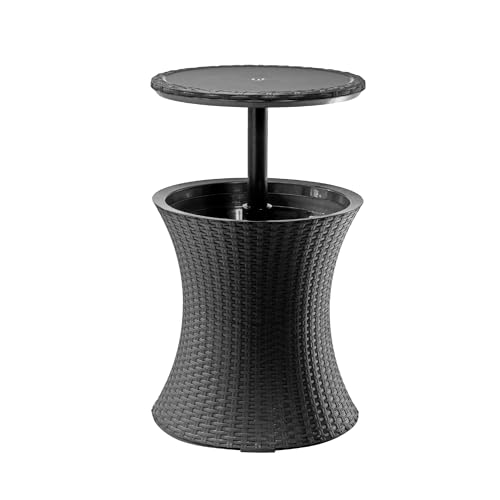
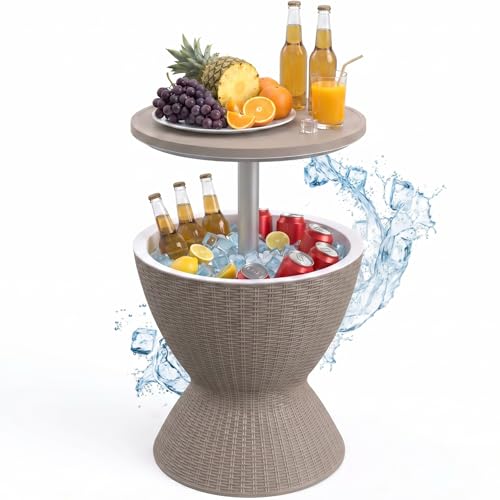
A smaller, removable cooler bin sits in a cutout near the center of the table. This design is more flexible — you can lift the bin out and use the table as a standard dining surface when the cooler is not needed. Drop-in bins are typically entry-level to mid-range in construction and suit casual backyard use.
3. Dual-Purpose Fire Pit and Cooler Combo
Some premium tables combine a center cooler with a fire pit insert, letting you switch between cold drinks and warm ambiance. These are high-end tier pieces that require more maintenance but offer unmatched versatility for year-round outdoor living. If this appeals to you, explore outdoor dining tables with a fire pit in the middle for a deeper comparison.
Materials and Construction: What to Look For
The table frame and cooler housing need to withstand sun, rain, and temperature swings. Here is how the common materials compare:
| Material | Durability Tier | Best For | Maintenance |
|---|---|---|---|
| Powder-coated aluminum | Premium | Humid climates, coastal areas | Wipe clean; rust-resistant |
| Teak or acacia hardwood | High-end tier | Traditional and rustic patios | Annual oiling recommended |
| High-density polyethylene (HDPE) | Mid-range | Family use, all-weather exposure | Soap and water; no sealing needed |
| Steel with rust-proof finish | Mid-tier to premium | Modern and industrial styles | Inspect for scratches; touch up coating |
| Resin wicker over metal frame | Entry-level to mid-range | Casual, decorative patios | Rinse; avoid prolonged water exposure |
For the cooler compartment itself, look for food-grade plastic liners and fully sealed insulation. A poorly sealed cooler will sweat, leak, and lose its cooling efficiency quickly. The lid gasket matters too — a tight seal keeps cold air in and insects out.
Pro Tip: Check the Drainage
A cooler table without a drain plug forces you to tip the entire table to empty melted ice. That is impractical and can damage the frame over time. Always confirm the cooler compartment has a bottom drain with a removable cap before committing to a model.
Sizing and Seating Considerations
Cooler tables come in a range of sizes, but the center cooler changes how many people can comfortably sit around the table. As a general rule:
- Rectangular tables with a center cooler typically seat 6 to 8 people, with three to four chairs per long side. The cooler runs lengthwise, so no one sits directly over it.
- Round cooler tables usually seat 4 to 6. The cooler is a circular bin in the center, and chairs distribute evenly around the perimeter.
- Square cooler tables often seat 4, with the cooler as a central square bin. These work best on smaller patios or balconies.
Pay attention to chair clearance. Because the cooler occupies the center, the usable table edge for each diner may be narrower than on a standard table. If you are pairing the table with new seating, review outdoor dining chairs to find options that tuck neatly under the table without crowding the cooler access.
For tighter spaces, a dining table with a bench and chairs can maximize seating without adding visual bulk, and benches slide fully under the table when not in use.
How to Choose the Right Cooler Table for Your Patio
Work through these questions before you start shopping:
- How often do you entertain? Frequent hosts benefit from a full-length center cooler with generous capacity. Occasional entertainers may prefer a drop-in bin that can be removed when not needed.
- What is your climate? In hot, sunny regions, insulation quality is critical. Look for double-wall construction and a tight-sealing lid. In coastal areas, prioritize rust-proof aluminum or HDPE over steel.
- How much shade does your patio get? A table in direct sun will melt ice faster regardless of insulation. Pair the table with a patio umbrella or position it under a pergola to extend cooling performance.
- Do you need matching seating? Many cooler tables are sold as part of a set. If you are building a complete outdoor dining area, browse outdoor dining furniture to coordinate tables, chairs, and storage.
- Will the table stay outside year-round? If yes, choose a material rated for full weather exposure and consider a fitted cover for the off-season. HDPE and powder-coated aluminum are the most forgiving in this regard.
Cooler Table vs. Standard Dining Table: Which Makes More Sense?
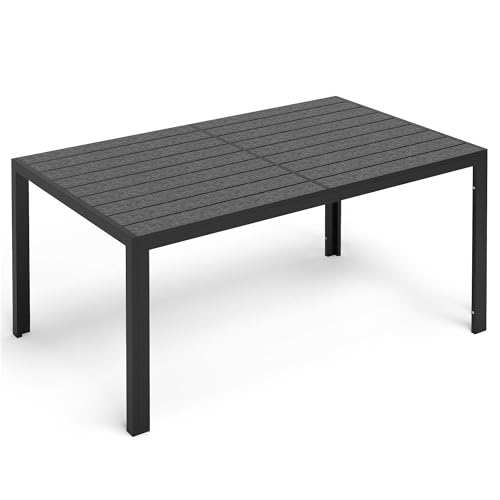
A standard outdoor dining table is more versatile for everyday meals — it offers a flat, uninterrupted surface for homework, crafts, or a large spread of food. A cooler table is purpose-built for entertaining, and the center compartment is a permanent feature that you cannot remove (unless you choose a drop-in bin model).
If your patio is primarily a dining space for family meals, a standard table may be the better fit. If your patio is an entertainment zone where drinks, snacks, and socializing are the priority, a cooler table earns its keep. Many homeowners compromise by choosing a drop-in cooler table that converts to a standard surface when the bin is removed.
Maintenance and Longevity Tips
- Empty and dry the cooler after every use. Standing water accelerates mold growth and can degrade the insulation over time.
- Clean the cooler liner with mild soap and water. Avoid abrasive cleaners that scratch food-grade plastic.
- Inspect the lid gasket seasonally. Replace it if it hardens or cracks — a failing gasket is the most common reason cooler tables lose cooling performance.
- Cover the table during off-season or heavy rain. Even weather-resistant materials last longer when protected.
- Tighten hardware twice a year. Cooler tables experience more movement than standard tables because the lid opens and closes frequently.
Frequently Asked Questions
How long does ice last in a cooler table?
Quality insulated cooler tables keep ice solid for 6 to 12 hours in moderate shade. In direct sun, expect the lower end of that range. Pre-chilling the cooler with a small amount of ice before adding drinks helps extend performance.
Can I use the cooler compartment for food?
Yes, most food-grade liners are safe for both drinks and food. However, avoid placing unwrapped food directly on ice — use sealed containers or a secondary tray to prevent contamination and sogginess.
Do cooler tables require assembly?
Most ship flat-packed and require 30 to 60 minutes of assembly with basic tools. Tables with integrated electrical components, like fire pit combos, may need professional installation.
What size cooler table fits a small patio?
A round or square table that seats four is usually the best fit for compact patios and balconies. Measure your space and leave at least 24 inches of clearance on all sides for chair pull-out.
Can I replace the cooler bin if it gets damaged?
Drop-in bin models usually allow replacement bins to be ordered separately. Full-length integrated coolers are harder to replace — the entire tabletop may need to be serviced, so check warranty coverage before purchasing.
Ready to Upgrade Your Outdoor Entertaining?
Browse our curated selection of outdoor dining tables with center coolers and find the one that fits your patio, your style, and your hosting habits.
Explore Recommended Options