Outdoor Furniture Covering: The Complete Protection Guide
Everything you need to know about protecting patio furniture with covers — fabric types, fit, ventilation, and long-term care for every season.
Jump to Buying GuideWhy covering matters: Outdoor furniture faces rain, UV rays, dust, pollen, and temperature swings every day. A well-chosen cover is the simplest and most effective way to extend the life of your patio investment. This guide breaks down the materials, fit strategies, and maintenance routines that separate a cover that lasts years from one that fails after a single season.
What Outdoor Furniture Covering Actually Does
An outdoor furniture cover is a protective fabric shell designed to shield tables, chairs, sofas, and loungers from environmental damage. It works on four fronts: blocking water from soaking cushions and frames, filtering ultraviolet light that fades fabrics and cracks resin, keeping dust and debris off surfaces, and reducing condensation on metal components that leads to rust.
The best covers are not simply waterproof tarps. They balance water resistance with breathability so that moisture trapped beneath the fabric can escape. A cover that traps humidity is often worse than no cover at all, because it creates a damp microclimate that encourages mildew on cushions and corrosion on metal frames. Understanding this balance is the key to choosing wisely.
Materials Compared: Which Covering Holds Up Best
Cover fabric determines how well protection holds up over time. Most patio furniture covers fall into a few recognizable material families.
Polyester with Polyurethane Backing
The most common choice for mid-range patio covers. The polyester outer layer resists abrasion and fading, while the polyurethane backing provides a water-resistant barrier. Quality versions include sealed seams and vent panels. This category handles typical residential use well and remains flexible in cooler weather.
Solution-Dyed Acrylic
Premium covers use acrylic fabric dyed at the fiber level, which makes color fade resistance exceptional. These covers are breathable and repel water without a stiff coating. They suit sunny climates where UV exposure is the primary threat and represent a long-term investment for homeowners who want the cover to match the furniture's lifespan.
Heavy-Duty Canvas
Woven cotton-polyester blends or treated canvas offer a rugged feel and thick protection. They excel for winter storage and for covering heavy dining sets or fire pit tables. Canvas needs periodic re-treatment with a water repellent spray to maintain performance, and it is heavier to handle.
Vinyl and PVC
Fully waterproof and easy to wipe clean, vinyl covers are common for commercial-grade settings. The trade-off is breathability — many vinyl covers lack vents, so they work best for short-term rain protection or covered storage rather than long-term outdoor use in humid regions.
| Tier | Typical Materials | Best For |
|---|---|---|
| Entry-level | Light polyester, basic PE fabric | Short-term dust protection, covered porches |
| Mid-range | Polyester with PU backing, sealed seams | Everyday residential patios in mixed climates |
| High-end tier | Solution-dyed acrylic, breathable membranes | Sun-heavy regions and year-round outdoor use |
| Commercial-grade | Reinforced canvas, heavy vinyl, UV-stabilized fabric | Restaurants, cafés, and high-traffic hospitality spaces |
Practical tip: If your furniture lives under a pergola or on a covered porch, a mid-range breathable cover is usually enough. If it sits fully exposed to rain and sun, step up to a high-end tier fabric with UV stabilization and reinforced seams.
Fit and Sizing: The Most Common Mistake
Poor fit is the leading cause of cover failure. A cover that is too tight stretches seams and tears at stress points. A cover that is too loose collects water in sagging pockets and flaps in wind, scuffing the furniture beneath. The right cover drapes slightly and stays anchored.
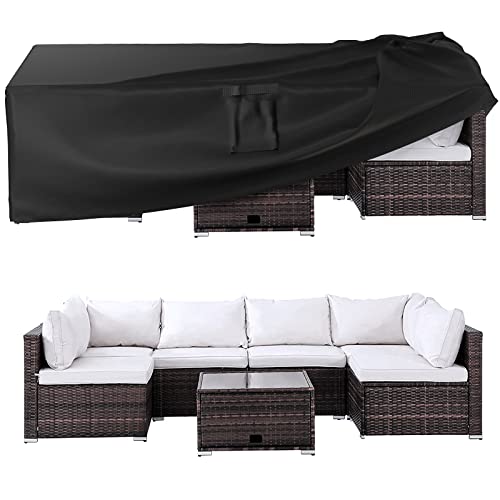
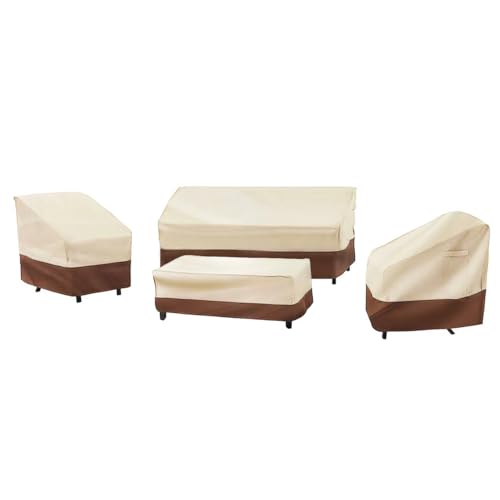
Measure the widest point of the furniture for length, the deepest point for width, and the highest point including the backrest for height. Add a few inches of clearance on each side. For sets, look for modular covers that fit individual pieces rather than one oversized sheet over the whole arrangement. A modular outdoor furniture set benefits from per-piece covers because each piece gets a snug fit and you can uncover only what you need.
Drawstrings, elastic hems, and buckle straps matter more than most shoppers realize. Wind is the silent killer of covers — it lifts loose fabric, lets rain underneath, and grinds the material against furniture edges. Choose covers with at least two attachment points per side.
Covering by Furniture Type
Dining Sets
Dining tables with an umbrella hole need covers designed for that opening, or a cover that fits over the closed umbrella. A complete outdoor dining table set often comes with manufacturer-matched covers. If you are buying separately, confirm the cover height accounts for the table plus chairs stacked or tucked beneath. For tables with a fire element, check that the cover is rated for the surface temperature after the fire feature cools completely.
Lounge and Deep Seating
Sectionals, sofas, and outdoor loveseats require covers with enough depth to accommodate back cushions. If your cushions stay on the furniture, the cover must breathe to prevent trapped humidity against foam. Consider waterproof cushions as a complement — cover plus waterproof cushion construction is a strong combination.
Fire Pit Tables and Heaters
Fire features have unique covering needs. A cover should fit over the table when fully cooled and should not rest directly on burner components. For propane models, keep covers away from gas connections until the unit is disconnected and cool. Browse outdoor fire pit tables and their compatible covers together when planning your setup.
Small Seating and Accents
Outdoor egg chairs, gliders, and benches often have curved or irregular shapes that generic covers handle poorly. Look for covers with stretch panels or drawstring hems that conform to curves. For garden benches, a simple slip cover with a fitted back panel works well.
Buying Checklist: Features That Matter
- Breathability: Look for mesh vents, vented panels, or breathable membrane fabric. This prevents mold and condensation.
- Sealed seams: Stitched seams are the first failure point in rain. Heat-sealed or taped seams extend cover life significantly.
- UV stabilization: Fabric treated against ultraviolet degradation will not become brittle after one summer.
- Attachment system: Drawstrings, buckles, and elastic hems keep the cover anchored in wind.
- Reinforced stress points: Double-stitched corners and reinforced fabric at furniture contact points resist tearing.
- Compatibility with your furniture: Measure before buying and compare to the size chart. When in doubt, size up rather than down.
If you are also investing in new pieces, pair your cover strategy with a review of outdoor furniture that can withstand weather — covers complement weather-resistant construction but do not replace it.
Care and Maintenance of Covers
Covers are protective gear, not permanent installations. Keep them working by brushing off debris before it grinds into the fabric, rinsing with mild soap and water each season, and letting them dry fully in the sun before folding and storing. Never fold a damp cover — trapped moisture degrades the fabric and breeds mildew.
Reapply water-repellent spray to canvas and treated fabrics once per season, or when water stops beading on the surface. Check seams annually for separation and repair small tears promptly with fabric tape or a patch kit. Store covers in a dry container during long off-seasons if you use them only for winter protection.
Common Mistakes to Avoid
- Covering wet furniture — always dry cushions and frames before covering.
- Using a single oversized tarp for a whole set — wind and water pooling damage both cover and furniture.
- Choosing a fully waterproof but non-breathable cover in humid climates — this traps moisture inside.
- Ignoring wind anchoring — loose covers cause more wear than no covers in windy regions.
- Skipping measurement and buying by label size alone — manufacturer size charts are more reliable than generic labels.
Frequently Asked Questions
What is the best material for outdoor furniture covering?
Polyester with a polyurethane backing is widely considered the most reliable all-round choice for residential patios. Solution-dyed acrylic offers the strongest UV resistance for sunny climates, while heavy canvas and commercial vinyl suit long-term storage and hospitality settings.
Do outdoor furniture covers cause mold?
Covers cause mold only when moisture gets trapped underneath. Choose breathable fabric with vents, dry furniture before covering, and air everything out during dry weather. A quality breathable cover actually reduces mold risk by keeping rain off while letting humidity escape.
Should I cover my patio furniture every day?
Daily covering is not required. Use covers during heavy rain, extended sun exposure, off-season storage, and when furniture will sit unused. For everyday use, quick wipe-downs plus a cover during storms is usually sufficient.
How do I measure furniture for a cover?
Measure the widest point for length, deepest point for width, and highest point including backrest for height. Add a few inches of clearance per side. Compare against the manufacturer's size chart rather than assuming a label size.
Protect the Investment You Already Made
Outdoor furniture is a long-term investment in how you use your backyard. A cover is one of the least costly upgrades you can make to protect that investment, and choosing the right one is straightforward once you understand materials, fit, and ventilation. Pair a well-fitted breathable cover with the correct cushion storage routine and seasonal cleaning, and your patio set will look and perform better for years.