Outdoor Patio Furniture for Apartment Balcony Living
Turn a compact urban balcony into a functional outdoor retreat with space-smart furniture, weather-resistant materials, and layouts designed for small footprints.
Why this guide matters: Apartment balconies come with hard limits — narrow walkways, load restrictions, wind exposure, and no room for error. This guide walks you through furniture categories, layout strategies, and material choices that actually work on a small balcony, so you can shop with confidence instead of guesswork.
Why Balcony Furniture Is Different
A balcony is not a scaled-down backyard. It is a constrained outdoor room with unique rules. Floor space is measured in inches, not feet. Wind tunnels between buildings can topple lightweight chairs. Rain blows sideways under railings, and HOA or building regulations may restrict grills, open flames, and even furniture placement near glass railings. Understanding these constraints before you shop prevents returns and frustration.
The good news is that manufacturers now design specifically for this segment. Compact bistro sets, stackable chairs, wall-mounted folding tables, and modular loveseats are all built with small footprints in mind. The key is matching the furniture format to your balcony's actual dimensions and exposure. If your space is especially tight, exploring dedicated outdoor lounge furniture for small spaces can reveal configurations you may not have considered.
Space-Saving Layout Strategies That Work
Before choosing a single piece of furniture, sketch your balcony to scale. Measure the width, depth, railing height, and door swing. Then match one of these proven layouts to your space.
The Linear Layout
Push everything against one long wall or railing. A slim bench, a narrow console, and two folding chairs create seating without blocking the walkway. Ideal for balconies under five feet deep.
The Conversation Corner
Place a small loveseat or two chairs at a right angle in one corner, with a compact side table between them. This leaves the center open and makes the balcony feel larger than it is.
The Bistro Nook
A round high-top table with two swivel chairs fits in tight corners and doubles as a workspace. Choose a table with a narrow base so chairs can tuck underneath when not in use.
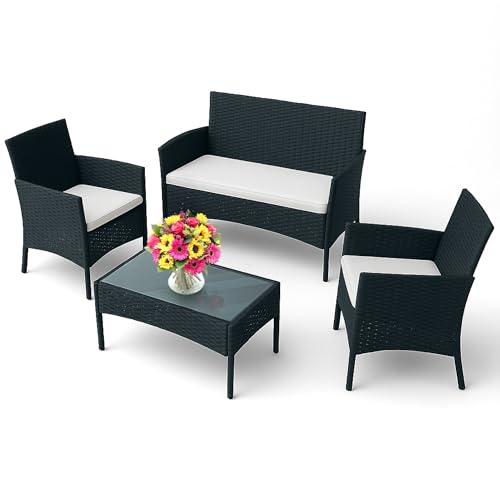
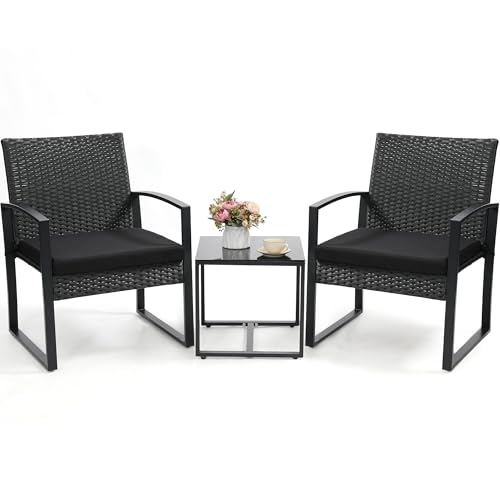
For balconies with a longer footprint, a high-top configuration can anchor the space without overwhelming it. Options like an outdoor high-top table and 2 chairs are particularly effective because the vertical orientation keeps the visual footprint small while still providing a legitimate dining surface. If you prefer a more relaxed seating arrangement, a patio furniture set with 2 chairs and a table remains one of the most reliable formats for balconies in the four-to-six-foot range.
The Furniture Categories That Fit Balconies Best
Bistro and high-top sets. These are the workhorses of balcony living. A compact table paired with two chairs delivers dining, coffee, and laptop space in a footprint that rarely exceeds three feet across. High-top versions add a perception of openness because the eye travels under the table rather than across a solid surface. Many models fold flat for storage during the off-season.
Stackable and folding chairs. When you need seating for four but only have room for two, stackable chairs solve the problem. They live against the wall when not in use and deploy in seconds when guests arrive. Folding chairs go a step further — they collapse entirely and can be stored in a closet. For a dedicated lounging option, consider a lightweight folding chaise lounge chair that can be repositioned or stored with minimal effort.
Compact loveseats and benches. A two-seat loveseat is the sweet spot for balcony lounging. It provides comfortable seating for two without the bulk of a full sofa. Look for models with removable cushions so you can bring them inside during rain. A weather-resistant outdoor loveseat with a slim frame can define the seating zone while leaving room for a small side table.
Hanging and swing chairs. If your balcony has a structural beam or ceiling anchor point, a hanging chair adds a focal point without consuming floor space. The hanging egg chair is a popular choice because it combines a small footprint with a strong visual presence. Just verify that your building allows ceiling-mounted hardware before committing.
Modular and multi-purpose pieces. Storage benches, nesting tables, and ottomans that double as seating keep clutter contained. On a balcony, every piece should earn its place by serving at least two functions. A weatherproof outdoor ottoman, for example, works as a footrest, an extra seat, and a surface for a tray.
Material Selection for Balcony Conditions
Balconies are exposed to wind, rain, and UV radiation — sometimes all at once. The material you choose determines how long your furniture lasts and how much maintenance it demands. Here is how the major categories compare.
| Material | Weather Resistance | Weight & Portability | Best For |
|---|---|---|---|
| Powder-coated aluminum | Excellent — rust-proof frame with durable coating | Lightweight and easy to move | Windy balconies where portability matters; high-humidity climates |
| High-density polyethylene (HDPE) resin | Excellent — UV-stabilized and waterproof | Moderate weight; stackable formats available | Year-round exposed balconies; low-maintenance households |
| Teak and acacia wood | Good — naturally resistant when sealed | Heavier; not ideal for frequent rearranging | Covered balconies with a design-forward aesthetic |
| Wicker and rattan (synthetic) | Good — synthetic versions resist moisture better than natural | Light to moderate | Covered balconies and aesthetic-driven setups |
| Steel with weather-resistant coating | Moderate to good — depends on coating quality | Heavy; stable in wind | Sheltered balconies where stability is the priority |
Cushions deserve their own consideration. Standard foam absorbs water and mildews quickly. Look for cushions with solution-dyed acrylic covers and quick-dry foam cores. Removable, washable covers extend the lifespan significantly. If you are furnishing a balcony that receives direct sun for most of the day, fade-resistant fabrics are non-negotiable. You can explore dedicated waterproof outdoor lounge chair cushions that are built for exactly this kind of exposure.
What to Skip on a Balcony
Not every outdoor product translates to balcony life. Full-size dining sets with six or eight chairs overwhelm the space and block movement. Deep-seated sectionals leave no room for a walkway. Fire pits and open-flame heaters are often prohibited by building codes or lease agreements — and even where allowed, they demand clearance that most balconies cannot provide. Oversized umbrellas can act like sails in the wind and may require a weighted base that eats into your usable floor area.
Instead, lean toward vertical solutions. Wall-mounted planters, railing hooks, and fold-down tables add function without consuming floor space. Lighting can be handled with clamp-on or adhesive strip lights rather than freestanding lamps. The outdoor light chains category offers battery-powered options that require no wiring and can be strung along the railing.
Balcony Furniture Buying Checklist
- Measure twice. Record the width, depth, railing height, and door clearance of your balcony before shopping. Confirm that the assembled furniture dimensions leave at least a 24-inch walking path.
- Check building rules. Verify whether your lease or HOA permits grills, fire features, hanging hardware, and furniture on the balcony surface. Some buildings restrict weight loads as well.
- Match material to exposure. Open, unsheltered balconies need rust-proof frames and UV-stabilized materials. Covered balconies allow more flexibility with wood and wicker.
- Prioritize stackability and foldability. Furniture that collapses or stacks gives you the option to clear the floor when you need space for other activities.
- Plan for wind. Avoid tall, lightweight pieces on upper floors unless they can be secured. Weighted bases and tie-down straps are worthwhile additions.
- Choose cushions you can store. Removable, quick-dry cushions that can be brought inside during rain will last far longer than fixed cushions.
- Think vertically. Railing planters, hanging lights, and wall-mounted shelves add function without reducing floor area.
- Leave room to move. A balcony crowded with furniture feels smaller than an empty one. Resist the urge to fill every inch.
Seasonal Care for Balcony Furniture
Balcony furniture faces harsher conditions than patio furniture in a sheltered yard. Rain blows in at angles, sun reflects off glass railings, and wind-driven grit abrades finishes. A simple seasonal routine keeps pieces looking fresh and extends their service life.
During rainy seasons, wipe down frames weekly and check for standing water in cushions and table recesses. Bring cushions inside during storms whenever possible. In winter, clean and dry all pieces before covering them — trapped moisture causes more damage than cold alone. Use breathable covers rather than airtight plastic, which can trap condensation. For metal frames, touch up any chips in the coating immediately to prevent corrosion from spreading. Resin furniture benefits from a simple wash with mild soap and water; avoid abrasive cleaners that dull the surface.
If your balcony receives heavy sun exposure, rotate furniture periodically to prevent uneven fading. This is especially important for resin and fabric surfaces, which can develop visible tone differences over a single season.
Frequently Asked Questions
What type of patio furniture works best on a small apartment balcony?
Folding bistro sets, stackable chairs, and modular loveseats work best because they maximize seating without permanently occupying floor space. Look for lightweight frames and slim profiles that can be rearranged or tucked away when not in use.
How do I protect balcony furniture from wind and rain?
Choose weather-resistant materials like powder-coated aluminum, high-density polyethylene resin, or treated acacia wood. Use fitted covers during storms and secure lightweight pieces with straps or weighted bases on windy balconies.
Can I fit a dining set on a narrow apartment balcony?
Yes, if you choose a vertical or wall-adjacent layout. A high-top table with two swivel chairs or a narrow folding bistro set can create a functional dining nook on balconies as narrow as four feet, as long as you leave a clear walking path.
What materials hold up best on a covered balcony?
Under a roof or overhang, you have more flexibility. Wicker and rattan, teak, and fabric cushions all perform well when shielded from direct rain. Even so, UV exposure can fade untreated fabrics, so solution-dyed acrylic is a smart choice for cushions.
Build a Balcony That Works for You
Start with measurements, choose a layout that matches your footprint, and select materials built for your balcony's exposure. The right combination turns a small outdoor space into the most-used room in your apartment.