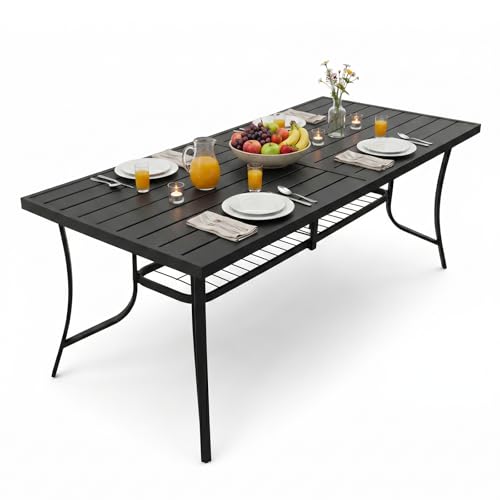
Outdoor Rectangular Table with Umbrella Hole: The Complete Buying Guide
Everything you need to know about choosing a rectangular patio table with an umbrella hole — sizes, materials, seating capacity, stability, and shade integration — so you can make a confident, well-informed decision.
Explore the Buying GuideWhy this guide matters: A rectangular outdoor table with an umbrella hole is one of the most practical investments for a patio, deck, or poolside area. It combines dining space with built-in shade, but the details — from hole diameter to frame material — determine whether it lasts a single season or a decade. This guide walks you through every decision point.
What Is an Outdoor Rectangular Table with Umbrella Hole?
An outdoor rectangular table with an umbrella hole is a patio dining table that features a pre-drilled opening in the center of its tabletop, designed to accommodate the pole of a patio umbrella. The rectangular shape is favored for longer seating runs along each side, making it a natural fit for family meals, entertaining, and multi-person dining.
Unlike a separate umbrella stand, an integrated table-hole design keeps the umbrella pole centered over the table, providing balanced shade and a cleaner footprint. This is especially valuable on smaller patios where floor space is at a premium. For homeowners considering a broader furniture set, a rectangular table is often paired with matching chairs and benches — see our guide to outdoor patio table and chairs with umbrella hole for coordinated options.
The hole itself is typically between 1.5 and 2 inches in diameter, though this varies by brand. Some tables include a removable cap or ring, which allows the table to be used without an umbrella when shade is not needed. If you already own an umbrella, verify its pole diameter before selecting a table — this is one of the most common compatibility oversights.
Why Choose a Rectangular Shape with an Umbrella Hole?
Rectangular tables with umbrella holes solve two problems at once: they maximize dining surface and seating along a linear footprint, and they anchor shade directly over the dining area. Here is why this configuration works so well:
Efficient Seating
A rectangular top seats more people along its long sides than a round table of similar depth, making it ideal for narrow patios and decks.
Centered Shade
The umbrella pole rises directly from the table center, casting balanced shade over diners rather than to one side.
Space-Saving Footprint
No separate umbrella base is needed on the ground, freeing up floor area for chairs and circulation.
Flexible Layout
Rectangular tables align neatly against walls, railings, or the edges of a deck, while still offering full seating access.
Entertaining-Friendly
The long surface accommodates serving dishes, centerpieces, and place settings without crowding the umbrella pole.
Umbrella Compatibility
Pairs naturally with market umbrellas, tilt umbrellas, and offset models that require a central anchor point.
Sizing Guide: How to Choose the Right Dimensions
Rectangular patio tables with umbrella holes are commonly available in lengths ranging from about 55 to 84 inches and widths from roughly 31 to 40 inches. The right size depends on your seating goals, available space, and umbrella canopy size.
- Seats 4: Typically 55–60 inches long and 31–36 inches wide — a solid choice for compact decks and small families.
- Seats 6: Usually 60–72 inches long and 36–40 inches wide — the most common configuration for everyday outdoor dining.
- Seats 8: Generally 72–84 inches long and 38–40 inches wide — suited to larger patios and frequent entertaining.
As a rule of thumb, allow at least 24 inches of table edge per seated diner and leave 30–36 inches of clearance between the table edge and any wall or railing for chair pull-out. Also consider the umbrella canopy diameter: a 9-foot canopy typically covers a table up to about 72 inches long, while a 10-foot canopy is better matched to longer 84-inch tables. If you are weighing a rectangular layout against a round one, our guide to the outdoor round dining table with umbrella hole explains where each shape excels.
Frame and Tabletop Materials Compared
Material choice is the single biggest factor in longevity and maintenance. Each option below is described in terms of market positioning and construction quality — not by any specific figures.
| Material | Tier | Best For | Notes on Durability |
|---|---|---|---|
| Powder-coated aluminum | Mid-range to premium | Year-round outdoor use | Rust-proof finish, lightweight, low maintenance; solid choice for the tier. |
| High-grade steel | Essential tier to mid-tier | Stability in windy areas | Heavy-duty and stable, but requires a weather-resistant coating to prevent corrosion. |
| Teak and hardwood | Premium to luxury | Long-term investment | Naturally weather-resistant; needs occasional oiling to preserve finish. |
| HDPE / poly lumber | Mid-range | Coastal and humid climates | Will not rot, splinter, or absorb water; feature-rich for its class. |
| Resin / plastic composite | Starter tier | Lightweight portability | Entry-level option; suitable for covered patios and seasonal use. |
Tabletop materials deserve separate attention. Slat tops shed water quickly but can let small items fall through; solid tops offer more usable surface but require drainage around the umbrella hole. Glass tops are easy to wipe down but should be tempered for safety. For a broader look at frame construction, see our overview of outdoor patio furniture materials and finishes.
Umbrella Hole Compatibility and Stability
The umbrella hole is only half of the equation — stability is the other half. A table-mounted umbrella exerts leverage on the pole and the table, especially in gusty conditions. Here is what to check:
- Pole diameter match: Confirm the umbrella pole fits the hole (typically 1.5–2 inches) without excessive play.
- Weighted base: Many tables rely on a separate base beneath the table for stability; verify whether one is included or required.
- Table weight and leg design: Heavier frames and wide-set legs resist tipping better than lightweight, narrow-leg designs.
- Wind rating: For exposed locations, consider a table with a reinforced center hub or an umbrella with a wind vent.
- Removable cap or ring: A cap lets you use the table without an umbrella and keeps crumbs out of the opening.
If your priority is maximum shade coverage across a larger seating area, an outdoor patio table and chairs with umbrella bundle can simplify matching pole, canopy, and table dimensions. Homeowners planning a full dining setup may also want to review outdoor patio table with umbrella and chairs configurations for coordinated styling.
Pairing the Table with the Right Seating
A rectangular table is only as comfortable as the chairs around it. Consider these pairings:
- Stackable dining chairs: Easy to store and rearrange; a practical match for mid-range tables.
- Benches: Maximize seating along the long sides and tuck fully under the table when not in use.
- Swivel or rocking chairs: Add motion and comfort at the ends of the table — see our guide to outdoor patio swivel chairs with cushions.
- Cushioned seats: Improve long-sitting comfort; choose quick-dry foam and UV-resistant fabrics.
For compact spaces, a outdoor patio table and chairs set often bundles a rectangular table with coordinating seating. If you plan to add storage for cushions and linens nearby, a outdoor patio storage cabinet with shelves keeps the area organized and extends the life of fabric items.
Placement, Surface, and Climate Considerations
Where and how you place the table affects both comfort and durability:
- Deck vs. patio vs. poolside: Wooden decks need even weight distribution; concrete patios are more forgiving. Poolside placement calls for rust-proof finishes and quick-dry materials.
- Sun orientation: Position the table so the umbrella shades the seating during your primary dining hours, and consider a tilt umbrella for changing sun angles.
- Wind exposure: On open decks, add a weighted base and choose a heavier frame; store the umbrella when not in use.
- Winter care: Even weather-resistant tables benefit from a cover during off-season months to protect the finish and hole ring.
Poolside homeowners should also review outdoor pool furniture guidance for material and finish recommendations suited to splashing and chlorine exposure.
Entry-Level vs. Mid-Range vs. Premium: What Changes
Rather than focusing on figures, it helps to understand what each tier of the market typically delivers:
| Tier | Typical Construction | Best For |
|---|---|---|
| Entry-level | Lighter frames, resin or basic metal, simpler hole ring | Seasonal use, covered patios, first outdoor dining setup |
| Mid-range | Powder-coated aluminum or HDPE, reinforced center hub | Year-round residential use, families, mixed climates |
| Premium | Heavy-duty frames, hardwood or high-grade steel, precision-fit hole hardware | Frequent entertaining, exposed locations, long-term investment |
| Luxury / commercial-grade | Marine-grade finishes, solid hardwood, engineered stability systems | Hospitality settings, coastal homes, large-scale dining |
In general, mid-range models tend to offer smoother hole-ring hardware and better UV-resistant finishes than entry-level options, while premium and luxury tiers focus on structural rigidity and refined joinery. Within any tier, a solid choice is one that matches your climate, storage habits, and umbrella weight.
Buying Checklist: What to Verify Before You Purchase
- Hole diameter: Measured and matched to your umbrella pole or planned umbrella.
- Seating capacity: Confirmed against your household size and entertaining habits.
- Frame material and finish: Matched to climate, sun exposure, and maintenance willingness.
- Tabletop type: Slat, solid, or glass — each has trade-offs for cleaning and durability.
- Base requirement: Verify whether a weighted base is included, required, or sold separately.
- Assembly and weight: Check whether the table can be moved by one or two people and whether tools are included.
- Warranty coverage: Review frame, finish, and hardware terms before committing — see our warranty and returns guide.
- Measurements on site: Confirm table length, width, and chair clearance against your actual patio dimensions using our measurement guide.
Frequently Asked Questions
What size umbrella fits an outdoor rectangular table with an umbrella hole?
As a general guide, a 9-foot canopy suits tables up to about 72 inches long, while a 10-foot canopy is better matched to 84-inch tables. Always confirm the pole diameter fits the table hole and check the umbrella's recommended table size.
Can I use an offset umbrella with a table that has an umbrella hole?
Yes, but the hole is not required for an offset umbrella. Offset models use a side base and cantilever arm, so the table hole is simply unused — or capped. A central-pole umbrella is the more direct match for a hole-equipped table.
Do I need a separate base if the table has an umbrella hole?
Often yes. Many tables rely on a weighted base beneath the table for stability, and some brands sell the base separately. Check the product specifications carefully — a table-mounted umbrella without adequate base weight can tip in gusts.
How many people can a rectangular patio table with an umbrella hole seat?
Most models seat four to eight people. A 55–60 inch table typically seats four, 60–72 inch tables seat six, and 72–84 inch tables seat eight. Allow about 24 inches of edge per diner for comfortable spacing.
Is a rectangular table better than a round table with an umbrella hole?
It depends on the space. Rectangular tables use linear space efficiently and seat more people along the long sides, while round tables promote conversation and fit better in square areas. Our guide to the outdoor round dining table with umbrella hole covers the round-table case in detail.
How do I protect the table and umbrella in winter?
Remove the umbrella, cap the hole, and cover the table with a breathable, weather-resistant cover. Store the umbrella indoors or in a dry shed. Our weatherproofing guide covers seasonal care in more depth.
Make a Confident Decision
An outdoor rectangular table with an umbrella hole is a practical, long-lasting addition to any patio when the size, material, and umbrella compatibility are matched to your space. Use the checklist above, measure your area carefully, and choose a tier that reflects how often you entertain and how exposed your patio is to the elements.
Ready to compare options? Browse related seating and shade configurations through our guides to outdoor patio furniture with umbrella hole and outdoor patio table with hole for umbrella to see how different layouts work together.