Outdoor Patio Table with Hole for Umbrella: The Complete Guide
Everything you need to know about choosing an outdoor patio table with an umbrella hole — sizes, shapes, materials, stability, and long-term care.
Why this guide exists: If you are researching an outdoor patio table with a hole for an umbrella, you probably already know you want shade without giving up table space. The challenge is that not every umbrella table is built the same. Hole diameter, table material, base stability, and shade coverage all affect how well the table works in real life. This guide walks you through those details so you can buy with confidence.
Why an Umbrella Hole Changes the Way You Use a Patio Table
An umbrella hole is more than a simple cutout in the middle of a tabletop. It is a structural feature that determines how shade is delivered, how stable your umbrella remains in wind, and how long the table lasts. A dedicated outdoor patio table with hole for umbrella typically includes a reinforced rim around the opening, which protects the tabletop from cracking and keeps the umbrella pole from wobbling.
Without a hole, your only shade options are freestanding umbrellas, cantilever models, or separate shade structures. Those can work well, but they add footprint and complexity. A table with a built-in hole keeps the umbrella anchored at the center of the conversation, which is exactly where most diners want shade. It also keeps the umbrella base out of walking paths, reducing trip hazards around the table.
If you are still deciding between a table-only purchase and a full seating arrangement, the broader outdoor patio furniture guide explains how tables fit into a complete outdoor setup. For shade-specific needs, pairing a hole-equipped table with a matching patio furniture set with umbrella hole can simplify the buying process and keep proportions consistent.
Shapes and Sizes: Matching the Table to Your Space
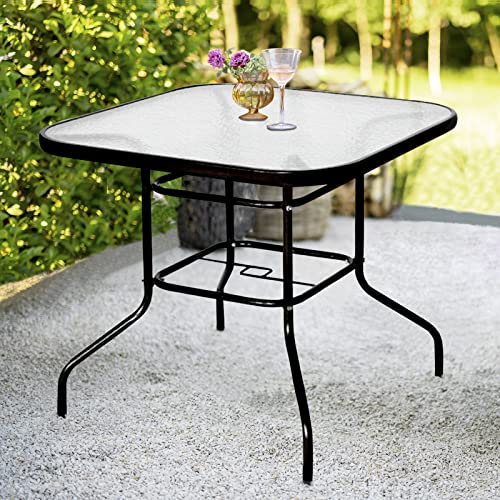
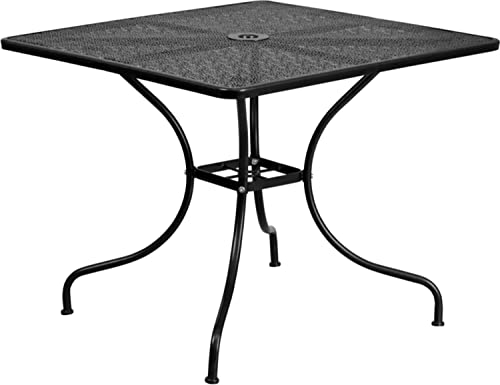
The shape of the table affects both shade distribution and seating comfort. Round tables place the umbrella at the true center, which produces even shade around the perimeter. Square tables offer a similar benefit and fit neatly into corner spaces. Rectangular tables are efficient for long patios, but the shade concentrates in the middle, so diners at the ends may sit in direct sun.
Size matters just as much as shape. A table that is too large for the patio makes the umbrella feel cramped; a table that is too small leaves the umbrella overhanging the seating area. As a general rule, leave at least 24 inches of clearance between the table edge and any wall, railing, or planter. That space allows chairs to pull out comfortably and keeps the umbrella base from crowding the seating zone.
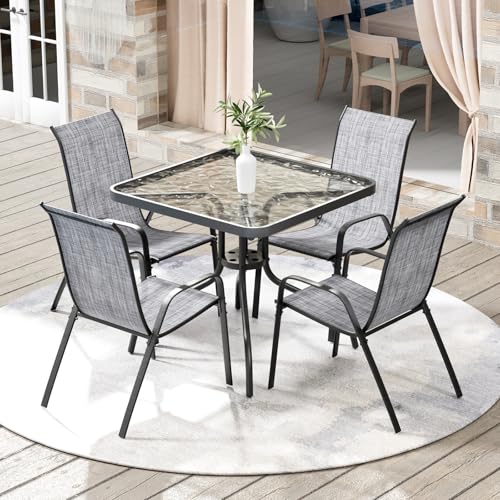
If your patio is compact, a round dining table with umbrella hole is often the most space-efficient choice. For larger gatherings, a rectangular table with umbrella hole provides more linear seating. If you are furnishing an entire dining zone, the patio table and chairs with umbrella hole option bundles the table and seating into a coordinated set.
Material Options and What They Mean for Durability
The material of the tabletop and frame determines how well the table handles sun, rain, and the stress of an umbrella pole. The table below compares common material categories using neutral quality tiers rather than specific figures.
| Material | Tier | Best For | Notes |
|---|---|---|---|
| Powder-coated aluminum | Mid-range to premium | Year-round outdoor use | Lightweight, rust-resistant, and easy to reposition. Look for a reinforced hole rim. |
| High-grade steel | Mid-tier to high-end tier | Windy locations and heavy use | Heavy-duty and stable, but requires a rust-proof finish and periodic inspection. |
| Teak or acacia hardwood | Premium to luxury | Natural, warm design schemes | Durable when sealed; the hole must be sealed to prevent water intrusion. |
| Weather-resistant resin | Entry-level to mid-range | Casual and family-friendly patios | Low maintenance and lightweight; check that the hole is molded with a reinforced collar. |
| Tempered glass top | Mid-range | Modern and contemporary patios | Sleek appearance; the hole edge must be polished and supported to avoid stress cracks. |
| Poly lumber (recycled plastic) | Mid-tier | Low-maintenance, all-weather use | Solid build and resistant to moisture; often heavier than aluminum. |
For a deeper look at material behavior in different climates, the patio furniture with storage for cushions page also discusses how storage and material choices interact during off-season months. If you prefer a classic wood look, a patio table and chairs set in sealed hardwood can be a long-term investment when maintained properly.
Umbrella Compatibility: Hole Size, Pole Diameter, and Base
Most outdoor patio tables with an umbrella hole use an opening between 1.5 and 2 inches in diameter. That range fits the majority of market umbrellas, but it is not universal. Before buying, measure the pole diameter of your umbrella — or check the product listing if you are buying both together. A pole that is too thin will rattle; a pole that is too thick will not fit at all.
The hole alone does not keep an umbrella upright. A weighted base is essential, and the base should sit directly under the hole or be integrated into the table frame. Some premium tables include a stabilizing collar or a built-in base housing, which reduces wobble and protects the tabletop from stress. If you are pairing a table with a separate seating arrangement, the patio table and chairs with umbrella option often includes a compatible base in the bundle.
Quick compatibility checklist
- Confirm the hole diameter matches your umbrella pole (typically 1.5–2 inches).
- Check whether a base is included or sold separately.
- Verify that the hole has a reinforced rim or collar.
- Measure the table height against the umbrella pole length for proper clearance.
- Consider wind exposure — a heavier base is safer in open areas.
Stability, Wind, and Weight Distribution
An umbrella acts like a sail. Even a moderate breeze puts lateral force on the pole, and that force transfers directly into the table through the hole. Tables with thin tabletops or unreinforced holes can develop cracks over time. Tables with a sturdy frame, a wide base footprint, and a reinforced hole rim handle wind stress far better.
If your patio is exposed to strong gusts, consider an offset cantilever umbrella instead of a through-table model. Cantilever umbrellas place the weight over a dedicated base rather than the table, which removes stress from the tabletop entirely. For through-table setups, a heavy-duty base and a table with a solid build are the two most important safeguards. The patio set with fire pit table category also shows how weighted center features can improve overall stability in windy layouts.
For a broader view of how tables integrate with other outdoor pieces, the patio table and chairs on sale collection highlights how bundled sets often include reinforced hole designs. Similarly, the patio table set with fire pit option demonstrates how a central feature can double as a stabilizing anchor.
Care and Maintenance for Umbrella-Hole Tables
The hole is the most vulnerable part of the tabletop because it exposes the core material to water. For wood tables, reapply a weather-resistant sealant annually and inspect the hole edge for swelling or splintering. For metal tables, touch up any paint chips around the hole with a rust-proof coating. For glass and resin tables, check the rim for hairline cracks after storms.
During off-season months, use a fitted cover that allows air circulation. Trapped moisture under a non-breathable cover can damage the finish more than rain alone. If the table stays outside year-round, a small grommet or collar insert around the hole helps reduce water intrusion and keeps the pole from scratching the rim. The patio furniture with umbrella hole guide expands on protective accessories that pair well with hole-equipped tables.
If you are upgrading an older setup, the patio table and chairs clearance page shows how end-of-season bundles often include tables with reinforced holes. For larger seating arrangements, the outdoor patio sectional guide explains how dining tables with umbrella holes can sit alongside sectional seating without crowding the layout.
Buying Checklist: What to Confirm Before You Commit
Use this checklist to narrow your options quickly. It focuses on the features that matter most for an outdoor patio table with a hole for an umbrella.
- Hole diameter matches your umbrella pole.
- Reinforced or collared rim around the hole.
- Sturdy frame with a wide base footprint.
- Weather-resistant finish appropriate for your climate.
- Compatible umbrella base included or available.
- Table height works with your existing chairs.
- Assembly instructions are clear and hardware is included.
- Warranty covers the frame and the hole reinforcement.
If you are building a complete dining zone, the patio table and chairs with umbrella hole and patio table and chairs with umbrella pages show how bundled sets handle these details. For bar-height layouts, the bar-height patio table and chairs guide covers the specific considerations for taller umbrella tables.
Frequently Asked Questions
What is the standard umbrella hole size in a patio table?
Most outdoor patio tables with an umbrella hole use a standard opening between 1.5 and 2 inches in diameter. This range fits the majority of market umbrellas, but always confirm the pole diameter of your umbrella before pairing it with a table.
Do I need a separate umbrella base if my table has an umbrella hole?
Yes. The hole in the tabletop only stabilizes the pole from side to side, not from the bottom. A weighted umbrella base is essential to keep the umbrella upright in wind and to protect the table from stress. Some premium tables include an integrated base or a stabilizing collar, but a dedicated base is still recommended.
Which table shape works best with an umbrella?
Round and square tables generally work best because the umbrella sits at the geometric center and provides even shade. Rectangular tables with a centered hole are also common, but the shade tends to concentrate in the middle. For long rectangular tables, consider two smaller umbrellas or an offset cantilever umbrella.
Can I add an umbrella hole to an existing patio table?
It depends on the material. Wood and some composite tabletops can be drilled with a hole saw and sealed afterward. Metal, glass, and resin tables are much riskier and often not recommended for DIY modification. In most cases, buying a table that already includes a reinforced umbrella hole is the safer and more durable choice.
How do I protect a patio table with an umbrella hole from rust and water damage?
Keep the hole and surrounding surface dry when possible, use a cover during off-season months, and inspect the rim of the hole for paint chips or rust. For metal tables, touch up any scratches with a rust-proof coating. For wood tables, reapply a weather-resistant sealant annually. A small grommet or collar insert around the hole also helps reduce water intrusion.
Ready to Compare Options?
Explore the recommended outdoor patio tables with umbrella holes below. Each option is selected for build quality, stability, and practical shade coverage.