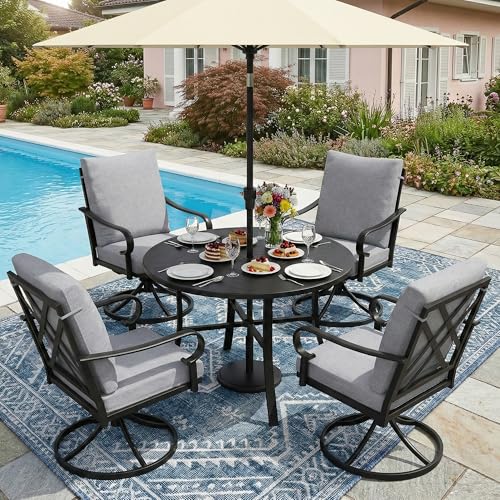
Patio Dining Sets on Sale: Your Complete Buying Guide
Everything you need to know before choosing an outdoor dining set — sizing, materials, umbrella compatibility, care, and how to spot a well-built set at every tier. Research first, then buy with confidence.
Start the Buying GuideWho this guide is for: If you already know you want an outdoor dining set and you are comparing options, this page walks you through the exact decisions that matter — how many seats, which frame material, umbrella or no umbrella, and what separates a solid build from a flimsy one. By the end, you will know precisely which configuration fits your patio and your lifestyle.
Why a Patio Dining Set Is the Anchor of Outdoor Living
A dining set does more than fill empty space on a deck or patio — it defines how you actually use the outdoors. It turns a pass-through area into a destination for morning coffee, weekend brunches, and evening dinners under string lights. Unlike a lounge arrangement, a dining set creates a natural gathering point with a clear purpose: sit, eat, talk, linger.
That is also why choosing the right set matters more than almost any other outdoor purchase. A set that is too large overwhelms a small patio; one that is too small leaves a large deck feeling sparse. The wrong material can fade, rust, or wobble within a season. The right set, by contrast, can serve a household for a decade or more with minimal upkeep. If you are still weighing dining versus lounging as the primary function of your space, compare it against a full patio dining setup and a patio living arrangement before committing.
Step 1: Match the Set Size to Your Space and Household
Seat count is the first decision because it drives the table dimensions, the footprint, and ultimately whether the set feels comfortable or cramped. Use this simple framework:
Four-Person Sets
Best for balconies, compact patios, and couples who occasionally host. A round or square table keeps the footprint tight and conversation easy.
Six-Person Sets
The sweet spot for most families. Long rectangular tables seat six comfortably without dominating a standard patio. Ideal if you host regularly.
Eight-Person Sets
For large decks and frequent gatherings. Requires generous clearance on all sides so chairs can pull out without hitting railings or walls.
Whatever the seat count, leave at least three feet of clearance around the table so chairs can slide in and out comfortably. If your space is tight, a four-person set with an umbrella delivers shade and seating without a separate base. For families that regularly seat six, a six-person set with an umbrella is often the most balanced choice, while larger decks can accommodate an eight-person set with an umbrella for full-scale entertaining.
Step 2: Choose the Right Configuration
Beyond seat count, the configuration shapes how the set fits your space and how flexible it is day to day. Here are the most common setups and who they suit:
| Configuration | Best For | What to Know |
|---|---|---|
| Standard table and chairs | Balanced everyday use | The most common layout; pair with a freestanding umbrella or overhead shade. |
| With umbrella hole | Sunny, exposed patios | Adds shade without a separate base; check pole diameter compatibility. |
| Bench and chairs | Mixed seating and tighter footprints | A bench maximizes seat count along one side; see bench and chair sets for space-saving options. |
| With fire pit table | Cool evenings and year-round use | Extends the season; consider a fire pit dining set for dual dining and warmth. |
| With swivel chairs | Conversation and easy entry | Swivel chairs make getting in and out easier; explore swivel chair dining sets. |
If shade is a priority, a set with an umbrella hole is the simplest solution because the umbrella shares the table's footprint. If you want warmth as well as shade, a configuration with both is worth considering — a set with umbrella and fire pit covers sunny afternoons and cool evenings in one arrangement. For dedicated outdoor dining, the broader patio dining furniture sets collection is a good starting point to compare configurations side by side.
Step 3: Understand Materials and Build Quality
Material determines weight, weather resistance, maintenance, and how the set feels to use. No material is universally best — the right choice depends on your climate and how much upkeep you want.
Frame Materials at a Glance
| Material | Tier Positioning | Strengths | Watch Out For |
|---|---|---|---|
| Aluminum | Mid-range to premium | Lightweight, rust-resistant, easy to move | Can feel light in high winds; check frame gauge |
| Powder-coated steel | Entry-level to mid-range | Heavy-duty stability and solid build | Susceptible to rust if the coating chips |
| Teak and acacia wood | Mid-range to luxury | Weathers beautifully, warm look, durable | Needs periodic sealing and oiling |
| Wicker and rattan | Entry-level to mid-range | Classic look, comfortable, hides wear | Check the underlying frame material |
| Resin | Essential tier | Low maintenance, weather-resistant | Less refined finish than premium materials |
Beyond the frame, look at the details that separate a solid build from a flimsy one: welded or reinforced joints, a rust-proof finish, sturdy legs with floor glides, and a tabletop that feels rigid without flex. Cushions should use quick-dry foam with removable, washable covers. If cushions are part of the set, plan for storage — a set with built-in cushion storage keeps fabric dry and extends its life. For replacement or refreshing, browse patio cushions to keep the set looking current.
Tiers, Not Numbers: How to Compare Sets Fairly
Because outdoor dining sets span an enormous range of build quality, it helps to think in tiers rather than specific figures. Entry-level and essential-tier sets typically use lighter frames and simpler finishes — a reasonable starting point for occasional use. Mid-range sets are the most balanced, usually adding better welds, thicker frames, and more refined tabletops. Premium and luxury tiers focus on solid materials, precision joinery, and finishes designed to hold up for many seasons. The key is to compare sets within the same tier: a mid-range model usually offers smoother mechanisms and sturdier joints than an entry-level one, while a premium set justifies itself through longevity and material quality rather than extra features alone.
Step 4: Plan Shade and Umbrella Compatibility
Shade is often an afterthought, but it changes how often you actually use the set. An umbrella hole in the table is the most space-efficient option because the umbrella shares the table's footprint. Check that the hole diameter matches standard umbrella poles, and use a weighted base in windy areas. If your table lacks a hole, a freestanding umbrella or a cantilever model works well — just confirm the base does not block walkways.
For maximum flexibility, a set that combines shade and warmth covers more of the year. A dining set with a fire pit in the middle extends evening use, while a fire pit dining table keeps the warmth central to the conversation. If you want both shade and heat, a set with umbrella and fire pit is the most versatile single purchase.
Step 5: Protect Your Set with Simple Care
A dining set is a long-term investment, and a few habits keep it looking sharp for years. Clean frames with mild soap and water, inspect joints and coatings each season, and store cushions indoors when not in use. A fitted, breathable cover protects against pollen, rain, and UV damage — browse patio furniture covers to find a size that fits your table and chairs.
If you live in a region with harsh winters, consider furniture that can be left outside in the winter, or plan to store the set in a garage or shed. Wood sets benefit from periodic sealing, while metal sets need touch-ups if the coating chips. For a deeper seasonal routine, our weatherproofing guide covers cleaning, protection, and storage in detail.
Step 6: Where to Look and How to Compare
Outdoor dining sets are sold across a wide range of retailers, from big-box stores to specialty patio shops and online marketplaces. The most useful comparison strategy is to shortlist two or three sets within the same tier, then compare frame material, joint construction, tabletop finish, cushion quality, and umbrella compatibility side by side. Read the warranty terms carefully — a generous warranty often signals confidence in the build.
If you are refining your shortlist, explore the full patio dining sets collection, compare bench and umbrella-hole sets for space efficiency, or look at six-seat umbrella sets for balanced family use. For a table-only route, a table and chairs with umbrella bundle keeps the configuration simple. And if you are still exploring the wider category, the outdoor dining furniture sets overview is a good next stop.
Quick Takeaway: A Decision Checklist
- Seat count: Four for small patios, six for most families, eight for large decks and frequent hosting.
- Configuration: Standard, umbrella hole, bench, fire pit, or swivel — match it to how you actually entertain.
- Material: Aluminum for humid climates, steel for stability, wood for warmth, wicker for classic looks, resin for low maintenance.
- Build quality: Welded joints, rust-proof finish, rigid tabletop, quick-dry cushions.
- Protection: A fitted cover, cushion storage, and seasonal inspection.
Frequently Asked Questions
What size patio dining set do I need?
Which material is best for a patio dining set?
How do I protect my patio dining set in winter?
Are umbrella holes important in a patio dining table?
How can I tell if a patio dining set is well-built?
Ready to compare options? Browse a curated selection of outdoor dining sets matched to the configurations and materials covered in this guide.
View Recommended Dining Sets