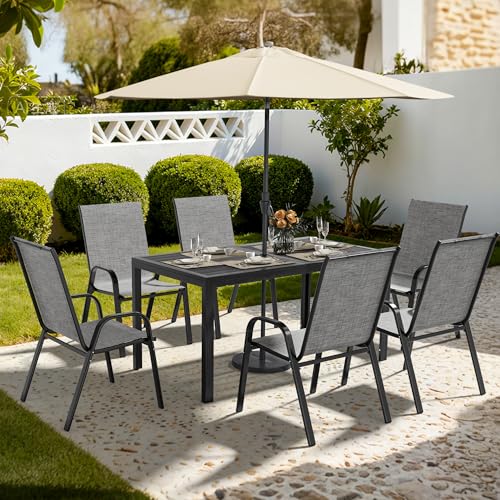
What to Look for in a Patio Set with Umbrella
A patio set with umbrella is more than a table and chairs with a pole through the middle. The right combination balances shade coverage, frame durability, and usable surface area. Before browsing models, understand the three components that determine long-term satisfaction:
- Umbrella type and coverage: Center-pole, cantilever (offset), and tilt mechanisms each serve different shade needs and space constraints.
- Frame material: Aluminum, steel, and wood behave very differently under rain, humidity, and salt air.
- Table design: Umbrella-ready tables need a reinforced center hole and a stable base; some sets include a weighted holder built into the table structure.
If you are still deciding whether an umbrella set or a conversation layout suits your lifestyle, our overview of patio furniture categories can help you map out the full picture before committing to one style.
Quick tip: Measure your shaded area at midday before shopping. A standard 9-foot canopy covers a roughly 6- to 7-foot circle — enough for a four-seat table but tight for six. Matching canopy size to actual seating is the single most common mistake buyers make.
Umbrella Configurations Explained
The umbrella is the defining feature of this category, and its mechanism changes how you use the entire set. Here is how the main configurations compare:
| Umbrella Type | Best For | Key Consideration |
|---|---|---|
| Center-pole | Round or square dining tables up to six seats | Requires a table with a reinforced umbrella hole and a weighted base |
| Cantilever / offset | Large tables, lounge zones, and areas where the pole would block sightlines | Base must be heavy or sand-weighted; rotation range determines shade flexibility |
| Tilt / crank | Afternoon sun that shifts angle | Tilt joints are a wear point — look for reinforced hinges on mid-range and premium models |
| Dual-canopy | Eight-seat and larger dining sets | Covers wider tables but adds wind load; needs a heavy-duty base |
For sets designed around larger gatherings, explore patio dining sets for six with umbrella and eight-seat configurations to see how canopy size scales with table dimensions. If your space is compact, a small-space conversation set may pair more naturally with a cantilever umbrella than a full dining layout.
Frame Materials: Which Lasts Longest?
Material choice determines how your set ages. The table below compares the three dominant frame categories using universal tier descriptors rather than any figure-based comparison.
| Material | Market Tier | Durability Profile | Best Climate |
|---|---|---|---|
| Powder-coated aluminum | Mid-range to premium | Rust-proof finish, lightweight, low maintenance | Humid, coastal, rainy |
| High-grade steel | Essential to mid-tier | Heavy-duty stability; requires rust inspection at welds | Dry, sheltered patios |
| Teak & dense hardwoods | Premium to luxury | Natural weather resistance; ages to a silver patina | All climates with seasonal sealing |
| Resin wicker over aluminum | Entry-level to mid-range | Comfortable texture; canopy fabric is the wear point | Covered patios and porches |
A common pattern holds across the market: entry-level frames typically use thinner gauge metal and simpler tilt joints, while mid-range models upgrade to reinforced welds and smoother crank mechanisms. Premium and luxury tiers add marine-grade hardware and solution-dyed canopy fabric that resists fading for many seasons.
Material note: If your patio faces salt air or heavy rain, prioritize a rust-proof finish and stainless hardware. The frame coating matters more than the umbrella fabric for long-term structural integrity — fabric can be replaced, but a corroded frame cannot be repaired efficiently.
Sizing Your Set to Your Space
Shade coverage and walkway clearance compete for the same square footage. Use these practical guidelines when matching a set to your deck or patio:
- Allow 36 inches of clearance between the table edge and any wall, railing, or grill so chairs can pull out comfortably.
- Four-seat sets generally need a footprint of about 8 by 8 feet including chair pull-out space.
- Six-seat sets suit patios of roughly 10 by 10 feet or larger.
- Eight-seat sets work best on decks of 12 by 12 feet and up, or with a cantilever umbrella that keeps the base out of the walking path.
Rectangular tables maximize seating per square foot, while round tables improve conversation flow and pair naturally with center-pole umbrellas. If your layout leans toward lounging rather than dining, a patio set with umbrella and fire pit combines daytime shade with evening warmth in a single arrangement.
Umbrella Fabric and Canopy Quality
The canopy is the most exposed component of the entire set, and fabric quality separates a set that looks fresh after three summers from one that fades in one. Consider these factors:
- Solution-dyed acrylic holds color best and is the standard for premium canopies.
- Polyester is common at entry-level and mid-tier; it performs well when coated but fades faster under intense UV.
- Ventilation panels at the canopy top reduce wind lift and improve airflow underneath.
- Double-stitched seams and reinforced pockets at the rib ends extend canopy life significantly.
Strengths of a Dedicated Umbrella Set
- Shade is integrated — no separate freestanding umbrella to store
- Table hole placement keeps the canopy centered over seating
- Sets are matched for proportion, so chairs and table fit together
- Easy to add a weighted base and cover as a bundle
Trade-offs to Weigh
- Center-pole tables limit where you can place a Lazy Susan or centerpiece
- Wind exposure requires lowering the umbrella when not in use
- Replacement canopies must match rib count and pole diameter
- Cantilever bases take up floor space outside the table footprint
Maintenance and Seasonal Care
A shade-ready set rewards a simple care routine. Wipe frames with mild soap and water monthly, and inspect tilt joints and crank housings for grit before each season. Canopy fabric should be brushed dry and stored closed during high-wind forecasts. In freezing climates, move cushions indoors and use a fitted cover — our guide to patio furniture that can be left outside in winter explains which materials tolerate year-round exposure.
For cushion longevity, rotate seat pads periodically and use patio cushion storage solutions during off-season months. A patio furniture cover sized to the full table-and-umbrella footprint protects seams and hardware from pooling water.
How to Evaluate Quality Before You Buy
Since product listings rarely describe construction in detail, use these checkpoints when comparing options:
- Frame welds: Look for smooth, continuous welds with no visible gaps or sharp spurs.
- Umbrella hole reinforcement: A metal grommet or reinforced ring around the table hole prevents cracking.
- Base weight and shape: Cast-iron or resin bases with a wide footprint resist tipping better than narrow plastic bases.
- Crank and tilt action: Smooth operation out of the box signals better internal components.
- Chair weight capacity and seat depth: Deep seats with firm support suit long dinners; shallow seats suit casual use.
If you want to compare broader product families before narrowing down, our patio furniture sets with umbrella overview and dining sets with swivel chairs roundup show how chair motion and table shape interact with umbrella placement.
Frequently Asked Questions
What size patio set with umbrella should I choose for a small deck?
For a small deck, look for a bistro-style or four-seat set measuring no more than 36 to 48 inches across. A compact round table with a center umbrella hole maximizes seating while keeping walkways clear, and a tilting umbrella directs shade without taking up extra floor space.
How do I secure a patio umbrella in windy conditions?
Choose a set with a weighted base or a table with a built-in umbrella holder. A heavy-duty cast-iron or resin base paired with a crank-and-tilt mechanism keeps the canopy stable. When winds pick up, lower the umbrella and store it to prevent tipping or canopy damage.
What materials last longest for an outdoor dining set with umbrella?
Powder-coated aluminum frames resist rust and stay lightweight, making them a top-tier choice for humid climates. Teak offers natural weather resistance for premium setups, while high-grade steel provides heavy-duty stability. For umbrellas, solution-dyed acrylic canopies resist fading better than polyester.
Can I leave a patio set with umbrella outside in winter?
Most mid-range and premium sets can stay outdoors in winter with fitted covers and indoor cushion storage. Umbrellas should be closed and covered or stored to protect fabric and frame joints. Confirm the set is rated for year-round exposure before leaving it out through freezing weather.
How much shade does a standard patio umbrella provide?
A typical 9-foot canopy shades roughly a 6- to 7-foot diameter area at midday — enough for a four- to six-seat set. Cantilever umbrellas cover larger zones because the pole sits outside the table. For eight-seat sets, look for a 10- to 11-foot canopy or a dual-umbrella layout.
Ready to Compare Shade-Ready Sets?
Browse our curated selection of patio sets with umbrellas and check availability across all tiers.
Explore Options