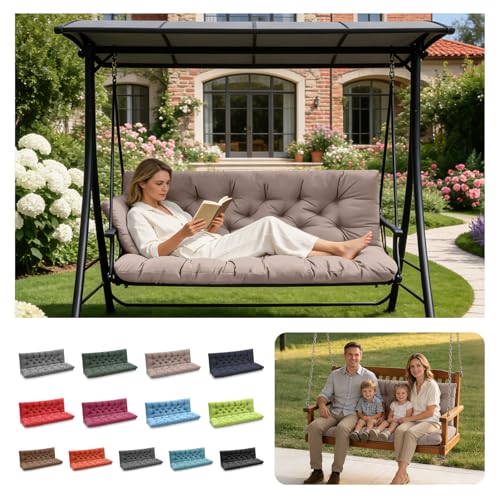
Patio Swing Cushions Replacement 3 Seater: Complete Buying Guide
Everything you need to choose the right replacement cushions for your three-seat patio swing — fit, materials, thickness, and long-term durability explained.
Why replacement cushions matter: A three-seater patio swing is one of the most relaxing spots in any backyard, but worn, faded, or compressed cushions quickly turn a comfortable seat into an uncomfortable one. Replacing the cushions is often the most efficient way to restore both comfort and appearance without replacing the entire swing frame.
Why Replace the Cushions on a 3 Seater Swing?
Outdoor swing cushions take a beating. Sun exposure breaks down fabric fibers, rain and humidity encourage mildew, and constant body weight compresses foam over time. When a three-seat swing starts to feel flat or the fabric cracks and fades, a replacement cushion set is usually the most practical path forward.
There are several good reasons homeowners look into a patio swing cushions replacement 3 seater set:
- Restored comfort: Fresh, resilient foam brings back the support that compressed cushions lose.
- Updated appearance: New fabric and color can refresh the entire look of the swing and surrounding patio.
- Hygiene: Old cushions trap dirt, pollen, and moisture; replacement eliminates mildew and embedded grime.
- Weather resilience: Modern replacement fabrics are often more water- and UV-resistant than original cushions.
- Cost-effective refresh: Replacing cushions is a worthwhile long-term investment compared with buying a whole new swing, especially when the frame is still solid.
How to Measure for a 3 Seater Swing Cushion Set
Fit is the single most common source of frustration with replacement cushions. Three-seat swings vary in seat width, seat depth, back height, and the way cushions attach — so measuring before you shop is essential.
Step 1: Measure the seat platform
Measure the full width of the seat from frame to frame, then measure the depth from the front edge of the seat to the backrest. Note whether the seat is flat or slightly curved — curved seats often need cushions with a matching profile or a flexible fill.
Step 2: Measure the backrest
Measure the height of the backrest and its width at the top and bottom. Some three-seat swings have angled backs; if so, a cushion set designed for angled backs will fit far better than a flat rectangular pad.
Step 3: Check the armrests and attachment points
Note the distance between the armrests and whether your swing uses ties, Velcro straps, or simply rests the cushions on the seat. Attachment points matter for windy locations; tie-down cushions stay put far better.
Materials: What to Look For in Replacement Cushions
The fabric and fill determine how long your replacement cushions will last and how comfortable they feel season after season. Here is how the main options compare.
| Material / Feature | Tier | Best For |
|---|---|---|
| Polyester with basic water resistance | Essential tier | Covered porches and mild climates |
| Solution-dyed acrylic fabric | Mid-range | Sunny patios with regular UV exposure |
| Olefin or high-performance woven fabric | Premium | Humid or rainy regions needing mold resistance |
| High-density foam with wrapped fiber | Balanced tier | Everyday comfort with good shape retention |
| Memory foam or quick-dry reticulated foam | High-end tier | Maximum comfort and fast drying after rain |
Fabric considerations
Solution-dyed acrylic is the gold standard for colorfastness because the dye is part of the fiber itself rather than applied on top. Olefin is highly water-resistant and resists mildew well, making it a strong choice for humid climates. Entry-level polyester cushions are fine for sheltered spaces, but they tend to fade faster under direct sun.
Fill and thickness
Thickness directly affects comfort. A mid-range cushion set typically uses 3 to 4 inches of foam, while premium sets often use 5 inches or more with a wrapped fiber layer for a softer surface feel. Quick-dry reticulated foam allows water to pass through instead of soaking in, which is a meaningful advantage for uncovered swings.
Fit Types: One-Piece vs. Three-Piece Sets
Three-seat swing cushions generally come in two configurations, and each has trade-offs.
One-piece bench cushion
A single long cushion covering the whole seat plus a separate back pad. These look tidy and prevent gaps between seats, but they can be harder to handle during cleaning and may shift more on windy days.
Three-piece segmented set
Three individual seat cushions plus back cushions. Segmented sets are easier to wash, replace piece by piece, and adjust for uneven wear. They also conform better to curved swing seats. The main downside is that individual cushions can slide without ties or straps.
Care and Maintenance for Longer Cushion Life
Replacement cushions are a long-term investment, and simple habits keep them looking good for years.
- Brush off debris weekly to prevent dirt from working into the fabric weave.
- Spot clean promptly with mild soap and water; avoid harsh bleach-based cleaners on solution-dyed fabrics.
- Dry thoroughly after rain — stand cushions upright so water drains and air circulates.
- Store during off-season or cover the swing with a breathable cover to prevent mildew buildup.
- Rotate cushions if your set is segmented so wear is distributed evenly.
If your swing sits in an exposed location, consider pairing new cushions with a protective cover. Our notes on patio swing cushions replacement 3 seater options include guidance on covers and storage between seasons.
Matching Cushions to Your Swing Style
Cushions should complement the swing frame and the surrounding patio. Wooden frames pair well with warm, earthy tones and textured weaves. Metal frames often suit cleaner, solid-color cushions in neutral or deep shades. If your swing has a canopy, the cushion color should either match the canopy or provide a deliberate contrast.
For broader styling direction, browse our patio styles collection, which covers modern, rustic, coastal, and minimalist approaches to outdoor furniture coordination.
Common Mistakes to Avoid
- Ordering by swing seat count alone: A "3 seater" label does not guarantee a universal fit; always compare measurements.
- Ignoring back height: Back cushions that are too short leave a gap; too tall and they interfere with the canopy.
- Choosing flat pads for curved seats: Curved swing seats need cushions with matching contours or flexible fill.
- Skipping the attachment check: Ties or straps are essential in windy areas.
- Overlooking drainage: On uncovered swings, quick-dry foam and drainage-friendly covers make a real difference.
Frequently Asked Questions
Measure the seat width, seat depth, and backrest height of your swing, then compare those figures with the cushion dimensions listed by the manufacturer. Pay attention to whether your seat is flat or curved and whether the swing has armrests that constrain the cushion width.
Solution-dyed acrylic and olefin are generally the most durable choices for outdoor use. Both resist fading and moisture well, with olefin offering particularly strong mildew resistance in humid climates.
Mid-range sets typically use 3 to 4 inches of foam, while premium sets often reach 5 inches or more. Thicker cushions feel more supportive but can affect how easily the swing folds or how the canopy frame sits, so check clearance.
One-piece cushions can work on gently curved seats if the fill is flexible, but deeply curved seats usually fit better with a segmented three-piece set that conforms to the contour.
With regular cleaning and proper storage, quality cushions typically last several seasons. Replace them when the foam no longer rebounds, the fabric cracks or tears, or persistent mildew cannot be removed.
Many premium cushion covers have zippers and are machine washable on a gentle cycle. Always check the manufacturer's care label — some coated or bonded fabrics should only be spot cleaned.