Pool Bed Buying Guide: In-Water Loungers for Ultimate Relaxation
Everything you need to know about choosing, using, and maintaining a pool bed for your backyard oasis.
EXPLORE POOL BEDSWhy a pool bed changes your backyard experience: A pool bed lets you recline directly in the water, combining the comfort of a lounger with the cooling effect of your pool. Whether you want a floating hammock, a partially submerged lounger, or a foam-core platform bed, this guide walks you through every consideration so you can choose the right model with confidence.
What Is a Pool Bed and Who Is It For?
A pool bed is an in-water lounging platform designed to support your body while you relax partially or fully submerged in a swimming pool. Unlike a traditional pool lounger that sits on the deck, a pool bed is placed directly in the water and uses buoyancy, foam, or mesh suspension to keep you comfortable.
These products are ideal for adults who want to read, sunbathe, or simply cool off without leaving the pool. They are especially popular among homeowners with in-ground pools, but compact models also work well in above-ground pools and larger spas.
Main Types of Pool Beds
- Inflatable pool beds: Air-chambered designs that float on the surface. They are lightweight, easy to store, and available in many shapes. Entry-level and mid-range options dominate this category.
- Foam-core pool beds: Covered foam platforms that partially submerge. They offer stable support and are popular for tanning and reading. Mid-range and premium tiers often use closed-cell foam for durability.
- Mesh water hammocks: Suspended mesh beds that cradle your body just below the water surface. They are compact, quick-drying, and well-suited to small pools.
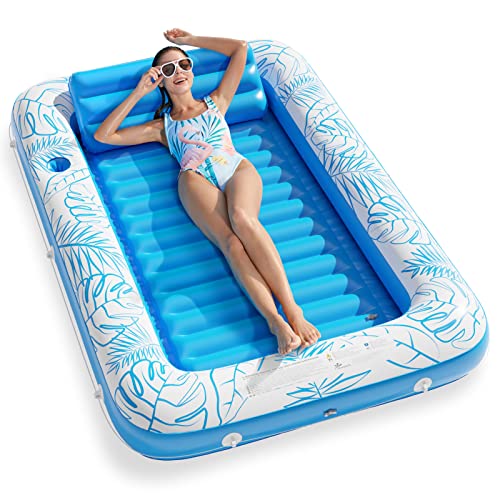
- Floating lounger beds: Reclining inflatable beds with backrests and cup holders, designed for full-body floatation. Premium models often include reinforced seams and UV-resistant coatings.
Key Factors to Consider Before Buying
1. Material and Durability
The material determines how long your pool bed lasts and how comfortable it feels. Common options include:
- Vinyl and PVC: Common in inflatable models. Look for UV-resistant and puncture-resistant grades. Thicker gauge material generally signals better durability.
- Closed-cell foam: Used in foam-core beds. It resists water absorption and maintains buoyancy over time. Premium foam beds use higher-density foam for longer service life.
- Marine-grade fabric and mesh: Found in water hammocks and fabric-covered beds. Quick-drying and comfortable against the skin. High-grade mesh resists fading and mildew.
- Powder-coated frames: Some hybrid pool beds use rust-proof aluminum frames combined with mesh or fabric. These are heavier but very stable.
If your pool is saltwater, prioritize materials explicitly rated for saltwater exposure, and rinse the bed with fresh water after each use.
2. Buoyancy and Weight Capacity
Buoyancy affects how high you float and how stable the bed feels. Inflatable beds typically float higher, while foam-core and mesh beds sit lower in the water. Check the manufacturer's stated weight capacity and consider whether the bed is designed for one adult or two.
- Entry-level inflatables: Usually support one adult.
- Mid-range inflatables and foam beds: Often support one adult with higher weight limits or two smaller adults.
- Premium and commercial-grade models: Designed for two adults with reinforced chambers or high-density foam.
3. Size and Pool Compatibility
Measure your pool's usable water area before choosing a pool bed. A large floating bed may dominate a small pool, while a compact water hammock can fit into tighter spaces. Consider the bed's dimensions both in use and when deflated or stored.
For narrow pools, a pool chaise lounge or a slim mesh hammock may be more practical than a wide platform bed. If you plan to pair your pool bed with deck seating, browse our pool patio furniture guides for complementary setups.
4. Comfort and Support
Comfort depends on the shape of the bed, the firmness of the support surface, and whether it includes a backrest. Ergonomic contours, headrests, and adjustable backrests improve the lounging experience. Mesh beds cradle the body, while foam platforms offer firmer support.
If you enjoy reading or sipping a drink in the pool, look for models with built-in cup holders or accessory trays. These features are common in mid-range and premium inflatable beds.
5. Storage and Portability
Inflatable beds deflate and fold compactly, making them easy to store in a shed or garage. Foam-core beds are bulkier but often stack or hang for drying. Water hammocks are among the most portable options, fitting into a small carry bag.
If you plan to move your pool bed between locations, prioritize lightweight materials and included carry handles. For permanent setups, a heavier foam or framed bed may be more convenient.
6. Maintenance and Care
Proper care extends the life of any pool bed:
- Rinse with fresh water after each use, especially in saltwater or chemically treated pools.
- Dry thoroughly before storing to prevent mildew and mold.
- Store inflatables away from direct sunlight and sharp objects.
- Check seams, valves, and fabric for wear at the start of each season.
- Use a patch kit for minor punctures on inflatable models.
For broader poolside maintenance guidance, see our pool accessories section.
Pool Bed Comparison by Tier
| Tier | Typical Materials | Best For | Durability Notes |
|---|---|---|---|
| Entry-level | Single-layer vinyl, basic mesh | Occasional use, small pools | Lighter construction; requires careful handling |
| Mid-range | Thicker PVC, closed-cell foam, reinforced mesh | Regular family use, tanning, reading | Better UV resistance and seam strength |
| Premium | High-density foam, marine-grade fabric, powder-coated frames | Frequent use, two-person lounging | Heavy-duty construction with long-term durability |
| Luxury / commercial-grade | Multi-layer foam, commercial vinyl, reinforced stitching | Resorts, large pools, daily use | Professional-grade materials and construction |
How to Set Up and Use a Pool Bed Safely
- Check water depth: Ensure the pool area where you place the bed is deep enough for the model you choose.
- Inflate properly: Follow the manufacturer's inflation guidance; over-inflation can stress seams.
- Position away from drains and jets: Strong suction or water flow can destabilize the bed.
- Supervise children: Pool beds are not life-saving devices and should never be used as flotation aids for non-swimmers.
- Store out of the water: Remove the bed from the pool after use to reduce chemical exposure and prolong its life.
Pair your pool bed with stable entry and exit points. If you need help getting in and out of the water, consider a pool ledge lounge chair or a pool chair in water for added support.
Pool Bed vs. Other Pool Loungers
Understanding how a pool bed compares to related products helps you choose the right fit:
- Pool lounge chairs typically sit on the deck or a ledge and offer firmer support. They are better for people who prefer to stay mostly dry.
- Pool loungers may refer to inflatable or floating recliners; some are designed for partial submersion.
- Pool floats for tanning are optimized for sun exposure and often include headrests and cup holders.
- Pool inflatable loungers are lightweight and easy to store, ideal for occasional use.
- Poolside loungers are deck-based and pair well with a poolside table for drinks and accessories.
Frequently Asked Questions
What is a pool bed and how does it work?
A pool bed is an in-water lounger designed to float or partially submerge in a swimming pool, allowing you to recline in the water. Most models use inflatable air chambers, foam cores, or mesh suspension to support your body while keeping you cool and partially submerged.
Are pool beds suitable for saltwater pools?
Yes, but material choice matters. Vinyl and PVC inflatables are generally fine for saltwater, while fabric-covered foam and mesh models should use marine-grade, UV-resistant materials. Rinse all pool beds with fresh water after use in saltwater pools to extend their lifespan.
How much weight can a pool bed support?
Weight capacity varies by model. Entry-level inflatables typically support one adult, while mid-range and premium models often support two adults or higher weight limits. Always check the manufacturer's stated capacity and never exceed it.
Can pool beds be used in above-ground pools?
Yes, most pool beds work in above-ground pools as long as the water depth and pool dimensions accommodate the lounger. Compact inflatable models and water hammocks are especially popular for above-ground pools because they require less space.
How do I store a pool bed during the off-season?
Clean and dry the bed completely, then store it in a cool, dry place away from direct sunlight. Inflatable models should be deflated and folded loosely; foam beds should be stored flat or upright to avoid warping. Keep all beds away from sharp objects and heavy items.
Ready to Find Your Perfect Pool Bed?
Browse our curated selection of in-water loungers and pool relaxation essentials below.
View Recommended Pool Beds