Portable Picnic Table: The Complete Buying Guide
A portable picnic table turns any patch of grass, parking lot, or campsite into a proper gathering spot. This guide covers frame types, seating configurations, materials, and setup tips so you can choose the right fold-and-go table with confidence.
Why a Portable Picnic Table Belongs in Your Outdoor Kit
If you have been searching for a table that travels as easily as it seats a group, you already know the appeal: a full picnic setup that folds into a compact package and lives in the trunk of your car. Unlike a fixed wooden table in the backyard, a portable picnic table is built around mobility. It is the difference between hosting lunch only at home and hosting lunch wherever the day takes you.
This guide is written for buyers who have already decided they want one and now need to sort through the noise. We will walk through the frame architectures, the seating layouts, the materials that hold up outdoors, and the practical details that separate a table you will use every weekend from one that stays in the garage after the first trip.
What Makes a Picnic Table Truly Portable
Portability is not a single feature — it is the result of several design decisions working together. A table earns the label when it can be carried by one person, deployed without tools, and stored without taking over a closet. In practice, that means three things:
- A folding frame. The table and benches collapse together, usually via a scissor, accordion, or hinge mechanism. The best designs fold flat rather than bulky.
- Managed weight. Aluminum frames keep the unit light enough to lift with one hand. Steel frames trade some weight for added rigidity.
- Integrated carry. A molded handle or shoulder strap matters more than most buyers expect. Without one, the table becomes a two-person job.
Tables that check all three boxes are the ones that actually leave the garage. If you want a broader sense of how portable seating and tables fit into a larger outdoor setup, our guide to portable folding chairs pairs naturally with this one.
Frame Types: Which Folding Mechanism Fits Your Routine
The frame determines how the table folds, how stable it feels, and how much space it occupies when packed. There is no single best option — the right choice depends on how often you move it and where it will sit.
Scissor Folding
The most common design. Two X-shaped supports collapse the tabletop and benches into a flat bundle. Setup takes seconds and the folded profile is slim. Best for tailgating, camping, and buyers who value speed.
Accordion Folding
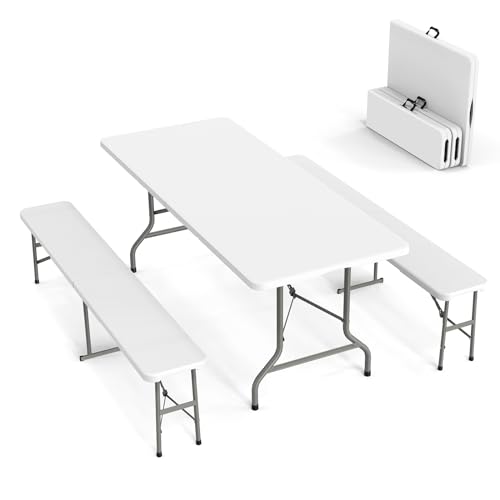
Benches fold inward beneath the tabletop like a book. The result is a compact rectangular package with a built-in handle. Ideal for sedan trunks and small storage spaces.
Roll-Top with Detachable Legs
The tabletop rolls around its own frame and the legs fold separately. This design prioritizes a wide, flat surface and is popular with campers who need a stable prep area. Slightly slower to assemble.
Aluminum Briefcase Style
Folds into a suitcase-like shape with a hard outer shell. The most travel-friendly format, though seating is usually separate. A strong fit for RV owners and frequent movers.
Whichever mechanism you choose, test the locking hinges before you commit. A frame that shifts under elbow pressure will feel unstable during meals. Mid-range and premium models generally use reinforced locking joints that hold firm on uneven ground.
Seating Configurations: Benches, Stools, or Detached Chairs
Seating is where portable picnic tables diverge most sharply. The layout you pick shapes how many people the table serves and how compact it packs.
Attached Bench Models
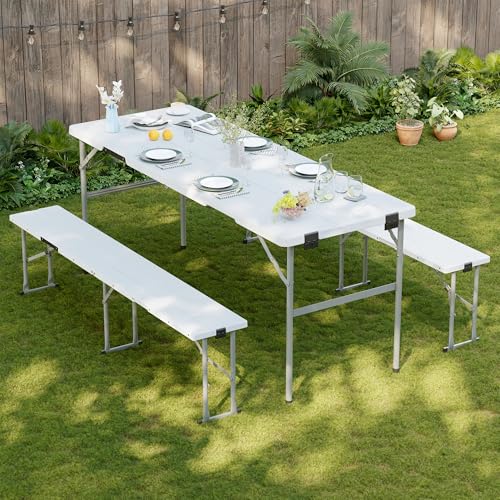
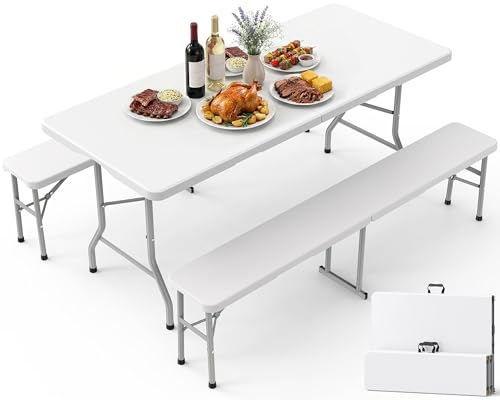
Benches fold out from the table body, creating a single self-contained unit. This is the classic picnic table format and the most convenient for families — one piece to carry, one piece to set up. The trade-off is bulk: attached benches make the folded package wider than a tabletop-only design.
A popular variation is the portable folding picnic table with 4 seats, which seats four comfortably and folds into a manageable bundle for car transport. If shade matters on sunny days, the portable folding picnic table with umbrella adds a canopy through a center pole mount.
Stool-and-Table Combos
Some designs use four separate stools that nest under the tabletop when folded. These pack smaller than bench models and let you rearrange seating, but you gain setup steps and risk losing a stool. The portable folding picnic double chair with umbrella is a neat hybrid for couples who want shade without a full bench setup.
Tabletop-Only Models
A table without integrated seating is lighter and packs flat, but you will need to supply chairs. This is the right call if you already own camp chairs or want to pair the table with dedicated seating like our portable camping chair picks.
Materials: What Survives Sun, Rain, and Repeated Folding
A portable table lives a harder life than a patio table. It gets folded, tossed in a trunk, rained on at a campsite, and unfolded again. Material quality is the clearest dividing line between entry-level and premium tiers.
| Material | Best For | Watch Out For |
|---|---|---|
| Aluminum | Lightweight travel, rust-prone climates, frequent moves | Dents under heavy impact; thin tops can flex |
| Powder-Coated Steel | Stability and heavy-duty use | Heavier to carry; chipped coating invites rust |
| High-Density Plastic (HDPE) | Weather resistance and easy cleaning | Can become brittle in extreme cold |
| Wood | Semi-permanent backyard use, classic look | Heavy; needs sealing; not truly portable |
For most buyers, aluminum is the sweet spot. It stays light, resists rust, and handles the folding stress that plastic hinges often cannot. If you plan to leave the table outdoors for long stretches, look for a rust-proof finish and UV-stabilized plastic components. Buyers who prefer the look and feel of wood for a fixed setup may find more relevant guidance in our overview of poly lumber alternatives, which mimic timber without the maintenance.
Sizing and Capacity: Match the Table to the Group
Portable picnic tables generally fall into three size classes. Choosing the right one is mostly about headcount and vehicle space.
- Two-person models. Compact, often paired with an umbrella. Ideal for couples, balcony use, and solo campers who want a small dining surface.
- Four-person models. The most popular format. Seats a family or a small tailgate group and still folds into a car-friendly bundle.
- Six-to-eight-person models. Longer benches and a wider top. These are heavier and better suited to SUV or truck transport, but they turn a campsite into a proper dining area.
Check two dimensions before buying: the folded length and the folded thickness. A table that folds to a slim profile fits behind a seat; a thick bundle may only fit in a cargo area. Also confirm the weight rating per seat — premium frames typically support more per person than entry-level ones.
Features That Earn Their Place
Not every added feature is worth the extra weight. These are the ones that consistently prove useful in real use:
- Locking hinges. Prevent the table from collapsing mid-meal and keep the surface rigid on soft ground.
- Adjustable feet. Small leveling caps compensate for uneven campsite terrain.
- Center umbrella hole. Essential if you plan to use a canopy; check the pole diameter compatibility.
- Cup holders or a center channel. Keeps drinks and utensils from sliding on a tilted surface.
- Carry handle or strap. The single most underrated portability feature.
- Weather-resistant coating. A powder-coated or rust-proof finish extends the table's usable life outdoors.
Skip features that add bulk without function. A table that is easy to carry will be used far more often than one loaded with extras.
Where a Portable Picnic Table Shines
The same table serves very different routines. Understanding your primary use case narrows the field quickly.
Camping and Road Trips
Campers need a stable surface for cooking prep and a place to eat that is not a camp chair balanced on a cooler. A roll-top or aluminum briefcase model pairs well with a lightweight foldable lounge chair for a complete mobile camp setup.
Tailgating and Events
Speed matters here. Scissor-folding tables with attached benches set up in under a minute and give a group a place to sit and eat. Look for a table with a hard, easy-wipe top that handles spills.
Backyard and Patio Overflow
When guests arrive and the main patio table is full, a portable table becomes a second dining station. It stores flat when not in use, which makes it a practical companion to a permanent porch table or a full porch and patio arrangement.
Beach, Park, and Picnic Days
A compact four-person model with a carry handle turns a park outing into a seated lunch. Pair it with a portable hammock chair for relaxed post-meal lounging.
A Practical Buying Checklist
Run through these questions before you commit. They catch most of the mismatches that lead to returns.
- How many people will typically sit at the table? Choose the size class accordingly.
- Will you carry it alone? If yes, prioritize aluminum and a built-in handle.
- What vehicle will transport it? Confirm the folded dimensions fit your trunk or cargo area.
- Will it stay outdoors for long periods? Choose a rust-proof finish and UV-stable plastic parts.
- Do you need shade? Check for a center umbrella hole and pole compatibility.
- How level is your usual terrain? Adjustable feet help on soft or uneven ground.
- Does the frame lock firmly? Reinforced locking hinges are a mid-range and premium feature worth having.
Comparing Tiers at a Glance
Portable picnic tables can be grouped into three broad tiers. Use this as a mental map rather than a shopping list — the right tier depends on how hard you plan to use the table.
| Tier | Best For | Typical Build |
|---|---|---|
| Essential Tier | Occasional backyard and park use | Basic scissor frame, plastic top, simple carry handle |
| Balanced Tier | Regular camping, tailgating, family use | Aluminum frame, reinforced hinges, integrated bench seating |
| Top-Tier | Frequent travel and heavy-duty use | High-grade aluminum or powder-coated steel, locking joints, adjustable feet |
Balanced-tier models usually offer the best combination of stability and manageable weight. Top-tier frames add rigidity and longevity for buyers who move the table constantly. Essential-tier tables are a reasonable fit for light, occasional use where the table stays close to home.
Keeping Your Portable Table in Shape
A portable picnic table needs very little maintenance, but a few habits extend its life significantly. Wipe the top after meals, especially after sugary or acidic spills. Dry the frame before folding it away — trapped moisture is the main cause of hinge corrosion. Store the table indoors or under a cover between trips. Periodically check the locking hinges and tighten any loose fasteners. For a deeper dive into protective routines, our weatherproofing guide covers covers and seasonal storage in detail.
Frequently Asked Questions
What is the best material for a portable picnic table?
Aluminum is the top choice because it is lightweight, rust-resistant, and easy to wipe clean. High-grade plastic and powder-coated steel are solid alternatives, while wood is better suited for semi-permanent setups.
How much weight can a folding picnic table hold?
Most mid-range and premium folding picnic tables support between 200 and 500 pounds per seat or bench, depending on the frame. Always check the manufacturer's weight rating before use.
Are portable picnic tables easy to set up alone?
Yes. Most modern folding models use a one-piece scissor or accordion frame that unfolds in under a minute. Look for locking hinges and a carrying handle if you often set up solo.
Can a portable picnic table fit in a car trunk?
Folding models with attached benches typically collapse to a flat profile of about four to six inches thick, which fits in most sedan trunks and SUV cargo areas. Check the folded dimensions before buying.
Do I need an umbrella-compatible table?
Only if you expect to sit in direct sun for extended periods. An umbrella hole adds flexibility, but it also requires a compatible canopy and base. If shade is not a priority, a plain tabletop is simpler and lighter.
Final Thoughts
A portable picnic table is one of the most versatile pieces in an outdoor kit. It seats a group, stores flat, and turns any open space into a dining area. Focus on three decisions — frame type, seating configuration, and material — and the rest of the choices become straightforward. Buy for how often you will move the table, not for the most features on the box. A lightweight, well-built table that travels easily will serve you far better than a heavier model that stays behind.