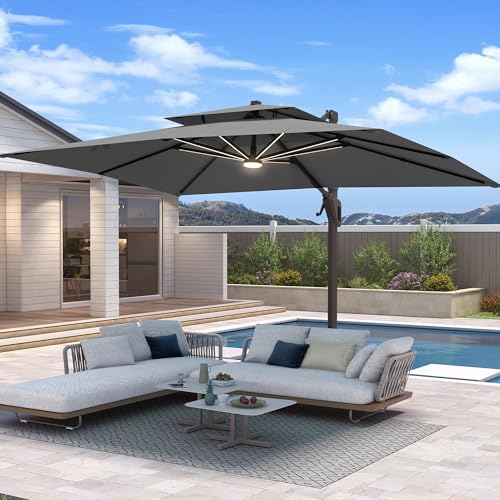
Rectangular Cantilever Umbrella with Lights: The Complete Buyer's Guide
Extend your patio evenings with an offset umbrella that combines full rectangular shade and built-in illumination. This guide walks you through canopy sizing, lighting systems, base stability, and the features that matter before you choose.
Explore Top PicksWhy this guide exists: A rectangular cantilever umbrella with lights solves two problems at once — it shades a long dining table without a center pole in the way, and it lights the area after sunset without extra wiring. But the category has real differences in canopy fabric, LED power source, and base requirements. This page explains each one so you can pick confidently.
What Makes a Cantilever Umbrella Different
A cantilever — also called an offset — umbrella supports its canopy from a side arm rather than a central pole. The pole sits beside the table, and the arm reaches over the seating area. For rectangular patios, this means a long canopy can span a six- or eight-seat dining table without obstructing legs or tabletop space. When you add integrated lighting, the umbrella becomes a dual-purpose shade and illumination fixture.
If you are still weighing frame styles, our overview of rattan patio furniture and rectangular patio dining tables with umbrella holes helps you match the umbrella to your existing setup.
Rectangular Canopy Sizes and Coverage
Rectangular canopies are measured as width by depth. Common sizes range from roughly eight by ten feet to ten by thirteen feet. A smaller rectangular canopy suits a four-seat bistro arrangement, while a larger one covers a full dining table plus the chairs around it.
Measure the table first, then add at least two feet of overhang on each long side for usable shade. Keep in mind that the arm reach matters: a canopy that is wider than the arm can support will sag or tilt. Check that the frame’s stated arm span matches the canopy dimensions.
Lighting Systems Compared
Integrated lighting is the defining feature of this umbrella category, and there are two main approaches:
Solar-Powered LEDs
A small panel on top of the canopy charges during daylight. Solar models are simple to place anywhere with direct sun and need no outlet. Output is softer and can dim on cloudy days or shorter daylight periods.
Electric / Battery LEDs
These run from a wall outlet or a rechargeable battery pack. They typically deliver brighter, more consistent light and often include dimming or color options. Placement depends on access to power.
Some models combine a solar panel with a backup battery, which balances convenience and reliability. When comparing, look at how the lights are mounted — rim-mounted strips are common, while some designs use a central hub. If you want a solar alternative for other parts of the yard, our guide to rectangular patio umbrellas with solar lights covers standalone options.
Frame Materials and Canopy Fabric
Aluminum frames dominate the category because they resist rust and stay lighter than steel. Powder-coated finishes add further protection. High-grade steel appears on heavier, more wind-resistant models but requires more careful maintenance. Canopy fabric should be a solution-dyed or acrylic-blend outdoor textile rated for UV resistance and water repellency.
Look for reinforced ribs, a crank or tilt mechanism that operates smoothly, and a canopy that can be removed for cleaning. For replacement or upgrade parts, see our page on replacement covers for cantilever umbrellas.
Base and Stability: What to Check
Cantilever umbrellas concentrate weight on the side, so the base is not an afterthought. Residential setups commonly use a cross-plate base that can be filled with water or sand for extra mass. Heavier steel plate bases are recommended for exposed, windy locations. Some models include wheels for repositioning, which is useful when the umbrella must be moved to follow the sun.
Always check whether the base is included — many umbrellas are sold separately from the base, and the correct base type depends on the frame and canopy size. If you are comparing complete setups, our rectangular cantilever umbrella with base page explains what to look for in an all-in-one package.
Quality Tiers at a Glance
This category spans a wide range of build quality. The table below uses relative tiers rather than figures, so you can match expectations to the class of product you are considering.
| Tier | Typical Characteristics | Best For |
|---|---|---|
| Entry-level | Lighter aluminum frame, basic solar lighting, standard fabric | Seasonal use, calm locations, first setup |
| Mid-range | Reinforced ribs, smoother crank/tilt, brighter LED system, better fabric | Everyday patio dining and evening entertaining |
| Premium | Heavy-duty frame, dual lighting options, weather-resistant coating, robust base compatibility | Frequent use and exposed yards |
| Commercial-grade | Solid build, high wind tolerance, replaceable components, professional lighting | Hospitality spaces and windy coastal settings |
Buyer's Checklist Before You Choose
- Measure your table and confirm canopy dimensions with overhang for shade.
- Decide between solar and electric lighting based on outlet access and desired brightness.
- Confirm whether the base is included and its recommended fill material.
- Check the frame material and finish for rust resistance.
- Verify the crank, tilt, and rotation mechanisms are rated for the canopy size.
- Plan storage or a cover for off-season protection.
For related shade solutions, see our guides to rectangular patio umbrellas with LED lights and rectangular porch umbrellas.
Setup and Placement Tips
Position the umbrella so the arm reaches over the table while the pole sits clear of walkways. Leave room for the base, which may extend beyond the pole footprint. If your patio receives strong afternoon sun, set the canopy slightly angled toward the sun’s path — most cantilever models allow tilt adjustment.
Keep the canopy closed during high winds and storms, even on heavy-duty models. Regular cleaning of the fabric and inspection of the crank and arm joints will extend the life of the umbrella significantly.
Frequently Asked Questions
Are rectangular cantilever umbrellas with lights worth it?
Yes. A rectangular cantilever umbrella with integrated lighting combines shade and evening ambiance in one fixture. It eliminates the need for separate string lights and frees up table space because the pole sits offset from the dining area.
Do the lights run on solar power or electricity?
Both options exist. Solar models use a top-mounted panel and recharge during the day, while electric models require an outlet or extension cord and typically deliver brighter, more consistent output.
What base weight does a cantilever umbrella need?
Offset umbrellas need a weighted base to resist tipping. Cross-plate bases filled with water or sand are common for residential use, while heavier steel plate bases are recommended for windy, exposed locations.
Can a cantilever umbrella cover a full dining table?
A rectangular canopy in the eight-by-ten or ten-by-thirteen foot range can cover a typical six-seat dining table. Measure your table and allow extra overhang for shade in the late afternoon.