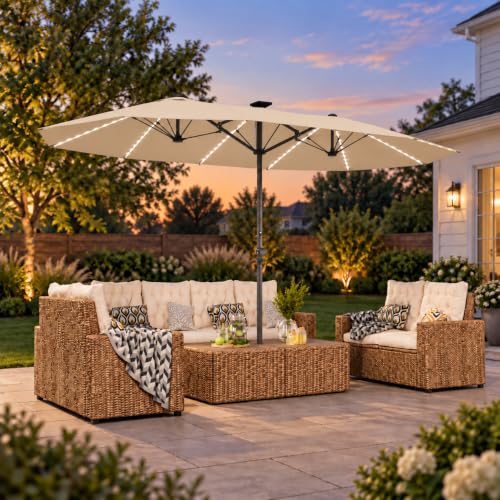
Rectangular Patio Umbrella with Solar Lights: The Complete Buying Guide
Everything you need to know before choosing a solar-powered rectangular umbrella: canopy sizes, frame types, LED systems, fabric durability, and practical setup advice for a shade solution that works day and night.
Explore Top PicksWhy this guide matters: A rectangular patio umbrella with solar lights solves two outdoor needs at once — generous shade for long dining tables and evening illumination without wiring. But the category has real differences in frame strength, solar panel efficiency, battery placement, and canopy fabric. This guide walks through each decision so you can choose confidently.
What Is a Rectangular Patio Umbrella with Solar Lights?
A rectangular patio umbrella with solar lights is a shade structure with an elongated canopy, typically sized to cover rectangular dining tables, lounge zones, or long balcony layouts. Integrated solar panels — usually mounted on the top of the canopy or along the ribs — charge a battery that powers LED lights built into the underside of the umbrella. The result is a dual-purpose piece: sun protection during the day and ambient lighting after dusk.
Unlike round umbrellas, the rectangular format aligns with the geometry of most dining tables and outdoor sofas, reducing wasted overhang on the sides. That makes it a practical match for rectangular patio dining tables with umbrella holes and for long lounge arrangements where even shade matters.
Key Benefits of Solar-Powered Rectangular Umbrellas
No Wiring Required
Solar panels and rechargeable batteries eliminate the need for outdoor outlets, extension cords, or electrician work — a major advantage for renters and older patios.
Evening Ambiance
Built-in LEDs create a warm, downward-facing glow that is gentler than string lights and keeps the table lit for late dinners and conversation.
Better Table Coverage
The elongated canopy matches rectangular tables more efficiently than a round umbrella, so the shade lands where diners actually sit.
Low Running Effort
Once installed, the system charges itself daily. There are no bulbs to wire and no switches to remember if the model includes automatic dusk activation.
How the Solar Lighting System Works
Most rectangular solar umbrellas use one of two lighting architectures:
- Canopy-mounted panels with hub battery: A small solar panel sits on top of the canopy and feeds a battery pack integrated into the center hub. LEDs run along the ribs or around the perimeter. This is the most common layout for center-pole models.
- Rib-integrated panels with per-arm batteries: Smaller panels are embedded along several ribs, each powering a short LED strip. This spreads weight and can improve charging in partial shade, though it complicates battery replacement.
Charge time depends on direct sun exposure, typically four to six hours of good sunlight for a full charge. Runtime usually ranges from four to eight hours, and many models include a switch with multiple brightness levels. If you plan to use the umbrella mostly in the evening, look for a model with a larger battery capacity and a panel that faces upward rather than sideways.
For a comparison of lighting approaches, see our guide to a rectangular patio umbrella with LED lights, which covers wired and plug-in options alongside solar.
Choosing the Right Canopy Size
Canopy size is the single most important decision. A rectangular umbrella needs to overhang the table and seating by roughly 12 to 18 inches on each side to provide real shade at the edges of the day.
- 6-seat rectangular table: Look for canopies around 10 x 6.5 feet or 11 x 7.5 feet.
- 8-seat rectangular table: Canopies around 11 x 7.5 feet or larger work better; some cantilever models reach 10 x 13 feet.
- Balcony or narrow patio: A 6.5 x 5 feet or 8 x 6 feet canopy can cover a bistro setup without overwhelming the space.
Measure the table footprint first, then add the overhang allowance. Also confirm that the umbrella's pole or cantilever arm clears your seating arrangement — a center pole through a table hole is the simplest solution, while cantilever frames free up the table edge entirely.
Center-Pole vs. Cantilever Frames
Rectangular solar umbrellas come in two structural families, and the choice affects stability, placement, and how the solar components are mounted.
Center-pole models are the classic configuration: the pole passes through the table and into a base. They are simpler to operate and usually less expensive within their tier, but the pole occupies table space and limits where the umbrella can stand. Solar panels on these models are typically mounted on the canopy top, which is a good position for sun exposure.
Cantilever models use an offset arm so the canopy hangs over the table without a center pole. They are ideal for large rectangular tables and lounge areas, but they require a heavy base or ground anchoring to resist wind. Many cantilever designs place solar panels on the canopy or along the arm, and the battery is often housed at the base or in the arm joint. If you prefer this configuration, explore rectangular cantilever patio umbrellas with lights for a closer look at the layout.
Frame Materials and Wind Resistance
A rectangular canopy catches more wind than a round one, so the frame matters more. The three common materials are:
- Powder-coated aluminum: Lightweight and rust-resistant, common in mid-range and premium models. Look for thicker wall thickness and reinforced joints.
- Steel: Stronger and heavier, often used in entry-level and mid-tier cantilever arms. Requires a rust-proof finish to hold up over seasons.
- Wood or engineered wood: Attractive for rustic and coastal themes but less common on solar models because electronics and wood maintenance are an awkward pairing.
Check the rib count and rib material — eight ribs is standard, but larger rectangular canopies benefit from more ribs or fiberglass ribs that flex in gusts. A wind vent at the top of the canopy reduces uplift and is a worthwhile feature on any umbrella of this size.
Canopy Fabric and Weather Performance
Solution-dyed acrylic and high-grade polyester are the two fabrics you will encounter most. Solution-dyed acrylic holds color and resists fading better over time, while quality polyester with a UV-resistant coating is a solid choice in the essential and mid-range tiers. Either way, confirm:
- UV resistance rating suitable for full-sun exposure.
- Water-repellent finish rather than fully waterproof construction, which traps moisture and encourages mildew.
- Removable, machine-washable canopy if easy cleaning is a priority.
Fabric care overlaps heavily with general outdoor furniture maintenance, so our weatherproofing guide is a useful companion for seasonal upkeep.
Tier Overview: What Changes Across the Market
Rather than framing choices around numbers, it helps to understand how rectangular solar umbrellas differ by market tier. The table below summarizes the typical trade-offs.
| Tier | Best For | Typical Characteristics |
|---|---|---|
| Essential tier | Occasional shade, smaller patios, first-time buyers | Steel or thin aluminum frame, polyester canopy, basic solar LED strip with single brightness level |
| Balanced tier | Daily dining tables, family patios, regular evening use | Powder-coated aluminum frame, solution-dyed acrylic canopy, multi-level solar lighting, wind vent |
| Premium tier | Large rectangular tables, exposed sites, cantilever setups | Reinforced aluminum or heavy-duty steel, higher-capacity battery, improved panel placement, crank and tilt mechanisms |
| Top-tier / commercial-grade | Hospitality settings, windy locations, all-season use | Marine-grade hardware, replaceable solar components, fiberglass ribs, heavy offset base systems |
Across tiers, the biggest quality jumps tend to appear in frame rigidity, canopy fabric durability, and the reliability of the solar charging system. A mid-range model usually offers a noticeably smoother crank mechanism and a longer-lasting battery than an entry-level one, which matters if the umbrella will be opened and closed daily.
Setup, Placement, and Sun Exposure
Solar performance depends on placement, so plan the location before assembly:
- Face the panel toward midday sun. If the panel is fixed to the canopy top, orient the umbrella so the top receives the most direct light between 10 a.m. and 3 p.m.
- Avoid heavy tree cover. Dappled shade reduces charging significantly. If the patio is partly shaded, choose a model with panels on multiple ribs.
- Secure the base. A rectangular canopy is a sail. Use a base rated for the canopy size, add weight if needed, and close the umbrella during storms.
- Keep the table hole aligned. For center-pole models, confirm the hole diameter and pole diameter match, and check that the pole does not interfere with chair placement.
If your table does not have a hole, a cantilever model is the cleaner alternative. Our overview of rectangular patio umbrellas with solar lights includes both center-pole and cantilever options so you can compare layouts directly.
Maintenance and Seasonal Care
Solar umbrellas need a little more attention than plain shade umbrellas because electronics are involved. A simple routine keeps both fabric and lighting in good condition:
- Wipe the solar panel every few weeks — dust and pollen reduce charging efficiency.
- Close the umbrella when not in use to reduce UV exposure and wind stress.
- Remove or disconnect the battery pack before winter storage if the design allows it.
- Clean the canopy according to the fabric manufacturer's instructions; avoid harsh solvents near the LED strips.
- Store the umbrella under a fitted cover or indoors during off-season months in cold climates.
For broader seasonal routines, our weatherproofing guide covers fabric protection, frame inspection, and storage best practices that apply directly to solar umbrellas.
Common Mistakes to Avoid
- Buying an undersized canopy: A rectangular umbrella that does not overhang the seating leaves diners in sun at the edges. Measure the table plus overhang before choosing.
- Ignoring wind exposure: A large rectangular canopy on an underweighted base is a safety risk. Match the base to the canopy and close the umbrella in gusts.
- Expecting full-sun charging in deep shade: Solar panels need direct light. If the patio is heavily shaded, consider a model with multiple panels or a plug-in LED alternative.
- Skipping the battery access check: Confirm that the battery pack is replaceable and reachable without dismantling the frame.
- Overlooking the tilt mechanism: A tilt function helps you follow the sun through the day, especially with a fixed rectangular footprint.
Frequently Asked Questions
How do solar lights on a patio umbrella work?
Solar panels mounted on the canopy collect daylight and charge a small battery pack, usually integrated into the hub or ribs. At dusk, the LED lights switch on automatically or via a switch, providing ambient illumination for several hours depending on charge and settings.
What size rectangular umbrella do I need for a 6-seat dining table?
A rectangular umbrella measuring roughly 10 x 6.5 feet or 11 x 7.5 feet typically covers a six-seat rectangular dining table comfortably, provided the canopy overhangs the seating edges by at least 12 to 18 inches on all sides.
Can a solar-powered umbrella stay outside in winter?
Most solar umbrellas are weather-resistant but not designed for harsh winter exposure. In cold climates, close the canopy, remove the solar battery pack if detachable, and store the umbrella indoors or under a fitted cover to protect both fabric and electronics.
Do I need a base for a rectangular solar umbrella?
Yes. Rectangular canopies catch more wind than round ones, so a weighted base or a cantilever frame with an integrated base is essential. Center-pole models need a base rated for the canopy size, while cantilever models rely on a heavy offset base or ground anchors.
How long do the solar batteries last?
Rechargeable battery packs in solar umbrellas typically provide four to eight hours of light on a full charge and usually last two to three seasons before needing replacement, depending on usage and sun exposure.
Pairing Your Umbrella with the Rest of Your Patio
A rectangular solar umbrella works best when it fits the broader layout. If your dining area uses a long table, consider how the umbrella pairs with the table and seating. Our guides to rectangular patio dining sets and rectangular dining tables for six with a bench cover sizing and layout in more detail. For lounge areas, a cantilever umbrella can shade a sofa arrangement without a center pole, and pairing it with durable rattan outdoor furniture creates a cohesive, low-maintenance setup.
If you are still deciding between umbrella styles, our overviews of rectangular porch umbrellas and rectangular cantilever umbrellas with base help clarify placement differences before you commit.
Ready to Choose Your Solar Umbrella?
Browse recommended rectangular patio umbrellas with solar lights and compare features, sizes, and frame types below.
View Recommended Options