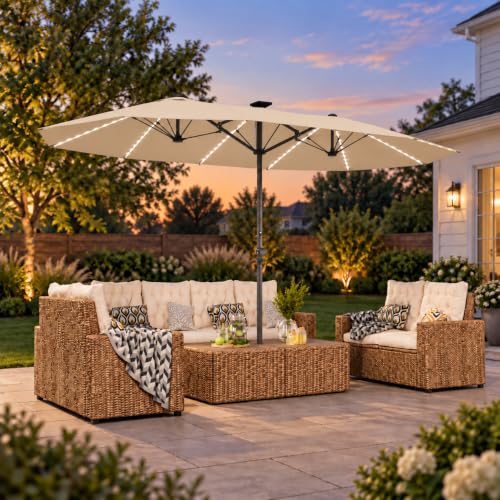
Rectangular Patio Umbrella With LED Lights: The Complete Guide
Extend your evenings outdoors with a shade solution that combines daytime comfort and nighttime ambiance. Learn how to select, place, and maintain a rectangular LED patio umbrella that fits your space perfectly.
A rectangular patio umbrella with LED lights solves two common outdoor living challenges at once: harsh midday sun and dark evenings. Unlike round umbrellas that leave awkward gaps over long dining tables, a rectangular canopy provides even coverage across rectangular tables and lounge arrangements. When integrated LEDs are added to the ribs or center hub, the umbrella becomes a functional lighting fixture after sunset — no separate string lights or lanterns required.
This guide walks through the key decisions you'll face when shopping: canopy shape and size, frame construction, fabric grade, lighting type, and power source. By the end, you'll understand which configuration suits your patio, how to install it safely, and what maintenance keeps it performing season after season.
Why Choose a Rectangular Patio Umbrella With LED Lights
LED-integrated umbrellas offer practical advantages that go beyond aesthetics. Here's what makes them a worthwhile addition to an outdoor space:
- Evening usability: Built-in LEDs illuminate the table surface and surrounding seating area, making dinners and conversations comfortable after dusk.
- Energy efficiency: Modern LED arrays draw very little power, so a single battery charge or solar panel can last through multiple evenings.
- Cleaner setup: No dangling cords or separate light fixtures — the lighting is integrated into the umbrella frame.
- Targeted illumination: LEDs positioned along the ribs or center hub cast light downward where it's most useful, rather than creating glare.
- Rectangular coverage: The canopy shape matches long dining tables, providing consistent shade and light across the entire surface.
Design note: A rectangular canopy typically suits a 6- to 8-seat dining table better than a round canopy of similar square footage, because the corners of the umbrella align with the table's corners instead of overhanging empty space.
Types of Rectangular LED Patio Umbrellas
Rectangular umbrellas with integrated lighting generally fall into two structural categories. Understanding the difference helps you choose based on your patio layout and table position.
Center-Pole Rectangular Umbrellas
The pole runs through the center of the canopy and typically through a hole in the table. This is the traditional configuration and works well when the table sits in an open area with room for a base underneath. Center-pole models are generally simpler to operate and tend to be more stable in moderate wind when paired with a weighted base.
Cantilever (Offset) Rectangular Umbrellas
The pole stands to the side, and a crank or lever arm suspends the canopy over the table. This design frees the table surface entirely and allows you to position the umbrella over seating that has no umbrella hole. Cantilever models are often preferred for lounge areas and for tables placed near walls or railings. They typically require a heavier base to counteract the offset load. If you're considering this style, explore options like a rectangular cantilever umbrella with lights to compare frame configurations.
| Feature | Center-Pole | Cantilever |
|---|---|---|
| Table requirement | Needs umbrella hole or open center | No hole required |
| Base footprint | Under the table | Beside the table; larger base |
| Best for | Dining tables in open areas | Lounge seating, wall-adjacent tables |
| Wind stability | Good with weighted base | Requires heavy base and proper anchoring |
Sizing and Placement for Rectangular Umbrellas
Choosing the right canopy size is the most important step for both shade performance and visual balance. A canopy that's too small leaves sun exposure at the table edges; one that's too large can overwhelm the space or catch excessive wind.
Matching Canopy to Table
As a general guideline, the canopy should extend roughly 1 to 2 feet beyond each edge of the table. For a standard 6-seat rectangular table, a canopy in the 9-by-6-foot range is a common fit. For an 8-seat table, look toward a 10-by-6.5-foot or similar proportion. If your table has an umbrella hole, confirm the pole diameter matches the hole size before ordering.
Height and Clearance
The bottom edge of the canopy should sit high enough that people can walk beneath it comfortably — typically around 6.5 to 7 feet from the ground to the lowest rib. Cantilever umbrellas often allow height adjustment, which is useful when the umbrella is shared between dining and standing-height areas. If you're pairing your umbrella with a dining surface that has a dedicated hole, you may also want to review rectangular patio dining table with umbrella hole options to ensure the pole and base align properly.
Placement Considerations
- Position the umbrella so the canopy shades the table during the hours you use it most — usually late morning through mid-afternoon.
- Leave clearance between the canopy and any nearby walls, fences, or pergola posts to avoid rubbing and wind damage.
- For cantilever models, place the base on the side that receives the most direct sun so the canopy reaches across the table.
- Check that the base sits on a level, solid surface; uneven pavers or soft ground can cause tipping.
Frame and Fabric Materials
Durability in an outdoor umbrella comes down to two components: the frame and the canopy fabric. Both need to withstand UV exposure, moisture, and wind.
Frame Construction
Aluminum frames are the most common choice for rectangular LED umbrellas because they resist rust and keep weight manageable. Powder-coated aluminum offers additional protection against scratches and corrosion. Steel frames are heavier and sturdier but require a rust-proof finish to hold up over time. Look for reinforced joints and a rib count that matches the canopy size — larger canopies benefit from 8 ribs rather than 6 for better wind resistance.
Canopy Fabric
Solution-dyed acrylic and polyester blends are standard for quality patio umbrellas. These fabrics hold color longer under UV exposure and resist mildew when properly dried. A fabric with a water-repellent finish adds convenience during unexpected showers. Heavier fabric weights generally offer better fade resistance and a more substantial feel, though they also add weight to the canopy.
Material tip: If your patio receives intense afternoon sun, prioritize a fabric rated for high UV resistance. The lighting system is only useful if the canopy itself stays intact and colorfast through multiple seasons.
LED Lighting Options Explained
The lighting system is what distinguishes these umbrellas from standard shade products. Most models use one of two LED placements, and some combine both.
Rib-Mounted LEDs
LED strips or individual bulbs run along the underside of each rib, directing light downward toward the table. This arrangement provides broad, even illumination across the seating area. Rib-mounted LEDs are common on larger rectangular canopies because they cover the full length of the umbrella.
Center-Hub LEDs
A cluster of LEDs sits at the center hub, casting a focused pool of light directly below. This style uses fewer components and is often simpler to maintain, but the light spread is narrower. It works best over smaller tables or when combined with ambient lighting elsewhere on the patio.
Color Temperature and Brightness
Most integrated LED systems use warm white light, which feels comfortable for evening dining. Some models offer dimming or multiple color settings. Consider whether you want a single fixed setting or adjustable brightness — the latter is useful if the umbrella doubles as task lighting for reading or games.
If you're comparing lighting approaches across styles, it's worth reviewing how rectangular patio umbrella with solar lights systems differ in panel placement and charge behavior before committing to a powered model.
Power Sources Compared
Rectangular LED umbrellas draw power from one of three sources. Each has trade-offs in convenience and installation.
| Power Source | How It Works | Best For |
|---|---|---|
| Solar panel | Panel on top of the canopy charges a battery during the day | Sunny locations; no wiring needed |
| Rechargeable battery | Removable battery pack charged indoors via USB or adapter | Shaded patios; consistent brightness |
| Plug-in adapter | Low-voltage cord connects to an outdoor outlet | Permanent setups with nearby power |
Solar models are the most self-sufficient but depend on direct sun exposure to charge fully. Rechargeable battery packs offer dependable output regardless of weather, though they require a charging routine. Plug-in models provide uninterrupted power but limit placement to areas near an outlet. Match the power source to your patio's sun exposure and your willingness to manage charging.
Setup, Safety, and Care Tips
Installation Basics
- Assemble the frame on a flat surface before raising the canopy to avoid bending ribs.
- Secure the base with weight plates or sandbags appropriate for the umbrella's offset load.
- Route any charging cables away from walkways and standing water.
- Test the LED system before the return window closes to confirm all segments illuminate evenly.
Wind and Weather
No patio umbrella should be left open in high wind. Close and secure the canopy when storms are forecast, and store cantilever models in a lowered position during extended bad weather. A fitted cover protects both fabric and lighting components during the off-season.
Cleaning and Maintenance
- Brush loose debris from the canopy before it accumulates in the folds.
- Clean fabric with mild soap and water; avoid abrasive cleaners that strip protective finishes.
- Wipe LED housings with a dry cloth — never spray water directly into electrical components.
- Inspect ribs and joints at the start of each season for looseness or corrosion.
- Charge or replace batteries according to the manufacturer's guidance to maintain output.
Storage tip: If you disassemble the umbrella for winter, label the LED connectors before separating the canopy from the frame. This makes reassembly faster and reduces the risk of damaging wiring.
Ready to Explore Your Options?
Browse curated rectangular LED umbrella models and compare features side by side.
View Umbrella OptionsFrequently Asked Questions
Can I use a rectangular LED umbrella on a round table?
Yes, though the canopy will overhang unevenly. A rectangular umbrella is designed to align with rectangular tables, so the visual balance and shade coverage are best when the shapes match. If your table is round, a round canopy typically provides more even coverage.
How long do the LEDs typically last?
Quality LED arrays are rated for thousands of hours of use. In practice, the battery or solar charging system often requires attention before the LEDs themselves degrade. Choosing a model with replaceable batteries extends the usable life of the lighting system.
Are LED umbrellas safe in rain?
Most integrated LED systems are designed to resist moisture, but they are not intended for use during storms. Close the umbrella and disconnect or cover the power source during heavy rain. Check the manufacturer's weather-resistance rating before leaving the umbrella open in wet conditions.
Do I need a special base for a cantilever LED umbrella?
Yes. Cantilever umbrellas require a heavier, wider base than center-pole models because the canopy weight sits away from the pole. Use the base specified by the manufacturer, and add weight plates if your patio is exposed to gusty conditions.
Can the LED lights be replaced if they stop working?
Replaceability varies by model. Some umbrellas use modular LED strips that can be swapped out; others have sealed lighting units. If long-term serviceability matters to you, confirm the availability of replacement parts before purchasing.
What size umbrella fits an 8-seat rectangular table?
An 8-seat rectangular table generally pairs well with a canopy in the 10-by-6.5-foot range or similar proportions. Measure your table and add roughly 1 to 2 feet of overhang on each side, then confirm the pole and base fit your table's umbrella hole and surrounding space.