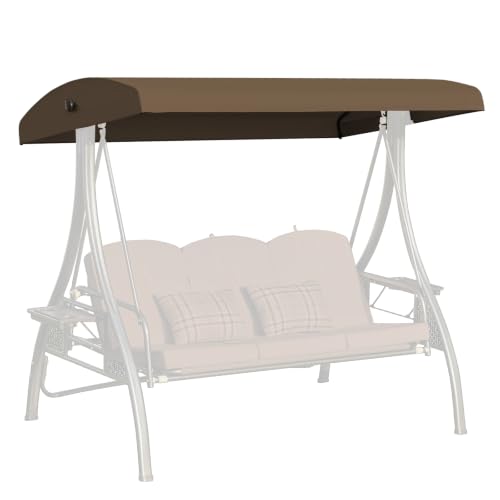
Replacement Canopy for a Three Person Swing
Everything you need to know before buying a replacement canopy for your three person swing — how to measure the frame, compare fabric grades, install the canopy, and extend its life through every season.
Start the GuideWhy this guide exists: A three person swing is one of the most loved pieces of backyard furniture, and its canopy is also the part that wears out first. Sun, rain, and wind fade the fabric and stress the seams long before the frame needs attention. A correctly fitted replacement canopy restores shade and privacy without replacing the entire swing — but only if the fit, fabric grade, and attachment style are right for your specific frame. This guide walks you through each decision in order, so you can buy with confidence.
Why a Replacement Canopy Beats a New Swing
The frame of a three person swing — whether steel, aluminum, or wood — is built to last many seasons. The canopy, by contrast, is a soft component exposed to the worst of the weather. Replacing just the canopy is the practical choice when the structure is still sound. It preserves the swing you already know fits your porch or garden, avoids the assembly work of a new unit, and keeps older frames out of waste streams.
Common signs it is time for a new top include visible fading on the sun-facing side, fabric that has become brittle or cracked at fold lines, water that pools instead of beading, seams pulling away from the attachment points, and mildew that returns after cleaning. If any two of these are present, a replacement canopy is usually the right move rather than another round of spot treatment. For a broader look at keeping outdoor soft goods in shape, see our outdoor care section.
How to Measure Your Three Person Swing Frame
Fit is the single biggest reason replacement canopies disappoint. Swing model names and seat counts are not standardized, so two "three person swings" from different makers can have canopies that are several inches apart in width and depth. Always measure the frame and compare to the canopy listing's specifications.
Use a metal tape measure and record these four numbers:
- Frame width: the outer distance across the top support bars, side to side.
- Frame depth: the distance from the front top bar to the rear top bar.
- Attachment span: the distance between the points where the canopy corners or straps anchor to the frame.
- Top height: from the top bar down to the seat surface, which affects how much side drop the canopy needs.
If your swing has a curved top, also note the arc height — the peak above the straight line between the two end bars. A canopy designed for a flat top will not sit correctly on a domed frame. When measurements fall between two listed sizes, choose the canopy whose attachment span matches most closely; a slightly generous width is easier to work with than one that is too tight to reach the anchor points.
Canopy Fabric Grades Explained
Replacement canopies are sold across a range of quality tiers, and the fabric is where most of the difference lives. Rather than thinking in terms of specific numbers, it helps to understand what each tier delivers in real use.
Basic Polyester
Lightweight and serviceable for a season or two in mild climates. Expect faster fading in strong sun and less water repellency over time.
Best for: covered porches and short-term refresh.
Coated Polyester
A solid middle ground with UV-resistant coating and reinforced seams. Holds color noticeably longer than entry-level fabric.
Best for: most residential patios and gardens.
Solution-Dyed Acrylic
Color is locked into the fiber itself, so it resists fading and mildew exceptionally well. Typically paired with water-repellent finishes.
Best for: full-sun positions and long-term ownership.
Beyond the fiber, check three construction details: double-stitched or bar-tacked seams at stress points, reinforced corners where straps or pockets attach, and a UV-resistant coating that is described as part of the fabric rather than a temporary spray. A 3 seater garden swing canopy with these features generally outlasts a plain fabric cover by several seasons. If you also maintain rattan or wicker swings, our guides to replacement cushions for rattan furniture and replacement cushion covers for wicker furniture cover the matching soft-goods care.
Canopy Types at a Glance
| Tier | Typical Construction | Best For | Weather Notes |
|---|---|---|---|
| Entry-level | Single-layer polyester, stitched hems | Covered porches, seasonal use | Fades faster in direct sun; store off-season |
| Mid-range | Coated polyester, reinforced seams | Most patios and gardens | Good water beading; holds color for several seasons |
| Premium | Solution-dyed acrylic, bar-tacked stress points | Full-sun positions, long-term ownership | Strong fade and mildew resistance; breathable |
| High-end tier | Acrylic with water-repellent finish, double-stitched | Coastal and windy sites | Best wind and salt resistance; longest service life |
Attachment Styles and Compatibility
Replacement canopies attach to the frame in a handful of ways, and matching the style to your swing is as important as matching the measurements.
- Strap and buckle: adjustable straps loop around the top bars. The most forgiving style and the easiest to fit to slightly different frames.
- Sleeve pockets: the top bars slide through sewn channels. Offers a clean look but requires precise bar spacing.
- Hook and ring: metal or plastic hooks attach to pre-drilled points. Simple to install, though hardware quality varies by tier.
- Corner ties: fabric ties at each corner. Common on lighter canopies and quick to remove for storage.
Check whether your frame has the mounting points the canopy expects. A strap-style canopy can usually adapt to a frame designed for ties, but a pocket-style canopy cannot be fitted to a frame with no continuous top bars. For swings that share space with other rattan seating, the care guidance in our rattan outdoor furniture overview is a useful companion read.
Installing the Replacement Canopy
- Remove the old canopy and inspect the frame. Check for rust, loose bolts, or bent bars. Address small frame issues before fitting the new top so you do not have to remove it again.
- Lay the canopy out and orient it. Match the front and back edges to the frame, and confirm the attachment points line up before any fastening.
- Attach the rear edge first. Working from the back gives you a fixed reference and makes the front easier to stretch into place.
- Secure the front and sides. Pull the fabric taut without over-stretching seams. Adjustable straps should be snug but not crushing the fabric against the frame.
- Tighten all fasteners evenly. Go around the canopy a second time to balance tension, then check that no corner is pulling harder than the others.
- Test in light wind. A gentle breeze will reveal flapping panels or loose straps that need adjustment before stronger weather arrives.
Work on a calm day and use a step ladder for the top bars. Two people make the process considerably easier on larger three person frames.
Making the Canopy Last
A replacement canopy is a long-term investment when it is treated like one. Brush off loose debris monthly, rinse with mild soap and water, and let the fabric dry fully before closing or storing. Avoid harsh detergents and pressure washers, which strip water-repellent finishes. During off-season months, remove the canopy and store it dry and folded loosely — this single habit adds years to its usable life. If your swing sits alongside other soft furnishings, the same routine applies to replacement cushions for outdoor furniture.
For swings that also need seat refreshes, our guides to replacement cushion sets for outdoor furniture and replacement fabric for chaise lounge chairs explain how to match fabric grades so the whole seating area ages at the same rate.
Frequently Asked Questions
How do I measure for a replacement canopy on a three person swing?
Measure the frame width, depth, and the span between the top attachment points, plus the height from the top bar to the seat. Compare these numbers to the canopy listing specifications rather than relying on the swing model name alone.
Which fabric is best for a three person swing canopy?
Solution-dyed acrylic and high-grade polyester with UV-resistant coating offer the best balance of fade resistance and water repellency. Entry-level polyester works as a short-term option but tends to fade faster in strong sun.
Can I install a replacement canopy by myself?
Yes, most three person swing canopies install with one or two people using basic tools. The canopy slides over the top frame and attaches with straps, hooks, or sleeve pockets. Work on a calm day and use a step ladder for the top bars.
How often should a swing canopy be replaced?
Most mid-range canopies last several seasons before visible fading, seam stress, or water pooling becomes a problem. Premium fabrics often last longer. Storing the canopy during off-season months significantly extends its usable life.
Ready to Restore Shade to Your Swing?
Browse our recommended replacement canopies for three person swings below, filtered for fit, fabric grade, and attachment style.
View Recommended Canopies