Replacement Cushions for Outdoor Furniture: The Complete Buying Guide
Your frame is still solid, the fabric has faded, and the foam has gone flat. This guide walks you through sizing, fills, fabrics, and fit so you can restore comfort without replacing the entire set.
Explore Recommended CushionsWhy replacement cushions make sense: Outdoor furniture frames — especially rattan, wicker, aluminum, and teak — typically outlast their cushions by several seasons. Replacing just the cushions is an efficient way to refresh the look and feel of a patio set while keeping the structure you already own. The key is matching dimensions, fill type, and fabric performance to how you actually use the space.
Why Outdoor Cushions Wear Out First
Cushions take the brunt of outdoor exposure. Sun degrades fabric dyes, rain and humidity break down foam cells, and repeated compression from daily use flattens fill over time. A cushion that once felt supportive can become thin and lumpy within a few seasons, even when the frame underneath remains structurally sound.
Understanding why cushions fail helps you choose better replacements. UV exposure causes fading and fabric brittleness. Moisture trapped inside foam encourages mildew and accelerates foam breakdown. Heavy use compresses open-cell foam. If your current cushions show any of these signs, replacement is usually the most practical next step — and it is far less disruptive than sourcing an entirely new set.
If your furniture is rattan, you may also want to review the broader guidance in our rattan garden furniture replacement cushions guide, which covers frame-specific fit considerations in more detail.
Step-by-Step: How to Choose the Right Replacement Cushions
Buying replacement cushions is largely a measurement and fit exercise. Follow these steps in order, and you will avoid the most common mistakes — cushions that are too thick, too wide between the arms, or too short against the backrest.
Measure the Frame, Not Just the Old Cushion
Old cushions may have compressed or stretched. Measure the seat width between the arms, the seat depth from front edge to backrest, and the back height you want to cover.
Note the Corner Shape
Rounded frames need contoured cushions. Straight-edged frames accept standard rectangular cushions. Check whether the backrest is angled or vertical.
Choose Seat Thickness
Thicker seats feel plusher but raise seating height. Confirm the total height still works with your table or coffee table before committing.
Decide on Fill Type
Quick-dry foam suits uncovered patios. High-resilience foam holds shape longer. Fiber-wrapped cores add softness at the surface.
Select Fabric for Your Climate
Solution-dyed acrylic and olefin resist fading. Water-repellent and mildew-resistant finishes matter in humid or rainy regions.
Confirm Attachment and Closure
Check for ties, straps, or grip dots that keep cushions in place. Zippered covers simplify washing and insert replacement later.
Replacement Cushion Types by Furniture Style
Different frame styles demand different cushion shapes. Using the wrong type leads to sliding, bunching, and poor posture support. The table below maps common furniture categories to the cushion style that fits them best.
| Furniture Style | Recommended Cushion Type | Key Fit Consideration |
|---|---|---|
| Rattan & wicker sofas | Contoured seat + back cushions | Measure between curved arms; backrests often angle outward |
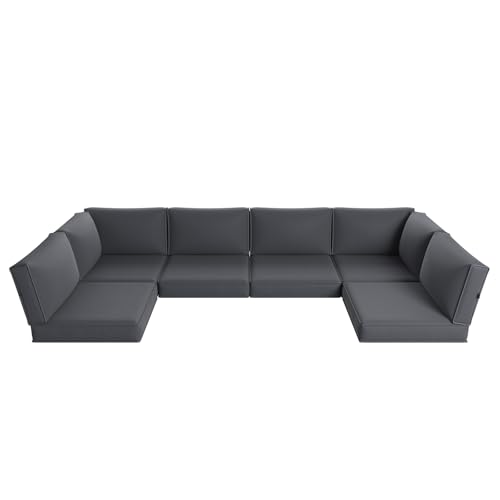
| Outdoor sectionals | Modular cushion sets per section | Confirm each segment length; corner pieces need L-shaped or wedge cushions |
| Lounge chairs & armchairs | Single seat cushion with back pad | Seat depth and back height vary widely between models |
| Dining chairs | Slim seat pads or tie-on cushions | Keep total thickness low so knees clear the table apron |
| Curved daybeds & round sofas | Curved or round replacement cushions | Radius and arc length must match the frame curve |
| Swivel rockers | Fitted seat + back cushion pair | Check clearance for the swivel mechanism and armrests |
For curved frames specifically, our guide to replacement cushions for curved outdoor furniture explains how to measure arc length and radius accurately. Sectional owners can find segment-by-segment sizing advice in the outdoor sectional furniture replacement cushions resource.
Cushion Fill Materials Compared
The fill determines how a cushion feels on day one and how it performs after a full season. There is no single best fill — the right choice depends on exposure, usage frequency, and personal comfort preference.
| Fill Type | Feel | Best For | Durability Notes |
|---|---|---|---|
| High-resilience foam | Firm, supportive | Daily-use seating, dining chairs | Retains shape well; can trap moisture if not quick-dry |
| Quick-dry foam | Firm with faster drainage | Uncovered patios, rainy climates | Open-cell structure speeds drying; slightly firmer surface |
| Polyester fiber fill | Soft, plush | Decorative back cushions, occasional seating | Compresses over time; needs regular fluffing |
| Foam core with fiber wrap | Balanced — support plus softness | Lounge chairs, sofas | Combines shape retention with surface comfort |
| Gel-infused foam | Cooling, responsive | Hot climates, long sitting sessions | Premium option; maintains support in heat |
If you are replacing cushions on rattan furniture, the fill choice often pairs with a specific cover construction. Our replacement cushions for rattan furniture article covers how contoured foam shapes work with woven frames.
Fabric and Cover Considerations
Fabric performance matters as much as fill. Outdoor cushions live in sunlight, humidity, and occasional rain, so the cover needs to resist fading, repel water, and resist mildew. The most reliable outdoor fabrics are solution-dyed — the color is integrated into the fiber rather than applied to the surface, which makes fading far less likely over time.
- Solution-dyed acrylic: Strong fade resistance, soft hand feel, widely used in mid-range and premium cushions.
- Olefin (polypropylene): Excellent moisture resistance and quick drying; common in entry-level and mid-tier cushions.
- Polyester blends: Often treated with water-repellent finishes; performance varies by construction quality.
- Removable zippered covers: Simplify washing and allow cover-only replacement when the fill is still good.
If only the fabric has worn out and the foam is still firm, cover-only replacement is a practical route. See our guide to replacement cushion covers for rattan furniture for sizing and closure details. Wicker owners can compare options in the wicker furniture cushion covers guide.
Quality Tiers: What to Expect at Each Level
Replacement cushions span a wide range of construction quality. Rather than focusing on numbers, it helps to understand what each tier typically delivers in materials and longevity. The descriptors below are relative positions within the market, not absolute grades.
Entry-Level Construction
Basic polyester covers with standard foam fill. Suitable for occasional use and covered porches.
- Standard foam that may compress within a season or two
- Limited fade resistance compared to solution-dyed fabrics
- Often non-removable covers
- Good starting point for seasonal or light-use setups
Mid-Range Construction
Better fabric treatments, firmer foam, and more consistent sizing. A solid choice for daily-use patios.
- Olefin or treated polyester covers with water repellency
- Higher-density foam with improved shape retention
- Zippered, removable covers on many models
- Better stitching and seam reinforcement
High-End Construction
Solution-dyed acrylic, quick-dry or gel-infused foam, and contoured shapes for specific frame styles.
- Strong UV and mildew resistance for exposed locations
- Foam cores engineered for long-term shape retention
- Precise contouring for curved and rounded frames
- Longer warranty coverage on fabric and construction
A mid-range cushion typically offers noticeably better foam recovery and fabric longevity than an entry-level option, while a premium cushion adds specialized contouring and advanced fabric technology. Matching the tier to your actual exposure and usage pattern is more important than simply choosing the highest tier available.
Matching Cushions to Specific Furniture Types
Once you understand sizing, fill, and fabric, the final step is matching the cushion to your exact frame. Below are the most common furniture categories and the specific considerations for each.
Rattan and Wicker Frames
Rattan and wicker furniture often features curved arms and rounded backrests, which means standard rectangular cushions can leave gaps or bunch at the corners. Look for contoured cushions with a slight taper or a rounded back edge. If your set is a swivel rocker, our replacement cushions for rattan swivel rocker guide addresses the extra clearance needed around the swivel base.
Sectionals and L-Shaped Couches
Sectionals require cushion sets sized per segment. Corner pieces need wedge or L-shaped cushions, while straight segments use standard rectangular cushions. Confirm the length of each individual segment rather than the overall sofa length. The outdoor L-shaped couch replacement cushions guide walks through segment-by-segment measurement.
Curved and Round Daybeds
Round daybeds and curved sofas need cushions with matching radius and arc length. Standard cushions will not follow the curve properly and will slide out of position. See our dedicated guides on outdoor round daybed replacement cushions and round outdoor daybed cushions for measurement methods.
Dining Chairs and Three-Piece Sets
Dining chair cushions are usually thin seat pads with ties or grip backing. Keep the total thickness low so knees clear the table apron. For complete three-piece bistro or patio sets, pre-matched cushion sets simplify sizing — see the replacement cushions for 3-piece outdoor patio furniture set guide.
Specialty Frames
Teak, wrought iron, PVC, and vintage frames each have their own quirks. Teak frames often have wider seat spans; wrought iron may have decorative arms that limit cushion width. Our guides on teak outdoor furniture replacement cushions, wrought iron patio furniture replacement cushions, and PVC patio furniture replacement cushions address these specific cases.
Care and Maintenance for Longer Cushion Life
Even well-made cushions last longer with routine care. A few simple habits make a measurable difference in how many seasons you get from a set.
- Brush off debris weekly to prevent dirt from working into fabric fibers.
- Spot clean with mild soap and water rather than harsh detergents that strip protective finishes.
- Stand cushions upright after rain so water drains and air circulates through the fill.
- Store or cover cushions during off-season months to reduce UV exposure and moisture accumulation.
- Fluff fiber-filled back cushions regularly to slow compression and maintain shape.
- Check zippers and seams seasonally and repair small tears before they enlarge.
If your cushions are still in good condition but the fabric has faded, cover-only replacement is an efficient option. Our replacement cushion sets for outdoor furniture guide covers how to coordinate a full matching set when several pieces need refreshment at once.
Frequently Asked Questions
How do I measure my outdoor furniture for replacement cushions?
Measure the seat width between the arms, the seat depth from the front edge to the backrest, and the back height you want to cover. Use a soft measuring tape and record dimensions in both inches and centimeters. Check whether the frame has rounded or straight corners, as this affects cushion fit. If possible, measure the frame rather than the old cushion, since old cushions may have compressed or stretched.
What is the best fill material for outdoor replacement cushions?
High-resilience foam and quick-dry foam are the most common fills. Quick-dry foam allows water to pass through and dry faster, which is ideal for uncovered patios. Polyester fiber fill is softer but compresses over time. Mid-range and premium cushions often combine foam cores with fiber wraps for comfort and shape retention. Gel-infused foam is a premium option for hot climates.
Can I buy replacement cushion covers only, without the fill?
Yes. Many retailers sell cushion covers separately, allowing you to reuse existing foam inserts. This is a practical option if the fill is still firm and only the fabric has faded or torn. Confirm the cover dimensions match your insert dimensions, and check whether the cover has a zipper closure. Our guides on replacement cushion covers cover sizing in more detail.
How do I choose cushions for rattan or wicker furniture?
Rattan and wicker frames often have curved arms and rounded backs, so standard rectangular cushions may not fit well. Look for contoured or curved replacement cushions designed for rounded frames. Measure the internal seat width between the arms and the depth from the front edge to the backrest curve. For swivel rockers, confirm clearance around the base mechanism.
What fabric features should I look for in outdoor replacement cushions?
Look for solution-dyed acrylic or olefin fabrics with UV resistance and water-repellent finishes. Mold and mildew resistance is important for humid climates. Removable, machine-washable covers with zipper closures simplify maintenance. Fade resistance ratings and warranty terms are also useful indicators of fabric quality. Entry-level polyester is adequate for covered porches but less suited to fully exposed locations.