Replacement Cushions for Wrought Iron Patio Furniture: The Complete Buyer's Guide
Wrought iron patio furniture is one of the most durable outdoor investments a homeowner can make. The heavy, ornate frames resist wind, hold their shape, and often carry a timeless look that blends with traditional, cottage, and even modern garden settings. The weak point, however, is almost always the cushion. Sun exposure, rain, and everyday use compress the foam and fade the fabric long before the metal shows any sign of wear.
Replacing cushions rather than the entire set is a practical, environmentally sensible choice. It also gives you a chance to update the color palette of your outdoor space without altering the furniture footprint. The key is getting the fit and the material right, because a loose or undersized cushion on a metal frame will slide, bunch, and wear out quickly.
Why Wrought Iron Frames Need Specific Cushion Types
Unlike wood or wicker frames, wrought iron typically has a thin, rigid seat deck and a decorative backrest with open scrollwork or vertical bars. That structure creates a few unique cushion requirements:
- Flat, firm seat decks: Metal seats offer no give, so the cushion must supply all the comfort. A thin pad is rarely enough for dining or lounging.
- Open backrests: Many wrought iron chairs have decorative backs without a solid panel. Back cushions need ties or a contoured shape to stay in place against the bars.
- Sharp edges and joints: Welded joints and scroll ends can abrade fabric from underneath. A durable bottom panel or a slightly larger cushion footprint helps prevent premature wear.
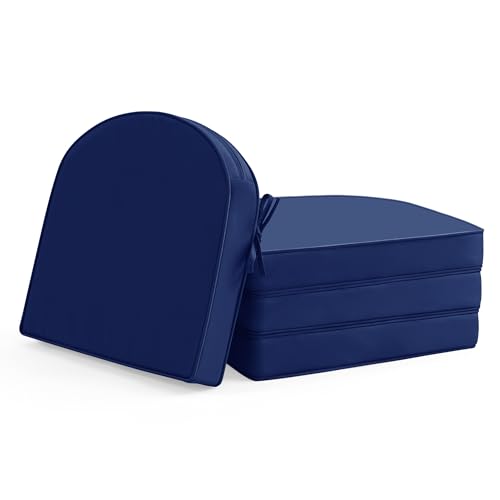
- Curved and rounded frames: Some wrought iron sets feature rounded or barrel-shaped seats. These require contoured cushions rather than standard rectangular ones.
If your set includes curved or rounded seating, it is worth reviewing dedicated options such as replacement cushions for curved outdoor furniture, which are shaped to follow the frame rather than leaving gaps at the edges.
How to Measure Your Wrought Iron Furniture for Replacement Cushions
Accurate measurement is the single most important step. Old cushions compress and stretch over time, so measuring them can lead to an undersized replacement. Always measure the metal frame itself.
Measure the seat frame
Record the inside width between the arm supports and the depth from the front edge to the backrest. Measure at the widest and deepest points, since wrought iron frames are often not perfectly square.
Measure the backrest
For back cushions, measure the width between the side bars and the height from the seat to the top of the backrest. Note whether the back is flat or curved, as this determines whether you need a flat or contoured back cushion.
Check seat height and table clearance
Measure from the floor to the top of the metal seat. Add your intended cushion thickness and confirm that your knees still clear the underside of the dining table. For most dining sets, a total seat height between 17 and 19 inches works well.
Note the frame shape
Trace the seat outline on paper or take a photo from directly above. Rounded, oval, or trapezoidal seats need cushions cut to match. Standard square cushions on a rounded frame will leave exposed metal and slide around.
Choosing the Right Cushion Thickness
Thickness affects comfort, posture, and how well the cushion stays in place. The table below summarizes common recommendations by furniture type. These are general guidelines, not fixed rules, so always confirm against your specific frame measurements.
| Furniture Type | Typical Cushion Thickness | Best For |
|---|---|---|
| Dining chairs | 2 to 3 inches | Everyday meals, upright posture |
| Lounge and spring chairs | 4 to 6 inches | Relaxed seating, reading, long conversations |
| Benches and settees | 3 to 4 inches | Shared seating, mixed use |
| Gliders and rockers | 3 to 5 inches | Motion seating, added support |
Thicker is not automatically better. A cushion that is too thick on a dining chair raises your seat height and can make the table feel cramped. Conversely, a thin cushion on a deep lounge chair leaves the metal frame noticeable. Match the thickness to the intended use of the piece.
Fabric and Foam: What Holds Up Outdoors
Fabric options
The cover is what takes the brunt of sun, rain, and dirt. For wrought iron patio furniture, look for these fabric categories:
- Solution-dyed acrylic: The color is built into the fiber rather than applied as a surface dye, so it resists fading and holds up well to repeated cleaning. This is a common choice in premium and top-tier cushions.
- Olefin: A durable synthetic that resists moisture and mildew. Often found in mid-range cushions and a solid choice for humid climates.
- Polyester blends: Common in entry-level cushions. They can work well for covered porches but tend to fade faster under direct sun.
Foam cores
The foam determines comfort and how quickly the cushion dries after rain. Open-cell quick-drying foam is the standard for outdoor seating. Higher-density foam holds its shape longer but feels firmer at first. A wrapped foam core with a soft top layer offers a balance between support and plushness. For seating that stays outside year-round, quick-drying foam is worth prioritizing over a softer, slower-drying core.
Weather resistance details
Look for covers with removable, machine-washable zippers, UV-resistant thread, and mildew-resistant backing. Ties, straps, or non-slip bottom panels are especially useful on wrought iron chairs, where a smooth metal seat gives cushions little to grip.
If your set includes a full sofa or sectional, the same fabric principles apply. You can compare options in the broader replacement cushions for outdoor furniture collection to see how different covers and cores are described across seating styles.
Attachment Methods for Metal Frames
Wrought iron frames rarely have built-in cushion channels, so attachment is important. The most common solutions are:
- Corner ties: Fabric ties loop around the frame or bars. Simple, effective, and easy to replace if a tie wears out.
- Elastic straps: Quick to fit and remove, but less secure on ornate frames with scrollwork.
- Non-slip bottom: A textured or rubberized underside grips the metal seat. Works well when the cushion is cut to the exact frame size.
- Hook-and-loop tabs: Useful for back cushions on bar-style backrests, though they need a compatible surface to grip.
If your chair has an open scrollwork back, ties are usually the most reliable choice. Route them around a solid bar rather than a thin decorative scroll to avoid abrasion and slippage.
Refreshing Other Types of Metal and Wicker Sets
Wrought iron is only one category of frame that benefits from a cushion refresh. If you also own rattan or wicker pieces, the same measuring and material principles apply. For woven frames, explore replacement cushions for rattan furniture and replacement cushions for wicker furniture to match the weave and frame style. For sets with removable covers, replacement cushion covers for rattan furniture can extend the life of the existing foam while updating the look.
Homeowners with vintage or inherited metal sets may find that standard sizes do not fit. In that case, replacement cushions for vintage patio furniture is a useful reference for adapting older frames, and replacement cushions for teak outdoor furniture offers a comparison point for how cushion sizing differs across frame materials.
Care and Maintenance to Extend Cushion Life
Even the most durable replacement cushion benefits from simple care. A few habits make a noticeable difference:
- Brush off loose dirt before it works into the fabric weave.
- Spot clean with mild soap and water, then rinse thoroughly to avoid residue buildup.
- Stand cushions on edge to dry after rain so moisture escapes the foam core.
- Store cushions in a dry, ventilated space during off-season months or extended wet weather.
- Rotate seat cushions periodically so wear is distributed evenly.
For a broader maintenance routine that covers frames, fabric, and hardware, see the weatherproofing guide. It explains how to protect metal finishes alongside cushion care so the entire set lasts longer.
Common Sizing and Fit Mistakes to Avoid
- Measuring the old cushion instead of the frame: Compressed foam gives a smaller number than the actual seat.
- Ignoring seat curve: Rectangular cushions on rounded wrought iron seats leave exposed metal and slide.
- Choosing thickness without checking table clearance: A tall cushion can make dining uncomfortable.
- Skipping attachment: Cushions without ties or a non-slip base shift constantly on smooth metal.
- Overlooking drying speed: Slow-drying foam traps moisture and encourages mildew, especially in humid regions.
Frequently Asked Questions
How do I measure my wrought iron patio furniture for replacement cushions?
Measure the inside seat width, seat depth, and seat height of the metal frame, then add your intended cushion thickness to the seat height. For back cushions, measure the backrest width and height. Always measure the actual frame rather than the old cushion, because foam compresses over time and can lead to an undersized replacement.
What cushion thickness works best for wrought iron patio chairs?
Most wrought iron dining chairs work well with cushions between two and four inches thick. Deeper lounge or spring chairs often benefit from four to six inches. Confirm that the added thickness keeps your knees at a comfortable height relative to the dining table.
Are replacement cushions for wrought iron furniture weather resistant?
Quality replacement cushions use solution-dyed acrylic or olefin covers with quick-drying foam cores, which resist fading, mildew, and moisture. Look for removable, machine-washable covers, and store cushions during heavy rain or the off-season to extend their lifespan.
Can I use standard cushions on curved wrought iron frames?
Curved or rounded wrought iron frames often need contoured or curved cushions rather than flat rectangular ones. Measure the radius and arc of the frame, or look for cushions specifically designed for curved outdoor furniture to avoid gaps and slipping.
How often should replacement cushions be replaced again?
With proper care, a quality replacement cushion typically lasts several seasons. Covers may need refreshing sooner than the foam core. Replace the cushion when the foam no longer recovers its shape, the fabric tears at stress points, or persistent mildew cannot be removed through cleaning.