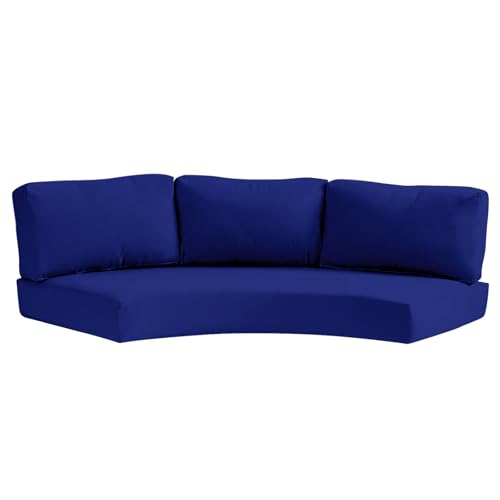
Replacement Cushions for Curved Outdoor Furniture
Everything you need to know before choosing new cushions for curved patio sofas, sectionals, and daybeds. Measure correctly, pick the right fabric, and restore comfort to your outdoor seating.
Start With MeasuringWhy curved furniture needs special attention: Curved outdoor sofas, round daybeds, and sectional pieces have contours that standard rectangular cushions cannot accommodate. Finding replacement cushions that follow the curve is essential for comfort, appearance, and safety. This guide walks you through every decision point so you can buy with confidence.
Understanding Curved Outdoor Cushions
Curved outdoor furniture — whether a rattan outdoor furniture set or a sectional patio arrangement — relies on cushions that follow the frame's arc. Unlike flat rectangular cushions, curved cushions are typically cut on a bias or constructed from multiple panels so they hug the seat and backrest without bunching. When the original cushions wear out, replacing them with generic flat pads leads to gaps, sliding, and an uncomfortable seating experience.
The most common curved furniture types that need replacement cushions include curved outdoor sofas, round outdoor daybeds, and L-shaped outdoor couches. Each has slightly different cushion geometry, so understanding your specific furniture shape is the first step before ordering.
How to Measure for Curved Cushions
Accurate measurements are the single most important factor in getting cushions that fit. Curved furniture cannot be measured with a simple length-by-width approach. Use a flexible tape measure and record the following for each cushion position:
Measurement Checklist for Each Cushion
- Arc length: Measure along the curve of the seat or backrest from one end to the other.
- Chord length: Measure the straight-line distance between the two ends of the curve.
- Depth: Measure from the front edge of the seat to the backrest, following the curve.
- Thickness: Note the original cushion height (typically 3–6 inches for seat cushions).
- Corner radius: For rounded corners, measure the radius of the curve.
- Number of sections: Count how many separate cushions the original set had (e.g., 3-seat curved sofa = 3 seat cushions + 3 back cushions).
If your furniture is a standard outdoor furniture piece with slight curves, you may be able to use replacement cushion sets for outdoor furniture that include slightly flexible foam. However, for pronounced curves — such as a round daybed — you will need cushions cut specifically to the arc. For rattan patio furniture with curved frames, check whether the manufacturer offers rattan garden furniture replacement cushions as direct-fit options.
Choosing the Right Fabric for Curved Cushions
Curved cushions experience more friction and flex than flat cushions because the fabric stretches around the arc. The fabric you choose must handle this constant tension without sagging or tearing. Here is how the main fabric categories compare:
| Tier | Fabric Type | Best For |
|---|---|---|
| Essential Tier | Polyester blends with basic UV treatment | Covered porches, mild climates, seasonal use |
| Balanced Tier | Solution-dyed acrylic (e.g., standard outdoor acrylic) | Year-round exposure, curved sofas used daily |
| Premium Tier | High-performance acrylic with stain and mold resistance | Humid climates, heavy use, light-colored curves |
| Luxury Tier | Marine-grade vinyl or designer performance fabric | Coastal exposure, salt air, long-term investment pieces |
For curved cushions, look for fabrics with a bit of stretch (2–4% elastane or similar) so the cover conforms to the arc without wrinkling. Avoid stiff canvas or tightly woven fabrics that resist bending — they will pull away from the curve and create gaps. If your furniture is a wicker piece with replacement cushions, the fabric should also resist snagging on the weave.
Foam and Fill Options for Curved Seating
The fill inside a curved cushion determines how well it holds its shape. Standard flat foam blocks will not bend to follow a curve — they either crack or leave gaps at the ends. Curved cushions require one of these fill types:
- Molded foam with a curved cut: The foam is cut to match the arc of your furniture. This is the most durable option for curved outdoor sofas and provides even support across the entire curve.
- Shredded memory foam or fiber fill: These fills conform to curves naturally and are common in round daybed cushions. They are comfortable but require occasional fluffing.
- Layered foam with a flexible core: A firm base layer with a softer top layer, both cut to the curve. This is the balanced-tier choice for most curved sectionals.
- Quick-dry reticulated foam: Essential if your curved furniture stays outside in rain. The open-cell structure lets water pass through and dry quickly, preventing mold inside the cushion.
Seat cushions on curved furniture should be firmer than back cushions — typically a high-density foam (2.5–3 lbs per cubic foot) for the seat and a softer fill for the back. If you are replacing cushions on a curved sectional, check whether the seat and back cushions use different fill types so you can match the original comfort level.
Fit and Attachment: Keeping Curved Cushions in Place
Curved cushions are more prone to sliding than flat cushions because the arc creates natural pivot points. The best replacement cushions include one or more of these attachment features:
Attachment Features to Look For
- Velcro strips or hook-and-loop tabs along the back edge to anchor the cushion to the frame.
- Elastic loops or ties that wrap around the furniture legs or frame rails.
- Non-slip backing (rubberized dots or grip fabric) on the underside of the seat cushion.
- Zippered covers that allow you to adjust the fill and keep the cushion snug around the curve.
- Contoured foam core that physically locks into the curve of the seat, reducing movement.
For rattan furniture cushions, look for covers with a slightly deeper gusset (the side panel of the cushion) so the cushion wraps around the rattan frame edge without riding up. If your furniture is a vintage patio piece, custom covers with adjustable ties may be the only reliable way to keep the cushion on a non-standard curve.
Matching Cushions to Specific Curved Furniture Types
Different curved furniture pieces need different cushion approaches. Use this guide to narrow down what to search for:
Curved Outdoor Sofas and Sectionals
A curved outdoor sofa typically has three or four seat cushions following one continuous arc, plus matching back cushions. Measure each seat position separately — the arc means the end cushions are often slightly different in shape from the middle ones. For L-shaped couches, you will need separate cushion sets for the long section and the short return.
Round and Curved Daybeds
A round outdoor daybed usually takes one large circular or semi-circular cushion, sometimes with a separate wedge-shaped backrest. These are the most difficult cushions to replace with generic options because the curve is continuous and the cushion must look plump and even all the way around. Look for daybed replacement cushions that are cut as a single piece or as two symmetrical half-moons.
Wicker and Rattan Curved Seating
Wicker and rattan frames often have gentle curves that are more forgiving than upholstered furniture. You may be able to use wicker furniture replacement cushions with a flexible foam core even if they are not custom-cut. However, for a wicker rocking chair or a rattan swivel rocker, the motion means the cushion needs stronger attachment — prioritize ties or non-slip backing.
Teak and Wood Curved Frames
Teak outdoor furniture with curved backs or seats usually has removable cushions that sit inside a wooden frame. For teak furniture replacement cushions, check whether the frame has a lip or rail that the cushion tucks under — this changes the thickness you need. Cushions that are too thick will not seat properly in a curved wooden frame.
Replacement Covers vs Full Cushion Sets
If the foam inside your curved cushions is still in good shape, you may only need new covers. Replacement cushion covers for rattan furniture and covers for wicker furniture are available in standard curved shapes, but custom covers are often necessary for pronounced arcs. Full replacement cushion sets are the better choice when the foam has flattened, cracked, or lost its shape — which is common on curved seats because the foam is under constant flexing tension.
When replacing only covers, confirm that the new cover's arc length and depth match your existing foam. A cover that is slightly too small will compress the foam and create a tight, uncomfortable seat; one that is too large will bunch at the curve.
Frequently Asked Questions
Related Guides on PatioFocus
Ready to Restore Your Curved Outdoor Seating?
Use the measurement checklist above, choose a fabric tier that matches your climate, and pick a fill that fits your furniture's curve. Your curved sofa, daybed, or sectional will feel like new again.
View Recommended Cushion Options