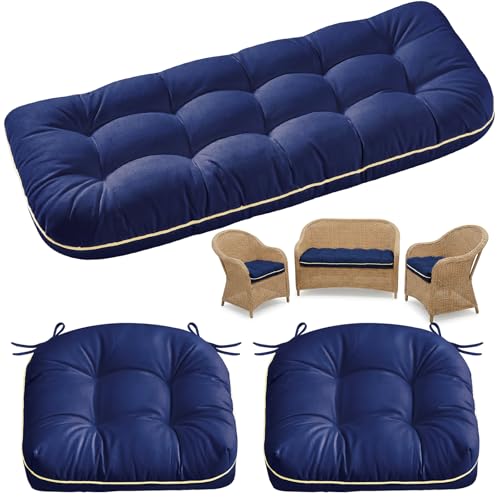
Replacement Cushions for 3 Piece Outdoor Patio Furniture Set
A practical buying guide to refreshing your three-piece patio set with the right cushions. Learn how to measure, choose materials, and match cushions to your frame so your outdoor seating looks and feels new again.
Why re-cushion instead of replace? A sturdy three-piece patio set is often built to last for many seasons, but the cushions take the brunt of sun, rain, and daily use. Replacing only the cushions is one of the most effective ways to restore comfort and appearance while keeping a frame that still works well. This guide walks you through the decision in plain terms.
What "3 Piece Patio Set" Usually Means
Before ordering anything, confirm what your set actually includes. In most product listings, a three-piece outdoor patio furniture set refers to one sofa or loveseat plus two matching chairs. Some sets instead pair a sofa with a coffee table and a single chair, and a few configurations use two chairs and a small side table. The cushion count follows the seating pieces, not the table.
For a typical sofa-plus-two-chairs set, you will usually need:
- Two or three seat cushions for the sofa, depending on whether it uses individual pads or one long bench cushion
- Two or three back cushions for the sofa
- One seat cushion and one back cushion for each chair
Many shoppers searching for replacement cushions for a 3 piece outdoor patio furniture set discover that the frame is a wicker or rattan design. Those frames are generally the easiest to re-cushion because the seat and back platforms are flat and standard in shape. If your set is rattan, browse the broader replacement cushions for rattan furniture collection to compare standard sizes.
How to Measure Before You Buy
Measurement is the single most important step. Cushions that are slightly too large will buckle and strain the seams, while cushions that are too small will slide around and leave gaps. Measure the original cushions while they are still on the frame, and write down four numbers for each seating piece:
- Seat width: the full left-to-right span of the seat platform
- Seat depth: from the front edge of the seat to where the back begins
- Back height: from the seat surface to the top of the back rest
- Thickness: the loft of the existing seat and back cushions
If your sofa uses three separate seat pads, measure each one individually rather than dividing the total width by three. Small differences in frame construction mean the pads are rarely identical. For chairs, measure both chairs separately as well, since some sets use slightly different geometry on the two sides.
Quick measurement tip
Use a soft tape measure and keep it flat against the frame. If you are between two sizes, choose the cushion that matches your seat depth exactly and allows a small amount of side-to-side tolerance. Depth is harder to adjust than width.
Matching Cushions to Your Frame Type
The frame material affects which cushion styles fit best. Wicker and rattan frames typically accept flat seat pads with a squared-off back cushion. Metal frames often have a slight curve to the seat, which means a flatter cushion can leave gaps at the edges. Wood frames are usually the most forgiving because the seat platform is a simple flat plane.
If your frame is wicker or rattan, the replacement cushion covers for rattan furniture options are worth reviewing, since covers let you keep existing foam inserts while changing the look. For sets with curved backs or rolled arms, look at replacement curved cushions for outdoor furniture, which are shaped to follow the contour rather than sitting flat.
Sets built around a sectional-style sofa or an L-shaped layout need different sizing logic. If your three-piece set is actually a sectional arrangement, see replacement cushions for outdoor sectional furniture for guidance on multi-section measuring.
Fabric and Foam: What to Look For
Outdoor cushion performance comes down to two components: the fabric shell and the foam core. Both matter, and both vary across quality tiers.
| Tier | Typical Fabric | Typical Foam | Best For |
|---|---|---|---|
| Entry-level | Polyester blends with basic water resistance | Standard polyurethane foam | Covered porches and seasonal use |
| Mid-range | Solution-dyed acrylic or olefin | Higher-density foam with a wrap layer | Year-round outdoor use in moderate climates |
| Premium | Dense acrylic with mildew-resistant backing | High-resilience foam, often with a quick-dry core | Full sun exposure and heavy daily use |
| Luxury | Heavyweight performance fabric with reinforced seams | Multi-layer foam or foam-and-fiber blend | Long-term outdoor living with frequent entertaining |
Within each tier, look for a few specific details. Solution-dyed acrylic holds color better than surface-dyed fabric because the color runs through the fiber rather than sitting on top. A quick-dry foam core allows water to pass through instead of pooling, which reduces mildew risk. Reinforced seams and zippered covers make cleaning and replacement easier. Mid-range cushions generally offer the best balance of durability and comfort for most households, while entry-level cushions suit sheltered patios where sun and rain exposure is limited.
Seat Cushions vs Back Cushions
Do not assume a single cushion set covers both roles. Seat cushions need denser foam to support body weight, while back cushions use softer filling for comfort. Many replacement sets sold as a package include both, but some listings sell seat and back cushions separately. Check the product description carefully to confirm which pieces are included in the set.
If you are replacing cushions on a set with a bench-style sofa, the replacement cushion sets for outdoor furniture category often includes coordinated seat and back options. For sets with individual pads rather than one bench cushion, measure and order each pad separately to avoid mismatches.
Fit Problems to Watch For
Even when measurements match, a few fit issues come up often with three-piece sets:
- Corner gaps on sofas: If your sofa has a slight curve or a raised center support, a flat cushion will bridge rather than contour. Look for cushions with a slight taper or a flexible core.
- Back cushions that slump: Softer back cushions settle over time. A denser back cushion holds its shape longer, especially on chairs used daily.
- Cushions sliding forward: This usually means the seat depth is slightly larger than the cushion. A non-slip grip pad underneath solves it without changing cushion size.
- Cover shrinkage after washing: Always check whether covers are machine washable and whether the fabric is pre-shrunk. Removing covers while damp helps them retain their shape.
When to Replace vs When to Re-Cover
Replacement is the right move when the foam has lost support, the fabric has torn at the seams, or mildew returns after cleaning. Re-covering is a better option when the foam is still firm and only the fabric looks worn. If your inserts are in good condition, the replacement cushion covers for wicker furniture range is a practical middle path.
For sets with older frames that have slightly unusual dimensions, the replacement cushions for vintage patio furniture guide covers how to work with non-standard sizes and where to look for close matches.
Care That Extends Cushion Life
New cushions last longer with a simple routine. Brush off loose debris weekly, spot clean stains promptly with mild soap and water, and let cushions air dry fully before returning them to the frame. Store cushions indoors or in a dry box during heavy rain and off-season months. A water-resistant cover helps, but it should be breathable so trapped moisture can escape.
Rotate seat cushions every few weeks so wear is distributed evenly. On a three-piece set, swapping the two chair cushions with each other is usually enough to balance the wear pattern.
Ready to Refresh Your Three-Piece Set?
Compare replacement cushion options sized for sofas and chairs, and check availability for the configuration that matches your frame.
View Cushion OptionsFrequently Asked Questions
How do I measure my 3 piece patio set for replacement cushions?
Measure the seat width, seat depth, back height, and cushion thickness of each original cushion. For the sofa or loveseat, measure each seat section separately because many 3 piece sets use individual seat pads rather than a single long cushion.
Can I replace cushions on a wicker or rattan 3 piece set?
Yes. Wicker and rattan frames are among the easiest to re-cushion because the seat and back platforms are usually flat and standard in shape. Look for cushions sized to your exact seat depth and back height for a snug fit.
What fabric is best for outdoor replacement cushions?
Solution-dyed acrylic and olefin fabrics are the most common choices for outdoor cushions. They resist fading, moisture, and mildew. Mid-range and premium cushions typically use denser foam and better fabric construction than entry-level options.
Do replacement cushions come as a set of 3?
Many retailers sell 3 piece cushion sets that include one seat cushion and two back cushions, or two seat cushions and one back cushion depending on the set configuration. Always check the listing to confirm which pieces are included.
How often should I replace patio furniture cushions?
Most outdoor cushions last three to five seasons with proper care. Replace them when the foam loses its shape, the fabric tears, or mildew becomes persistent despite cleaning.