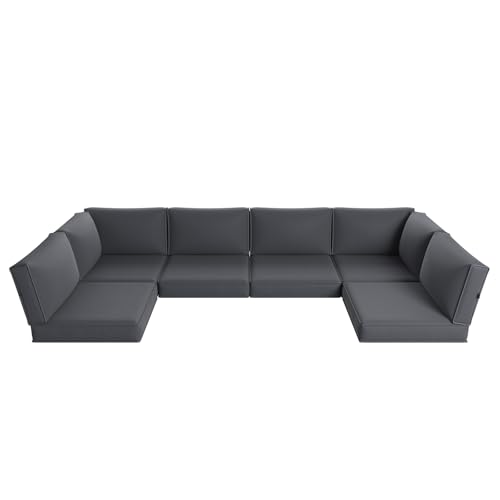
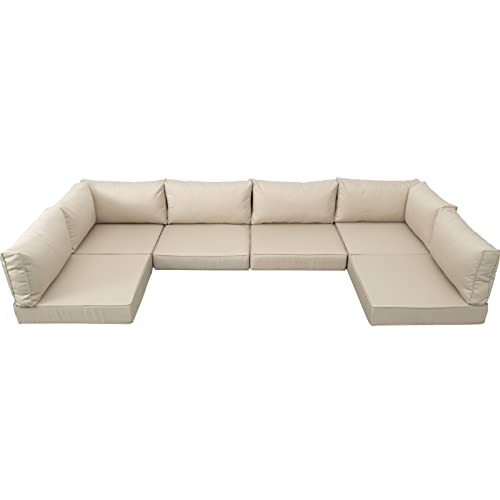
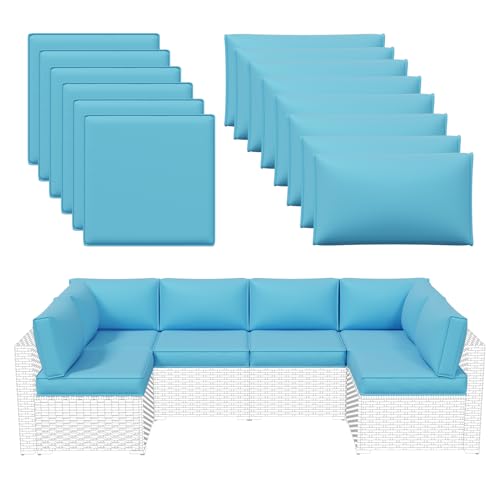
Replacement Cushions for Outdoor Sectional Furniture
Your sectional frame is still solid — the cushions are what make it feel new again. This guide walks you through sizing, fabrics, fills, covers, and care so you can restore comfort and style with confidence before you order.
Explore the Buying GuideWho this guide is for: If your outdoor sectional cushions are faded, flattened, torn, or simply no longer comfortable, you are likely comparing replacement options right now. The sections below cover exactly what to measure, which fabrics and fills hold up outdoors, and how to avoid the most common fit mistakes — so you can choose the right set and get back to enjoying your patio.
Why Replace Sectional Cushions Instead of the Whole Set
A sectional frame — whether rattan outdoor furniture, aluminum, or wood — is typically the longest-lasting component of the set. The cushions absorb the most wear: UV exposure, rain, body weight, and repeated compression. When the fill collapses or the fabric fades, the frame usually remains structurally sound.
Replacing cushions is a sensible long-term investment for several reasons:
- Preserve a frame you already trust. If the frame has held up for years, its joinery and finish are proven. New cushions extend its useful life considerably.
- Refresh the look without a full redesign. A new fabric color or texture can transform a sectional's appearance without changing the layout of your patio.
- Upgrade comfort over the original fill. Many factory cushions use basic fiber fills. Replacement sets often offer higher-density foam or hybrid fills that feel noticeably better.
- Keep matching pieces together. Sectionals are configured as a unit. Replacing the whole set can be unnecessary when only the soft goods have worn out.
If your sectional is made of woven material, you may also want to review replacement cushions for rattan furniture, since woven frames have specific considerations around cushion grip and corner fit.
Sizing: The Most Common Reason Replacements Disappoint
Fit problems are the number one complaint about replacement cushions. A sectional is not a single sofa — it is a collection of modules, and each module can have different seat and back dimensions. Measure every piece individually before you shop.
Measurement Checklist
- Seat cushions: record width, depth, and thickness for each seat module separately.
- Back cushions: record width, height, and thickness. Note whether they are attached, loose, or wedge-shaped.
- Corner modules: measure both legs of the corner, since the cushion shape is often L-shaped or a custom polygon.
- Thickness tolerance: a slightly thicker cushion can change seat height and how the back cushion sits. Confirm clearance under any armrests.
- Taper and curves: note whether cushions taper toward the back, as many sectional seats do.
- Frame lip and ties: check whether cushions rest inside a frame lip or sit on a flat platform, and whether ties or hook-and-loop strips are needed.
For curved or L-shaped configurations, standard rectangular cushions often will not fit cleanly. Dedicated options such as replacement cushions for outdoor L-shaped couch arrangements and replacement cushions for curved outdoor furniture are designed around those geometries. If your set is modular in the conventional sense, replacement cushions for sectional patio furniture is a useful cross-reference for module-based sizing.
Tip: photograph each cushion next to a tape measure. When you contact a maker or compare listings, those photos resolve dimension questions faster than written measurements alone.
Fabric Selection: What Survives Outdoors
Outdoor cushion fabric must resist UV fading, moisture, and mildew. The construction of the yarn matters as much as the brand name on the label.
- Solution-dyed acrylic: color is infused into the fiber rather than applied to the surface, giving excellent fade resistance. A top-tier choice for sunny exposures.
- High-performance olefin: naturally moisture-resistant and quick-drying, with good colorfastness. Often found in mid-range and premium sets.
- Polyester with water-repellent finish: a solid choice for the essential tier, especially in covered patios. Performance varies by finish quality.
- Acrylic blends: balance durability and hand-feel; confirm the outdoor rating rather than assuming from the fiber name.
Fabric weight and weave density also matter. Tighter weaves resist pilling and snags better, while a slightly textured surface hides wear and pet contact more gracefully than a flat, smooth finish. If you are only replacing the outer layer, replacement cushion covers for rattan furniture and replacement cushion covers for wicker furniture explain how covers are matched to existing inserts.
Fill Types: Foam, Fiber, and Hybrid
The fill determines how the cushion feels on day one and how it holds up after a season of use. Match the fill to how often the sectional is used and whether it sits in exposed or covered conditions.
- High-density foam: supportive and shape-retentive. Best for frequently used seating and households that prefer a firmer sit. Choose open-cell or quick-dry foam for outdoor use.
- Polyester fiber: plush and light, with a softer sink-in feel. It compresses over time, so it suits lighter use or back cushions more than primary seats.
- Hybrid (foam core with fiber wrap): combines support with a soft surface. A common mid-range and premium choice that balances durability and comfort.
- Quick-dry reticulated foam: allows water to pass through and air to circulate, reducing drying time. A worthwhile specification for exposed patios.
Back cushions can use a softer fill than seat cushions without compromising support. Many replacement sets mix fills deliberately for this reason.
Comparing Replacement Cushion Tiers
The table below uses universal quality descriptors rather than any monetary figures. Use it to match your expectations to the tier of product you are considering.
| Tier | Typical Construction | Best For | Durability Profile |
|---|---|---|---|
| Essential tier | Polyester fabric with water-repellent finish; fiber or basic foam fill | Covered porches, seasonal use, back cushions | Adequate for light use; expect fill compression over time |
| Balanced tier (mid-range) | Olefin or acrylic-blend fabric; hybrid fill with foam core | Everyday family use, mixed sun and shade | Solid longevity with reasonable care; good shape retention |
| High-end tier (premium) | Solution-dyed acrylic; high-density or quick-dry foam core with fiber wrap | Full-sun patios and frequent entertaining | Strong fade and moisture resistance; holds shape across seasons |
| Luxury tier | Premium performance fabric with reinforced seams; custom-cut dense foam | High-use outdoor living rooms and custom sectionals | Long-term investment with the best comfort and wear characteristics |
A mid-range set with a well-made foam core often outperforms an entry-level set with a fancier fabric but weaker fill. Spend your attention on the fill and seam construction, not only the surface pattern.
Replacing Covers vs. Replacing the Whole Cushion
If your foam inserts are still firm and free of water damage, replacement covers are the efficient route. They let you change color and texture while keeping inserts that are already performing well. This approach suits replacement cushion sets for outdoor furniture where the fill is healthy but the fabric has aged.
Replace the full cushion when the fill has collapsed, developed mildew, or no longer holds shape. Compressed foam cannot be restored by a new cover, and a soft insert under a tight cover will stretch the seams prematurely. For three-piece configurations, replacement cushions for 3-piece outdoor patio furniture set covers complete-set sizing in one place.
Whichever route you take, confirm that the cover's interior dimensions match your insert's measured dimensions — not the outer dimensions of the old cover, which may have stretched.
Matching Cushions to Specific Frame Materials
Sectional frames vary in how they hold cushions, and that affects which replacement style fits best:
- Wicker and rattan frames: cushions typically rest inside a woven lip or tie to the back. Review replacement cushions for wicker furniture for grip and corner-fit notes specific to woven construction.
- PVC and resin frames: smooth surfaces allow cushions to slide, so anti-slip backing or ties are worth prioritizing. See replacement cushions for PVC patio furniture for the relevant fit details.
- Teak and hardwood frames: oil-finished wood can transfer onto light fabric at contact points. A cushion with a breathable base layer helps. Refer to replacement cushions for teak outdoor furniture.
- Wrought iron and metal frames: often paired with thinner seat profiles. Replacement cushions for wrought iron patio furniture explains the clearance considerations.
- Vintage or older frames: non-standard dimensions are common. Replacement cushions for vintage patio furniture covers custom sizing and pattern matching.
For curved sectionals specifically, replacement cushions for curved outdoor sofa addresses the segment geometry that standard rectangular cushions cannot handle.
What to Confirm Before You Order
Before finalizing a replacement set, run through these confirmation points. Each one prevents a common return or misfit:
- Measure every module separately and write the numbers down rather than relying on memory.
- Check seat height impact. A thicker cushion raises the seating surface; confirm it still feels right with the back cushion in place.
- Verify fill type and drying behavior. Exposed patios benefit from quick-dry constructions.
- Confirm tie-down or anti-slip features if your frame is smooth or your patio is windy.
- Review seam and zipper quality. Double-stitched seams and concealed zippers signal better construction.
- Ask about cover removability. Washable, removable covers substantially extend the usable life of the set.
Care and Storage for Long Cushion Life
Replacement cushions perform best when maintained with the same attention you would give any outdoor textile:
- Clean with mild soap and water rather than harsh detergents, which can strip water-repellent finishes.
- Dry fully before storage. Trapped moisture is the leading cause of mildew in cushions.
- Store during extended rain or off-season when practical. Breathable covers are preferable to airtight plastic, which traps condensation.
- Rotate and flip seat cushions periodically to distribute compression evenly across the fill.
- Address spills promptly to prevent stains from setting into the fiber.
If your sectional also has a daybed or swing module, the care routine is similar; the sizing notes in replacement cushions for outdoor round daybed and replacement cushions for round outdoor daybed may help when those pieces are part of the same set.
Related Cushion Guides
If your sectional uses curved segments or you are unsure whether to replace covers or full cushions, these guides cover adjacent scenarios:
- Replacement cushions for outdoor furniture — the broad overview across all furniture types.
- Replacement cushions for curved outdoor furniture — geometry and pattern considerations for curved pieces.
- Replacement curved cushions for outdoor furniture — curved-specific sizing detail.
- Replacement cushions for outdoor furniture — general fabric and fill reference.
- Replacement cushions for rattan furniture — woven-frame fit and grip notes.
Frequently Asked Questions
How do I measure my outdoor sectional for replacement cushions?
Measure each seat and back cushion individually, including thickness. Record width, depth, and thickness for every piece, since sectional modules often differ in size. Add seam allowances and account for corner pieces, which usually need distinct dimensions.
What fabric is best for outdoor sectional replacement cushions?
Solution-dyed acrylic and high-performance olefin are excellent choices for fade and moisture resistance. Polyester blends with water-repellent finishes offer good value for their tier. Avoid standard cotton, which absorbs water and mildews quickly.
Should I choose foam, fiber, or hybrid cushion fill?
High-density foam holds shape and supports weight well. Polyester fiber feels softer but compresses over time. Hybrid fills combine foam cores with fiber wraps for a balance of support and plushness, making them a popular mid-range and premium choice.
Can I replace just the cushion covers instead of the whole cushion?
Yes, if your existing foam inserts are still firm and intact. Replacement covers are a practical option when the fill is healthy but the fabric is faded or torn. Confirm that cover dimensions match your inserts precisely.
How do I keep outdoor sectional cushions from molding?
Choose quick-drying fills, store cushions during heavy rain when possible, and ensure the frame allows airflow beneath the seats. Clean and fully dry cushions before seasonal storage, and use breathable covers rather than airtight plastic.