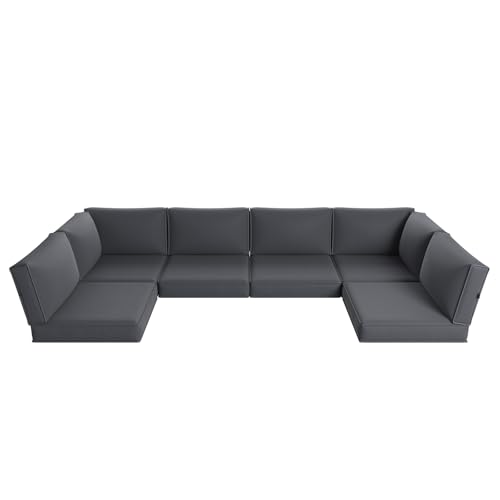
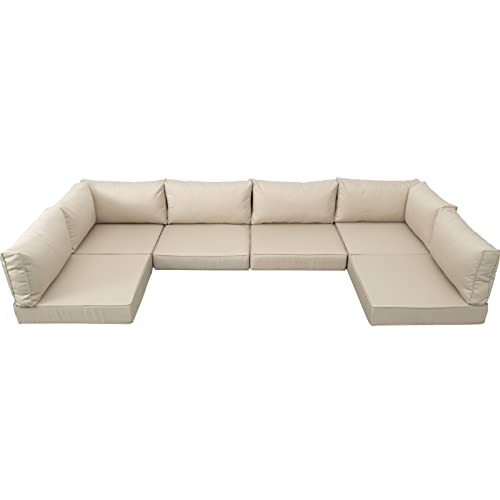
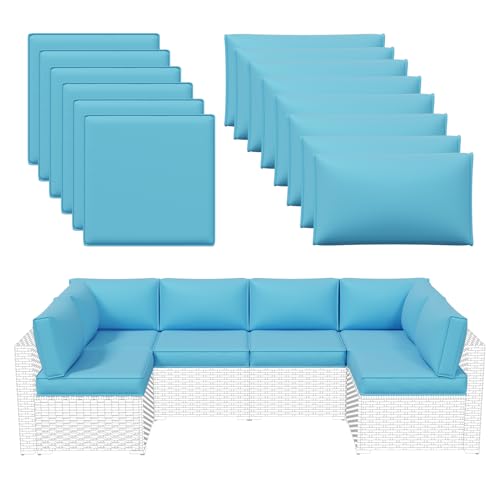
Replacement Cushions for Sectional Patio Furniture
Your complete guide to measuring, choosing fabrics, and refreshing a sectional patio sofa with cushions that fit correctly and last for seasons.
START THE GUIDEWhy this guide matters: A sectional patio set is one of the largest outdoor furniture investments a homeowner makes. When the cushions wear out, replacing them correctly is far more efficient than replacing the whole frame. This guide walks you through shapes, fabrics, fill types, and fit so you can restore comfort without guesswork.
Why Refresh Your Sectional Cushions?
Sectional patio furniture is built to be a long-term anchor for outdoor living. The frame, whether aluminum, rattan, or wicker, often outlasts the cushions by many seasons. Sun exposure, rain, and daily use break down foam and fabric long before the structure weakens. That is why replacement cushions are one of the most practical upgrades in outdoor furniture care.
Finding the right replacement cushions for sectional patio furniture is about more than matching a color. Sectionals come in L-shaped, U-shaped, curved, and modular configurations, and each section may need a different cushion dimension. Getting the measurements, fill density, and fabric specification right is what separates a cushion set that feels tailored from one that slides, sags, or fades within a season.
This guide is organized for readers who already know they want replacement cushions and need clear, trustworthy information before choosing a set. You will learn how to measure each section, which fabric families perform best outdoors, how fill density affects comfort, and how to compare quality tiers without relying on marketing language.
Identify Your Sectional Shape First
Before comparing fabrics or fills, confirm the geometry of your sectional. Cushion sets are often sold by shape category, and ordering the wrong shape is the most common reason cushions do not fit. Use the cards below to identify which category your furniture belongs to.
L-Shaped Sectional
Two straight runs joined at a 90-degree corner. Cushions usually include a dedicated corner piece plus straight seat and back cushions on each arm.
Most commonU-Shaped Sectional
Three runs forming a U, with two corners. Each corner cushion may be symmetrical or handed, so check whether the set labels left and right corners separately.
Symmetry mattersCurved Sectional
Rounded or arc-shaped seating where straight cushions will not conform. Curved cushions require arc measurements rather than simple width and depth.
Specialty fitModular Sectional
Individual pieces that can be rearranged. Each module needs its own cushion size, and consistent thickness keeps the seat height even across modules.
Piece-by-pieceSectional with Chaise
One run extends into a chaise lounge. The chaise cushion is longer and may require a separate specification from the standard seat cushions.
Mixed sizesCorner-Only Replacement
Sometimes only the corner cushion wears out. Many retailers sell corner pieces individually, which is efficient when the rest of the set is still sound.
Targeted refreshIf your sectional has a curved or L-shaped profile, the cushion set is not interchangeable with a standard straight sofa. Our dedicated guides on replacement cushions for outdoor L-shaped couches and replacement cushions for curved outdoor furniture go deeper into the measurement approach for those shapes.
How to Measure Each Section Correctly
Accurate measurement is the single most important step. A cushion that is slightly too deep will buckle at the front edge, and one that is too narrow will slide sideways. Follow these steps for every seat and back section, not just one representative piece.
Measure seat width and depth
Measure the flat seating platform from edge to edge for width, and from the front edge to the backrest for depth. Do this on each module separately, since modular frames can vary slightly.
Record cushion thickness
Thickness affects seat height and how the cushion sits against the backrest. Note the original thickness and keep it consistent across the set so the seat line stays level.
Measure back cushion height
Back cushions are usually measured from the top of the seat cushion to the top of the backrest. Decide whether you want a full-height back cushion or a lower profile that exposes the frame.
Capture corner and curve angles
For corner pieces, measure both legs of the corner and the inside angle. For curved sections, measure the arc length along the seat and the chord width to communicate the curve accurately.
Note armrest and backrest wrap
Some sectional cushions tuck under the backrest or wrap around a low arm. Record whether the cushion needs to extend beyond the seat platform or sit flush within the frame.
Verify with the frame, not the old cushion
Old cushions may have stretched or compressed. Measure the frame platform itself as the primary reference, then use the old cushion as a secondary check.
Write every measurement down in a simple table before shopping. Retailers often ask for width, depth, and thickness in that order, and having the numbers ready prevents miscommunication. If your sectional is a curved or round design, the measurement logic shifts to arc-based dimensions, which is covered in our guide on replacement cushions for round outdoor daybeds.
Choosing the Right Outdoor Fabric
Fabric determines how a cushion ages. Outdoor cushions face UV radiation, moisture, mildew pressure, and abrasion from daily use. The fabric families below are the ones that consistently perform well in real outdoor conditions, ranked by typical market positioning.
Solution-Dyed Acrylic
Color is infused into the fiber rather than applied to the surface, so it resists fading far better than piece-dyed fabrics. Premium versions include water-repellent finishes and mildew resistance. This is the most reliable choice for sectionals that stay outside year-round.
Olefin
Lightweight, moisture-resistant, and colorfast. Olefin is a strong mid-range option that handles humidity well and dries quickly. It is often used in balanced-tier cushion sets where durability matters but the fabric does not need the full specification of solution-dyed acrylic.
Polyester Blends
Common in starter-tier cushion sets. Polyester blends can look good initially but tend to fade and absorb moisture faster unless treated. Best suited to covered porches or sectionals that are stored during harsh weather.
Textilene and PVC-Coated Mesh
Woven mesh fabrics that are highly resistant to moisture and mildew. They have a firmer hand and a different aesthetic, often used on PVC patio furniture. A solid choice for humid climates and poolside sectionals.
Beyond fiber type, look for these specification details on any cushion listing:
- UV resistance rating — fabrics rated for extended sun exposure hold color longer.
- Mildew and mold resistance — essential for humid or rainy climates.
- Water-repellent finish — helps water bead and roll off rather than soak in.
- Removable, washable covers — zippered covers make deep cleaning far easier.
- Colorfastness to crocking — a sign the dye will not transfer onto clothing.
If your sectional frame is woven rattan or wicker, the fabric choice often pairs with a specific cushion profile. Our material notes on replacement cushions for wicker furniture and replacement cushion covers for rattan furniture explain how fabric and frame interact.
Understanding Cushion Fill and Comfort
Fill determines how a cushion feels and how long it keeps its shape. Outdoor sectional cushions generally use one of three fill systems, and each has a distinct comfort profile and maintenance requirement.
| Fill Type | Tier | Best For | Notes |
|---|---|---|---|
| High-density foam | Premium / top-tier | Daily-use sectionals | Holds shape well, resists sagging, and supports a tailored look. Firmer initial feel that softens with use. |
| Foam wrapped in fiber | Mid-range / balanced | Comfort-focused seating | Combines foam support with a softer surface. Good balance for lounging sectionals. |
| Polyester fiber fill | Entry-level / essential | Occasional seating | Soft and light but compresses over time. Requires regular fluffing to maintain loft. |
| Quick-dry reticulated foam | Specialty | Poolside and humid climates | Open-cell structure lets water drain quickly. Ideal where cushions get wet often. |
For a sectional that is used regularly, high-density foam or a foam-fiber hybrid is the most practical long-term investment. Entry-level fiber fill is acceptable for guest seating or covered porches but will need more frequent replacement. The fill should match the seat depth as well: deep sectionals benefit from a slightly firmer core so the cushion does not bottom out.
What to Check Before You Buy
Once shape, fabric, and fill are settled, review the practical details that affect long-term satisfaction. These are the points buyers most often overlook.
- Set composition — confirm how many seat cushions, back cushions, and corner pieces are included. Some sets sell seat and back cushions separately.
- Consistency of thickness — mixed thickness across a modular sectional creates an uneven seat line.
- Attachment method — ties, grip dots, or elastic bands keep cushions from sliding on smooth frames.
- Cover removability — zippered covers are far easier to clean and extend cushion life.
- Return policy — cushion fit is dimensional, so a clear return path matters if a piece does not match.
- Care instructions — spot cleaning versus machine washing varies by fabric and fill.
If your sectional is teak or wrought iron rather than rattan, the frame material influences how cushions sit and breathe. See our notes on replacement cushions for teak outdoor furniture and replacement cushions for wrought iron patio furniture for frame-specific considerations.
Caring for Replacement Sectional Cushions
Proper care is what makes a replacement set last. A few consistent habits make a meaningful difference:
- Brush off debris weekly — leaves and pollen trap moisture against the fabric.
- Clean spills promptly — blot rather than rub, and use a mild soap solution for stubborn marks.
- Allow full drying — stand cushions on edge after rain so water drains and air circulates.
- Store during off-season — covered storage protects against prolonged UV and damp conditions.
- Rotate cushions — rotating seat and back cushions across the sectional evens out wear.
For a broader seasonal maintenance routine that covers frames, covers, and fabric, see our guide on weatherproofing outdoor furniture. If you are replacing covers rather than the full cushion, our notes on replacement cushion covers for wicker furniture explain how to match covers to existing foam inserts.
Comparing Cushion Tiers at a Glance
Use this summary to align your expectations with market positioning. The tiers below are relative categories, not absolute specifications, and they are consistent across this guide.
| Tier | Typical Fabric | Typical Fill | Best For |
|---|---|---|---|
| Entry-level | Polyester blend | Fiber fill | Covered porches, seasonal use |
| Mid-range | Olefin or acrylic blend | Foam wrapped in fiber | Regular family use, mixed climates |
| Premium | Solution-dyed acrylic | High-density foam | Year-round exposure, daily use |
| Specialty | Textilene or PVC mesh | Quick-dry reticulated foam | Poolside, humid climates |
If your sectional is an older or vintage piece, cushion sizing can be less standard. Our guide on replacement cushions for vintage patio furniture covers how to work with non-standard dimensions, and our overview of replacement cushions for outdoor furniture provides a wider context for other furniture types.
Ready to Explore Replacement Cushion Options?
Compare cushion sets by shape, fabric, and fill tier. Our recommended product selection below is filtered for sectional patio furniture so you can review options that match the specifications discussed in this guide.
View Recommended Cushion SetsFrequently Asked Questions
How do I measure sectional patio furniture for replacement cushions?
Measure each seat and back section separately. Record width, depth, and thickness for every module, and note any corner angles or curve arcs. Measure the frame platform rather than the old cushion, since old cushions may have stretched or compressed.
What is the best fabric for outdoor sectional cushions?
Solution-dyed acrylic is the most reliable choice for year-round outdoor use because the color is infused into the fiber and resists fading. Olefin is a strong mid-range option that handles humidity well. Polyester blends are better suited to covered or seasonal setups.
Can I replace only the seat cushions on a sectional?
Yes. Many retailers sell seat and back cushions separately. Replacing only the seat cushions is practical when the back cushions are still structurally sound and color-matched. Check that the new seat cushions match the existing back cushion thickness and profile.
How long do replacement sectional patio cushions last?
With proper care, quality replacement cushions typically last several seasons. Premium-tier cushions with high-density foam and solution-dyed fabric hold their shape and color longer than entry-level options. Regular cleaning, drying, and off-season storage all extend usable life.
Should replacement cushions be the same thickness as the originals?
Matching the original thickness keeps the seat height and backrest alignment consistent. If you choose a different thickness, verify that the total seat height still feels comfortable and that back cushions do not sit too high or too low against the frame.