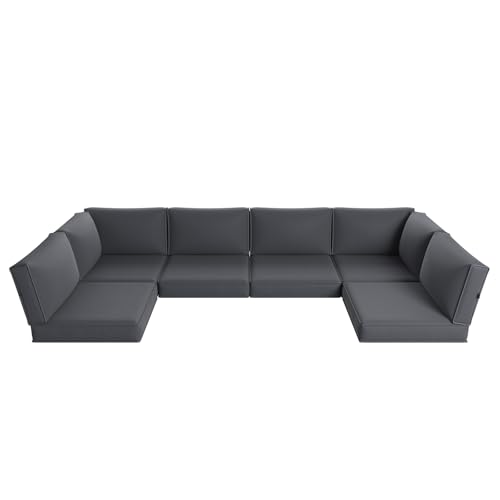
Replacement Cushions for PVC Patio Furniture
Restore comfort and style to your outdoor seating. Learn how to measure, choose the right fabric, and find cushions that fit PVC frames properly.
START THE GUIDEWhy this guide matters: PVC patio furniture is built to last, but the cushions that come with it rarely survive more than a few seasons. UV exposure, rain, and everyday use flatten the foam and fade the fabric long before the frame shows any wear. If you already know you need new cushions and want to get the fit right the first time, this guide walks you through frame measurement, fabric selection, cushion construction, and the practical details that separate a good replacement from a frustrating one.
Why PVC Patio Furniture Needs Specific Cushions
PVC, or polyvinyl chloride, is a synthetic resin used in a wide range of outdoor furniture frames. It is often molded or extruded into rounded profiles, then assembled into chairs, sofas, and sectional pieces. The material is weather-resistant, easy to wipe clean, and holds its shape well over time, which is why it remains popular for poolside and coastal settings.
The challenge is that PVC frames are rarely square. Many designs feature curved armrests, sloped backrests, rounded seat corners, and contoured seat pans. A standard rectangular box cushion will sit awkwardly on these frames, leaving gaps at the corners and slipping forward when someone sits down. That is why the best replacement cushions for PVC patio furniture are usually contoured, tapered, or curved rather than flat.
PVC frames also tend to have a slightly different seat geometry than wood or metal frames. The seat pan is often molded with a subtle dish shape to help water drain and to add comfort. Cushions that are too thin will bottom out on the hard frame, while cushions that are too thick will raise the seat height and make the backrest feel short. Matching cushion thickness to the frame design is just as important as matching the footprint.
If your PVC furniture shares design cues with resin wicker or rattan pieces, you may find that replacement cushions for rattan furniture fit well, since both frame types often use similar curved profiles and rounded corners. The same logic applies to replacement cushion sets for outdoor furniture that are sold as universal curved sets.
How to Measure Your PVC Patio Frames
Measurement is the step most buyers rush, and it is the step that causes the most returns. Do not measure the old cushion. Worn foam compresses unevenly, fabric stretches, and the result is a set of dimensions that no longer match the frame. Measure the frame itself, with the old cushion removed.
Five Measurements to Record for Every Seat
Write down each measurement in both inches and centimeters. Most cushion sellers list dimensions in one unit or the other, and converting after the fact invites errors. If your furniture is a sectional or an L-shaped arrangement, measure each section separately, because corner pieces and end pieces often have different footprints.
Pay particular attention to the corners of the seat pan. PVC frames frequently use rounded corners with a radius of an inch or more. A cushion with square corners will overhang or buckle at those points. Curved cushions designed for curved outdoor furniture are shaped to follow these radii and sit flush against the frame.
For sofas and loveseats, also record the distance between the seat cushions if the frame has a center support or divider. A single long cushion may not sit flat across a divided seat pan, and two smaller cushions may be the better fit. The same principle applies to replacement cushions for outdoor sectional furniture, where each module needs its own measurement.
Choosing the Right Outdoor Fabric
The fabric decides how the cushions look after a season of sun and rain, and it also affects how comfortable they feel against skin. Outdoor cushion fabrics fall into a few broad categories, each with trade-offs.
Solution-Dyed Acrylic
Acrylic fibers are dyed before they are spun, so the color runs through the entire fiber rather than sitting on the surface. This makes acrylic highly resistant to fading and is the reason it appears in most high-end tier outdoor cushions. Acrylic also resists mildew and dries relatively quickly. It feels soft rather than slick, which matters for seating you use in shorts and swimwear.
Olefin (Polypropylene)
Olefin is a synthetic fiber that is naturally water-resistant and does not absorb much moisture. It is common in mid-range cushion covers and performs well in humid climates. Olefin is durable and holds color well, though it can feel slightly rougher than acrylic. It is a solid choice for poolside furniture where quick drying matters more than a plush hand feel.
Polyester Blends
Polyester is the most common fiber in entry-level outdoor cushions. It is durable and resists shrinking, but standard polyester fades faster than solution-dyed acrylic and can feel stiff. Higher-quality polyester blends with water-repellent finishes perform noticeably better, so check the fabric specification rather than assuming all polyester is equal.
Tier guidance: Entry-level cushions typically use polyester blends with basic water resistance. Mid-range cushions usually move to olefin or acrylic blends with better UV stability. Premium and luxury tier cushions generally use solution-dyed acrylic with reinforced seams, zippered covers, and mold-resistant foam. The fabric tier is the single biggest predictor of how the cushions will look after two or three seasons.
Beyond fiber type, look for these fabric features:
- Zippered covers: Removable covers can be washed and replaced, which extends the life of the foam core.
- Reinforced seams: Double-stitched or bound seams resist splitting at stress points.
- Water-repellent finish: Helps rain bead off rather than soak in, though it wears off over time.
- Mold and mildew resistance: Important in humid or coastal climates.
- Colorfastness rating: A higher rating means better resistance to UV fading.
If your PVC frames are paired with wicker or rattan accents, fabric choices that coordinate with replacement cushion covers for wicker furniture often look cohesive, since both frame types tend to use similar neutral and earth-tone palettes.
Foam, Filling, and Construction Tiers
The foam core determines comfort and how the cushion holds up over time. Replacement cushions for PVC patio furniture are typically built with one of three foam constructions.
| Construction | Tier | Best For | Trade-Offs |
|---|---|---|---|
| Standard polyurethane foam | Entry-level | Occasional seating, covered patios | Compresses faster; may bottom out on hard frames |
| High-density polyurethane foam | Mid-range | Everyday seating, family use | Firmer feel; heavier to move |
| High-resilience foam with wrapped fiber | Premium | Frequent use, humid climates | Bulkier; needs more storage space |
| Quick-dry reticulated foam | High-end tier | Poolside, uncovered patios | Firmer; less plush than standard foam |
High-density foam is the practical baseline for PVC furniture. Because PVC seat pans are firm and often slightly dished, a cushion that is too soft will compress to the frame and feel like you are sitting on plastic. A firmer, denser foam distributes weight better and keeps the cushion shape longer.
Quick-dry reticulated foam is worth considering if your furniture sits in the open. The open-cell structure lets water drain through instead of pooling inside the cushion. It feels firmer than standard foam, so it suits people who prefer a supportive seat over a soft one.
Cushion thickness is a separate decision. A 3-inch cushion is common for dining chairs and compact seating, while 4 to 5 inches is typical for lounge and sofa cushions. Thicker is not automatically better: a cushion that is too thick raises the seat height and can make the backrest feel too low. Match thickness to the seat height you measured earlier, and keep the back cushion proportional to the frame.
Curved vs Flat Cushions for PVC Seating
The shape of the cushion matters as much as the dimensions. PVC frames are often molded with curves that flat cushions cannot follow.
When to Choose Curved Cushions
Curved cushions are the better fit when the seat pan has rounded corners, the backrest is angled or contoured, or the armrests curve inward. These cushions are cut with a shaped perimeter that follows the frame, and the back cushion often has a slight curve to match the backrest. They are common for curved outdoor sofas and for round outdoor daybeds, and the same shaping logic applies to many PVC pieces.
Curved cushions also reduce the gap between the cushion and the frame at the corners, which keeps the cushion from sliding forward when someone sits down. On a sloped backrest, a curved back cushion stays in contact with the frame instead of leaving a triangular gap behind your shoulders.
When Flat Cushions Work
Flat box cushions are fine when the frame is genuinely square and the seat pan is flat. Some PVC dining chairs and benches use simple rectangular seat pans, and a standard flat cushion fits these well. Flat cushions are also easier to find in open stock and easier to replace individually.
For chaise lounges and reclining PVC pieces, look for cushions cut specifically for the frame profile. A flat cushion on a reclining frame will bunch at the hinge point. Replacement cushions for outdoor L-shaped couches and other shaped frames follow the same principle: the cushion should be cut to the frame, not forced onto it.
Full Set or Individual Cushions?
There is no single right answer, but the decision usually comes down to how much of the furniture needs new cushions and how consistent the color needs to be.
Full Set Advantages
- Color and fabric are guaranteed to match across all seats.
- Consistent foam density and thickness across the set.
- Usually the better option when more than half the cushions are worn.
- Simpler ordering: one product code covers the whole arrangement.
Individual Cushion Advantages
- Replace only the worn pieces, which is useful when one seat gets more use.
- Easier to mix cushion sizes on modular or sectional frames.
- Useful for adding a single matching cushion to a set bought earlier.
The catch with individual cushions is dye lot variation. Fabric is produced in batches, and two cushions from different batches can differ slightly in shade. If you buy singles, check whether the seller offers open-stock cushions from the same production run, and order all the pieces you need at once. For a coordinated look across a full set, a replacement cushion set for outdoor furniture removes the guesswork.
Also check the return policy before ordering. Cushions are bulky and expensive to ship back, so sellers with clear size charts and generous return windows are worth prioritizing.
Care Tips to Extend Cushion Life
Replacement cushions are an investment, and a few habits make a measurable difference in how long they last.
- Store cushions when not in use. A storage bench or deck box keeps cushions out of rain and direct sun. This is the single most effective habit.
- Clean with mild soap and water. Harsh detergents strip water-repellent finishes and can weaken fibers. Rinse thoroughly and let cushions dry fully in the sun before storing.
- Rotate cushions periodically. Flipping and rotating cushions spreads wear and sun exposure evenly.
- Bring cushions inside during off-season months. Cold and damp conditions encourage mildew even in resistant fabrics.
- Address spills immediately. Blot rather than rub, and avoid letting stains sit in the foam.
- Use covers or a storage solution. A cover keeps debris off and reduces UV exposure during long stretches of non-use.
For PVC frames specifically, check that water drains freely from the seat pan before placing cushions back after rain. Standing water trapped under a cushion is a common cause of mildew on the underside. If your cushions have zippered covers, washing the covers separately according to the care label extends the life of the foam core.
If your PVC furniture is part of a larger collection that includes replacement cushions for outdoor furniture across different frame types, keep a simple record of which cushion goes on which piece. Mixed sets wear unevenly when cushions are swapped by accident.
Ready to Compare Cushion Options?
Browse a curated selection of replacement cushions matched to PVC and curved outdoor frames. Check fit, fabric tier, and construction before you buy.
View Recommended Cushions