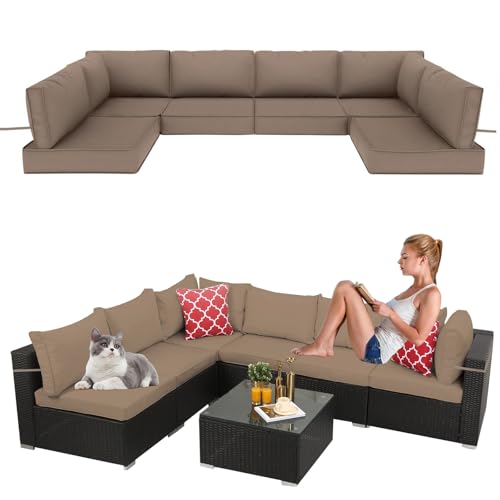
Replacement Cushions for Outdoor L-Shaped Couch
Restore comfort and style to your sectional with the right cushions. Learn sizing, fabric choices, and fit tips before you buy.
START THE GUIDEWhy replace instead of replace the whole couch? A quality outdoor L-shaped couch frame is a long-term investment. When the cushions wear out, replacing them is often the smartest way to keep a solid frame in service for years. This guide walks you through measuring, fabric selection, and fit so your new cushions look and feel right from day one.
Why Replacement Cushions for an L-Shaped Couch Are Different
An L-shaped outdoor couch, also called a sectional, is not simply two straight sofas pushed together. It has a corner section, long arms, and often a mix of seat depths and back heights. That geometry means off-the-shelf cushion sets rarely fit perfectly. Replacement cushions for an outdoor L-shaped couch must account for the corner wedge, the seat depth on each leg of the L, and the backrest angle on both sides.
Many sectional owners discover this the hard way. They buy a generic cushion set, then find the corner piece is too small or the back cushions slide down. The result is a couch that looks tired even with new cushions. The better path is to understand your frame first, then choose cushions built for sectional geometry.
This guide is written for homeowners in the research stage. You already know you want new cushions. What you need now is the confidence to choose the right set, understand the tradeoffs between tiers, and avoid common fit mistakes.
How to Measure Your L-Shaped Couch for Cushions
Accurate measurement is the single most important step. A cushion that is off by even a small margin will bunch, gap, or slide. Grab a metal tape measure and a notebook, and measure each piece separately.
Seat Cushions
Measure the width and depth of each seat platform individually. On an L-shaped couch, the seats on the long leg and the short leg are frequently different sizes. Record the thickness of the old cushion if you still have it. Standard outdoor seat cushions range from about three to six inches thick, with thicker cushions offering more support and a plusher feel.
Back Cushions
Back cushions are measured by height and width, plus the thickness. Note whether your frame uses a single long back cushion or several smaller ones. Some sectional frames use a continuous backrest, while others have segmented backs. Match the count and size of your new back cushions to the old ones, or to the frame's mounting points.
The Corner Section
The corner is where most replacement projects go wrong. Measure the corner seat platform in both directions and note the angle. Most L-shaped couches use a 90-degree corner, but curved sectionals exist. If your corner is curved, look for replacement cushions for curved outdoor furniture rather than forcing a square cushion into a curved frame. A dedicated curved cushion set will fit far better and last longer.
Arms and Back Height
Measure the arm height and the back height from the seat platform. These numbers determine how the back cushions rest and whether the seat cushions will be visible above the frame. If your old cushions sat flush with the arms, match that. If you want a taller back for more support, choose back cushions with extra height, but confirm the frame can support them.
Pro tip: Photograph your couch from several angles before you remove the old cushions. Photos of the bare frame, the corner joint, and the arm profile make it much easier to compare new cushion sets online and to describe your frame to a custom maker if needed.
Choosing the Right Fabric and Fill
Outdoor cushions live a hard life. Sun, rain, and temperature swings break down weak fabrics quickly. The fabric and fill you choose determine how long your replacement cushions last and how comfortable they feel.
Fabric Options
Solution-dyed acrylic is the benchmark for outdoor upholstery. The color is locked into the fiber, so it resists fading far better than surface-dyed fabrics. Olefin is another common outdoor fabric; it is durable and resists moisture, though it can feel less soft. Polyester blends are common in entry-level cushions and can work well if they carry a good UV rating, but they tend to fade faster over several seasons.
Look for fabrics described as water-resistant or water-repellent, with a tight weave that resists pilling. If your couch sits under a covered patio, you have more flexibility. If it is fully exposed, prioritize UV resistance and quick-drying performance. If you are refreshing a wicker or rattan frame, our guide to replacement cushion covers for rattan furniture covers fabric pairing in more detail.
Fill and Foam
Seat cushions typically use polyurethane foam, sometimes wrapped in fiber or a soft batting for a plusher feel. High-density foam holds its shape longer and resists bottoming out. Back cushions often use blown fiber or a foam-fiber blend, which feels softer and is easier to fluff. Some premium sets use a foam core with a fiber wrap for the best of both.
If your old cushions flattened quickly, upgrade to a higher-density foam. If they felt too firm, look for a fiber-wrapped seat cushion. The tier you choose matters here: entry-level sets often use lower-density foam, while mid-range and premium sets step up to denser cores and better wraps.
Zippers and Covers
Removable, washable covers are a major convenience. Check that zippers are hidden and that the cover has a good seam allowance. If you plan to wash covers regularly, confirm the fabric is machine washable. Some premium outdoor fabrics are spot-clean only, which is fine for covered patios but less practical for exposed setups.
Understanding Cushion Tiers
Replacement cushions for an outdoor L-shaped couch come in several quality tiers. Rather than focusing on numbers, think in terms of construction and materials. The table below summarizes what each tier typically offers.
| Tier | Typical Construction | Best For |
|---|---|---|
| Entry-level | Standard foam, polyester or basic olefin fabric, sewn-in covers | Covered patios, seasonal use, refreshing a secondary couch |
| Mid-range | Higher-density foam, solution-dyed acrylic or quality olefin, removable covers | Year-round use on a covered or partially covered patio |
| Premium | High-density foam with fiber wrap, premium solution-dyed acrylic, reinforced seams | Fully exposed couches, daily use, long-term investment |
| Luxury / commercial-grade | Engineered foam cores, top-tier outdoor fabrics, custom-fit construction | High-use households, hospitality settings, custom sectionals |
A mid-range set is usually the sweet spot for a primary outdoor couch. It offers meaningfully better durability than entry-level without the custom-order complexity of luxury tiers. If your couch is fully exposed to sun and rain, moving up a tier is a worthwhile investment in longevity.
Common Fit Mistakes and How to Avoid Them
Even well-made cushions can disappoint if they do not fit the frame. Here are the mistakes we see most often, and how to sidestep them.
Buying a Straight Set for an L-Shaped Couch
A straight sofa cushion set will not include the corner piece. If your couch has a true corner seat, you need a sectional-specific set or a mix of individual cushions that includes a corner cushion. Some sellers list "sectional" sets that are really two straight sets; check the corner dimensions carefully.
Ignoring Seat Depth Differences
Many L-shaped couches have a deeper seat on the long leg than on the short leg. Ordering uniform cushions can leave gaps or overhang. Measure each seat and, if depths differ, look for a set with mixed sizes or order individual cushions.
Overlooking the Backrest Angle
Back cushions on a sectional often lean at different angles on each leg. A thick, rigid back cushion can push you forward if the angle is steep. Look for back cushions with some give, and check customer photos of the set on a similar frame.
Forgetting the Frame's Tie-Down Points
Many outdoor couches have ties, clips, or hook-and-loop strips to hold cushions in place. Confirm that your new cushions include matching attachment points, or plan to add them. Cushions that slide around feel cheap no matter how good the fabric is.
Check the corner first. Before ordering any set, confirm the corner cushion dimensions match your frame. If the corner is curved or unusually shaped, explore replacement cushions for curved outdoor furniture or a custom option. Getting the corner right makes the rest of the project far easier.
Matching Cushions to Your Couch Frame Material
The frame material affects how cushions sit, wear, and attach. A few material-specific notes can save you from a mismatched purchase.
Rattan and Wicker Frames
Rattan and wicker sectionals are popular for their lightweight frames and woven texture. Cushions for these frames often need to be slightly thicker to bridge the weave pattern and sit evenly. Look for sets designed for wicker geometry, or check our guide to replacement cushions for wicker furniture for frame-specific tips.
Teak and Wood Frames
Wood frames tend to have clean, straight lines, so standard rectangular cushions fit well. The main concern is moisture: wood expands and contracts, so choose cushions with breathable covers that dry quickly. Our replacement cushions for teak outdoor furniture guide covers wood-friendly fabrics.
PVC and Resin Frames
PVC and resin frames are common on budget-friendly sectionals. They are lightweight and weather-resistant, but the cushion platforms can be slippery. Cushions with non-slip bottoms or tie-downs work best here. See replacement cushions for PVC patio furniture for more detail.
Wrought Iron Frames
Wrought iron sectionals are heavy and long-lasting, but the metal can heat up in direct sun. Cushions with a breathable fabric and a bit of loft help with airflow. Our replacement cushions for wrought iron patio furniture guide explains the fit considerations.
Caring for Your New Cushions
Good care extends the life of any cushion tier. A few habits make a real difference.
- Brush off debris weekly. Leaves and pollen trap moisture against the fabric.
- Clean spills promptly. Blot, do not rub, and use a mild soap solution for stubborn marks.
- Dry thoroughly. After rain, stand cushions on edge so water drains and air circulates.
- Store during extreme weather. If you expect long periods of rain or snow, bring cushions indoors or use a breathable cover.
- Rotate seat cushions. Swap positions periodically so wear is even across the sectional.
If your cushions came with removable covers, follow the care label exactly. Some premium outdoor fabrics tolerate machine washing, while others are spot-clean only. When in doubt, hand wash and air dry.
Frequently Asked Questions
Can I use straight sofa cushions on an L-shaped couch?
Only if your couch has no true corner seat and is really two separate sofas. A true L-shaped couch with a corner platform needs a corner cushion or a sectional-specific set. Using straight cushions on a corner leaves a gap or an overhang that looks and feels wrong.
How do I know if a cushion set will fit my sectional?
Compare the set's listed dimensions to your own measurements for each seat, back, and corner piece. Pay attention to seat depth differences between the two legs of the L. If the seller provides a dimension diagram, check the corner piece first.
What is the best fabric for an exposed outdoor L-shaped couch?
Solution-dyed acrylic is the strongest choice for full sun exposure. It resists fading and holds color well. Pair it with a high-density foam core and removable, washable covers for the best balance of durability and convenience.
Should I replace only the seat cushions or the backs too?
If the back cushions still hold their shape and match the new seats, you can replace only the seats. However, if the backs are flattened or the fabric has faded unevenly, replacing the full set gives a more cohesive look and avoids mismatched wear.
How do I measure the corner cushion?
Measure the corner platform in both directions along the L, plus the thickness. Note whether the corner is a square 90-degree platform or a curved piece. For curved corners, look for curved cushion sets rather than forcing a square cushion into place.
Can I get custom cushions for an unusual sectional?
Yes. Custom makers can build cushions to your exact measurements and corner geometry. This is often the best route for curved sectionals or older frames with non-standard dimensions. Expect a longer lead time and a higher tier of investment, but the fit is unmatched.
Related Guides
Refreshing an outdoor couch is often part of a larger patio update. These guides can help you plan the rest of the project:
- Replacement cushions for outdoor sectional furniture — a broader look at sectional cushion options.
- Replacement cushions for curved outdoor sofa — for curved sectionals and rounded frames.
- Replacement cushion sets for outdoor furniture — how to evaluate full sets.
- Replacement cushion covers for wicker furniture — cover-only options for wicker frames.
- Replacement cushions for rattan furniture — fitting cushions to woven frames.
- Replacement cushions for vintage patio furniture — handling non-standard older frames.