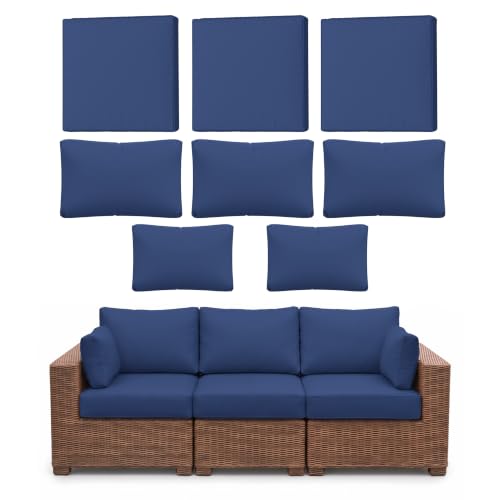
Replacement Cushion Covers for Rattan Furniture
Everything you need to refresh worn rattan seating: accurate measuring, fabric selection, fit checks, and long-term care—so your outdoor furniture looks and feels new again.
Why Replace Cushion Covers Instead of the Whole Rattan Set
Rattan furniture is built around a sturdy frame—often natural rattan, synthetic resin wicker, or a hybrid weave—that can last for many seasons when cared for properly. Cushion covers, on the other hand, take the brunt of daily use: sun exposure, rain, spills, pet claws, and general abrasion. Replacing just the covers is a practical way to extend the life of your existing rattan furniture without committing to an entirely new seating arrangement.
This approach is especially useful when the frame is still solid and the foam inserts hold their shape. A fresh set of covers can restore the visual appeal of a rattan patio set, update the color scheme to match new decor, or simply replace covers that have faded unevenly after long sun exposure. It is also a sensible option for anyone who has inherited older wicker pieces and wants to modernize them without a full replacement.
Before ordering, it helps to inspect the frame and inserts. If the weave is cracked, the joints are loose, or the foam has compressed and lost rebound, new covers alone may not deliver the result you expect. In those cases, consider whether the frame itself needs attention first, or whether a different approach—such as a full replacement cushion set—makes more sense for your setup.
How to Measure Rattan Cushions Accurately
Fit is the single biggest factor in whether replacement covers look intentional or sloppy. Rattan frames vary widely in seat depth, back height, and corner radius, so relying on a generic size label is risky. Measure the existing cushions—or the frame openings if the old cushions are missing—and write down every dimension before you shop.
Measure Length and Width
Use a soft tape measure across the widest points of the cushion. For seat cushions, measure front-to-back and side-to-side at the seam.
Record Thickness
Measure the foam height at the center and near the edges. Rounded or tapered cushions may need a cover with a gusset or a slightly larger allowance.
Note the Shape
Square, rectangular, rounded-corner, T-shaped, and curved cushions all fit differently. Sketch the outline and mark any notches or tie points.
Check the Frame Fit
Confirm how the cushion sits inside the frame—snug, loose, or overlapping. This affects whether you need a cover with a zipper or a slip-on style.
Pro tip: If you are replacing covers on a curved or corner piece, measure both the seat and the back separately. Many rattan sectional and corner units use different dimensions for each section, and a single cover size rarely fits both.
For pieces with unusual shapes, such as a rattan daybed or a rattan swivel chair, measure the cushion in place rather than removing it. This helps you capture the true seated profile and avoid a cover that is too tight around the corners. If you are unsure about the shape, compare your measurements against the supplier's diagram before ordering.
Choosing the Right Fabric for Outdoor Cushion Covers
Fabric choice determines how the covers handle sun, rain, and daily use. Not every cover marketed for rattan furniture is built for outdoor conditions, so check the material and finish carefully. The table below summarizes common options and their typical strengths.
| Fabric Type | Best For | Key Considerations |
|---|---|---|
| Solution-dyed acrylic | Long sun exposure, color retention | UV-resistant, water-repellent finishes available; generally a premium choice |
| Polyester blends | Balanced everyday use | Look for outdoor-rated treatments; mid-range durability |
| Olefin | Moisture-prone climates | Resists mildew and fading; texture varies by weave |
| Canvas cotton blends | Covered porches and shaded areas | Comfortable hand feel; needs more protection from direct rain |
Beyond the base fabric, look at the finish and construction. Tight weaves resist pilling and snags, while reinforced stitching at stress points improves longevity. If your furniture sits in full sun, prioritize UV-resistant covers; if it is under a roof but exposed to humidity, prioritize breathability and mildew resistance.
Color choice also matters for perceived longevity. Mid-tone neutrals and textured weaves tend to hide minor soiling better than very light or very dark flat colors. If you plan to keep the same rattan patio furniture for several seasons, a classic neutral cover is often the most flexible option for future decor changes.
Cover Types, Closures, and Fit Styles
Replacement covers come in several constructions. The right choice depends on how often you remove them for cleaning, whether the cushions stay outside year-round, and how precise your measurements are.
- Zip-around covers: The most common style for seat and back cushions. A full zipper makes installation straightforward and allows the cover to sit snugly around the foam.
- Slip-on covers: Pull over the cushion without a zipper. These are quicker to change but may shift on rounded or tapered cushions; look for elastic or tie-down details.
- Envelope or overlap closures: Often used on back cushions. They hide the opening and give a clean look, but check that the overlap stays closed in wind.
- Custom-fit covers: Made to your measurements, including corner radius and thickness. A sensible choice for curved, T-shaped, or sectional cushions.
If you are refreshing a rattan sofa or a rattan lounge chair, check whether the original cushions have piping, tufting, or a specific seam position. These details affect how a replacement cover drapes. For curved pieces, a custom cover is usually more reliable than a one-size-fits-all option.
Also consider how the cover interacts with the frame. Some rattan designs have tie points or hook-and-loop strips that keep cushions in place. If your frame uses these, choose covers with matching attachment points or plan to add them during installation.
Quality Tiers: What to Expect from Each Level
Replacement covers vary in construction quality, and the differences show up in how they wear over time. The tier framework below uses relative positioning rather than any specific figures, so it stays useful regardless of market changes.
| Tier | Typical Characteristics | Best For |
|---|---|---|
| Entry-level | Basic outdoor-rated fabric, simpler stitching, limited size range | Seasonal refreshes, shaded patios, light use |
| Mid-range | Better UV and water resistance, reinforced seams, more size options | Everyday outdoor use with moderate sun exposure |
| Premium | Solution-dyed fabrics, precise construction, custom-fit options | Long-term use, high-sun locations, curved or sectional seating |
| Luxury / commercial-grade | Heavy-duty textiles, colorfastness, specifications built for hospitality use | High-traffic areas, full-sun installations, premium rattan collections |
The middle of the market is often the practical choice for most households: mid-range covers typically balance durability and fit without the specialization of top-tier options. That said, if your furniture is in constant sun or you are covering a large sectional, the higher tiers can be a worthwhile long-term investment because they tend to hold color and structure longer.
Pay attention to the closure hardware as well. A robust zipper and clean seam finishing often distinguish mid-range and premium covers from entry-level options. On curved pieces, such as the cushions used on a rattan papasan chair or a round daybed, construction quality matters even more because the cover has to conform to a non-linear shape.
Installation and Care Tips for Long-Lasting Covers
Once the covers arrive, fit them before the return window closes. Slide the foam insert in gently, working from the corners inward, and zip or close the cover fully. If the fit is tight, avoid forcing the zipper; a slightly different insert thickness or a custom cover may be the better answer.
- Clean regularly: Brush off debris and wipe spills promptly. Mild soap and water are usually sufficient for outdoor fabrics; follow the care label for anything stronger.
- Rotate cushions: Flip and rotate seat cushions periodically to distribute wear and sun exposure evenly.
- Dry thoroughly: After rain, remove covers and let both the foam and fabric dry completely before reassembling to prevent mildew.
- Store seasonally: During off-season or severe weather, store covers and inserts in a dry, ventilated space. This is especially important for pieces like a rattan storage bench that may hold moisture if closed up while damp.
- Protect from sharp edges: Check the frame for rough spots that could snag the fabric, and smooth or cover them before installing new covers.
For deeper maintenance guidance, including how to handle mildew and seasonal storage, the outdoor care section covers broader routines that apply to rattan and wicker furniture. Keeping the frame clean and dry is just as important as caring for the covers, since trapped moisture can affect both the weave and the cushion inserts.
Fit check reminder: Before washing or treating new covers, confirm that they fit the intended cushions. A quick dry-fit on the frame will reveal whether the cover is too loose at the corners or too tight across the seat, which is much easier to resolve before the covers are used outdoors.
Frequently Asked Questions
How do I know which cushion cover size to choose for my rattan furniture?
Measure the existing cushion length, width, and thickness with a soft tape, then compare against the cover supplier's size chart. Account for seam allowances and any rounded corners, and confirm whether the cover is designed for a specific seat depth or back height. When in doubt, custom-fit covers are the most reliable option for irregular shapes.
Can I use indoor cushion covers on outdoor rattan furniture?
Indoor covers are generally not treated for moisture, UV, or mildew resistance. For outdoor rattan furniture, choose covers explicitly rated for outdoor use with water-repellent and UV-resistant finishes. This helps protect both the foam and the fabric from sun damage and damp conditions.
How often should replacement cushion covers be changed?
Most outdoor covers last several seasons depending on sun exposure and care. Rotate and clean covers regularly, and replace them when you notice fading, thinning, seam failure, or persistent mildew that does not respond to cleaning. If the frame is still in good condition, replacing the covers is a practical way to keep using the furniture.
Do replacement covers fit both seat and back cushions?
Not always. Seat and back cushions often have different dimensions and shapes, especially on rattan sofas and sectional pieces. Order covers sized for each cushion type, and double-check the depth and thickness specifications before ordering.
What if my rattan furniture has curved or unusual cushion shapes?
Curved, T-shaped, and sectional cushions usually need custom-fit covers rather than standard sizes. Measure the cushion in place, sketch the outline, and note any notches or tie points. Custom covers are more likely to sit smoothly and avoid wrinkles at the corners.
Ready to Refresh Your Rattan Seating?
Explore our recommended replacement cushion covers and related outdoor essentials to give your rattan furniture a fresh, comfortable update.
View Recommended Covers